Practical answer first: if you’re visiting Seoul for the first time, target the shoulder seasons—late March to early May and mid-September to early November—and compare bundle packages with standalone bookings for the same dates, same number of travelers, and identical inclusions before you decide. Shoulder seasons offer milder weather, smaller crowds, and often more flexible cancellation or date-change windows from providers, but the value of a package depends on the specific inclusions and the flexibility you need. Start by listing non-negotiable elements (flight times, neighborhood, hotel type, and must-see experiences) and use those criteria to judge any advertised Seoul travel deals. This article explains how to weigh inclusions, flexibility, traveler-specific value, and final terms so you can choose the booking approach that fits your first trip to Seoul.

Test package value fairly
| Booking approach | Best for | Tradeoff to check |
|---|---|---|
| Full package (flight + hotel + transfers) | Travelers who want pre-planned convenience and a single point of contact for the whole trip. | Less flexibility on times and suppliers; savings may disappear if you need to change dates or cancel part of the trip. |
| Flight + hotel bundle only | Visitors who value simpler booking but still want control over local activities and transfers. | May save planning time but can lock you into specific flight times or hotel policies that aren’t ideal. |
| Separate bookings (book flights, hotel, and tours individually) | Flexible travelers who prefer tailoring location, schedule, and on-the-ground activities independently. | More time-consuming to book and manage; you handle multiple customer-service channels if issues arise. |
| Hotel-first approach (secure hotel, then add flights/tours) | Those who prioritize neighborhood and accommodation quality over flight times. | Flights that match your preferred hotel location or check-in schedule may cost more or require inconvenient connections. |
Check current package and separate options
Use identical dates, travelers, room needs, baggage, and flexibility so the comparison stays meaningful.
What to compare before judging a package deal
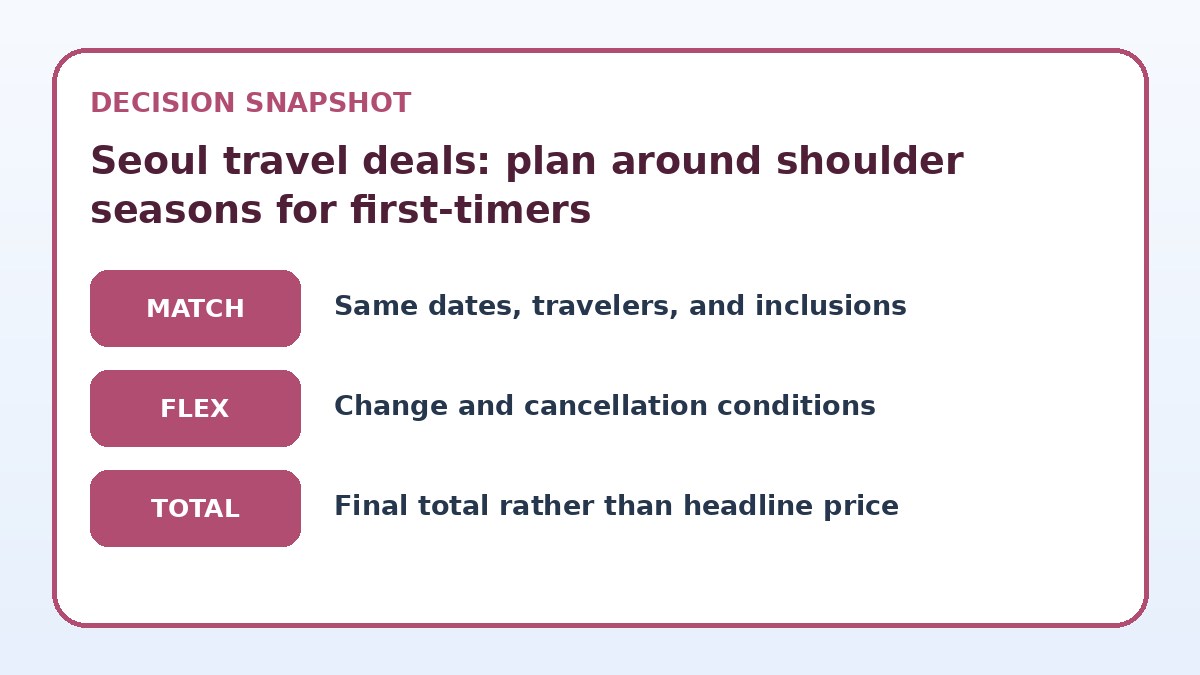
Start with a checklist of the core details any Seoul travel deal must match for a fair comparison: identical travel dates, passenger names and ages, the same flight cabin class, the same hotel room type and cancellation window, and the same ground transfers or local activities included. If you’re looking at two- or three-city itineraries, ensure the sightseeing or day-trip inclusions are equivalent. Differences in flight times, transit connections, or hotel location can change the value dramatically for a first-time visitor who wants to maximize time in central Seoul.
Next, ask whether the advertised package includes any add-ons that you don’t need—like city passes, optional tours, or prepaid meals—and whether those add-ons are refundable. Convert all totals to a single currency and break down the per-person cost for each included item. That prevents a misleading headline price from masking poor flight times, a budget hotel far from metro lines, or restrictive tour schedules that force a fixed daily routine instead of letting you explore Seoul neighborhoods freely.
Inclusions: flights, hotels, transfers, and extras
For most first-time visitors, inclusions matter more than the headline price. Confirm whether flights are direct or connecting, which fare class applies, and what baggage and seat-selection rules are attached. For hotels, check the neighborhood (Insadong, Myeongdong, Hongdae, Jongno, Gangnam, etc.), room size and bed type, breakfast inclusion, and the property’s cancellation policy. Transfers listed as “private” versus “shared” can also change convenience; a late-night arrival may make a private transfer worth the extra cost for peace of mind.
Watch for extras that sound helpful but add little value: prepaid attraction tickets that lock you into a morning start, meal plans that duplicate restaurants you wanted to try, or so-called ‘welcome packs’ that you won’t use. If an inclusion is important to you—say, a Hanok stay, a DMZ tour, or a Namsan cable car ride—compare the standalone price of that item to the value listed inside a package. That will reveal whether the package is truly saving you money or simply bundling items you could buy more flexibly on arrival.
Look past the headline total
Compare inclusions and change conditions before deciding whether a package is genuinely useful for this trip.
Deal comparison checklist
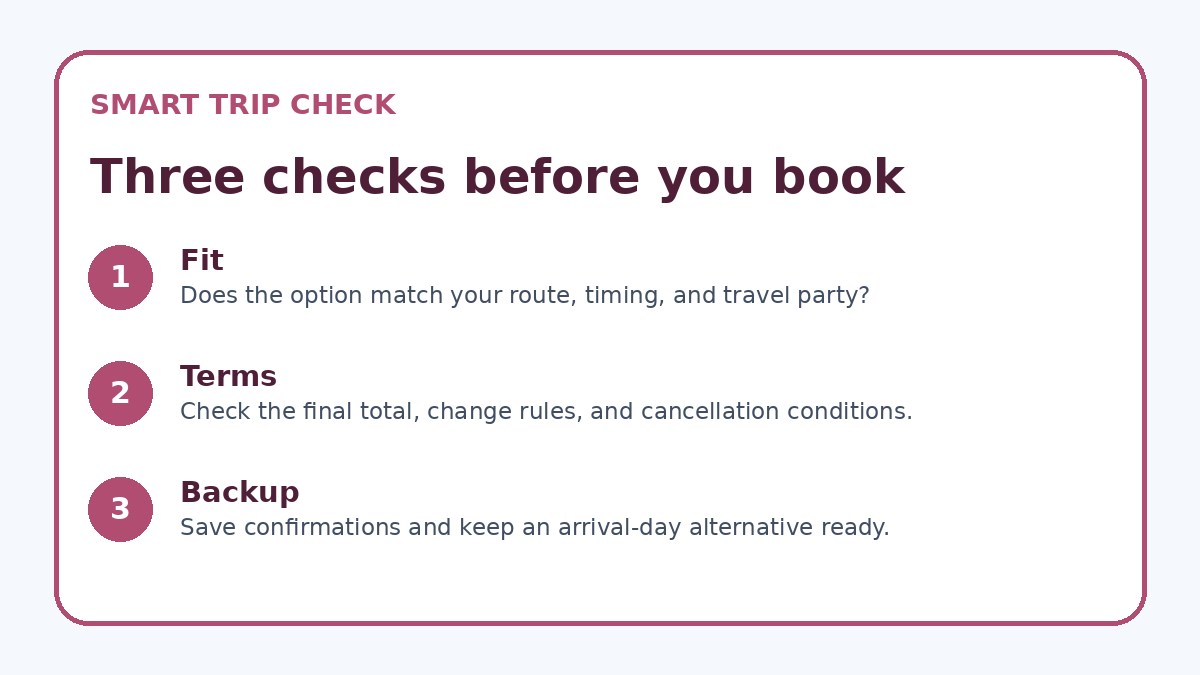
- List absolute must-haves (neighborhood, flight arrival window, bed type, and any required accessibility needs) before comparing deals.
- Compare the same travel dates, number of travelers, and exact inclusions across multiple offers to avoid false savings.
- Open the final booking page and confirm cancellation, refund processing time, and any name-change fees for flights and hotels.
- Convert total package costs to your local currency and calculate per-person costs for included items like transfers and tours.
- Verify whether local taxes, hotel city fees, or arrival transfers are included or payable on arrival.
- If a package uses third-party suppliers, note who provides on-the-ground support and keep their contact details after booking.
Flexibility and traveler-specific value
Flexibility is often the deciding factor. Families, travelers with mobility constraints, or anyone with a tight schedule will value predictable flight arrival times and hotel locations near metro stations. Younger travelers or those on open schedules might prefer exploring multiple neighborhoods and booking experiences locally. Check the change-fee structure for flights and hotels: low or refundable change fees increase the true value of a package during shoulder seasons when weather or personal schedules sometimes shift.
Traveler-specific value also includes pace and priorities. If you want a relaxed first trip that includes a curated set of tours, a prebuilt package with thoughtfully timed excursions could save planning time. Conversely, if you plan to move around, eat street food, and take spontaneous day trips from Seoul, separate bookings for flights and a centrally located hotel plus a few prebooked must-dos usually provide more freedom and often similar expense when compared fairly.
Final terms: cancellations, customer service, and verification
Before buying, read the provider’s final booking page for exact cancellation windows, refund processing times, name-change policies, and what happens if a flight is delayed or canceled. Don’t rely on marketing copy. If the package includes third-party suppliers—local tour operators, transfer companies, or hotels—verify who handles customer service on the ground and where to call if something goes wrong. Ask whether the package price includes local taxes and fees; if not, the amount payable on arrival can change the true cost.
Also check whether the provider issues a single bundled ticket or separate supplier confirmations. Bundled itineraries sometimes leave you dependent on a single customer-service channel for changes, while separate bookings might require dealing with multiple suppliers. For any listed flights, compare direct and connecting options on the booking page, and ensure the layover times meet your comfort level. If you use Trip.com or another comparison site, treat it as a place to cross-check availability and terms, not as a substitute for reading the final supplier contract.
Travel Deals & Booking Strategy questions travelers ask
Are shoulder seasons in Seoul really better for first-time visitors?
Shoulder seasons generally offer milder weather and fewer tourists than peak months, which can make navigating Seoul’s neighborhoods and attractions easier for a first trip. You’ll likely find more comfortable walking conditions, shorter lines at popular sites, and a wider range of hotel availability near central districts. However, shoulder seasons can also include variable weather—early spring may still have cool days and late autumn can have crisp, cool nights—so pack layers and confirm cancellation flexibility in case plans shift.
How do I verify that a bundle’s flight and hotel match my needs?
On the package’s final booking or confirmation page, check the exact flight times, number of stops, and fare rules including checked-baggage allowance and change fees. For hotels, confirm the property’s neighborhood, room type, bed configuration, and whether breakfast or other amenities are included. Don’t assume similar-sounding room categories are identical—look for explicit details about room size, occupancy limits, and cancellation windows. If any element is ambiguous, contact the provider to get a written clarification before you pay.
What are common hidden costs to watch for in Seoul travel deals?
Frequent extras include hotel-local taxes or city fees payable at check-in, baggage fees for lower fare classes, outbound airport transfers that are optional, and prepaid attraction tickets that may not be refundable. Also watch for restrictive cancellation policies or change fees that apply differently to flights versus hotels. Always check whether meals, transfers, and local taxes are included in the package price; the final booking page should state what’s covered and what you’ll pay on arrival.
Final decision note
For a first visit to Seoul, shoulder seasons can improve your experience and make planning less stressful—but the right booking approach depends on your priorities. Compare like-for-like: same dates, travelers, and inclusions. If convenience and a single support channel matter most, a full package may suit you; if flexibility and neighborhood choice matter more, separate bookings typically give you better control. Always read the final booking page to confirm cancellation rules, baggage allowances, transfer types, and tax inclusions. Use that verification step to turn a promising Seoul travel deals headline into a trip that fits how you want to travel and enjoy the city.
Continue planning
Check current options and final conditions
Use the provider page to confirm live availability, the final total, cancellation terms, and every condition that matters to your trip.
This evergreen planning guide was created with AI-assisted drafting and a structured quality review. It does not display live prices, schedules, availability, visa guidance, or provider rankings. Verify current details before booking. Some links are affiliate links; we may earn a commission at no additional cost to you.