If you’re traveling solo between Seoul and Tokyo, the most practical question before you book is simple: how easily can you change or cancel your ticket if plans shift? Start by deciding how likely your itinerary will change — flexible travel dates, uncertain meeting times, or a possible extension in Japan all push you toward more flexible fares or add-on protections. Then compare three things on any airline or booking page: the cost to change, whether a fare difference applies, and the refund policy for cancellations. Also verify any third-party rules if you book via an online travel agency. This article explains the tradeoffs between cheaper nonrefundable fares and pricier flexible options, how to read provider pages for the exact penalties and waivers, and which decision approach fits different solo-traveler priorities.
See current options before you compare the details
Availability and final conditions change. Open Trip.com now or keep reading for the practical comparison.
Understand ticket families and what flexibility buys
Airlines typically sell multiple fare families for Seoul to Tokyo flights, each combining different change and cancellation rules, baggage, and seat options. Lower fares often mean nonrefundable tickets with either a fixed change fee or no changes allowed; mid-tier fares commonly offer free changes with a paid fare difference, and top-tier fares usually allow refunds and free date changes. As a solo traveler, consider what you value most: minimizing cost, maximizing certainty, or keeping options open. If your schedule is tentative, a mid-tier flexible fare can reduce stress even if the upfront cost is higher because it avoids high last-minute change fees.
When comparing fare families, don’t rely only on the headline names like Basic, Standard, or Flex. The exact terms that matter are change fees, whether fare differences apply, and whether cancellations yield refunds or travel credit. Also look for included perks that support flexibility—priority standby, one-time fee waivers, or free same-day rebookings—because those can save money when plans shift at short notice. Always read the fare rules on the airline’s final booking page to confirm the precise conditions, since names and inclusions vary between carriers and can change over time.
How to compare direct and connecting itineraries for change risk
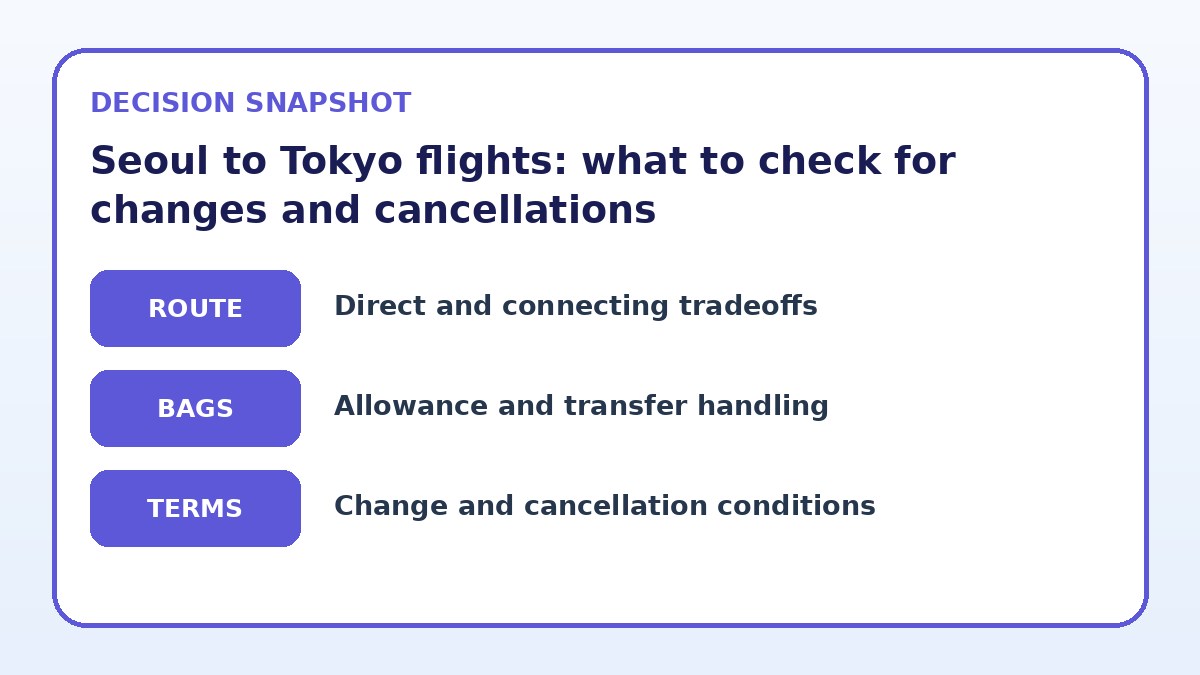
Direct and connecting options affect both your travel experience and how changes are handled. A direct Seoul–Tokyo flight is simpler to change or cancel because it’s a single ticket leg; if you need to change date or time, you only negotiate the rules for that fare. Connecting itineraries, especially with different carriers or sold as separate tickets, can multiply the risk: changes on one leg may not automatically adjust the other, and rebooking could incur multiple fees. When searching, compare total change penalties across the whole itinerary rather than focusing on one leg.
If you prefer connections to expand departure options or lower costs, check whether the itinerary is sold on a single ticket and whether the carriers have interline agreements. A single-ticket connection generally protects you if a schedule change causes a missed connection, because the airline will rebook you under the ticket rules. For independently booked legs, however, you’d be responsible for rebooking each segment separately. Confirm the handling of missed connections, protective rebookings, and whether any additional domestic or transit protection applies in the booking confirmation.
| Approach | Best for | Tradeoff to check |
|---|---|---|
| Lowest nonrefundable fare | Travelers with fixed dates seeking lowest upfront cost | High cancellation risk; changes often cost fee plus any fare difference |
| Mid-tier flexible fare or change-waiver add-on | Travelers likely to adjust dates but wanting balance of cost and flexibility | Higher upfront price but reduced or waived change fees; fare differences may still apply |
| Refundable fare | Highly uncertain plans or risk-averse solo travelers | Highest ticket cost but full refundability and simpler cancellations |
| Cheaper fare plus travel insurance or credit-card coverage | Travelers wanting lower cost with specific covered reasons for cancellation | Insurance limits and exclusions apply; claims may be denied for routine changes |
Ready to check the option that fits your plan?
Use your exact dates and traveler details so the provider page can show the current total and conditions.
Add-ons, waivers, and third-party protections to consider
Beyond fare rules, many travelers benefit from add-on protections or third-party products. Airlines sometimes sell flexible bundles or ‘flex’ add-ons that waive change fees, include seat selection, or convert cancellations to travel credits. Credit cards and travel insurance can also cover change costs or reimburse nonrefundable expenses in specific situations like illness or documented travel disruptions. Evaluate whether the add-on cost plus potential savings is worth it: compare the price of a flexible fare to a lower fare plus an add-on or insurance policy.
If you consider travel insurance, check policy language closely: some policies reimburse nonrefundable ticket portions only for covered reasons named in the policy, not for simple change of plans. If you book through an online travel agency, read the agency’s change and cancellation fees as well as the airline’s terms—the agency may charge its own service fee for processing changes or refunds. For clarity, always verify all fees, waivers, and covered reasons on the airline or agency’s final booking page before purchase; that is the controlling information for any later claim.
Before you book
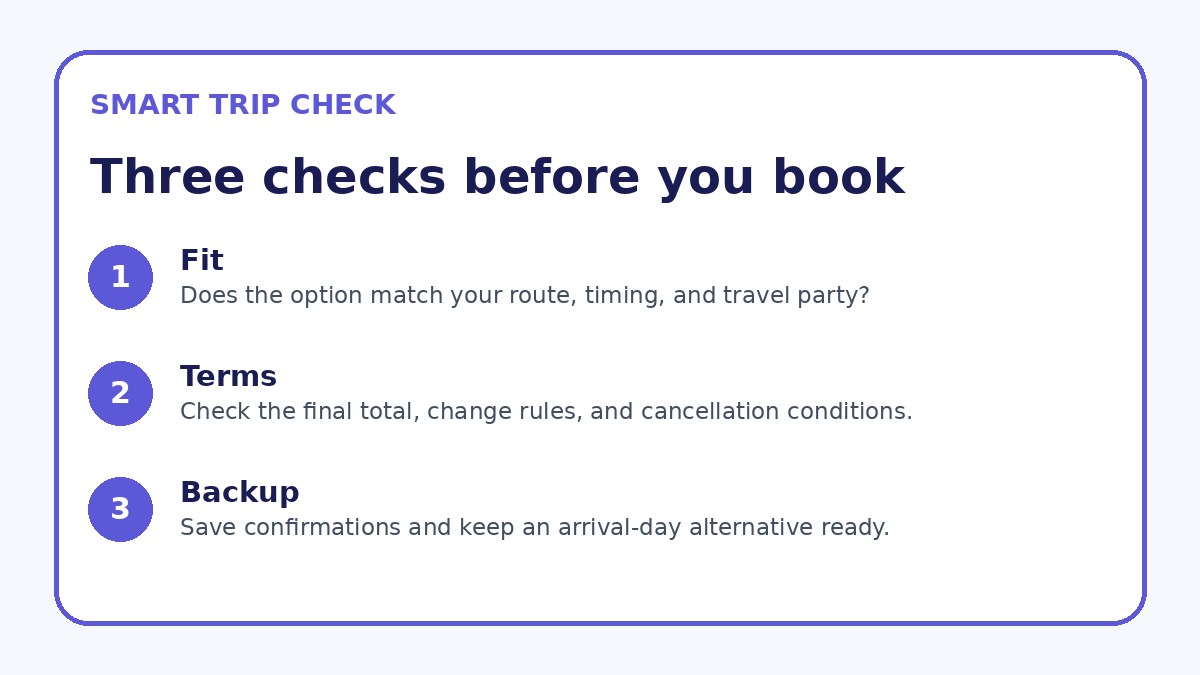
- On the airline’s final booking page, note the exact change fee, whether fare difference applies, and any free-change window before departure.
- Confirm whether cancellations produce a monetary refund, travel credit, or no refund, and save the wording shown at purchase.
- If booking through an online travel agency, check both the airline’s rules and the agency’s change/refund fees on the confirmation page.
- Decide if a flexible fare, add-on waiver, or refundable ticket fits your change-likelihood and calculate the total upfront cost versus worst-case rebooking fees.
- If using insurance or a credit-card benefit, read the policy’s covered reasons and required documentation before relying on it for reimbursement.
- For connecting itineraries, verify whether legs are on a single ticket or separate tickets and confirm how missed connections will be managed.
Practical decision rules for solo travelers on Seoul–Tokyo routes
Use a decision rule aligned with how likely your plans will shift. Rule 1: If dates are fixed, choose the cheapest nonrefundable fare but keep a backup plan for unforeseen disruptions. Rule 2: If dates are probably flexible, take a mid-tier fare or add a change-waiver bundle so you can adjust without heavy penalties. Rule 3: If plans are highly uncertain, buy a refundable ticket or ensure the booking includes free cancellations to get a refund rather than credit. These rules balance upfront cost against the potential hassle and expense of rebooking.
Also weigh non-financial factors that matter to solo travelers: time of day, airport choice, and minimum connection times. If you might need to change to a different airport or arrive earlier for safety in unfamiliar terminals, pay attention to whether the fare allows same-day airport changes or if rebooking incurs full penalties. Whatever approach you choose, document the booking confirmation and the exact policy text shown at purchase; that makes disputes with an airline or agency far easier to resolve if you must change or cancel.
Frequently asked questions
Can I change a Seoul to Tokyo flight for free if I booked a low-cost carrier?
Many low-cost carriers sell very restrictive fares that don’t include free changes. Some allow changes for a fee, and others require purchase of a flexibility bundle to avoid penalties. On the airline’s final booking or manage-booking page you will see whether a free-change window exists, what the fixed change fee is, and whether a fare difference is also charged. If you need flexibility, compare the cost of upgrading to a flexible fare or buying an add-on against the potential fees you’d pay for an expected number of changes.
Is it better to buy a refundable ticket or buy travel insurance for cancellation protection?
Refundable tickets give straightforward refunds but cost more up front. Travel insurance can be cheaper but only reimburses under specific covered reasons listed in the policy, such as illness or severe disruption; routine change of plans is typically not covered. If you require maximum predictability and simple refunds, refundable tickets are cleaner. If you seek cost savings and your cancellation risk is due to covered perils, insurance may be appropriate—always check exclusions, claim processes, and required documentation before relying on a policy.
What should I verify when booking a connecting Seoul–Tokyo itinerary sold as separate tickets?
When legs are sold separately, you’re responsible for missed connections and rebooking each segment under its own rules. Verify the minimum connection time you can realistically make, whether each ticket permits changes or refunds, and whether you’ll need to collect and recheck luggage. Also look for protective options like consolidated single-ticket itineraries, which transfer responsibility to the carrier if a delay causes a missed connection. If you prefer less risk, consider buying a single-ticket connection even if it costs more.
Final planning note
Solo travelers on the Seoul to Tokyo corridor should treat change and cancellation rules as central to booking decisions rather than afterthoughts. Decide how flexible your itinerary must be, then compare the total cost of flexibility—whether built into the fare, provided by an add-on, or bought via insurance—against the potential fees and stress of last-minute changes. Always confirm the exact wording shown on the airline or agency final booking page, document your confirmation, and weigh direct versus connecting itineraries for exposure to compounded penalties. With a clear decision rule and the right protections, you’ll reduce unexpected expenses and keep your trip planning manageable.
Continue planning
Check current options and final conditions
Use the provider page to confirm live availability, the final total, cancellation terms, and every condition that matters to your trip.
This evergreen planning guide was created with AI-assisted drafting and a structured quality review. It does not display live prices, schedules, availability, visa guidance, or provider rankings. Verify current details before booking. Some links are affiliate links; we may earn a commission at no additional cost to you.