
If you arrive in Busan late and are carrying more bags than usual, your priorities shift: minimize transfers, secure a hotel that accepts late check-in and baggage, and avoid walking blocks with heavy suitcases. Start by filtering Busan hotels for places open 24-hour reception or clearly stated late check-in policies; if those aren’t listed, plan to call or message before you book. Consider where you’ll land and which rail or bus stations you might use, then choose a property with straightforward ground access so you limit handling. Finally, know your options for temporary luggage storage—either at the hotel or at station-based lockers—and confirm procedures and fees on provider pages before you finalize anything.
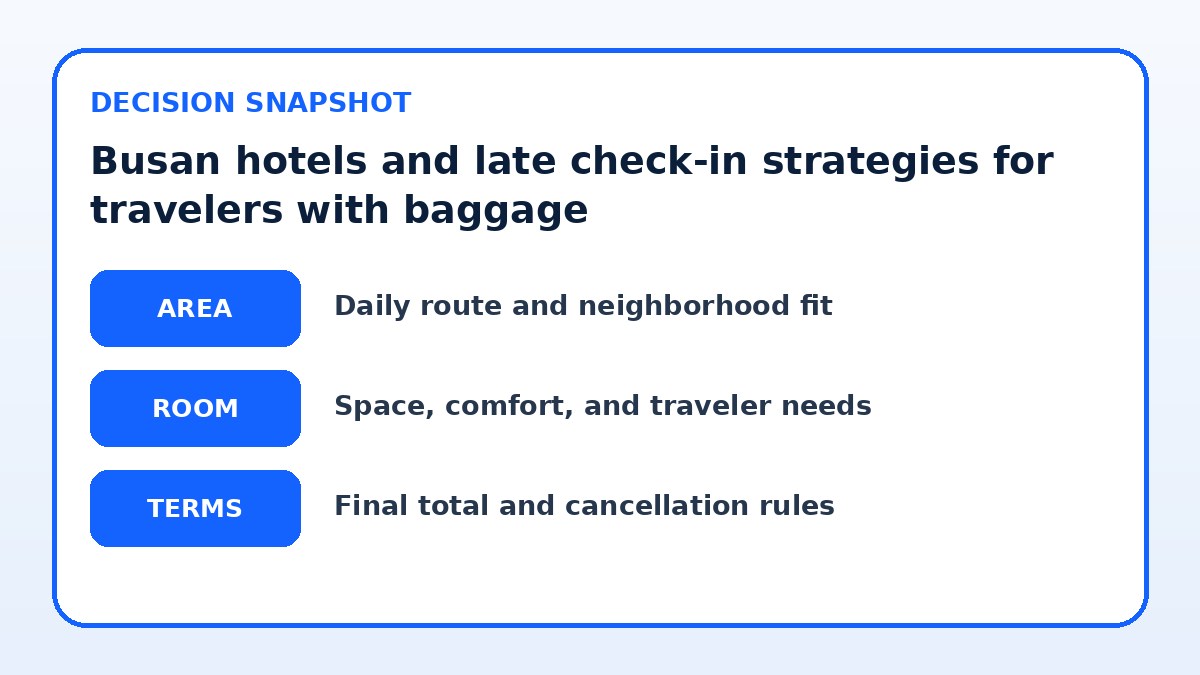
See current options before you compare the details
Availability and final conditions change. Open Trip.com now or keep reading for the practical comparison.
Decide location based on transport and baggage
When handling a late arrival with heavy or oversized baggage, location matters more than amenities. Map where you will arrive—whether it’s Gimhae Airport, Busan Station, or a long-distance bus terminal—and pick Busan hotels within the shortest, simplest transfer. Prioritize hotels near a station entrance with elevators, a taxi stand, or shuttle access so you can avoid long walks, stairs, or crowded transfers late at night. A slightly higher fare for a closer hotel often pays back in fewer luggage transfers and lower stress after a late arrival.
Think in terms of routes, not neighborhoods. A hotel that looks central on a map might still require a long loop through narrow streets or multiple subway changes that are hard with several suitcases. Use tools or maps to check pedestrian routes, stair locations, and elevator icons. If you’re unfamiliar with Korean station layouts, plan a backup taxi route and save the hotel’s local-language address to show drivers; confirm pickup spots with the hotel when you make a reservation so you are not left searching late at night.
Check late arrival and luggage policies carefully
Before booking, read any hotel policies about late check-in and baggage storage on the provider’s final booking page—don’t rely only on third-party summaries. Look for clear statements about 24-hour reception, key collection procedures after hours, and whether staff will secure luggage if you arrive before formal check-in or after desk closure. If the policy is vague, message or call the hotel to get explicit confirmation: ask what phone number to use on arrival, whether a late check-in fee applies, and how they record a guest arriving after reception hours.
Also verify luggage storage limits and any charges. Some hotels store items in a secure room free for guests, but others limit size or number or impose a fee for long storage. If you plan to leave bags while you sightsee or overnight before a later flight, confirm how long they will hold items, what identification or claim receipts they issue, and whether they accept fragile or high-value items. Keep copies of the hotel’s storage policy and receipts until you collect your belongings.
| Approach | Best for | Tradeoff to check |
|---|---|---|
| Hotel near station with 24-hour reception | Minimizing transfers and late-night navigation | May be pricier or less quiet than properties a short distance away |
| Hotel offering scheduled airport or station shuttle | Hands-off transfers with large or many bags | Shuttle may run on limited schedules; verify pick-up windows before arrival |
| Cheaper hotel further away with luggage storage | Saving cost while securing bags for short stays or early departures | Requires a reliable late-night taxi or shuttle; extra handling of luggage |
| Self-transfer by public transit with elevators | Travelers prioritizing cost and mobility with manageable luggage | Depends on station elevator access and off-peak service patterns |
Ready to check the option that fits your plan?
Use your exact dates and traveler details so the provider page can show the current total and conditions.
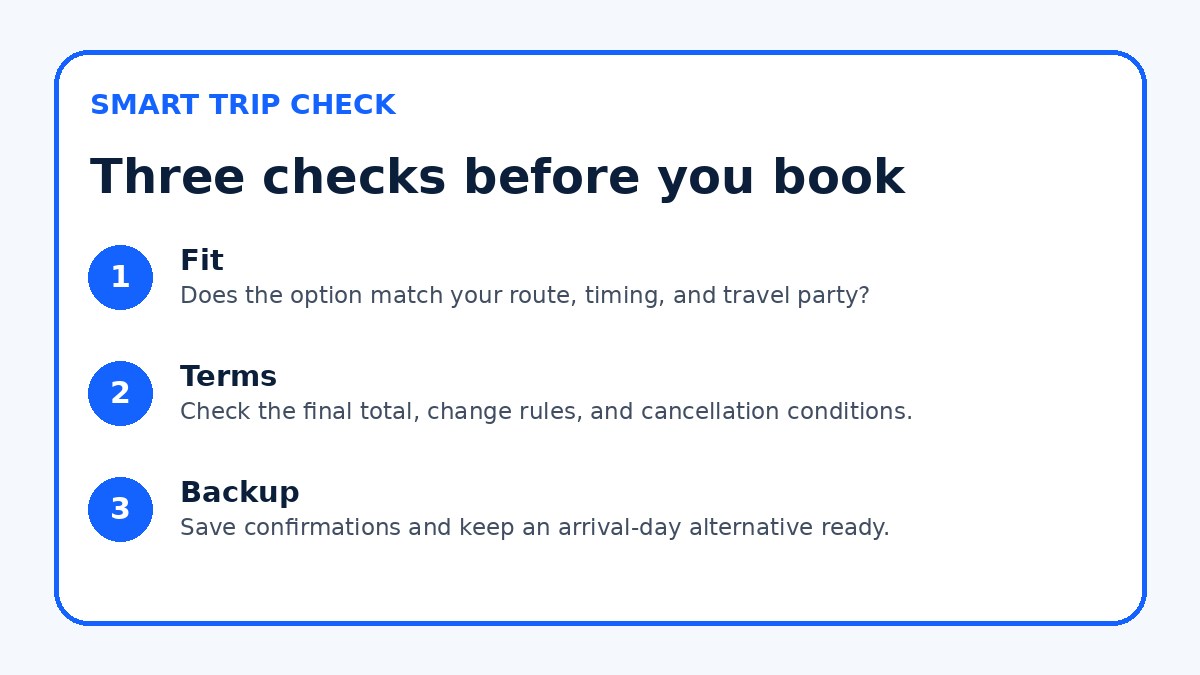
Compare practical transfer options with your luggage
Deciding between taxi, airport limousine, shuttle, or public transit depends on baggage volume and your budget. Taxis provide the simplest door-to-door option—especially late at night—but verify whether the taxi will fit your luggage without extra trips. If you have very large or many suitcases, a private airport transfer or hotel shuttle can be less stressful; check with the hotel whether they offer scheduled pickups and how to arrange them. For rail arrivals, prioritize stations with elevators and escalators on your exit route.
Public transit can be efficient, but confirm elevator availability and station layouts before relying on it after a late arrival. Some subway stations have limited late-night services and sparse staff presence. If you must use the subway or bus, plan for minimal walking between platforms and entrances, and avoid peak crowding times when you’ll struggle with bags. Save a backup taxi app or the local taxi number in case you need a quick switch to a vehicle that handles luggage more easily.
Before you book
- Confirm the hotel’s late check-in procedure and staff contact number; save a screenshot of the confirmation.
- Ask the hotel whether they provide luggage storage, size limits, holding duration, and any applicable fees.
- Identify the simplest door-to-door transfer (hotel shuttle, taxi) and save the pickup location instructions in Korean.
- If using public transport, map elevator locations and the shortest accessible route from the station to the hotel.
- Pack an overnight essentials bag you can carry separately in case your main luggage is delayed or stored.
- Bring printed and digital copies of your reservation, local address, and reception instructions to show drivers or staff.
Prepare for contingencies and verify before booking
Late-night travel and extra luggage invite small complications: keys left at a remote pickup, temporary storage capacity reached, or drivers unfamiliar with narrow addresses. Build a contingency plan that includes a local-language copy of your hotel address, a saved contact number for reception, and screen captures of confirmation messages. If the booking platform allows messaging, ask the hotel to confirm how they handle arrivals after reception closes and whether someone waits or leaves instructions.
Always verify critical details on the final booking page and confirm any verbal arrangements in writing. This includes late check-in procedures, shuttle schedules, luggage storage limits and fees, and the exact location where drivers should drop you. If you use a third-party site to compare Busan hotels, cross-check the chosen property’s official page or contact them directly. Trip.com can be used as one place to check current availability, but always confirm policies on the hotel’s booking page or by direct message.
Frequently asked questions
Can I book a late check-in at any Busan hotel if I message them in advance?
Many hotels will accommodate late arrivals if you inform them ahead of time, but policies vary. Always check the hotel’s stated policy on the final booking page and ask for written confirmation of after-hours procedures. When you message, include your expected arrival time, flight or train details, and a local-language address for drivers. If the hotel does not confirm late check-in, plan for a nearby option with guaranteed 24-hour reception or arrange a taxi that can wait while you sort keys and paperwork.
What is the best way to get from Gimhae Airport or Busan Station to a hotel with lots of luggage?
The least stressful option is door-to-door transport: a taxi, private transfer, or hotel shuttle if available. These cut out extra lifts and long walks with suitcases. If you choose rail or bus, verify elevator access, platform layouts, and the distance between exits and your hotel. For oversized or numerous bags, contact the hotel ahead to confirm they can help with porter service or accept deliveries; otherwise plan for a vehicle that accommodates your baggage in one trip to avoid repeated handling.
If my luggage is larger than standard storage lockers, what are my options in Busan?
If station or terminal lockers are too small for your bags, check whether your hotel offers secure luggage storage for oversized items and what identification or receipts they provide. Some hotels will hold larger items for guests; others may limit size or number and charge a fee. If neither option is available, contact local baggage services or ask your carrier about oversized luggage handling. Always get a clear written agreement on duration, fees, and liability before leaving items unattended.
Final planning note
Arriving late in Busan with extra luggage is manageable with a little pre-trip planning: choose Busan hotels that reduce transfers, confirm late-check-in and storage policies in writing, and pick a transport option that suits the size and number of your bags. Verify all essential details on the hotel’s final booking page or by direct message—reception hours, storage limits, and pickup points—so you have documented instructions to show drivers and staff. Carry an overnight bag, save local-language directions, and plan a backup taxi route. These practical steps cut stress and let you reach your room quickly so your trip can start comfortably, even after a late arrival.
Continue planning
Check current options and final conditions
Use the provider page to confirm live availability, the final total, cancellation terms, and every condition that matters to your trip.
This evergreen planning guide was created with AI-assisted drafting and a structured quality review. It does not display live prices, schedules, availability, visa guidance, or provider rankings. Verify current details before booking. Some links are affiliate links; we may earn a commission at no additional cost to you.