If you need to book Seoul to Taipei flights for work, get straight to the essentials: confirm your preferred travel windows, whether you require a direct or connecting itinerary, what loyalty or corporate rules apply, and how airport timing affects the meeting schedule. Start by defining non-negotiables—arrival time at your first Taipei appointment, minimum connection times, and whether you must earn or use frequent-flier benefits. Then gather flight options and cross-check those against ground transport from each airport and any company travel policies. This article gives a compact, actionable pre-booking checklist and explains the tradeoffs you’ll face so you can make a swift, defensible booking that keeps your trip efficient and predictable.
See current options before you compare the details
Availability and final conditions change. Open Trip.com now or keep reading for the practical comparison.
Define business priorities before searching
Begin by listing the concrete constraints that will drive your choice: meeting start times, which Taipei airport is closest to your destination, whether you need to collect checked luggage between flights, and whether you must preserve elite status credits. For many business travelers, small schedule shifts can make or break a day; knowing whether you absolutely need to arrive the evening before, or if same-day travel is acceptable, will narrow viable flights quickly. Also check your employer’s travel policy for preferred carriers, fare classes, or advance-purchase rules before you start comparing prices.
Next, consider the trip’s flexibility requirements. If your itinerary may change, prioritize refundable or changeable fares and factor in the practicalities of last-minute connections. If you’re trying to minimize mileage accrual loss, verify which booking codes earn credit with your frequent-flyer program. Finally, decide on baggage needs—carry-on only speeds transfers and reduces risk of delay when tight connections are involved, while checked luggage may be unavoidable for longer stays or equipment.
Compare direct and connecting options clearly
When reviewing Seoul to Taipei flights, treat direct and connecting itineraries as different products. A direct nonstop reduces variables—no extra security lines or recheck times—and generally shortens total travel time, but it may run at less convenient times or carry a fare premium. Connecting options can offer more schedule choices or lower published fares, and sometimes better loyalty accrual, but they introduce more points of possible delay and require careful attention to minimum connection times between arrival and departure airports.
To compare fairly, calculate door-to-door travel time: include transit time to Seoul airport, minimum recommended arrival buffer for international business travel, any time needed to change terminals or re-check bags at connecting airports, and ground transfer time in Taipei. Also assess the real-world risk of missed connections—if a single delayed inbound could force you into an overnight, that may outweigh a marginal cost saving. Where possible, look for airline-provided minimum connection guarantees or same-ticket connections that reduce risk.
| Approach | Best for | Tradeoff to check |
|---|---|---|
| Direct nonstop flights | Travelers prioritizing predictability and shortest possible travel time | May cost more or offer fewer schedule choices during off-peak hours |
| Single-connection itineraries | Those needing flexible departure/arrival windows or lower published fares | Higher risk of delays and more complex baggage/transfer logistics |
| Flexible refundable fares | Trips with a high chance of last-minute changes or corporate policy requirements | Higher upfront cost which may be justified by avoided change fees |
| Lower, non-refundable fares | Strict budgets with fixed dates and no expected schedule changes | Little flexibility and possible high fees for changes or cancellations |
Ready to check the option that fits your plan?
Use your exact dates and traveler details so the provider page can show the current total and conditions.
Verify airport logistics and ground transfers
Don’t assume all airports offer the same ground connections. In Seoul, you could be using Gimpo or Incheon; in Taipei, Taoyuan or Songshan. Which terminal you fly from or into changes taxi, metro and limousine-bus options, and therefore door-to-door time. For corporate travelers with meetings in central Taipei, an arrival at Songshan can be far faster than Taoyuan despite fewer nonstop options. Map typical transit times at the arrival hour you’re targeting and check peak-hour traffic patterns, since rush hour can add substantial surface time between airport and downtown.
Also factor in practicalities like immigration queues, business-class fast-track availability, and whether your flight arrives at a remote stand requiring bus transfer. If you must move quickly from the gate to a meeting, prioritize flights with arrivals that minimize airport-to-office transit. If you rely on ride-hailing or company car services, confirm pick-up locations and any terminal-specific rules the driver needs to follow. These on-the-ground details often determine whether a marginally cheaper flight is ultimately practical.
Before you book
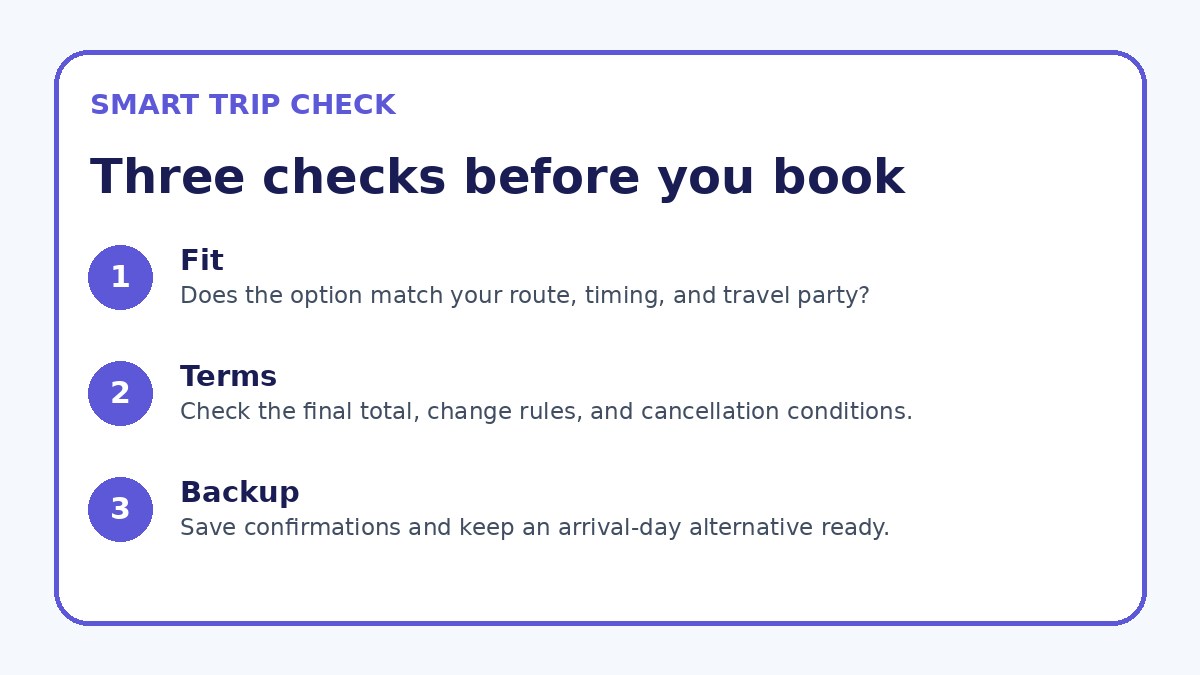
- Confirm which Seoul airport (Incheon or Gimpo) and which Taipei airport (Taoyuan or Songshan) best match your meeting locations and note transfer times.
- Decide whether nonstop or connecting service is essential by setting arrival/departure time windows and acceptable total door-to-door duration.
- Review fare rules on the airline’s final booking page for change/cancellation fees, baggage allowance, seat selection policy, and upgrade eligibility.
- Check corporate travel policy and expense procedures to ensure the chosen fare class and booking channel comply with approval and reporting requirements.
- Compare total travel risk: look at minimum connection buffers, likelihood of delays, and whether the itinerary is on a single ticket to protect missed connections.
- Confirm loyalty or corporate frequent-flyer creditability for the specific fare code and, if relevant, whether lounge access or priority services apply.
Fare rules, corporate policy and loyalty considerations
Before you commit, read the fare conditions on the booking page: change and cancellation penalties, eligibility for upgrades, baggage allowance, and whether you can select or reserve seats. For business travelers, a slightly higher flexible fare can be cheaper overall when factoring in potential change fees and the value of schedule certainty. If you plan to use corporate travel tools or expense management systems, ensure the chosen booking path and fare class are supported and will feed correctly into your company’s reporting.
Loyalty program benefits can influence your decision—status perks like lounge access, priority handling and extra baggage may matter on busy itineraries. Confirm which frequent-flyer program will credit the flight and whether a codeshare ticket formats accrual differently. When provider-specific facts could change, check the airline’s final booking page for the exact fare code, baggage rules, upgrade eligibility, and any ancillary fees before completing purchase. Trip.com can be used as one place to compare current availability and conditions.
Frequently asked questions
Should I prioritize arrival time in Taipei or lowest fare when booking for a one-day meeting?
For a one-day meeting, prioritize arrival time and reliability over the lowest fare. A slightly more expensive nonstop or earlier arrival reduces the chance of travel disruptions that could force an overnight stay. Consider total door-to-door time, not just airtime: factor in transit to and from airports, immigration queues, and potential traffic to your meeting venue. If your employer allows, choose a refundable or flexible fare to reduce risk. If the schedule is fixed and cost constraints are tight, choose a connection with a comfortable buffer and on a single ticket to protect against missed connections.
How do I evaluate connection risk between Seoul and Taipei flights?
Evaluate connection risk by checking the scheduled layover length, whether the connection is on a single ticket, and whether you must change terminals or recheck luggage. Single-ticket itineraries usually protect you from missed connections by rebooking you on the next available flight, while separate tickets leave you exposed. Also research typical transfer times at the connecting airport and allow extra time for immigration or security if switching between international and domestic terminals. If you’re tight on time, prefer longer layovers or choose airlines that state minimum connection guarantees on their booking pages.
What should I verify on the airline's booking page before finalizing a business trip?
On the airline’s final booking page verify the exact fare code, change and cancellation conditions, baggage allowance and any ancillary fees, seat assignment rules, and upgrade eligibility. Confirm whether the itinerary is a single ticket covering connections and check how frequent-flyer miles will be credited for that fare code. If applicable, review corporate booking tool compatibility and whether the booking will meet company expense and reporting requirements. For arrival logistics, double-check terminal details and scheduled arrival times so you can plan ground transfers and appointments accurately.
Final planning note
Booking Seoul to Taipei flights as a business traveler is mostly about minimizing uncertainty. Start by defining non-negotiable schedule needs, align airport choice with your ground logistics, and pick the itinerary type—nonstop or connection—that best matches your tolerance for risk. Always verify fare rules and corporate policy compatibility on the provider’s final booking page so you avoid surprises with baggage, changes, or loyalty credit. Use the checklist above to make comparisons quickly: a clear, rules-based decision will save time, preserve company budget, and keep your trip focused on the meeting, not the travel.
Continue planning
Check current options and final conditions
Use the provider page to confirm live availability, the final total, cancellation terms, and every condition that matters to your trip.
This evergreen planning guide was created with AI-assisted drafting and a structured quality review. It does not display live prices, schedules, availability, visa guidance, or provider rankings. Verify current details before booking. Some links are affiliate links; we may earn a commission at no additional cost to you.