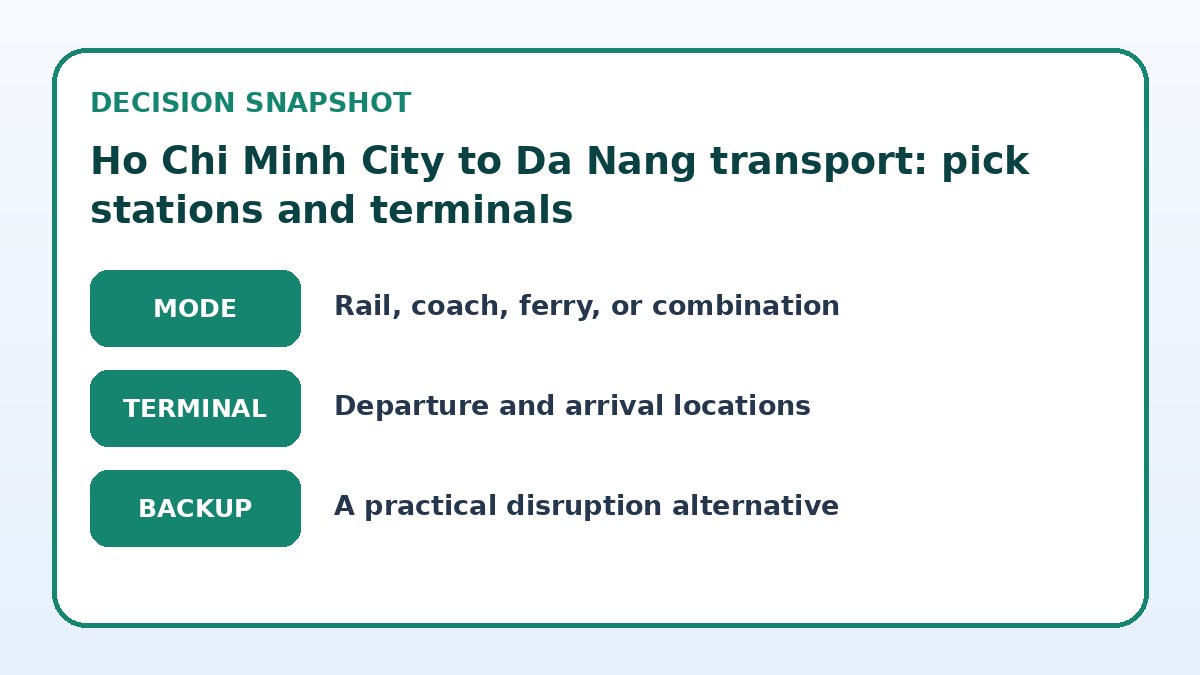
Practical answer first: decide whether you’ll travel by air or rail, then plan transfers based on the exact stations or terminals involved — Saigon’s main rail station or Tan Son Nhat Airport in Ho Chi Minh City, and Da Nang’s central rail station or Da Nang Airport. Book a single reliable transfer from your hotel to the departure terminal, and a second from arrival terminal to your Da Nang accommodation. For rail, check which station the train uses and whether you must change trains; for flights, verify terminal details and the need to re-clear security for connections. Confirm transport options and walking distances before you travel, and keep at least one hour extra for city transfers to account for traffic or station procedures. Use provider pages or Trip.com to verify current availability and exact terminal/station names before booking.
See current options before you compare the details
Availability and final conditions change. Open Trip.com now or keep reading for the practical comparison.
Choosing between plane and train: how transfers shape the decision
The main practical difference for first-time visitors is how each mode affects your transfers. Flying usually means a longer fixed-distance transfer to an airport terminal, security and check-in time, then a transfer from the airport into Da Nang city. Trains tend to use central stations closer to urban neighborhoods, so station-to-hotel transfers can be shorter and simpler, but rail schedules may require arriving earlier or handling luggage in station concourses. Think about where your accommodation is: if it’s near the Da Nang waterfront or the train station, rail can be convenient; if it’s around the airport area or you prefer speed, flying may suit you better.
Also weigh luggage and mobility factors. Trains often allow easier step-free boarding at city stations and may be simpler for larger items if you prefer minimal airport formalities; however, trains sometimes stop at less central locations depending on the route. Flights reduce travel time in the air but add the overhead of airport terminal procedures and potentially longer city-to-airport transfers in Ho Chi Minh City’s traffic. For each option, map the exact station or terminal addresses and typical travel times to your specific hotels at the booking stage.
Planning your Ho Chi Minh City departure transfer
Start from your hotel: measure the expected trip time to either Tan Son Nhat Airport or Saigon’s main railway station at typical travel hours, not just off-peak. For flights, you’ll need time for check-in and security; for trains, verify if the train boards on platforms with level access or require stairs. If you have heavy luggage or limited mobility, book a private car or hotel-arranged transfer; for budget travelers, a reputable ride-hailing app or metered taxi is often simplest. Always save a screenshot or note of the station/terminal name in Vietnamese so drivers can identify the correct drop-off point.
Confirm where the train platform or airline’s check-in desk is located within the station or terminal and whether you must pass through ticket control or an additional gate after ticketing. Many first-time visitors underestimate urban traffic, so aim to leave with a cushion: arrive earlier than the minimum required by the carrier. If you book a connection that ties to another service, check whether the provider requires separate rebooking or if baggage transfers are handled automatically — verify this on the carrier’s booking page before committing.
| Approach | Best for | Tradeoff to check |
|---|---|---|
| Fly and use airport transfers | Travelers prioritizing total travel time and fewer intermediate stops | Requires longer city-to-airport transfers and handling of airport procedures |
| Take the train to Da Nang Railway Station | Those preferring central drop-off locations and simpler last-mile transfers | Schedules may be less frequent and may require earlier station arrival |
| Private prebooked car both ways | Travelers with lots of luggage or mobility needs wanting door-to-door service | Higher cost and dependence on provider punctuality in city traffic |
| Ride-hail or metered taxis on arrival | Flexible travelers who want fast pickup without prebooking | Variable pricing, potential wait at ranks, and slower during peak traffic |
Ready to check the option that fits your plan?
Use your exact dates and traveler details so the provider page can show the current total and conditions.
Arriving in Da Nang: terminal and station transfer options
On arrival, your choice of transfer affects how quickly you reach your hotel. Da Nang Airport sits outside the central urban grid; direct airport taxis and ride-hail services take you into the city and to tourist beaches. If you arrive by train, Da Nang Railway Station is generally closer to inner-city areas and may offer short taxi rides, motorbike taxis, or walking options depending on your accommodation’s location. Evaluate luggage-handling needs: some train stations have easier platform access than airport terminals for moving bags a short distance.
Look for documented pick-up points and clarify meeting spots with drivers. For pickups at the airport or train station, ask your driver to wait at a named landmark or the official taxi rank rather than the general drop-off lane. If you plan to use a prepaid shuttle or hotel pickup, confirm where the driver will meet you — arrival halls often have multiple exits. Carry small local-currency bills for initial fares or tips, and keep a printed address of your hotel in Vietnamese to show drivers when needed.
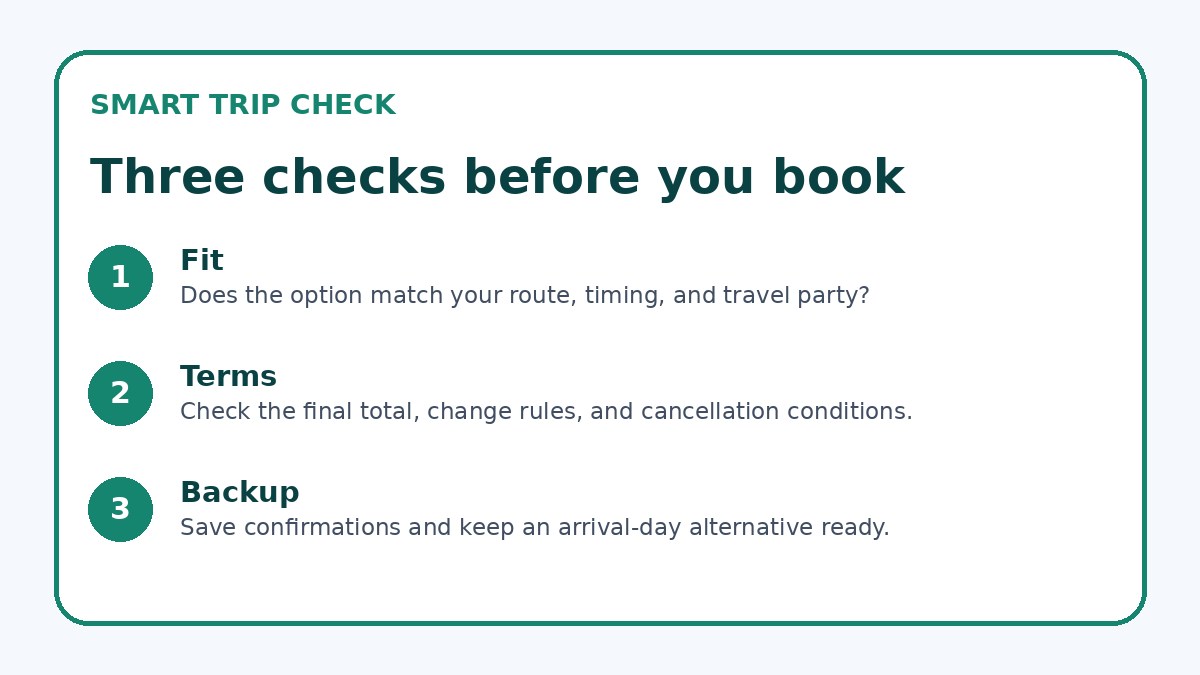
Before you book
- Confirm the exact station or terminal names in Vietnamese and save them on your phone and a printed note.
- Measure typical travel time from your hotel to the chosen departure terminal or station at the time you plan to travel.
- Prebook or reserve your preferred transfer (hotel shuttle, private car, or ride-hail) and verify the provider’s waiting-time and cancellation policy.
- Check whether your ticket requires baggage collection and recheck during connections; verify this on the carrier’s booking page.
- Arrange a clear pickup landmark at arrival (official taxi rank or named hotel entrance) and share it with your driver or hotel.
- Carry small local-currency bills and a printed hotel address in Vietnamese to show drivers if needed.
Practical checks and what to verify before booking
Before you book any ticket, verify the exact departure and arrival station or terminal names, and confirm whether the service is direct or requires a change. For flights, check which airline terminal is used at both ends and whether a connection requires you to collect luggage and re-check it. For trains, look up the station code or full Vietnamese name and any platform access notes on the carrier’s official page. When comparing door-to-door times, add expected transfer times, security/boarding windows, and local traffic patterns rather than using scheduled journey times alone.
If you plan to reserve a transfer service, verify the cancellation and waiting-time policies on the provider’s booking page. For third-party transfers and ride-hail apps, check where drivers are allowed to pick up passengers at each terminal or station and whether there are official ranks or surge pricing at busy hours. Consider contacting your hotel to ask about typical transfer times and recommended pickup points; local staff often know the practical details not listed on booking pages. Use Trip.com or the carrier’s website to confirm current terminal/station names and any important provider notes before finalizing.
Frequently asked questions
Which is more convenient for first-time travelers: flying or taking the train between Ho Chi Minh City and Da Nang?
Convenience depends on your priorities. Flying shortens travel time in the air but adds airport check-in, security, and city-to-airport transfers at both ends. Trains can deliver you closer to central neighborhoods, reducing last-mile travel, and may be easier if you dislike airport procedures. For first-time visitors who value predictability and speed, flying is often preferred; those who want a simpler arrival into the city center or to avoid airports tend to favor trains. Map your hotel relative to the terminal or station before deciding.
How much transfer time should I allow for getting from Ho Chi Minh City hotels to the airport or railway station?
Allow a buffer beyond the carrier’s minimum recommended arrival: factor in peak-hour traffic in Ho Chi Minh City, the time to find the correct drop-off point, and any ticket or luggage procedures at the terminal or station. For flights, follow the airline’s guidance plus extra time for road congestion; for trains, add time to buy tickets or find platforms if you haven’t received seat assignments. If you have tight connections, consider a private transfer or leave significantly earlier to avoid stress.
Can hotels in Da Nang and Ho Chi Minh City arrange transfers, and are they worth booking?
Many hotels offer paid pickups and drop-offs; these can be particularly useful for first-time visitors because staff know the best pickup points and speak the local language. Hotel-arranged transfers reduce the need to negotiate with drivers and can handle luggage efficiently. Compare the hotel’s terms, waiting time policy, and cancellation rules before booking. If cost is a priority and you are comfortable using local taxis or ride-hail apps, those remain viable alternatives, but a prearranged hotel transfer adds convenience and clarity on arrival.
Final planning note
For first-time travelers linking Ho Chi Minh City and Da Nang, the transfer plan often determines the trip’s ease more than the in-transit mode itself. Identify exact station and terminal names, measure realistic door-to-door travel times, and choose transfers that match your luggage, mobility, and comfort needs. Prebook or confirm pickup points, keep hotel addresses in Vietnamese handy, and verify terminal/station details on the carrier or booking page before purchase. If you want a single place to compare current schedules or availability, you can look up options on Trip.com, but always confirm terminal and baggage rules directly with the carrier. Thoughtful transfer planning will make the actual journey much less stressful.
Continue planning
Check current options and final conditions
Use the provider page to confirm live availability, the final total, cancellation terms, and every condition that matters to your trip.
This evergreen planning guide was created with AI-assisted drafting and a structured quality review. It does not display live prices, schedules, availability, visa guidance, or provider rankings. Verify current details before booking. Some links are affiliate links; we may earn a commission at no additional cost to you.