Practical answer first: for most families travelling between Seoul and Osaka, prioritize a short, single connection with a minimum guaranteed connection time, checked-bag protection, and a seat booking or preassigned rows so everyone sits together. That combination reduces stress and the risk of missed connections or lost luggage. Start by locking exact travel dates, the ages of each child, and any mobility or stroller needs before searching. With those details you can compare direct versus one-stop itineraries, see whether a through-checked bag is offered, and decide if paying slightly more for flexible fare conditions is worth the convenience. Below you'll find clear tradeoffs, what to check on the carrier’s final booking page, and four practical flight-selection strategies tailored to families.
See live routes for your exact travel day
Compare direct and connecting choices with the same baggage and traveler details.
Routing: direct or single connection?
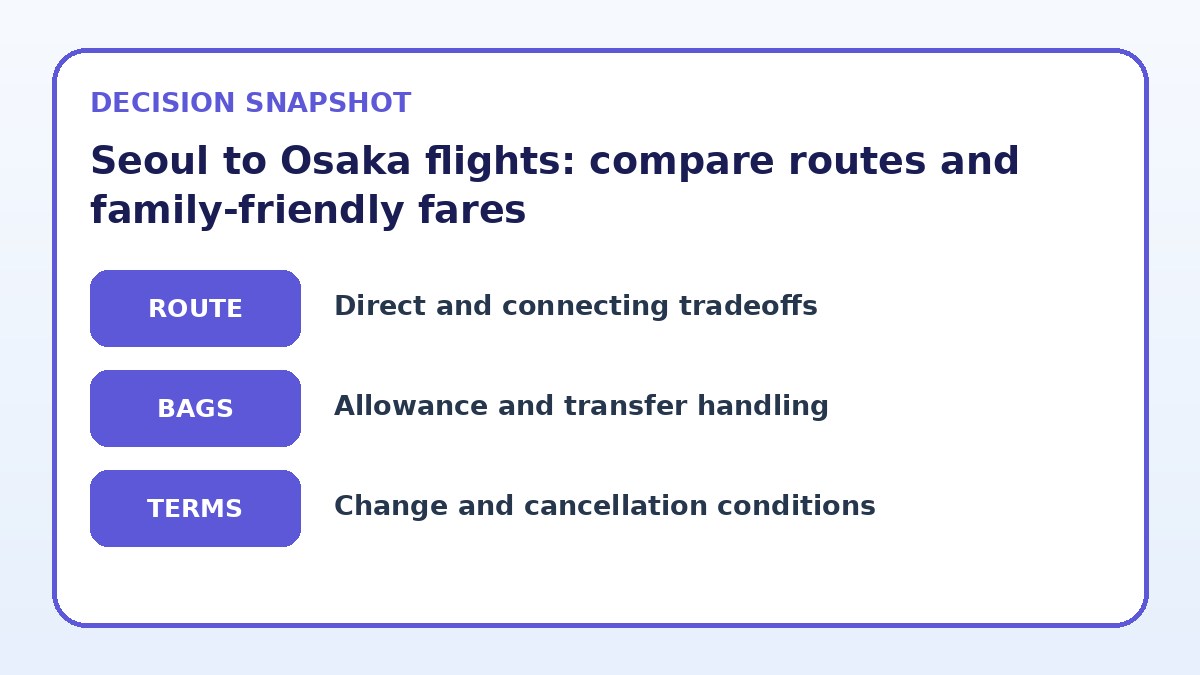
For families the routing decision is about minimizing handling and uncertainty. A direct flight eliminates connection risk and reduces transit logistics: you won’t move between terminals, re-clear security, or shepherd luggage through multiple carriers. If a nonstop option is available on your dates and suits your schedule, it is often the simplest and least tiring choice because it keeps door-to-door steps low and reduces opportunities for delay-related stress.
However, a short single-connection routing may offer better departure times or cheaper overall travel when direct seats are limited. When comparing connecting itineraries, prefer connections within the same airline group or codeshare agreements that offer through-checked bags and protected connections. Check the exact transfer airport layout and whether the connection requires changing terminals or re-clearing immigration; those details should determine if a short connection is realistic with children and carry-on baggage.
Baggage and connection risk: protect your checked and carry-on items
Families travel with more luggage and often with items like strollers, car seats, and baby supplies. Before booking, read the carrier’s baggage rules on the booking page: confirm how many checked bags are allowed, weight and size limits, and whether strollers or car seats count as free items. For connecting itineraries, explicitly verify whether bags will be checked through to your final destination or if you must collect and recheck them during the layover. Through-checked baggage drastically reduces transfer stress.
Also investigate the carrier’s stated policy for missed connections and delayed bags. If a connection is on separate tickets, risk increases because airlines may not accept liability for missed flights due to delay on another carrier. When possible, book single-ticket itineraries or purchase connection-protection services. On the booking page, look for language about guaranteed connections, rebooking assistance, and whether the airline will deliver delayed luggage directly to your accommodation.
Compare flight-selection strategies
| Flight strategy | Best for | Risk to check |
|---|---|---|
| Nonstop direct flight | Families prioritizing simplicity and the shortest travel steps | Often fewer schedule options and possibly higher base fare for preferred times |
| Single, same-ticket connection with through-checked bags | Families needing specific departure or arrival windows with moderate cost savings | Connection time risk—choose a comfortable minimum layover and verify transfer type |
| Separate tickets for segments to lower fare | Price-sensitive families willing to accept higher logistical complexity | No guaranteed rebooking if a delay causes a missed connection; increased baggage handling |
| Flexible fare booking with seat selection and change options | Families who value schedule certainty and the ability to adjust plans | Higher upfront cost but reduced stress and more predictable rebooking options |
Recheck the complete itinerary
Confirm airports, connection handling, baggage, and change conditions before deciding.
Schedule fit: timing around children’s routines
Seating family comfort is more than flight time; it’s syncing with kids’ sleep, meals, and medication schedules. When planning, map out departure and arrival windows against the family’s daily routine. Avoid tight red-eye departures if small children struggle to sleep on planes, and beware early-morning connections that require an extra early start. Choose departure times that allow you to arrive at the airport with ample time for check-in, security, and a relaxed pre-flight period.
For connections, target layovers long enough to move between gates, use family facilities, and take a break without risking the next flight. Very long layovers can be useful if they give time to rest, but they also extend total travel time and complicate nap schedules. On the carrier’s final booking page, confirm the total travel duration and each segment’s departure and arrival local times so you can plan in-flight meals and rest for the entire group.
Flight details to verify
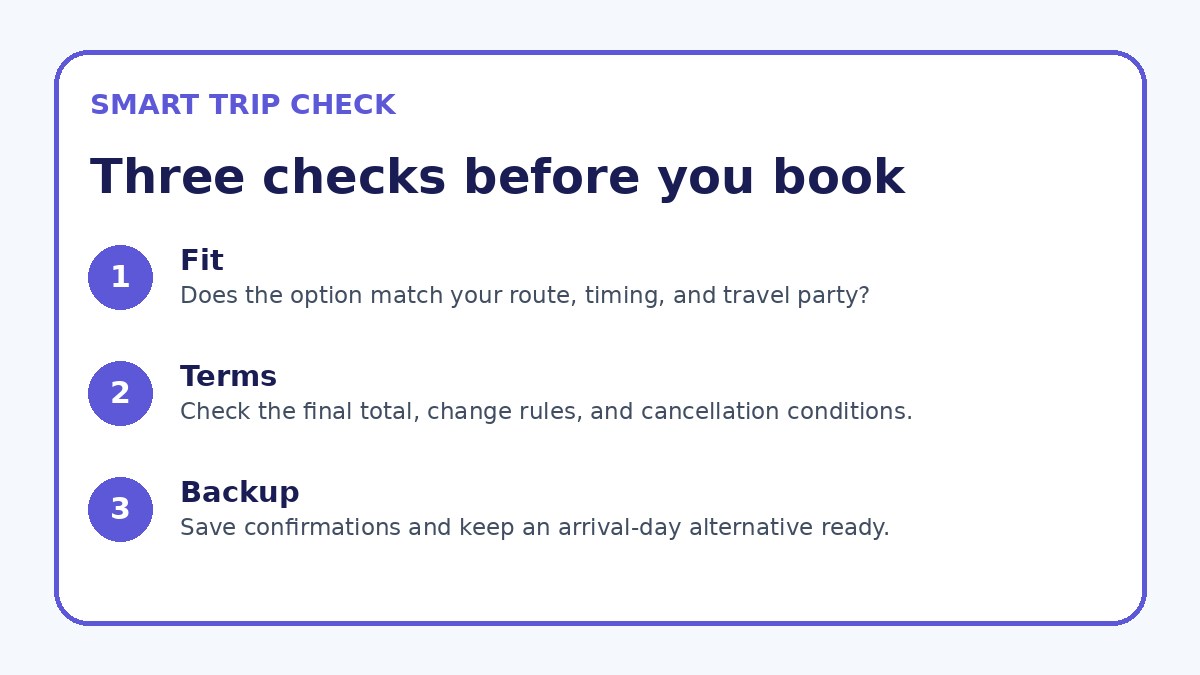
- Gather exact travel dates, full traveler names as on passports, ages of children, and any mobility or medical needs before searching fares.
- Search both nonstop and one-stop itineraries on single-ticket bookings and compare total door-to-door travel time, not just flight time.
- On the carrier booking page verify baggage allowance, through-checking of bags for connections, and the policy for strollers or car seats.
- Confirm seat assignment and, if needed, pay for contiguous seats or priority boarding to help settle children before taxi and takeoff.
- Check the fare conditions for change and cancellation fees, and note the steps and timelines for refunds or rebooking on the airline site.
- If booking separate tickets, allow extended buffer time for transfers and consider travel protection that covers missed connections and delayed luggage.
Fare conditions: flexibility and seating for peace of mind
Fare rules determine how easy it will be to change plans when travel with children doesn’t go to plan. Look for fares that allow free or low-cost changes, name corrections, and partial refunds. Flexible fares often cost more upfront but can save money and headaches when flights need to be rescheduled due to illness or family emergencies. Confirm on the airline’s booking page the exact change and cancellation fees, the window for free changes, and how refunds are processed.
Seating policies also matter: confirm whether seats can be preassigned without extra fees so the family can sit together, or whether you’ll need to pay for contiguous seats. If you rely on miles or award travel, check how far in advance seats open for family groups and whether seating together is guaranteed. Before finalizing, check baggage, seat assignments, and change penalties on the booking page, and consider buying tickets that include priority boarding if you need extra time to get children settled.
Flight Guide questions travelers ask
How much layover time should a family allow when connecting between Seoul and Osaka?
Aim for a buffer that reflects the transfer complexity: a short, single-terminal connection might be safe with a relatively brief layover, while transfers requiring terminal changes or re-clearing security and immigration need significantly more time. Also factor in stroller or wheelchair assistance, passport control queues, and the need to visit family restrooms or nursing rooms. Before booking, check the airport layout and the airline’s stated minimum connection time on the booking page, then add extra margin based on your children’s ages and how much time you want to remain relaxed.
Should I buy flexible fares when flying with young children?
Flexible fares provide easier date changes and fewer penalties when plans shift, which is often valuable for families. If flexibility matters—because of school schedules, health concerns, or uncertain plans—paying more for changeable tickets can save stress later. However, if your trip is fixed and everyone’s documents are certain, a standard fare with travel insurance that covers illness-related cancellations may be a reasonable alternative. Always verify the carrier’s exact change and refund terms on its final booking page before purchasing.
What luggage and equipment should I prioritize to reduce connection stress?
Prioritize a through-checked suitcase for bulk items, a well-organized carry-on with immediate child needs (snacks, medication, diapers, entertainment), and a lightweight collapsible stroller or a car-seat bag if you need one. Confirm whether strollers and car seats can be gate-checked or counted as free items on the carrier’s booking page. Use luggage tags with clear contact details and consider packing a spare outfit and basic toiletries in a carry-on. For connections, label items clearly so any temporarily mislaid gear can be identified quickly.
Final decision note
Families booking Seoul to Osaka flights should prioritize a plan that reduces handling and uncertainty: favor direct flights or same-ticket single connections with through-checked bags, pay attention to seat assignments, and choose fare conditions that match how flexible your travel must be. Start with exact traveler names, ages, and special needs, then compare total door-to-door time, baggage rules, and change penalties on the airline’s final booking page. If you need a single place to compare live options, Trip.com can show current availability, but always verify baggage, seating, and refund language on the carrier or ticketing platform before purchase.
Continue planning
Check current options and final conditions
Use the provider page to confirm live availability, the final total, cancellation terms, and every condition that matters to your trip.
This evergreen planning guide was created with AI-assisted drafting and a structured quality review. It does not display live prices, schedules, availability, visa guidance, or provider rankings. Verify current details before booking. Some links are affiliate links; we may earn a commission at no additional cost to you.