Practical answer first: for most solo travelers who value simplicity and low transfer friction, an overnight sleeper train or a direct daytime rail seat that arrives into Chiang Mai station usually offers the best balance of comfort, luggage handling, and minimal transfers. If door-to-door speed is your priority, compare direct flights at booking but weigh the extra time and cost of city transfers and airport waits. Coaches and combined bus-train options can be cheaper or more flexible for odd schedules, but they increase the number of handoffs and require clearer plans for luggage and late arrivals. Below I explain the tradeoffs and give a decision framework focused on terminals, luggage friction, timing flexibility, and realistic disruption backups so you can choose the most practical intercity option for your solo trip.
Terminal fit: where each mode drops you and how to reach your door
Terminal fit is about more than station names; it’s how easily you get from arrival to your accommodation. Trains into Chiang Mai stop at the centrally located Chiang Mai Railway Station, often leaving you within a short taxi or tuk-tuk ride of many hotels and guesthouses. Buses typically use the city’s main bus terminal or a central interchange; that can be slightly farther out depending on which service you pick. Flights arrive at the airport, which is several kilometres from the old city and will require an extra transfer. When planning, map each terminal to your first-night address and prefer options that avoid long secondary transfers or complicated last-mile navigation after arrival.
For solo travelers especially, consider typical evening factors: late arrivals at an airport or remote bus station can add taxi or ride-hail costs and reduce safe options for walking to lodging. If you value arriving within walking distance of your accommodation, prioritize rail or coach services that stop centrally, or a flight with reliable, well-reviewed airport transfer options. Where transfers are unavoidable, look for providers that explicitly mention baggage assistance or easy ground transport links, and verify transfer times and pick-up points on the provider’s site before booking.
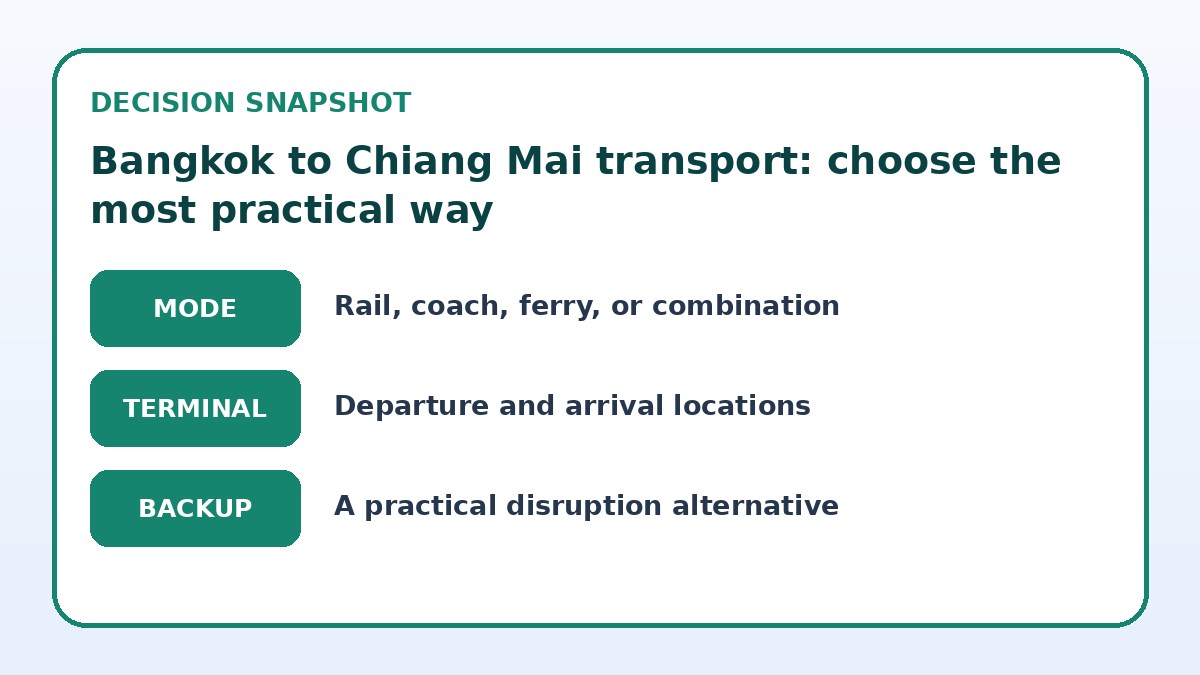
Choose the end-to-end journey plan
| Journey approach | Best for | Friction to check |
|---|---|---|
| Overnight sleeper train | Solo travelers who want fewer transfers and to save daytime hours. | Fixed departure times and the need to manage sleeping onboard and personal security. |
| Direct daytime train | Those prioritizing central arrival and easier last-mile navigation. | Limited daily departures can reduce schedule flexibility and recovery options if missed. |
| Coach/bus services | Travelers seeking more frequent departures and potentially lower handoff complexity. | Bus stations may be further from central areas and require extra transfer planning. |
| Flight with airport transfer | Anyone needing the shortest in‑air time or tight long-distance connections. | Extra city-to-airport transfers and security/check-in windows increase door-to-door time. |
Check live intercity options
Look beyond the ride itself and compare terminals, transfers, luggage, and arrival fit.
Luggage and transfer friction: pack and plan to minimize handoffs
Luggage friction is a core practicality metric: how many times you’ll lift, queue, and move your bags. Trains often have overhead racks and under-seat space and typically involve a single carry-on and a single larger bag that you stow near your berth. Buses may load luggage into an external hold, which reduces in-vehicle clutter but requires being present at loading and unloading; expect a short scramble at busy stops. Flights bring more formal luggage rules and security screening, which can increase gate-to-gate time and complexity, especially if you’re traveling with bulky items or want to avoid checked-bag fees.
To reduce friction, choose a single reliable bag you can manage solo and practise packing to minimize bulky extras. If you expect multiple transfers, consider a soft-sided bag that’s easier to wrestle into compartments, and use clear luggage tags with your phone number. Also plan for last-mile logistics: confirm whether your accommodation will help with luggage on arrival, and keep essential items—chargers, shoes, medication—in a small daypack you can keep with you during transfers.
Timing flexibility: schedule choices and the reality of buffer time
Timing flexibility is about matching departure windows to your tolerance for risk and late arrivals. Trains may run at fixed times with fewer daily departures, so missing one can force a long delay or a different mode. Coaches sometimes offer more frequent departures across the day, which helps if you want flexibility without paying for last-minute flights. Flights can be fastest in the air but are affected by fixed check-in and security windows; when you factor in travel to and from airports and the potential for delays, door-to-door time may be comparable to rail for some itineraries.
Plan using realistic buffer times rather than optimistic minimums. For example, if you need to be at a meeting or tour on arrival, reverse-calculate the latest sensible departure to allow for delays and transfers. If your schedule is flexible, traveling overnight on a train can save daytime hours and a night’s accommodation, but check the arrival hour and how you’ll get onward transport. Always note how many daily departures each mode offers and pick an option that gives you backup same-day alternatives.
Compare the practical alternatives
Use the final page to confirm what is actually offered on your dates and save a workable fallback.
Intercity travel checklist
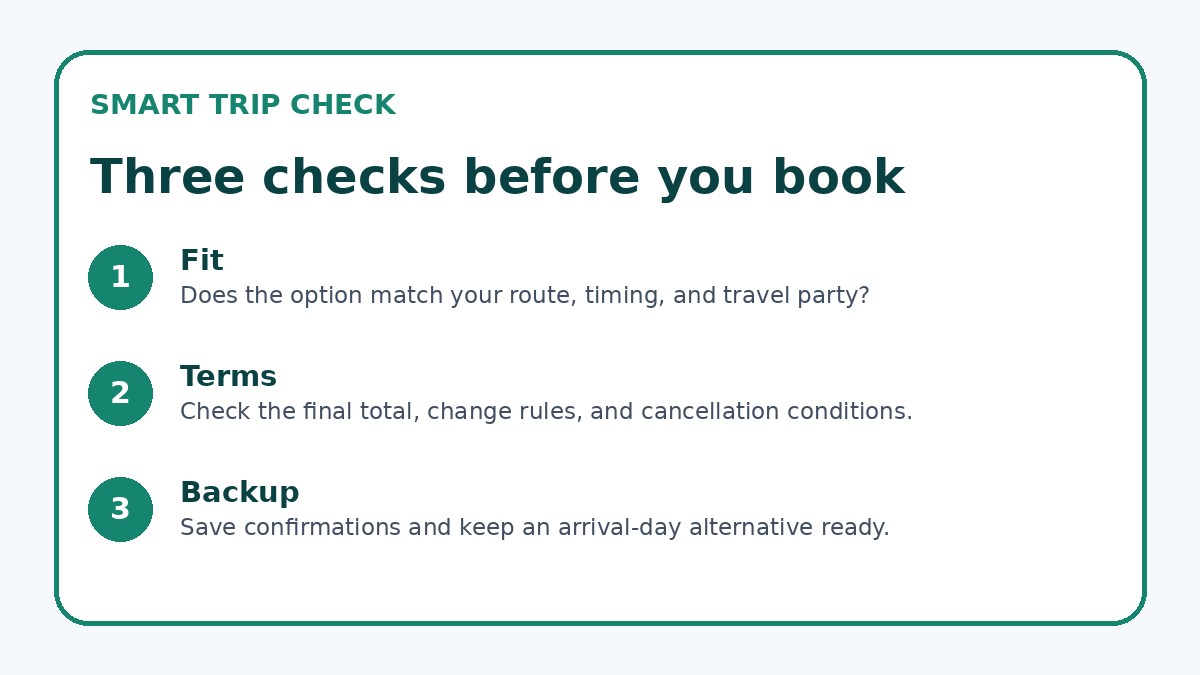
- Map exact arrival and departure terminals to your accommodation and estimate realistic taxi or ride-hail times.
- Pack one manageable main bag and a daypack with essentials to limit luggage transfers during the trip.
- Compare total door-to-door time—not just in-vehicle duration—when choosing between train, bus, or flight.
- Verify terminal, baggage rules, and boarding or check-in locations on the provider’s booking page before you purchase.
- Plan two practical backups (alternative train or coach times, or an airport-to-city transfer option) and note where to buy them.
- Keep emergency cash, a charged phone with local connectivity, and contact details for your first-night host or hotel.
Disruption backups: practical contingencies for a solo traveler
A practical backup starts with identifying the simplest alternative that keeps your door-to-door plan intact. If your chosen train is full or delayed, can you catch a daytime coach or a later train without complicated station moves? If a flight is cancelled, is there an airport counter with rebooking assistance or will you need to navigate local apps and counters? Have a list of two realistic alternatives and know where you’ll buy the replacement ticket—either online, at a station desk, or through a reputable aggregator. Trip.com may be a useful place to compare current availability, but always verify departure times, terminal details, and transfer rules on the provider’s final booking page.
Also prepare small in-trip contingencies: carry emergency cash for a last-mile taxi, keep a charged local SIM or portable Wi‑Fi for instant booking, and have a list of nearby guesthouses if you face an overnight delay without planned accommodation. Share your intended arrival plan with someone at home and with your first-night host so there’s a contact if you’re delayed. For solo travelers, these practical redundancies reduce stress and keep options straightforward when things go off plan.
Rail & Intercity Transport questions travelers ask
Is the train from Bangkok to Chiang Mai the most convenient option for a solo traveler?
Convenience depends on your priorities: trains often land you closer to central Chiang Mai and reduce last-mile transfer complexity, which many solo travelers find very practical. However, convenience also means minimal luggage handling and reliable arrival times. If you value fewer hands-on luggage moves and arriving within a short taxi ride of your accommodation, a direct train or an overnight sleeper can be the most convenient. Check current schedules and the precise station location on the provider’s booking page to confirm it meets your timing and terminal needs before booking.
How should I decide between a daytime coach and an overnight train?
Decide by weighing timing flexibility against sleep and comfort preferences: a daytime coach may run more frequently and let you see scenery, while an overnight train saves daytime hours and a night’s lodging. Consider your tolerance for sleep quality on transport, how central the arrival points are, and whether you want to avoid late-night transfers. Factor in the number of daily departures, how many handoffs you’ll face, and whether your accommodation offers late check-in if you arrive after hours. Always check boarding points and baggage handling details when comparing options.
What immediate steps should I take if my booked option is cancelled or delayed?
First, confirm the provider’s official update and rebooking policy on their booking page. Then assess the quickest practical alternative that maintains low transfer friction—another train or a coach that arrives centrally, or a flight if door-to-door time still works when factoring airport transfers. If none are viable the same day, secure nearby lodging options and communicate your change of plans to your first-night host. Keep emergency cash and a charged phone ready to arrange a last-mile taxi if public services become unreliable.
Final decision note
Practical intercity travel from Bangkok to Chiang Mai for solo travelers comes down to door-to-door thinking: prioritize options that minimize transfers, reduce luggage handling, and fit your schedule tolerance. Trains typically win on central arrival and lower last-mile friction, while buses offer frequency and flights may shrink time in transit but add airport transfers. Decide by mapping terminals to your accommodation, comparing total travel time including transfers, and planning two realistic backups. Finally, verify terminal and baggage details on the provider’s booking page, carry essentials in a daypack, and keep local connectivity for quick changes—those steps will turn a plan into a reliably practical journey.
Continue planning
Check current options and final conditions
Use the provider page to confirm live availability, the final total, cancellation terms, and every condition that matters to your trip.
This evergreen planning guide was created with AI-assisted drafting and a structured quality review. It does not display live prices, schedules, availability, visa guidance, or provider rankings. Verify current details before booking. Some links are affiliate links; we may earn a commission at no additional cost to you.