If your flight or train gets you into Seoul late in the evening, pick a neighborhood that minimizes night-time hassle first — fewer late-night transfers, easy access to a 24-hour convenience store, and hotels accustomed to late check-in. For families that means prioritizing hotels near a major station or an airport rail stop with straightforward, well-lit routes and a handful of eating options open late. Decide whether convenience (short transfer), comfort (bigger rooms and fewer stairs), or budget (cheaper hotels near transit nodes) matters most, then shortlist areas that match the top priority. Later sections explain daily-route friction, how room and party needs change your choice, and the final booking terms to verify with the hotel before you book. When checking live availability compare current listings on your preferred sites — Trip.com can show inventory — and always confirm the hotel’s late-check-in policy, parking or shuttle terms, and family-room configurations on the provider’s final booking page.

Check live stays in the areas that fit
Use your dates and party size to compare current rooms after you narrow the neighborhood fit.
Neighborhood fit: choose a base that removes late-night stress
Start by deciding what “low stress” means for your family on arrival night. If you have a sleeping child and luggage, staying within one easy transfer of the airport or the terminal you’ll arrive at will be the most forgiving option. That often means neighborhoods served by the AREX line, lines that run late, or places with frequent taxis; pick areas where the route between the station and the hotel is short, well-lit, and without complicated pedestrian crossings. Consider whether the area has a 24-hour convenience store and at least one casual restaurant open late — these simple amenities transform a tired landing into a manageable first night.
If older kids are part of your party, you might accept a slightly longer transfer in exchange for a livelier neighborhood the next morning. Parents with infants or strollers normally prefer flatter streets and hotels with elevators or ground-floor rooms to avoid stairs and long corridors. Also note whether you value being within walking distance of your morning transportation: a hotel that saves 30–45 minutes of first-morning transit will pay off in mood and time, even if it costs a bit more. Use neighborhood fit to eliminate options fast: convenience near arrival, nighttime amenities, and practical street access are primary filters.
Choose an area-selection strategy
| Area approach | Best for | Tradeoff to check |
|---|---|---|
| Stay by a major rail hub (Seoul Station/AREX) | Maximum simplicity on airport arrival and quick first-day transit | Less local atmosphere; city center bustle at night may be noisy for small children |
| Choose a lively neighborhood (Hongdae/Itaewon/Insadong) | Evening dining options and morning sightseeing variety | Longer or more complicated transfers from airport; nightlife noise possible |
| Book near a subway transfer point (Gangnam/Jamsil) | Efficient subway access across Seoul and straightforward morning routes | Can be more expensive and farther from airport rail lines |
| Pick a quieter residential area near a single station | Calmer nights and family-friendly streets with fewer crowds | May require an extra transfer on arrival or limited late-night dining |
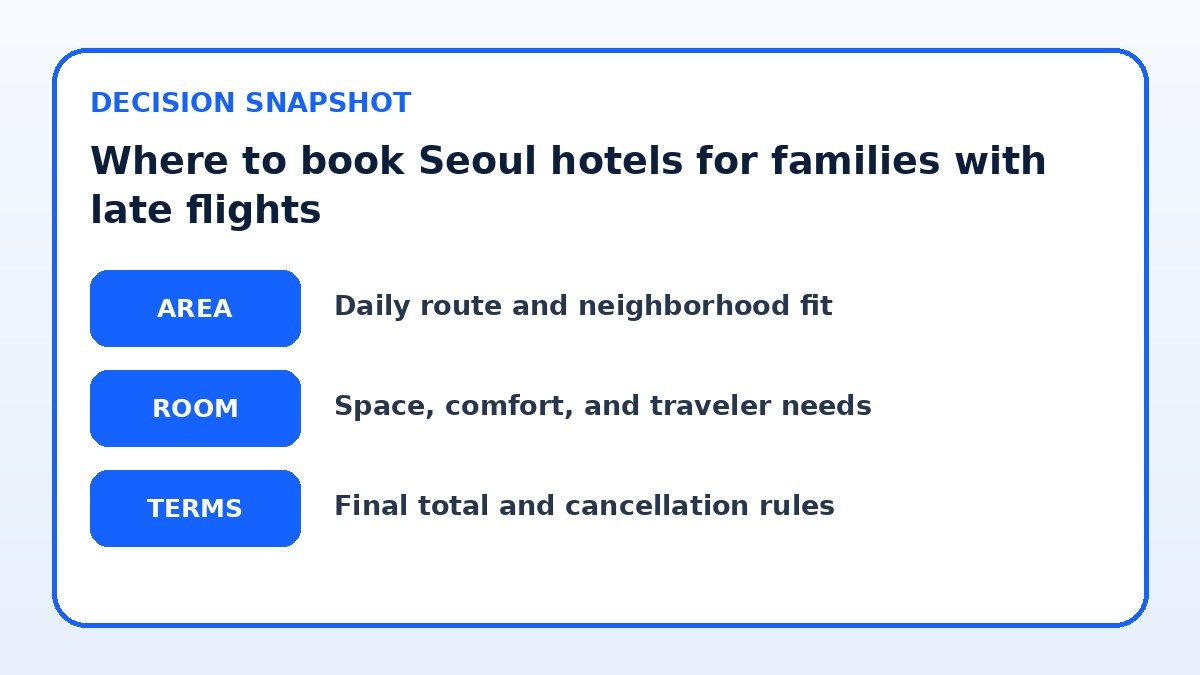
Daily-route friction: plan the morning after as part of arrival choices
Don’t treat last-night choices independently from your morning plans. Which attractions or neighborhoods will you visit on day one? A hotel that’s perfect for a late arrival but adds long commutes to your morning itinerary can create friction and wasted hours. Map your likely morning route from each candidate area to the places you’ll visit first — museums, palaces, or a simple walk in a nearby park — and prefer the area that keeps first-day travel under 30–45 minutes for most of your party. Factor in subway vs bus transfers and the effort of moving strollers or luggage through stations.
Consider the difference between a short taxi hop after a late arrival and repeated taxi rides the next morning. Sometimes paying a little more for a hotel next to a major station yields a cheaper, easier start to each day, because the subway is fast and predictable. Alternatively, if your morning plan is flexible, staying in a quieter residential neighborhood near a late-night dining option can give the family a better rest. Wherever you land, check pavement conditions and elevator availability at the station, and on the hotel page verify whether luggage assistance and early breakfast options are offered.
Now compare like with like
Keep the same dates, guests, room needs, and cancellation preferences while you compare the final choices.
Room and party needs: what to book for comfort after midnight
When you know the neighborhood, pick a room type that solves immediate practical needs: a family room or two connecting rooms reduces corridor noise and late-night disruptions, while a room with a small fridge and microwave lets you handle forgotten snacks or midnight bottles without hunting for a shop. If anyone in your family needs a cot or rollaway, request and get confirmation in writing. Elevators and luggage-carry policies matter more after a late arrival: a ground-floor or low-level room can save exhausted parents from heavy stair carries at odd hours.
Also reflect on sleep patterns — if children are likely to sleep through arrival while parents unpack, choose a quieter section of the hotel away from the street or lobby. Ask about blackout curtains and soundproofing when you contact the property. If meals are a concern, check whether the hotel offers late-room service or an on-site convenience pantry. Verify bedding configurations and ability to add a crib on the final booking page; do not assume rooms shown online will automatically include cots or specific bed layouts without confirmation.
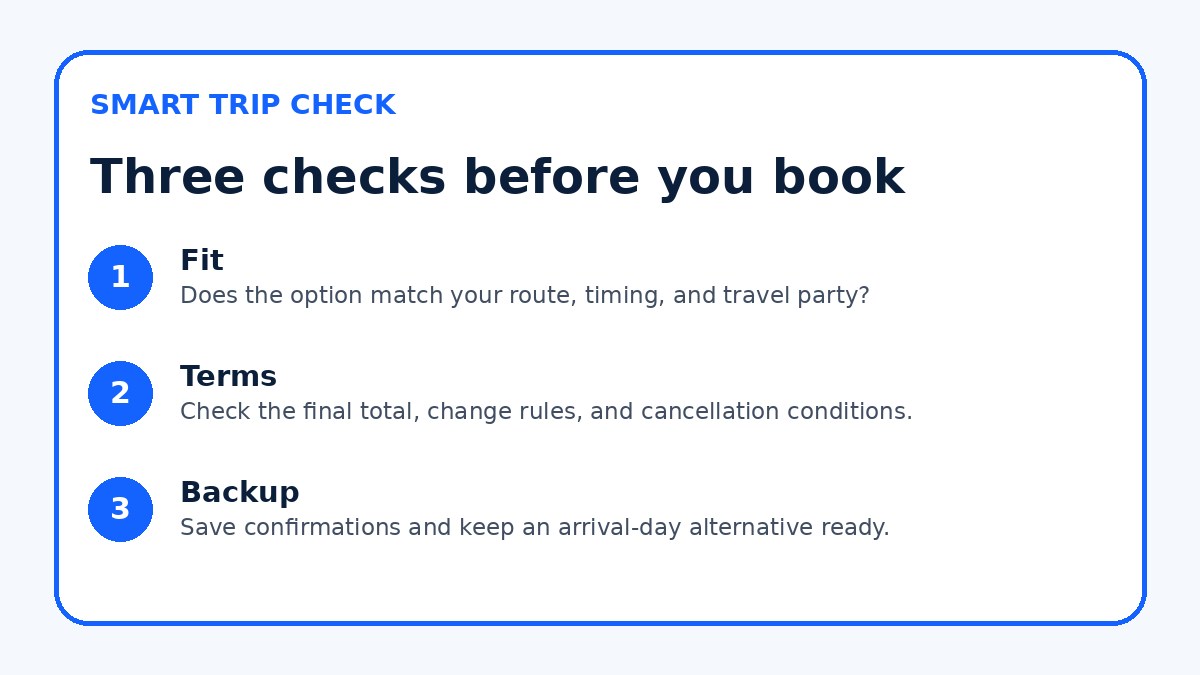
Hotel booking check before payment
- Call or message the hotel to confirm accepted check-in time and how they handle arrivals after that time.
- Request written confirmation for any cot, rollaway bed, or specific bedding configuration you need.
- Confirm elevator access and whether staff will assist with luggage during late arrivals.
- Ask if the hotel offers an airport shuttle or recommended taxi pickup point and the booking procedure.
- Verify whether breakfast service starts early or if a grab-and-go option is available for the next morning.
- Save the hotel’s emergency contact number and the booking confirmation screenshot to your phone and print a copy.
Final booking terms: exactly what to confirm before you commit
Before completing a reservation, verify three practical items directly with the hotel: their latest accepted check-in time and how they handle arrivals after that cutoff; any late-arrival fee or requirement to leave a card on file; and the exact policy on child cots or rollaways. Ask how the property communicates late arrivals (will the reception hold your key at the desk?) and whether there’s 24-hour staffing. If you plan to use a shuttle or airport transfer, confirm pickup point and whether advance arrangement is required.
Also check cancellation and modification terms that match your flexibility needs — but do this on the final booking page of the hotel or booking site, not just the summary. If you have special needs like stroller storage, early breakfast boxes, or allergy-friendly bedding, request these in writing and save the confirmation. When comparing live inventory, you can use platforms such as Trip.com to see current availability, but always rely on the hotel’s own booking page or confirmation email for the exact check-in rules, fees, and room configuration guarantees.
Hotel Guide questions travelers ask
Can I rely on taxis late at night in Seoul to reach my hotel after a late flight?
Taxis are generally available in Seoul at night, but availability and convenience depend on where you arrive and local conditions. If you land at Incheon or Gimpo, first check whether your arrival terminal has official taxi stands and whether there’s a designated spot for booked airport taxis. For families with children or a lot of luggage, pre-booking an airport transfer or choosing a hotel close to a major rail line reduces uncertainty. Always verify pickup procedures and meeting points with the transporter or hotel before you travel.
What if my family’s plane is delayed and I can’t arrive until very late — how strict are Seoul hotels about check-in times?
Policies vary by property: some hotels accept arrivals at any hour while others have a stated latest check-in time or require advance notice for very late arrivals. The only safe approach is to confirm directly with the hotel before booking: ask for the latest practical check-in time, whether they will hold keys for guest arrivals, and if any late-arrival fee applies. Keep a written confirmation (email or booking-note) showing their response so front desk staff can see it when you arrive.
Should I book one big family room or two smaller rooms when arriving late with kids?
Choose based on sleep patterns, privacy needs, and the children’s ages. A single family room or a room with a sofa bed keeps everyone together and simplifies late-night logistics; you’ll have fewer doors to manage and less hallway noise. Two rooms or connecting rooms give parents separate sleeping space and more privacy but require an extra key and potentially more movement in the lobby and elevator at night. Confirm exact bed layouts and the possibility to add a crib when you book so there are no surprises after arrival.
Final decision note
When you expect a late arrival in Seoul, make your neighborhood decision with arrival-night simplicity as the top filter: short, well-lit transfers, late-night essentials nearby, and hotels experienced with late check-ins. From that shortlist, pick a room setup that solves immediate practical needs — cot availability, elevator access, and on-site food options — and verify the hotel’s late-arrival procedure in writing before you pay. Balancing the arrival-night ease against your first-day route will keep the family rested and reduce early-trip friction. Use comparison sites like Trip.com to view current availability, but rely on the hotel’s booking confirmation for exact check-in terms, fees, and room configuration guarantees.
Continue planning
Check current options and final conditions
Use the provider page to confirm live availability, the final total, cancellation terms, and every condition that matters to your trip.
This evergreen planning guide was created with AI-assisted drafting and a structured quality review. It does not display live prices, schedules, availability, visa guidance, or provider rankings. Verify current details before booking. Some links are affiliate links; we may earn a commission at no additional cost to you.