
For a business trip between Seoul and Jeju you want minimal fuss: carry-on where possible, a checked bag only if necessary, and arrive with time to spare for security or last-minute changes. The practical approach is to prioritize mobility—choose a single versatile carry-on with a laptop compartment plus a slim personal item, confirm baggage rules before booking, and plan airport arrival based on whether you need to check luggage or handle corporate paperwork. That cuts waiting time and reduces the chance of missed meetings. Below you'll find the tradeoffs—when a checked bag makes sense, how to speed up airport time, and what to verify with your airline and departure airport. Use these steps to tailor packing and timing choices to the exact flight options you find when you book.
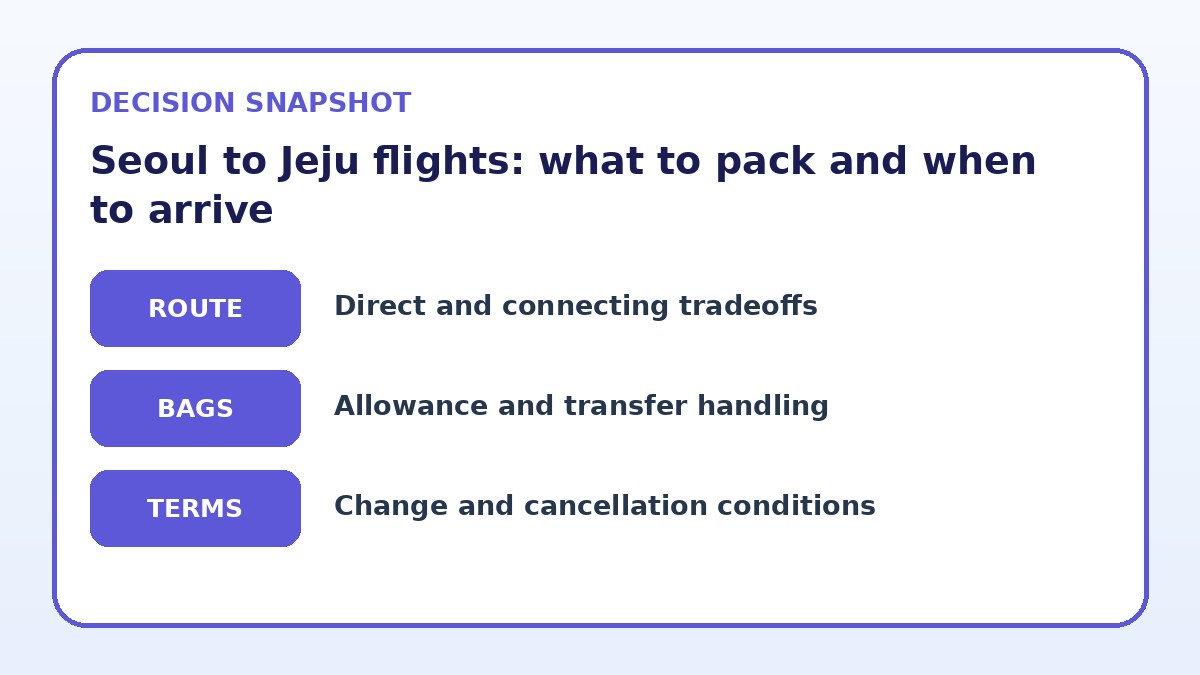
See current options before you compare the details
Availability and final conditions change. Open Trip.com now or keep reading for the practical comparison.
Deciding carry-on versus checked bag for Seoul to Jeju
For a short business trip, carry-on luggage is usually the most efficient choice. A single carry-on plus a personal item keeps you mobile between meetings, removes the wait at baggage claim, and avoids the risk of a delayed or misrouted checked bag. Think about your itinerary: if you have back-to-back meetings or tight onward connections from Jeju, a carry-on reduces time on the ground. Also consider local transportation at both ends—if you’ll be walking or using taxis, lighter baggage simplifies transfers.
A checked bag becomes practical only when your needs require bulk: presentation materials, samples, or extended-stay clothing. If you opt to check a bag, pack a small kit in your carry-on with essential work items, a fresh shirt or blouse, and chargers for devices. Confirm the airline’s baggage allowances and check-in cutoff times before you book; different carriers on this route may have varying rules for checked weight and size that influence whether checking a bag is worth the delay.
Timing airport arrival: match arrival time to services needed
How early you arrive depends on what services you’ll use. For carry-on-only passengers who have mobile or web check-in and no special services, arriving 60 minutes before departure is generally adequate for domestic flights. If you need to drop a checked bag, visit an airline counter, or purchase services at the airport, build in extra time—plan for 90 to 120 minutes. Business travelers should also account for corporate check-in procedures, group ticket handling, or last-minute itinerary changes that can add time.
Peak periods and local traffic matter: mornings and holiday windows can lengthen security queues and ground transport. If you are meeting a colleague at the airport or need to work before boarding, add buffer time for lounge access or quiet workspace. Always check the departure airport’s recommended arrival time and any alerts on the airline’s booking page about earlier check-in requirements; those are the facts that may override general guidance.
| Approach | Best for | Tradeoff to check |
|---|---|---|
| Carry-on only (mobile check-in) | Short business trips, tight connections, and fast transfers | Limited clothing and sample capacity; must pack very efficiently |
| Checked bag with carry-on backup | Trips requiring extra wardrobe or materials | Longer airport time for check-in and potential baggage handling delays |
| Priority services and lounge access | Busy schedules needing reliable workspace and expedited queues | Additional cost or loyalty status required; marginal time savings on off-peak days |
| Ship materials ahead of time | Heavy or bulky presentation items you can't check | Requires lead time and coordination; adds planning complexity and possible fees |
Ready to check the option that fits your plan?
Use your exact dates and traveler details so the provider page can show the current total and conditions.
Speeding through airport steps: check-in, security, and boarding
Prepare documents and devices for security to avoid delays. Keep your boarding pass and ID readily accessible, remove liquids or electronics per security rules, and wear shoes and clothing that are easy to remove if required. Use mobile or online check-in to skip ticket counters. If your airline offers dedicated business or priority queues, weigh the cost or program status benefits against the time saved—frequent travelers often find loyalty privileges pay off on busy days.
For checked bags, use curbside or dedicated bag drop when available to shorten the in-terminal queue. Label your luggage with a phone number and email, and add an inside tag with your meeting details in case of mishandling. Monitor flight status through the airline app and set alerts for gate changes; a last-minute gate move can cost time, so staying informed lets you adjust arrival and boarding priorities without panic.
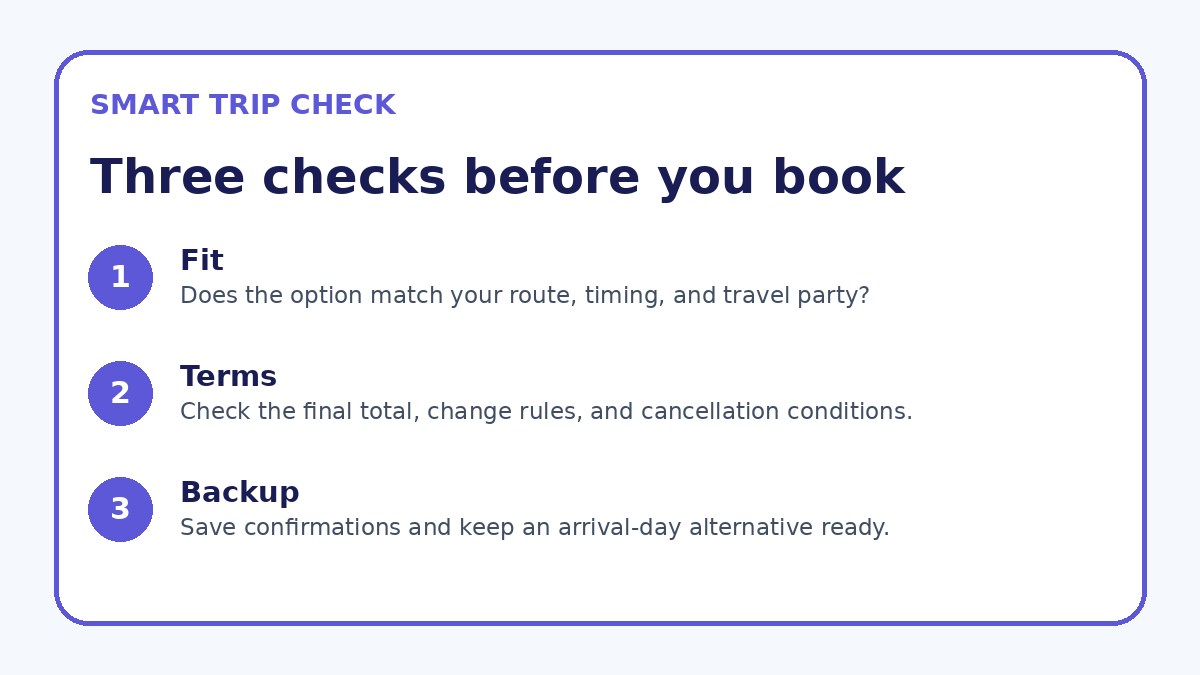
Before you book
- Check the airline’s baggage size and weight limits on the final booking page before finalizing your ticket.
- Pack essentials—chargers, presentation files, a fresh top, and toiletries—in your carry-on in case checked luggage is delayed.
- Complete online check-in and download or print your boarding pass to reduce time at the airport.
- Allow 60–90 minutes arrival for carry-on-only travel; increase to 90–120 minutes if checking bags or needing counter services.
- Label both inside and outside of checked luggage with contact details and a copy of your itinerary.
- Set flight and gate alerts in the airline app and confirm terminal/gate 30–60 minutes before departure.
Packing smart for business: what to carry and what to check
Assemble a compact business kit: a lightweight suit or jacket that resists wrinkling, a couple of versatile shirts or blouses, a travel-sized iron or steamer if needed, and interchangeable shoes. Place fragile items, presentation clickers, and spare chargers in your carry-on. Choose a carry-on with separate laptop and accessory compartments so you can pass through security quickly without emptying everything. Keep receipts, contracts, and any essential documents in a flat document sleeve or digital copies synced to cloud storage.
Reserve checked baggage for bulk items such as product samples or additional wardrobe pieces that you cannot compress. Use compression packing cubes to maximize space and keep things organized so you can quickly retrieve what you need. If you expect to ship materials for a meeting, compare shipping cost and timing with the hassle of checking extra baggage. Finally, before booking, verify size and weight allowances on the airline’s final booking page, and if traveling with special equipment, check any extra handling requirements.
Frequently asked questions
How much earlier should I get to the airport for a Seoul to Jeju flight if I need to check a bag?
If you need to check a bag for a domestic Seoul to Jeju flight, plan to arrive at least 90 minutes prior to departure to allow time for the airline counter, baggage drop, and security. During peak travel seasons or early morning flights, add extra buffer—up to 120 minutes—to account for longer lines at check-in and security. Confirm the airline’s stated check-in and baggage cut-off times on the booking page to avoid arriving too late for acceptance of checked baggage.
What should I pack in my carry-on to stay meeting-ready if my checked bag is delayed?
Pack a change of clothes or at least a fresh shirt, essential toiletries, chargers, laptop and presentation materials, and any prescription medication in your carry-on. Also include business cards, a compact wrinkle-release spray or travel steamer if needed, and a folder with hard copies of vital documents. This combination keeps you presentable and functional for meetings while you wait for a checked bag to arrive.
Are there ways to speed past lines when traveling for business on this route?
Use online check-in and mobile boarding passes, enroll in any airline priority or business-class lanes you can access, and consider premium services such as expedited security if offered. Arrive outside peak hours when possible and use dedicated bag drop counters if available for checked luggage. Always verify what priority services are included with your ticket on the airline’s booking page so you know which lanes and benefits you can use at the airport.
Final planning note
Organizing baggage and airport time for Seoul to Jeju business travel is about matching what you need in the meeting room to how much time you want to spend in transit. Favor carry-on travel when speed and agility matter, and reserve checked luggage for unavoidable bulk. Confirm baggage rules, check-in cutoffs, and any priority services on the airline’s final booking page before you book. Build in sensible buffers for peak periods and use mobile check-in, bag-drop options, and flight alerts to keep control of your schedule. With a compact packing strategy and the right arrival timing, you’ll minimize airport time and maximize productivity on the ground.
Continue planning
Check current options and final conditions
Use the provider page to confirm live availability, the final total, cancellation terms, and every condition that matters to your trip.
This evergreen planning guide was created with AI-assisted drafting and a structured quality review. It does not display live prices, schedules, availability, visa guidance, or provider rankings. Verify current details before booking. Some links are affiliate links; we may earn a commission at no additional cost to you.