If you’re traveling for work and need a comfortable long‑haul connection between Seoul and Jeju, plan for more than just airfare. The practical choice balances routing convenience, baggage transfer risk, schedule reliability, and fare conditions that let you rebook or recover when plans shift. Start by knowing your exact travel dates, company rules for expense and refundable fares, and whether you need checked baggage or priority services. Then compare options that minimize connection time while protecting your luggage and meeting arrival deadlines for meetings. This article gives a direct recommendation up front, then walks you through the tradeoffs on routing, baggage and connection risk, schedule fit, and fare conditions so you can pick the option that best protects your time and productivity.

See live routes for your exact travel day
Compare direct and connecting choices with the same baggage and traveler details.
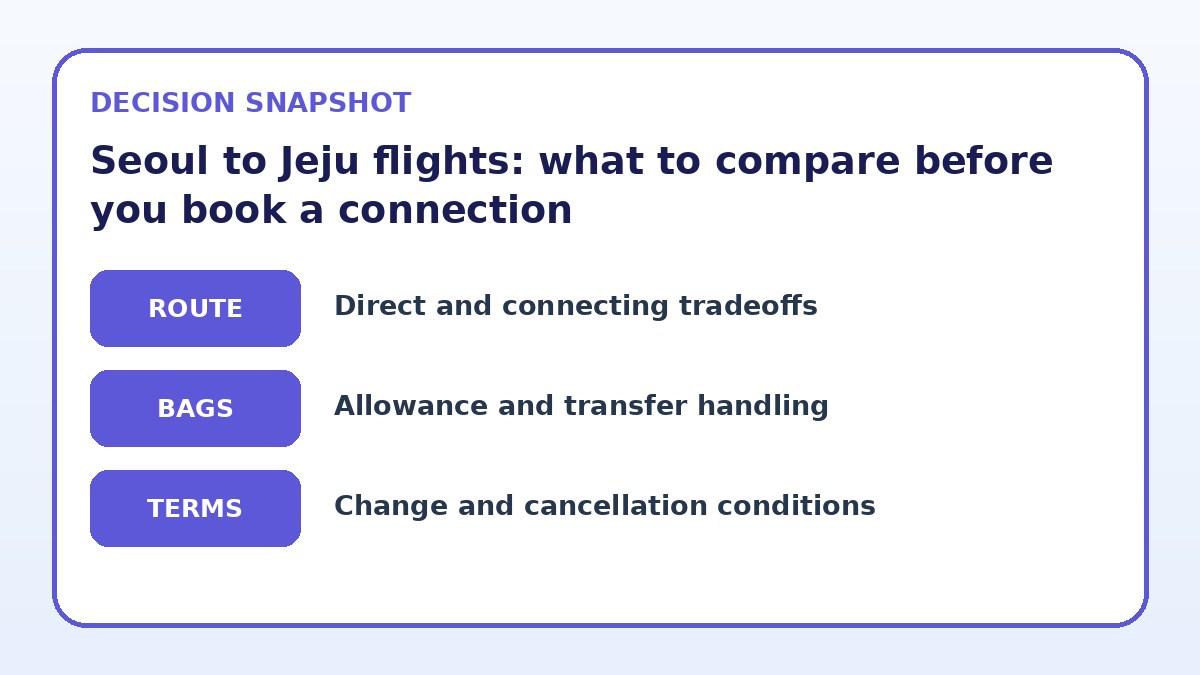
Routing: single ticket vs separate legs
Start by deciding whether to book a single ticket that includes your Seoul to Jeju connection or to buy separate tickets for each leg. For a business traveler focused on comfort and reliability, a single ticket normally reduces risk: the airline assumes responsibility for missed connections and will rebook you on the next available flight within their rules. Separate tickets can be cheaper but shift all connection risk to you—you may have to pay for a new ticket or recheck baggage if a delay causes you to miss the onward flight.
When comparing routing options, check actual connection airports and terminals: some itineraries require transfers between terminals or even different airports, which adds transit time and stress. Ask your travel department or the booking agent to confirm minimum recommended connection times and whether the carrier offers protected connections. If you must buy separate legs, leave a generous buffer and plan how you will retrieve and recheck luggage if transfers are required; this step protects your meeting schedule and reduces last‑minute surprises.
Baggage and connection risk: protect your luggage
Baggage handling rules matter more than price when you must be at a meeting on time. On a single‑ticket itinerary, checked bags are usually transferred automatically, but policies differ by airline and fare class. Before booking, confirm with the carrier whether they will transfer luggage all the way to Jeju on the same reservation and what happens if a delay causes a missed connection. If your itinerary mixes carriers or includes separate tickets, assume you will have to collect and recheck bags, which can take significant time.
Carry‑on strategy reduces connection risk: pack essential documents, presentation materials, and a change of clothes in your carry bag so a mishandled checked suitcase does not derail your trip. If you must check bulky equipment, consider shipping it ahead of time or using protective, easily trackable cases. Always check the airline’s final booking page for baggage size, weight limits, and any extra fees, and if your company uses a travel manager, have them confirm baggage transfer policies in writing before you finalize your reservation.
Compare flight-selection strategies
| Flight strategy | Best for | Risk to check |
|---|---|---|
| Single‑ticket connection on one carrier | Travelers prioritizing minimal connection risk and baggage protection | Often higher fares and fewer low‑cost customization options |
| Separate tickets to mix carriers for lower cost | Cost‑sensitive travelers with flexible schedules and light carry‑ons | Full connection risk and likely need to reclaim and recheck baggage |
| Direct domestic flight (if available that day) | Those needing the fastest door‑to‑door time with minimal transfers | May have limited schedules and less flexibility for last‑minute changes |
| Buffered itinerary with overnight in transit city | Critical meetings where arriving the day before is acceptable or required | Higher accommodation and per diem costs, but far lower disruption risk |
Recheck the complete itinerary
Confirm airports, connection handling, baggage, and change conditions before deciding.
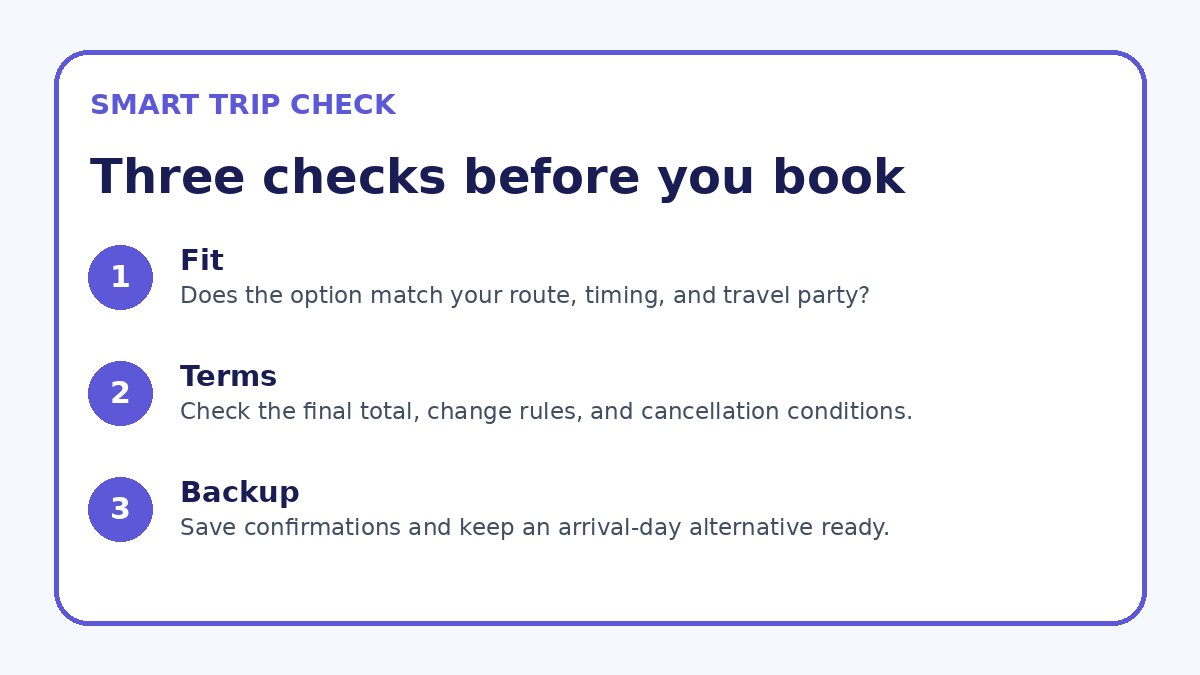
Schedule fit: buffer times and peak considerations
Fit your flight times to your business obligations by building realistic buffer time into the itinerary. Account for immigration, security screening, domestic departure lounges, and local ground transit in both Seoul and Jeju. Early morning flights can be appealing but often mean heavier traffic to the airport or limited backup flights if disruptions occur. Late‑day connections might offer fewer alternatives if you miss a flight, so weigh how flexible your meeting time can be.
Use the worst‑case scenario to plan: add time for delays and unforeseen waits, and choose connections with several reasonable rebooking options throughout the day. If meetings are fixed and cannot move, consider an overnight buffer in Jeju rather than a tight same‑day connection. When comparing times on booking pages or with an agent, verify the full itinerary transfer times and the carrier’s policy for reaccommodation so you can confidently estimate arrival windows for critical engagements.
Flight details to verify
- Gather exact travel dates, preferred arrival window in Jeju, and your company’s fare/flexibility policy before searching fares.
- Decide whether you need to check bulky equipment and, if so, plan for protected packaging or shipment instead of relying on checked baggage transfer.
- When comparing itineraries, confirm on the airline’s booking page whether checked bags are through‑checked to Jeju on the reservation.
- Allow realistic connection buffers for terminal transfers, security, and ground transit; add contingency time equal to typical peak delays.
- Choose a fare that explicitly states change and reissue conditions you accept; screenshot or save the fare rules at purchase.
- If using a travel agent or corporate portal, ask them to confirm rebooking procedures and backup flight options in writing before finalizing.
Fare conditions: flexibility, change fees, and corporate rules
Read fare conditions carefully before committing: change and refund policies, upgrade eligibility, and baggage inclusion vary widely across fare buckets even within the same carrier. For business travelers who need flexibility, look for fares that allow free or low‑cost changes, or choose refundable fare options if your company budget permits. If you’re booking through a corporate travel portal or agency, confirm which fare families meet corporate policy and whether the agency can hold or exchange reservations under short notice.
When the booking page shows multiple fare choices, check the specific wording about same‑day standby, involuntary rerouting, and reissue fees—these items determine how quickly you can recover from disruptions. Keep screenshots or a PDF of the fare rules and the confirmation page at booking, because on the day of travel you may need to remind an agent of your entitlements. If you use a third‑party aggregator such as Trip.com to compare options, always verify final terms on the airline’s official booking page before paying.
Flight Guide questions travelers ask
Should I book a direct flight or a connection for Seoul to Jeju if I have important meetings?
If a direct flight exists that hits your timing constraints, it is usually the least risky option for time‑sensitive meetings because it removes transfer steps and baggage recheck. However, direct flights may have limited schedules and could cost more or be full when you need them. If no direct option fits your schedule, prioritize a single‑ticket connection with guaranteed baggage transfer and several same‑day rebooking alternatives. Always confirm the airline’s protected connection policy and the practical earliest arrival time given local ground transit before you book.
How much layover time should I allow between Seoul and Jeju to be safe for business travel?
There is no universal layover time; instead, base your buffer on the specific airports, terminals, and whether you must change airports. For single‑ticket itineraries within the same airport and terminal, a moderate buffer that accommodates immigration and security plus a cushion for delays is often sufficient. For separate tickets or terminal transfers, add significantly more time to collect and recheck baggage and travel between terminals. Consult the airline’s minimum connection time as a baseline and increase it to reflect peak hour travel and your personal risk tolerance.
What fare features matter most for business travelers booking Seoul to Jeju flights?
Business travelers should focus on change and refund flexibility, baggage inclusion, and upgrade or standby rules when choosing a fare. A fare that allows low‑cost or no‑fee date changes reduces stress if meetings shift. Complimentary or reasonably priced checked baggage avoids surprise fees and ensures you can bring necessary equipment. Also verify whether the fare supports priority boarding or lounge access if these services affect how productive and comfortable you’ll be during connection waits. Always confirm these features on the airline’s official booking page before purchase.
Final decision note
Choosing the right Seoul to Jeju flight for business travel is a matter of prioritizing time reliability and luggage protection over marginal savings. For most business travelers, a single‑ticket connection that guarantees baggage transfer and offers flexible rebooking options will reduce stress and protect your meeting schedule. If you must mix tickets to save money, build much larger buffers and use carry‑on packing to mitigate risk. Before you finalize any booking, gather your exact travel dates and company rules, verify fare terms and baggage policies on the airline’s official page, and consider an overnight buffer when meetings are non‑negotiable.
Continue planning
Check current options and final conditions
Use the provider page to confirm live availability, the final total, cancellation terms, and every condition that matters to your trip.
This evergreen planning guide was created with AI-assisted drafting and a structured quality review. It does not display live prices, schedules, availability, visa guidance, or provider rankings. Verify current details before booking. Some links are affiliate links; we may earn a commission at no additional cost to you.