Practical answer up front: for a family flying from Seoul to Jeju, choose the flight that fits your schedule first, then match baggage allowances and airport arrival times to that schedule. Prioritize either a later arrival/shorter airport wait with more carry-on flexibility, or earlier check-in with checked baggage when you need space. Before checking live fares, have exact travel dates, ages of every traveler, number and size of bags, and whether you need a stroller or car seat. Those details change fare rules, baggage fees, and boarding options. This article walks you through the route-vs-fare tradeoff, how to avoid baggage and connection risk, how to pick flight times that work with children's routines, and which fare conditions to verify on the airline’s final booking page. Use these steps to compare direct vs. connecting flights, and double-check policies before payment.
See live routes for your exact travel day
Compare direct and connecting choices with the same baggage and traveler details.
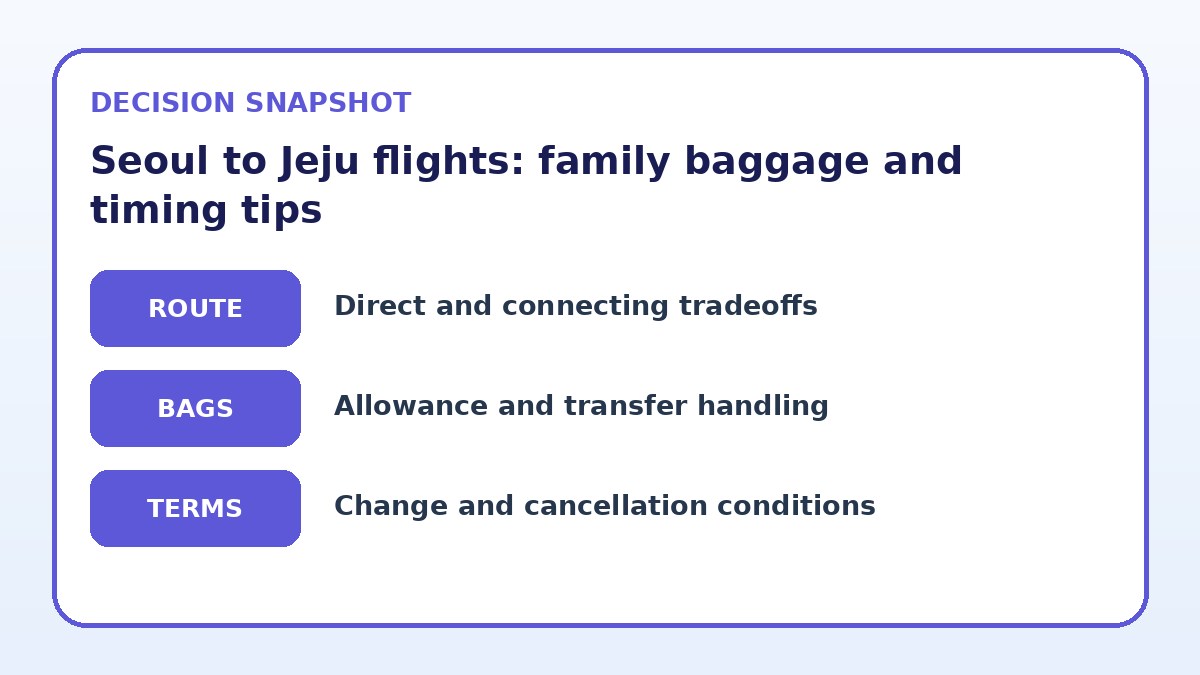
Routing: direct versus connecting for short domestic hops
On Seoul–Jeju service, direct flights are frequently the most practical for families because they remove the stress and time of changing planes. A nonstop flight means fewer transfers, less chance of misplaced checked baggage, and a simpler timeline for young children. However, direct flights may be less flexible in schedule or more expensive on certain dates; if a connecting option offers significantly better departure times that match your family’s rhythms, weigh that scheduling benefit against the additional complexity.
When you compare direct and connecting itineraries, check total travel time plus time on the ground. For families, a longer door-to-door time due to a long connection rarely pays off unless the savings or schedule alignment is meaningful. Always inspect the connection window: a short layover increases missed-connection risk and stress, while a very long layover increases waiting time and the need for extra food, entertainment, or a transit hotel.
Baggage and connection risk: packing for certainty
Start by listing every piece you plan to bring and label what must travel as carry-on: medications, diapers, formula, favorite toys, and a change of clothes. If you rely on checked baggage for large items like strollers or car seats, note the airline’s size and weight allowances on its final booking page and whether gate-checking is available. If you pick a connecting itinerary, remember each transfer raises the chance of delay or misrouted luggage; consider minimizing checked items or using identical hard tags and tracking labels on checked bags.
If your family travels with baby equipment, verify whether the airline permits free checked strollers or car seats and if they can be used until the gate. Also check whether baggage fees apply per passenger or per booking and which fare classes include at least one checked bag. For high certainty, consolidate fragile or essential items in carry-on and accept a modest extra carry-on allowance if the fare supports it; when policies vary, screenshot or save the airline’s baggage summary from the booking page for reference.
Compare flight-selection strategies
| Flight strategy | Best for | Risk to check |
|---|---|---|
| Lowest upfront fare with basic carry-on only | Families traveling light who prioritize lower ticket cost | You may need to pay extra for checked bags, seat selection, and less flexibility if plans change |
| Moderate fare including one checked bag per passenger | Families needing strollers, larger luggage, or predictable packing needs | Higher upfront cost but reduces stress and surprises at the airport; still check change fees |
| Flexible/refundable fare with full baggage and seat selection | Families who value schedule flexibility and reduced risk for missed connections | Higher fare but easier to change plans; confirm exact refund and change process on booking page |
| Book direct on airline’s site vs. third-party aggregator | Those who want immediate access to airline policies and direct support | Third-party sites can show more options at once; always verify baggage and change rules on the airline’s final booking page |
Recheck the complete itinerary
Confirm airports, connection handling, baggage, and change conditions before deciding.
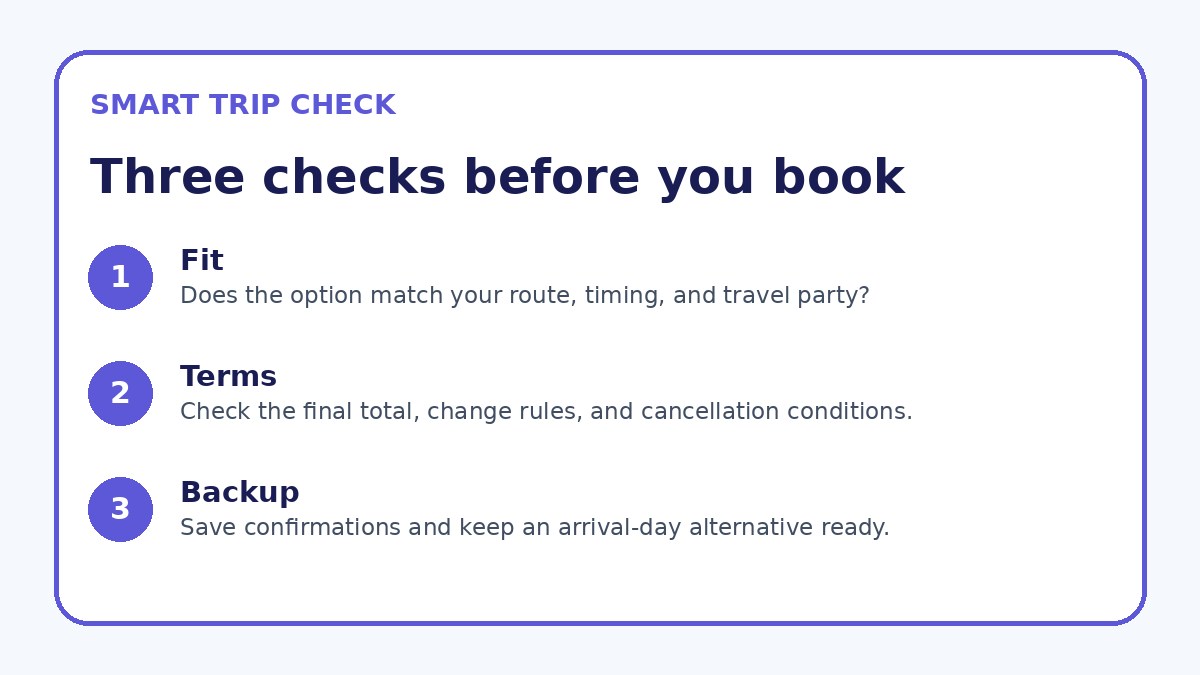
Schedule fit: syncing flights with children's routines
Choose flight times that align with your children’s sleep and meal schedules whenever possible. Early-morning flights can be great if kids sleep on travel; evening flights may work if they reliably sleep through boarding and descent. Midday departures offer more flexibility for pre-flight preparation but can mean more energy and bustle at the airport. When deciding, estimate the entire process—travel to the airport, check-in, security, and a likely 30–60 minute buffer to account for family needs—and select a departure that keeps total disruption low.
Factor in the local ground logistics on both ends: travel time to the Seoul airport you chose, expected traffic, or public transit reliability at your planned arrival time in Jeju. If your arrival needs to connect to a ferry, bus, or rental pickup, give extra buffer for baggage claim and small delays. All families differ: for some, minimal time in the airport is top priority; for others, a long layover with a relaxed pace and play breaks is preferable. Choose the rhythm that keeps the group calm.
Flight details to verify
- Gather exact traveler details: full names, ages, birthdates, and any infant seat or stroller needs before searching fares.
- List all luggage by item and decide which are carry-on essentials versus checked items.
- Choose 2–3 preferred flight times that fit children’s nap and meal schedules, then search fares for those exact times.
- Compare fare rules on the airline’s final booking page: baggage allowance, change/cancellation fees, seat selection, and infant policies.
- Pack a family carry-on kit with medicines, spare clothes, snacks, chargers, and entertainment for each child.
- Save screenshots or PDFs of the fare rules and baggage allowances shown at checkout for use if disputes arise.
Fare conditions: what to verify on the booking page
Before you confirm, read the airline’s fare rules on its final booking page. Key items to verify include whether the fare includes checked baggage (and weight limits), change or cancellation fees, whether seat selection is included, and if family boarding or pre-boarding is offered. Don’t rely on third-party summaries: if a booking site shows a bundled fare, click through to the airline’s terms and take screenshots or save confirmation pages that show the baggage and change policy.
Also check exactly how infants or lap children are treated for fees and seats, and what documentation a carrier requires. If you need to add a car seat or stroller, verify the carrier’s gate-check procedure and whether the device counts toward a free allowance. If you plan to rebook or change travel dates, compare refundable versus non-refundable options and confirm the process for making changes on the airline’s page: some fares let you change with a fee and fare difference, others allow changes only in certain fare classes.
Flight Guide questions travelers ask
How early should a family arrive at the airport for a Seoul to Jeju flight?
For domestic Seoul-to-Jeju flights, aim to arrive earlier than single travelers: typically allow 90–120 minutes before departure for families. This extra buffer covers checking strollers or large items, getting through security with children, bathroom breaks, and time to manage last-minute outfit changes or snacks. If you checked bags online and have only carry-on, you can shorten that slightly, but always keep enough time to handle unexpected delays, restroom visits, and calming a nervous child before boarding. Verify the airline’s recommended check-in time on its booking page.
Should I check a stroller or bring it to the gate?
Decide based on your child’s needs and the airline’s policy listed on the booking page. Many families gate-check strollers so they can use them through the terminal and hand them to staff at the gate; confirm whether gate-checking is permitted and whether the stroller counts toward free baggage allowances. If your stroller is bulky or you prefer it protected, check it as regular baggage but pack a lightweight, foldable travel stroller in carry-on if you need something on arrival. Save the airline’s stroller policy screenshot after booking so gate agents and staff can see the allowance if needed.
How do I avoid lost baggage when traveling with children?
Minimize checked items for essentials; keep items like medicines, a change of clothes, and critical baby supplies in carry-on. Use durable luggage tags, add a bright ribbon or distinctive marker, and include a printed itinerary and contact details inside checked bags. Consider a small GPS tracker in checked luggage for peace of mind. When checking bags, keep the receipt and verify the tag number; if you must connect flights, choose longer layovers to reduce missed-transfer risk. If baggage is lost, contact the airline’s baggage desk immediately and keep all documentation from check-in and the boarding pass.
Final decision note
Families flying Seoul to Jeju will save stress by deciding schedule fit first, then matching fare and baggage options to that schedule. Make a short inventory of every traveler and every bag before you search, pick a handful of departure times that respect your children’s routines, and compare fares with baggage and change rules directly on the airline’s final booking page. For transfers or bulky baby equipment, prefer direct flights or allow generous layover buffers. Finally, pack critical items in carry-on, save policy screenshots when booking, and arrive with extra airport time to keep everyone calm. With these steps you’ll make a clear, family-friendly decision rather than a last-minute scramble.
Continue planning
Check current options and final conditions
Use the provider page to confirm live availability, the final total, cancellation terms, and every condition that matters to your trip.
This evergreen planning guide was created with AI-assisted drafting and a structured quality review. It does not display live prices, schedules, availability, visa guidance, or provider rankings. Verify current details before booking. Some links are affiliate links; we may earn a commission at no additional cost to you.