Practical answer first: choose a hotel area that minimizes the transfer from Melbourne Airport or your late arrival point, offers late check-in or 24-hour reception, and gives space for extra luggage—either larger rooms, luggage storage, or accessible elevators. For most travelers arriving late with heavy bags, that narrows the field to three smart area decisions: stay near the airport for fastest access; pick Southern Cross/CBD for transport links and luggage services; base yourself in Southbank/Federation Square for riverside convenience and evening services; or choose a nearby inner suburb with quieter streets and easier vehicle access. Each choice reduces a specific friction—time, stairs/corners, late-night transit, or finding a taxi/ride-share—so prioritize the one that matches your energy level on arrival, how many suitcases you’ll carry, and whether you need immediate storage before exploring.
Check live stays in the areas that fit
Use your dates and party size to compare current rooms after you narrow the neighborhood fit.
Neighborhood fit: pick the right base for arrival stress
Think of the first hour after you land. If your priority is minimizing walking, stairs, and baggage shuffling, target hotels closest to your arrival mode: airport hotels if you have a tight connection to a late-night onward transport option, or Southern Cross/CBD if you’ll use the SkyBus, a late suburban train, or a rideshare. Hotels in those zones commonly list 24-hour reception or express late check-in; still, verify their stated arrival policies on the booking page before you finalize to avoid surprises.
If you want a calmer first night and won’t be going far the next morning, suburbs like Southbank, Docklands, Carlton, and South Yarra often offer larger rooms, quieter streets, and more straightforward car drop-offs. These areas trade immediate proximity to the airport for easier vehicle access and potentially more luggage-friendly room layouts. Match the neighborhood to how drained you’ll be, whether you need late dining, and if early morning departures will push you to stay closer to the airport.
Choose an area-selection strategy
| Area approach | Best for | Tradeoff to check |
|---|---|---|
| Airport-adjacent hotels | Minimizing transfer time after midnight arrivals | Less evening dining and sightseeing nearby; usually more basic surroundings |
| Southern Cross / CBD | Quick onward transit and multiple late-night service options | Can be busier, louder, and have smaller rooms for the price |
| Southbank / Federation Square | Riverside dining within walking distance after late arrival | Slightly further from airport trains; may require a short taxi or tram ride |
| Nearby inner suburbs (South Yarra, Carlton, Docklands) | Quieter nights and larger rooms for handling extra luggage | Often extra transfers to reach major airport or train links |
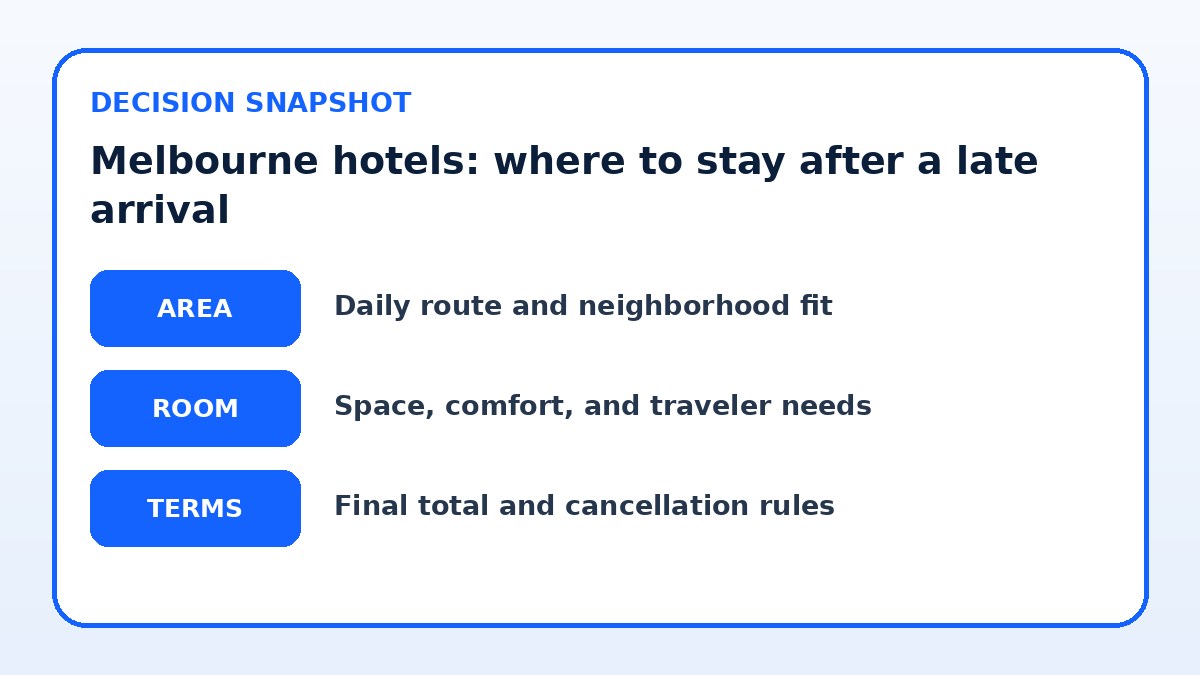
Daily-route friction: how each area affects onward travel
Calculate not just distance but the number of handoffs: baggage carousel to shuttle to check-in to elevator to room. Hotels by the airport or near Southern Cross reduce handoffs; you can often go straight from a shuttle or train into a lobby with elevator access. If your onward plan includes early trains or an early city tram, staying near Southern Cross or the CBD saves time and reduces the need to recheck bags with storage before leaving.
Conversely, choosing a quieter inner suburb can mean a more comfortable arrival but potentially more transfers to get to major train lines or the airport. If you’ll rely on rideshares, verify typical drop-off points, elevator access to lobbies, and whether the hotel’s entrance has steps. Wherever you intend to stay, confirm on the provider’s booking page whether luggage can be held before check-in, the layout to access rooms, and any late-check-in instructions so you don’t end up carrying bags through narrow stairways.
Now compare like with like
Keep the same dates, guests, room needs, and cancellation preferences while you compare the final choices.
Room and party needs: size, beds, and storage considerations
For travelers with extra luggage, room layout matters. Look for rooms described as 'larger', 'accessible', or with extra storage spaces; these often have more floor area and fewer tight corners. If you travel with more than two checked bags, consider suites or interconnecting rooms that let you spread out luggage without blocking pathways. Also check if the hotel lists in-room amenities that ease arrivals—luggage racks, wardrobes with open space, and clear floor plans; confirm those details on the hotel’s final booking page.
Think about your party composition. Couples or solo travelers can manage smaller rooms if arrivals are late and plans are short, but families or groups with multiple suitcases benefit from rooms with separate sleeping spaces or additional bathrooms. If you need daytime access to luggage before official check-in, prioritize hotels advertising baggage storage for arriving guests. Always confirm how late front desk staff work and whether they accept late arrivals without additional forms of ID or pre-arranged instructions.
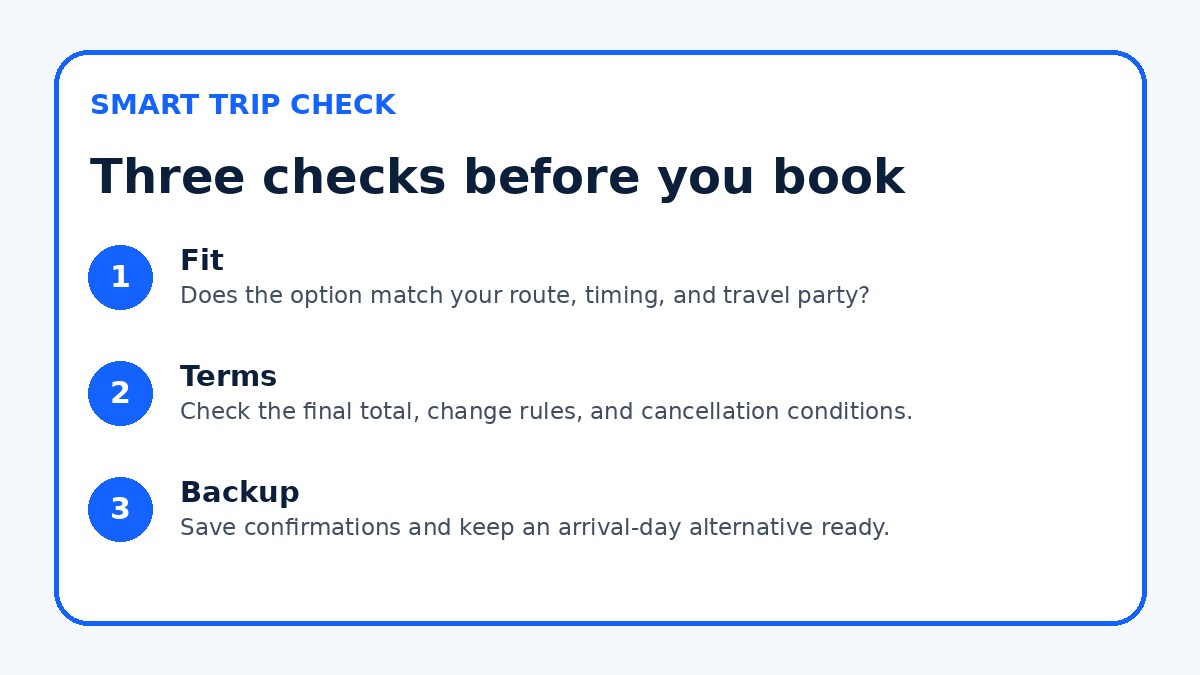
Hotel booking check before payment
- Confirm the hotel’s latest permitted check-in time and how to notify the property of your exact arrival time.
- Ask the hotel if they offer baggage storage for arriving guests and any size/quantity limits before completing the booking.
- Check whether the hotel entrance has steps or narrow corridors that could complicate wheeling suitcases; request elevator access details if needed.
- Verify the property’s late arrival procedure—key pickup, code, or night porter—and save the arrival instructions to your phone.
- Plan your first transfer: compare a direct airport hotel shuttle, train to Southern Cross, or a rideshare drop-off time and expected walking distance to the lobby.
- Take photos of your bags and keep essential items (chargers, medications, a change of clothes) in a carry-on in case check-in is delayed.
Final booking terms: what to check before you reserve
Before you book, verify three things on the hotel’s booking page: late check-in policy and how to communicate arrival time, baggage storage availability and any stated limits, and how to access the property at night (back entrances, codes, or key safes). Don’t assume 24-hour reception—some properties have staff on site but a different process after a certain hour. If the booking platform or hotel mention third-party arrival procedures, ask for a step-by-step confirmation so you can land and reach the room without a dispatcher call.
Also check practical access details: whether the lobby has an elevator/lift large enough for suitcases, whether there are steps at the entrance, and if there’s a designated taxi or rideshare pick-up point. If you plan to park a large vehicle or be dropped off close to the entrance, verify policies for passenger drop-offs and any local permits or kerbside rules. When in doubt, message the property directly and keep that confirmation screenshoted in your phone for arrival.
Hotel Guide questions travelers ask
If I arrive after midnight, which Melbourne area usually makes the process quickest?
If speed and fewer handoffs matter most after midnight, airport-adjacent hotels typically get you into a bed fastest because you skip city transfer options. Southern Cross/CBD properties are the next best option since they connect directly with night transport and frequent taxi or rideshare pickups; however, late trains or buses can become scarce, so always confirm the hotel’s late check-in procedure and whether a night porter or key safe is available. Verify the actual reception hours and arrive-instructions on the hotel’s booking page before you go.
How can I tell if a Melbourne hotel really handles lots of luggage comfortably?
Look for room descriptions mentioning extra space, luggage racks, wardrobes, or family/suite categories; check photos for clear floor space and unobstructed access to beds and bathrooms. Read the hotel’s stated amenities and confirm baggage storage and accessible elevators on the booking page. If photos are inconclusive, message the property directly asking about elevator dimensions, storage policies, and whether they’ll assist with bags at late hours—save that response in case you need to show it at arrival.
Should I prioritize quieter suburbs for larger rooms or central areas for transport access?
Your choice should match energy and schedule: if you plan to sleep immediately and leave early, a central option near Southern Cross or the airport saves time and reduces transfers. If you value room space to unpack and de-stress—especially with many suitcases—a quieter suburb or Southbank can be more comfortable. Consider whether you’ll need early-morning airport transfer versus an easy evening meal; weigh which friction (extra transfers vs. cramped room) you’re willing to accept and verify access details on the hotel’s final booking page.
Final decision note
A sharp area choice before you search inventory makes booking a Melbourne hotel after a late arrival much easier. Narrow to the category that solves your biggest friction: fastest transfer (airport), easiest onward transit (Southern Cross/CBD), immediate riverside convenience (Southbank), or calmer, more spacious rooms (inner suburbs). Once you’ve picked an area, vet the specific property for late check-in procedures, baggage storage, elevator access, and clear arrival instructions—don’t rely on assumption. Use those criteria to shortlist two or three hotels, then confirm the final operational details on the restaurant or hotel booking page. Optionally compare live availability through Trip.com or the hotel’s own page, but rely on the confirmed arrival and luggage terms the property provides.
Continue planning
Check current options and final conditions
Use the provider page to confirm live availability, the final total, cancellation terms, and every condition that matters to your trip.
This evergreen planning guide was created with AI-assisted drafting and a structured quality review. It does not display live prices, schedules, availability, visa guidance, or provider rankings. Verify current details before booking. Some links are affiliate links; we may earn a commission at no additional cost to you.