Practical answer first: when booking Seoul to Hong Kong flights with kids, prioritize a connection that minimizes airport transfers and long layovers while keeping baggage protection and schedule reliability clear. For many families that means choosing an itinerary with a single reasonably timed connection at an airport you and the carrier can easily navigate, or a direct service if available on your travel dates. Balance the lower-stress routing versus the fare: a cheaper multi-stop option can cost more in missed naps, extra taxis, or rebooking hassle. Before you search live fares, gather exact travel dates, each traveler’s full name as on passport, ages of children, baggage needs, and any mobility or dietary requirements — that factual snapshot will let you filter properly and compare conditions on carriers’ booking pages and third-party sites like Trip.com.
See live routes for your exact travel day
Compare direct and connecting choices with the same baggage and traveler details.
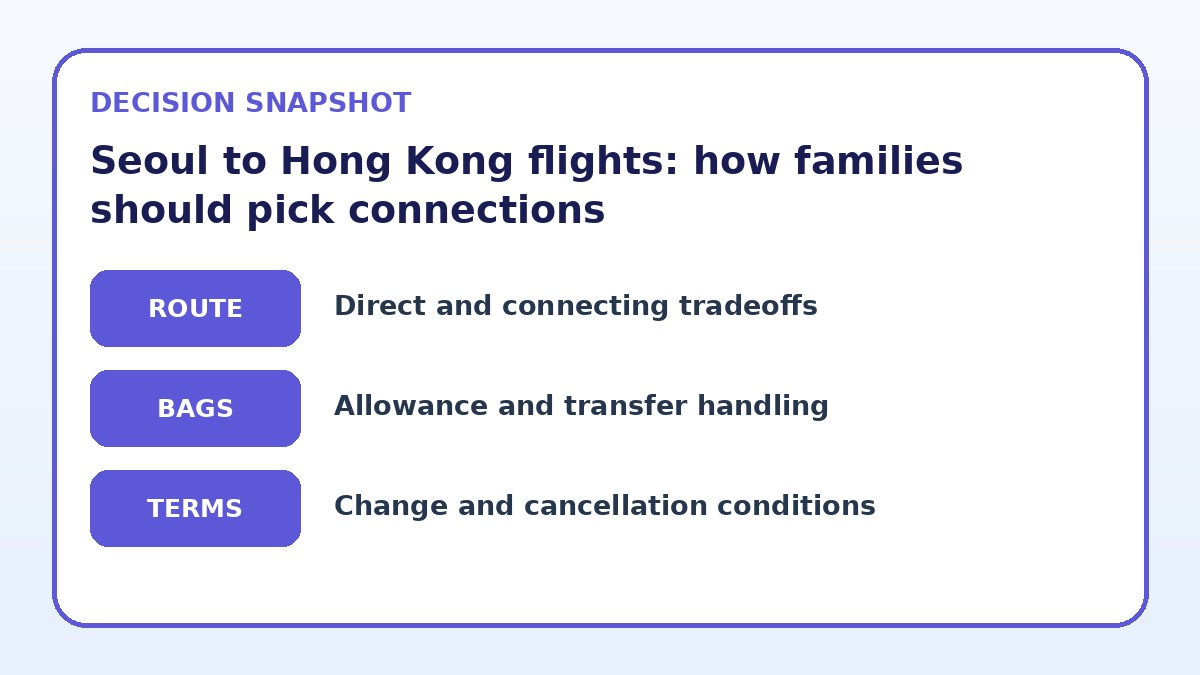
Routing: pick a connection that fits family rhythms
Families should treat a routing decision as a lifestyle choice as much as a price choice. A single-connection itinerary with a moderate layover (2–4 hours for many families) usually reduces the stress of rushing between gates, gives time for bathroom and snack breaks, and allows toddlers to stretch or nap. If a direct flight is offered on your dates, it may simplify logistics—but check the departure and arrival times: an overnight departure that matches your child’s sleep schedule can be worth paying more for, while an awkward midday departure might blow nap routines. For longer multi-leg routings, factor in whether you’ll need to pass through immigration or collect and recheck bags, which can turn a seemingly short connection into a long, tiring detour.
When comparing airports for a connection, think about how terminals connect and whether you’ll need to change terminals by bus or train. Some hub airports offer quick airside transfers and family lounges; others require exiting and re-entering through security, which can add time and unpredictability. Also consider the direction of travel: flights that break your journey in the same time zone direction reduce jet lag complexity compared with cross-time-zone zigzags. Finally, if you’re traveling with infants who require bassinets or with children who need assigned seats together, confirm availability on the operating carrier before booking to avoid unpleasant surprises.
Baggage and connection risk: protect your luggage and plans
Baggage rules and who handles transfers are the practical core of connection planning for families. First, check whether your itinerary is sold by one carrier or as a code-share/product of multiple carriers: if the itinerary is issued on a single ticket and the carriers have an interline agreement, bags are usually checked through to the final destination. If legs must be booked separately, you may need to collect and recheck luggage at the connection airport, which adds time and stress. Always verify on the carrier’s booking confirmation or the final checkout page whether checked baggage is included, the number of pieces allowed per passenger, and whether dimensions and weight rules differ between legs.
Consider connection risk beyond luggage: shorter minimum connection times increase the chance of missed flights, which is particularly painful with children. If a carrier lists a minimum connection time that seems tight, build in a longer layover manually, especially for morning peak delays or if you must change terminals. Add buffer for customs and immigration if your connection requires it. For high-risk connections, look into purchase protections like refundable fares, flexible change policies, or travel insurance that covers missed connections and costs for overnight rebooking, and confirm exactly what those protections cover on the insurer or carrier’s policy page.
Compare flight-selection strategies
| Flight strategy | Best for | Risk to check |
|---|---|---|
| Direct or non-stop flight when available | Families valuing simplicity, fewer transfers, and less risk of missed connections. | Often more expensive or less flexible on preferred times; check seat and baggage inclusions. |
| Single connection with a longer layover (2–4 hours) | Families who want buffer time for potty breaks, snacks, and gentle transfers between gates. | Adds total travel time and may mean extra airport-time boredom without a lounge or play area. |
| Two short connections to lower fare | Budget-conscious families willing to trade convenience for lower fares and flexible time. | Higher risk of delays cascading, possible immigration/baggage recheck, and greater stress with kids. |
| Split-ticketing to mix low-cost carriers and legacy airlines | Travelers seeking lower-cost combos when direct single-ticket options are unaffordable. | Baggage often not checked through and missed-connection protection is limited; requires longer self-transfer buffer. |
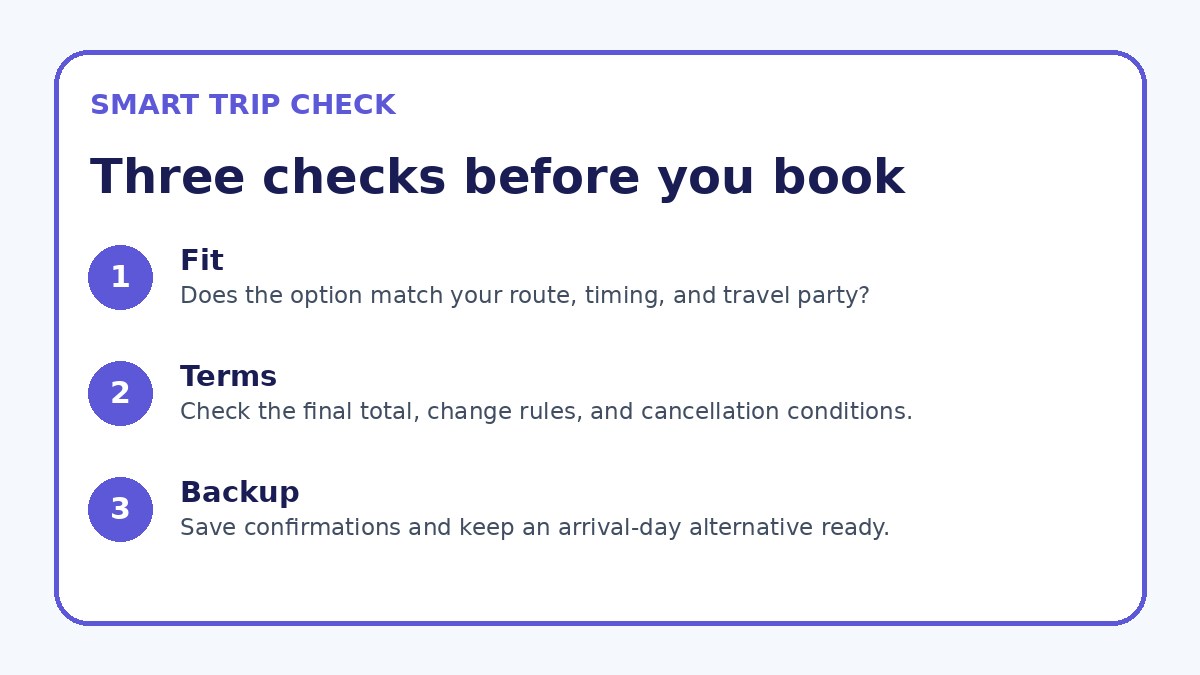
Recheck the complete itinerary
Confirm airports, connection handling, baggage, and change conditions before deciding.
Schedule fit: sync flights with your family’s routine
Match flight times to your kids’ natural routines where possible. Early morning departures can work well for children who sleep through check-in and boarding, while red-eye flights might let older children sleep on board and save time at the destination. Consider arrival times too: arriving during local daytime can make it easier to adapt, whereas late-night arrivals may force an uncomfortable first night. Review the full door-to-door travel time, not just airborne hours. Add time for airport transit to ensure you’re not stripping needed buffer from your schedule by picking the absolute shortest flight duration.
Also account for meal and medication timings. Long layovers can be useful if they align with mealtimes and let you access airport restaurants or family rooms. For families requiring special meals or carrying medications, check carrier policies in advance and note whether you need a doctor’s letter or specific packaging. Seat assignments matter: securing contiguous seats helps keep young children calm and supervised. Confirm seat maps and special requests directly with the operating carrier as soon as you have a booking reference to avoid last-minute issues.
Flight details to verify
- Collect exact travel dates, each passenger’s name as on passport, passport numbers, birth dates for children, and any visa documentation before searching.
- Confirm whether your full itinerary is on a single ticket and which carrier is the operating airline for each leg on the booking page.
- Check the carrier’s baggage allowances and whether checked bags are guaranteed to transfer automatically between legs.
- Reserve seats together and request a bassinet or special assistance with the operating carrier immediately after booking.
- Compare fare rules on the airline’s official confirmation page for change, cancellation, and refund terms before final payment.
- Plan for at least 90–120 minutes for connections that require terminal changes or immigration; add extra buffer for separate tickets.
Fare conditions: read the fine print before you commit
Fare conditions are the legal skeleton of your plan; read them thoroughly. Look at rules for changes, cancellations, name corrections, and refundability. Many lower-fare buckets restrict changes or charge high fees—so a small fare premium for a flexible option can pay off if your travel dates shift or a child falls ill. If you expect a potential change, choose fares that allow free or low-cost date changes or buy a refundable fare. Also check whether seat selection, baggage, and infant fares are included or sold separately; total trip cost can be much higher than the base fare indicates.
Confirm the carrier’s minimum connection time (MCT) policy and whether the carrier guarantees missed connections on itineraries it sold together. If the trip is a multi-carrier itinerary, verify which carrier is responsible for rebooking in case of disruption. When using third-party marketplaces, always cross-check fare rules on the operating carrier’s official booking page before finalizing. For peace of mind, print or save the fare rules, and consider purchasing a service that offers paid re-protection or concierge support for families when traveling on complex itineraries.
Flight Guide questions travelers ask
Should I book a direct Seoul to Hong Kong flight for my family or accept a cheaper connecting option?
Direct flights reduce the number of airport transitions and lower the chance of missed connections and luggage hassles, which benefits families with young children. However, direct options may not align with preferred departure times or budgets. Evaluate whether the time saved and reduced complexity justify any fare premium by calculating total door-to-door time, potential overnight stays if connections go wrong, and added costs for extra baggage or seat selection. If choosing a connecting route, prefer a single connection with a comfortable layover and verify baggage transfer and operating carrier responsibilities on the ticket confirmation.
How much layover time should we plan at a connection when traveling with children?
Aim for a layover that balances buffer time and total travel fatigue: typically two to four hours works well for families on a single-connection itinerary, giving room for bathroom breaks, snacks, and light play without causing prolonged airport waiting. If the connection requires terminal changes, immigration, or baggage recheck, add at least an extra hour or more depending on the airport’s layout. For separate tickets or unknown transfer complexity, plan substantially longer to avoid stress and allow time to rebook if a leg is delayed.
What baggage and protection checks should I do before confirming a family itinerary?
Confirm whether checked baggage is included and whether it will be transferred automatically through to your final destination; this is especially important on multi-carrier or separate-ticket itineraries. Check the number of pieces and weight limits for each passenger and whether infants have separate allowances. Review the fare’s missed-connection policy and what the carrier will cover if a delay causes you to miss a connecting flight. If you need added security, consider refundable fares, flexible change options, or travel insurance that explicitly covers missed connections and additional accommodation costs.
Final decision note
Booking Seoul to Hong Kong flights for a family is a balance between convenience, cost, and predictable travel rhythms. Prioritize routing that reduces transfers and aligns with your children’s sleep and meal schedules, then confirm baggage handling and the operating carrier’s rules before finalizing payment. Choose fares that offer the change flexibility you might realistically need and build sensible layover buffers when connections involve terminals, immigration, or separate tickets. Prepare exact traveler details and verify all fare conditions on the carrier’s booking page; doing this homework before you compare live prices will make the actual booking simpler and far less stressful on travel day.
Continue planning
Check current options and final conditions
Use the provider page to confirm live availability, the final total, cancellation terms, and every condition that matters to your trip.
This evergreen planning guide was created with AI-assisted drafting and a structured quality review. It does not display live prices, schedules, availability, visa guidance, or provider rankings. Verify current details before booking. Some links are affiliate links; we may earn a commission at no additional cost to you.