If you’re arriving in Busan with oversized suitcases, sports gear, or multiple bags, start your planning by choosing the neighborhood rather than browsing individual hotels. The practical answer: prioritize an area with smooth transfers and hotels that commonly offer larger rooms or storage options—Gwangalli and Haeundae for wide hotel choices near transport, Seomyeon for best transfer links and services, and Nampo-dong/Jagalchi for compact streets but excellent market access. Each area brings different daily-route friction and room tradeoffs: beachfront districts ease luggage drops for beach days but can be farther from express rail services; downtown hubs reduce transfer time but may have narrow stairwells in older buildings. Below you’ll find quick, actionable criteria to shortlist a neighborhood, questions to ask property pages, and the booking terms to confirm before committing so you arrive ready, not hauling.

Check live stays in the areas that fit
Use your dates and party size to compare current rooms after you narrow the neighborhood fit.
Neighborhood fit: pick by transfer and purpose
Start by matching the neighborhood to your trip’s purpose and arrival method. If you come by bus or long-distance train, Seomyeon offers excellent transfer connectivity and a dense hotel market where finding a room with elevator access and larger beds is easier. Haeundae and Gwangalli are ideal if you expect repeated trips to the beach or water activities; these areas have hotels designed for tourists and often more modern layouts with luggage-friendly corridors. Nampo-dong and Jagalchi are perfect when you want immediate food markets and short walks to attractions, but narrow streets and older buildings can create handling challenges—plan to verify elevator presence and entrance steps.
Also weigh group or activity needs: families or groups who need space for multiple pieces of luggage should lean to neighborhoods with a higher proportion of medium-to-large hotels—these areas tend to have suites and connecting rooms. Business travelers with many short trips across the city may prefer Seomyeon for its centrality. If you’ll spend most days moving heavy gear (surfboards, photography packs), prioritize beachfront areas where you can drop bags and return to the room without crossing congested downtown blocks. The goal for this step is elimination: reduce the map to one or two neighborhoods before hunting specific hotels.
Choose an area-selection strategy
| Area approach | Best for | Tradeoff to check |
|---|---|---|
| Beachfront (Haeundae/Gwangalli) | Repeat beach days and modern hotels with larger rooms | May add transit steps to city attractions and longer transfers from major terminals |
| Central hub (Seomyeon) | Fast transfers and variety of elevator-equipped hotels | Can be busy and slightly less scenic than waterfront districts |
| Market/downtown (Nampo-dong/Jagalchi) | Immediate food and market access; short sightseeing walks | Narrow streets, older buildings, and potential stair-only hotel access |
| Residential/quiet areas (Suyeong or outskirts) | Lower noise, cheap local storage options, and calmer streets | Fewer hotel choices geared to tourists and possibly longer daily commutes |
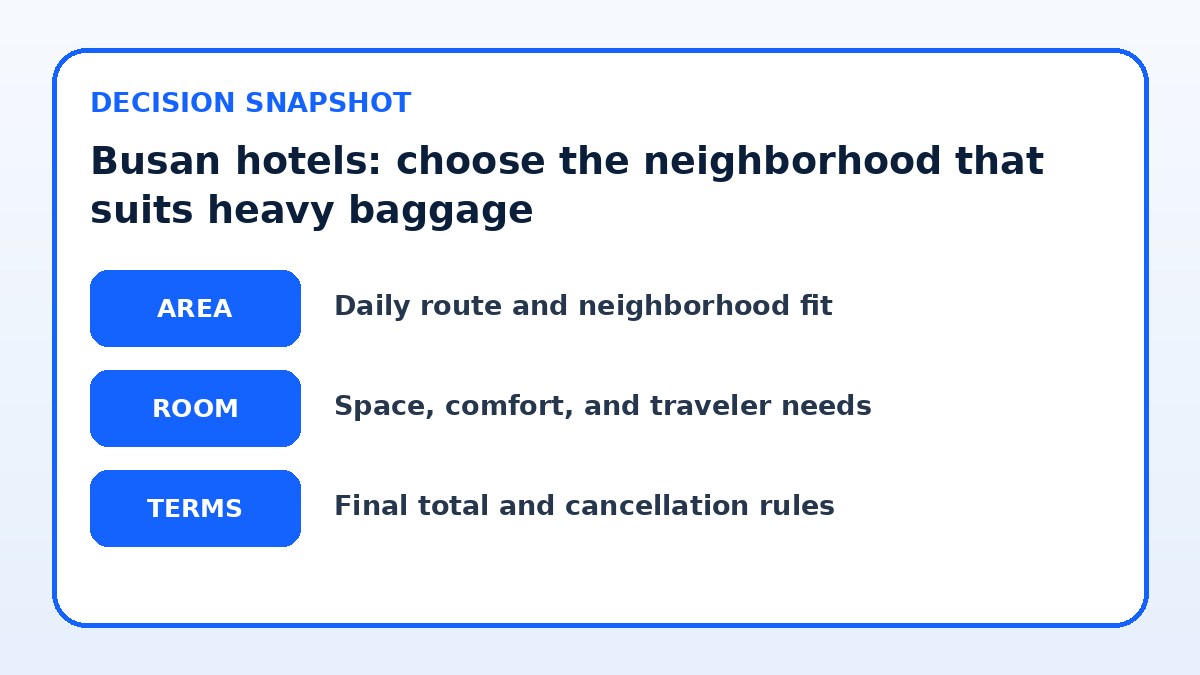
Daily-route friction: what adds time and effort
Door-to-door movement determines how heavy luggage affects each day. Consider transit mode, first and last mile, and how often you’ll leave the hotel. Neighborhoods with wide sidewalks, elevator-access stations, and simple station transfers reduce friction. For example, areas near major subway nodes or the express bus terminals reduce the number of stairs and transfers you face with luggage. Conversely, historic districts and market streets have step-heavy sidewalks and crowded paths that can double the time it takes to move a bag five blocks—even if those areas are fun to explore, they cost convenience.
Also examine the hotel’s immediate approach: is there a loading area for taxis or ride-hail? Some beachfront and modern downtown hotels offer dedicated drop-off points; older guesthouses may require hauling bags down narrow alleys or staircases. Before you book, map the last 100–300 meters from transit to the hotel entrance and, if possible, check street-level photos. These small distances often determine whether you’ll regret a location selection when you arrive with bulky or heavy items.
Now compare like with like
Keep the same dates, guests, room needs, and cancellation preferences while you compare the final choices.
Room and party needs: size, storage, and layout
Once you pick a neighborhood, choose rooms that match how you’ll use them. Look beyond bed type and star rating: confirm the listed room square footage or room category names (e.g., 'deluxe', 'suite', 'family') and compare photos that show floor space and luggage placement possibilities. Ask whether rooms offer extra closets, space under desks, or sofa beds because these features let you keep bags out of the way. If you travel with a partner and several large cases, connecting rooms or a suite can turn a cramped hotel night into a manageable stay.
If you have special gear—bikes, surfboards, photography cases—ask hotels about secure storage, accessible loading doors, and whether they can help with temporary gear drops on check-in and check-out days. Verify elevator dimensions on the hotel’s FAQ or by emailing staff because some older buildings’ elevators are too narrow for large suitcases. Finally, check bedding flexibility and extra-bed policies for families: you may need a larger room to accommodate an additional bed without blocking pathways.

Hotel booking check before payment
- Map your door-to-door route from the station or airport to each candidate hotel's entrance and note stairs or long sidewalks.
- Confirm elevator presence and dimensions on the hotel page or by emailing the property to ensure large suitcases fit.
- Ask the hotel if they offer luggage storage and whether it is secure, free, and available on arrival and departure days.
- Compare room layouts and square footage in the listed photos to check for clear walking space and luggage placement areas.
- Verify check-in/out times and late-arrival procedures; request a late check-in option if your flight or bus arrives after standard hours.
- If you travel with special gear, request written confirmation of accessible loading doors or temporary storage arrangements before booking.
Final booking terms: what to check before you confirm
Before you lock in a reservation, verify key terms that affect luggage handling and flexibility. Confirm the hotel’s check-in/out times and late-arrival procedures if you land late; ask whether luggage storage is complimentary or paid and whether it’s secure and easily accessible. Review cancellation and change policies so you can switch neighborhoods if your first-night logistics prove worse than expected. If you book through an OTA, check both the OTA page and the hotel’s official page to reconcile any differences in stated facilities like elevator access or luggage storage.
When provider-specific facts could change, note exactly what to verify on the property page or by email: elevator dimensions, step-free entrance, dedicated taxi/drop-off zone, and luggage storage terms. If you rely on third-party images, request up-to-date photos of the room type you plan to book. Trip.com can be mentioned as a place to compare current availability and conditions, but always double-check the hotel’s own listing or call the property for final confirmation of access and room layout before arrival.
Hotel Guide questions travelers ask
How do I choose between a beachfront hotel and a central hotel in Busan with lots of luggage?
Decide which inconvenience you prefer: longer daily transfers or more difficult final-mile handling. Beachfront areas like Haeundae and Gwangalli usually offer modern hotels with larger rooms and dedicated drop-off zones, which makes moving luggage into the room easier but may add travel time to inland attractions or transit hubs. Central neighborhoods like Seomyeon shorten travel times and station transfers but can have smaller rooms or older buildings. Map expected daily trips and weigh whether saved minutes or easier luggage handling matters most for your itinerary.
What specific hotel features should I check to ensure moving luggage is easy?
Confirm elevator presence and size, step-free entrance, a designated taxi or drop-off area, luggage storage availability, and whether the hotel staff can assist with carrying bags. Look for room photos that show clear floor space and closet area so suitcases won’t block walkways. If information is unclear online, email the property asking for elevator dimensions and whether there are any stairs between the entrance and reception. Always verify these details on the hotel’s official booking page or by direct contact before finalizing your reservation.
If my hotel lacks space, where can I store extra luggage in Busan?
Many major stations and some bus terminals offer coin lockers or luggage storage counters, but availability can vary. Check nearby subway or rail stations and the express bus terminal listings for luggage services; verify size limits and hours directly. Some hotels provide paid or free luggage storage for guests—confirm conditions with the property. If you plan to store specialty gear like bicycles or surfboards, ask in advance for secure, accessible storage and whether there are any handling fees or advance booking requirements.
Final decision note
Shortlisting an area in Busan before browsing hotels saves time and stress when you travel with extra luggage. Focus first on the neighborhood that matches your arrival method and daily plans—Seomyeon for transfers, Haeundae or Gwangalli for beach-focused stays, Nampo-dong for market proximity—and then inspect individual hotels for elevator size, drop-off access, room layout, and luggage storage. Map your likely arrival route, confirm key measurements and policies on the hotel’s page or by email, and keep a backup storage option in mind if space is tight. With the neighborhood decided and those final checks completed, you’ll be able to shortlist properties confidently and reduce hauling friction during your trip.
Continue planning
Check current options and final conditions
Use the provider page to confirm live availability, the final total, cancellation terms, and every condition that matters to your trip.
This evergreen planning guide was created with AI-assisted drafting and a structured quality review. It does not display live prices, schedules, availability, visa guidance, or provider rankings. Verify current details before booking. Some links are affiliate links; we may earn a commission at no additional cost to you.