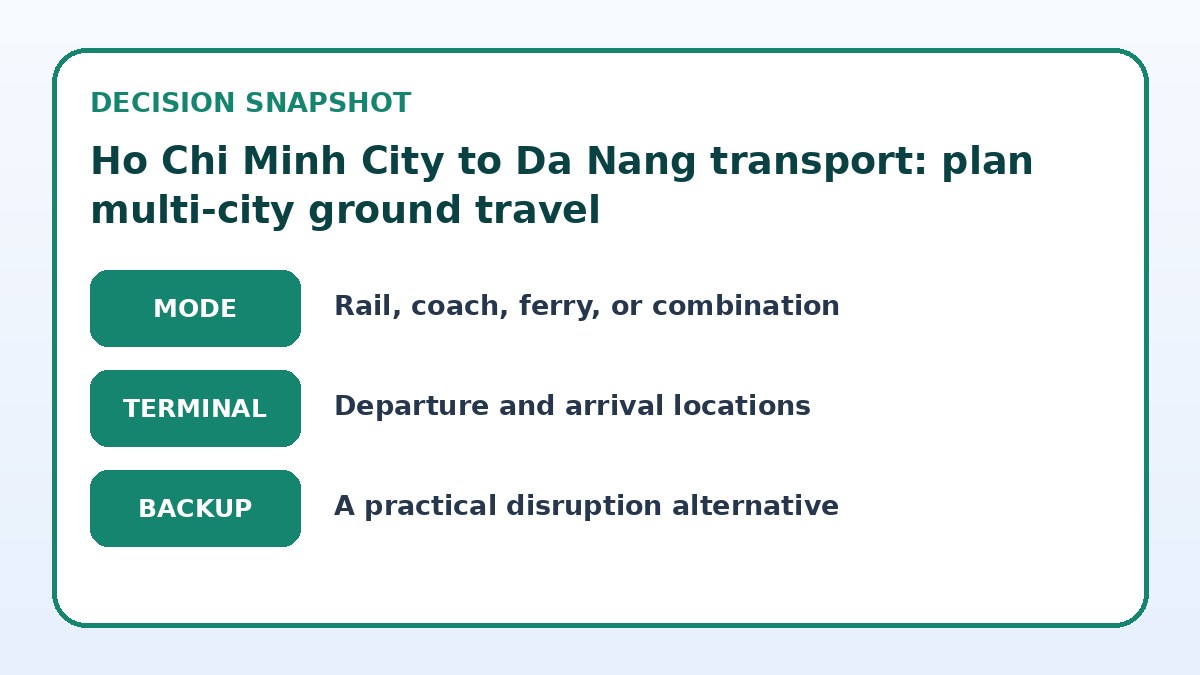
Practical answer first: choose a mostly-rail plan if you prioritise comfort and scenic coastal views with straightforward station-to-station transfers; choose coach-only if you need the simplest single-ticket, door-to-door approach; choose a mixed plan when you want flexibility to stop mid-route or when schedules don’t match. For any choice, build your itinerary around terminal fit (how close stations and bus terminals are to your lodgings), luggage friction (can you carry bags up stairs or transfer between platforms?), timing flexibility, and a disruption backup such as an alternate late coach or a domestic flight. This article walks first-time visitors through comparing four multi-city ground-transport approaches, assessing end-to-end practicality, and assembling a clear backup plan so you can book with confidence.
How to choose between rail, coach, or a mixed plan
Start by ranking what matters most to your trip: travel time, comfort, scenery, cost-effort, and the need for intermediate stops. Trains usually offer more space to move and better views along long coastal stretches; coaches can provide direct city-to-city pickup and drop-off that saves transfers. A mixed plan—for example a night train plus a daytime coach for a side stop—lets you combine advantages but increases transfer complexity. First-time visitors should list priorities, then filter options by those priorities before checking real-time schedules and seat availability on provider booking pages.
Next, translate priorities into practical criteria you can compare: terminal proximity to your hotel, number of expected luggage moves, the likelihood of needing a late arrival option, and the flexibility to add a stop en route. Make each criterion measurable: minutes to transfer, number of baggage lifts, and whether travel happens overnight. Use those measures when comparing specific itineraries. If you want to sightsee en route, a mixed approach can be the best compromise—if you prefer simplicity, coach-only usually lowers transfer count.
Choose the end-to-end journey plan
| Journey approach | Best for | Friction to check |
|---|---|---|
| Rail-focused plan (single-mode by train) | Travelers prioritising comfort, space to move, and coastal scenery with fewer road-bumps. | May require longer transfers to stations and careful luggage handling; fewer direct door-to-door pickup options. |
| Coach-focused plan (single-mode by coach) | Visitors who want the simplest door-to-door routing and often shorter terminal transfers into city centres. | Less onboard space and comfort over long distances; traffic makes timing less predictable than rail on some legs. |
| Mixed plan (train + coach legs) | Travelers wanting schedule flexibility or wanting to stop mid-route without committing to a long single-operator journey. | Higher transfer and luggage friction; requires more attention to connection times and backup options. |
| Staged multi-city slow approach (multiple short hops) | Sightseeing-oriented travelers who want to break the route into manageable day segments and explore towns en route. | More planning and bookings required, more baggage handling, and potentially higher cumulative travel time. |
Check live intercity options
Look beyond the ride itself and compare terminals, transfers, luggage, and arrival fit.
Terminal fit and luggage/transfer friction
Terminal fit is about more than distance: check how easy it is to reach a station or bus terminal from your hotel at your arrival hour. Some stations are deep in dense neighbourhoods, while bus terminals may be outside the city centre requiring a short taxi or rideshare. For each candidate itinerary, map the door-to-door route and estimate transfer times including traffic at your travel hour. For first-time visitors, allow extra buffer for locating platforms, buying last-minute tickets, and navigating signage.
Luggage matters. Long-distance trains often have luggage racks and space for suitcases, but you may need to lift bags up steps or carry them between carriages. Coaches may load luggage into a hold, which reduces on-board clutter but requires checking in and retrieving at terminals. If your plan includes multiple legs, count the number of times you’ll handle bags—each transfer adds fatigue and delay. When booking, verify baggage allowances and any size restrictions on the provider’s final booking page rather than relying on third-party summaries.
Timing flexibility and disruption backups
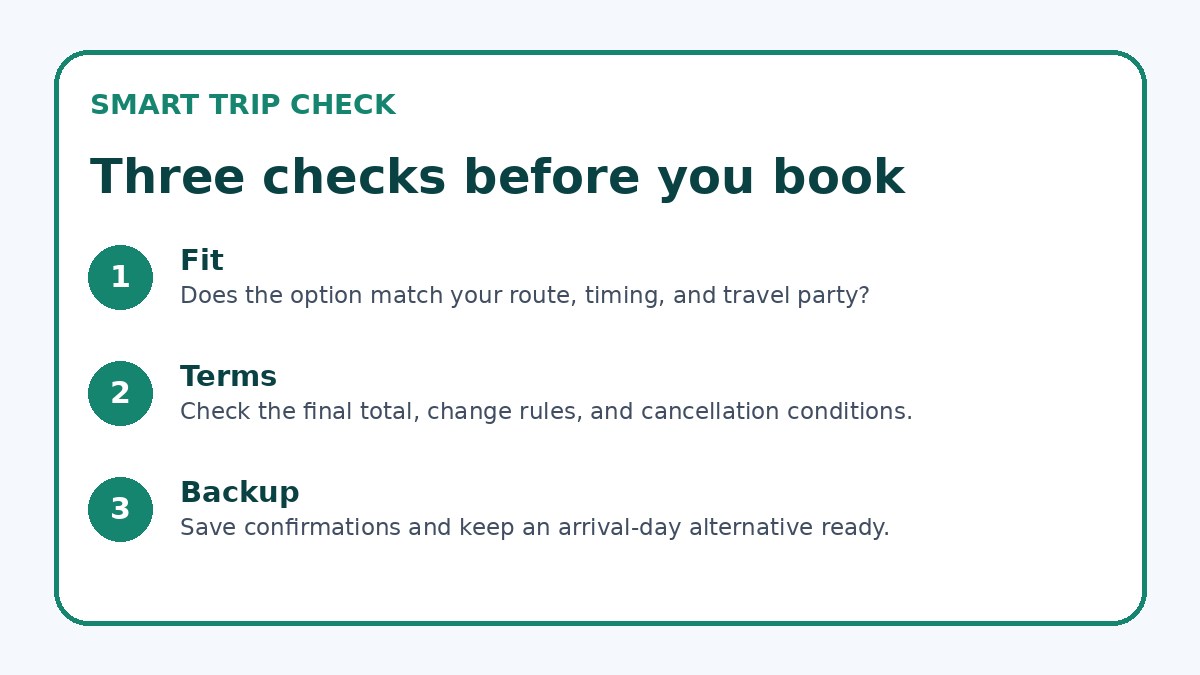
Timing flexibility means choosing itineraries that tolerate delays and still get you where you need to be. If you have firm connections—like a hotel check-in or a tour—build in minimum buffer time between the advertised arrival and your next commitment. For trains and coaches, check for later services on the same route so you can rebook if cancelled. For mixed plans, ensure backup options exist for both legs; a single cancelled leg can strand you if an alternate isn’t available that night.
A disruption backup is a simple, pre-planned contingency: identify one later service, a different route using the other mode, and an airline option if ground options are exhausted. Note that domestic flights can be useful but require extra time for airport transfers and security. Always confirm cancellation, change, and refund terms on the final booking page before purchase so you understand the cost and speed of switching to your backup. Keep local emergency contacts and translation apps handy in case you need help rearranging on the ground.
Compare the practical alternatives
Use the final page to confirm what is actually offered on your dates and save a workable fallback.
Intercity travel checklist
- Map door-to-door travel times for each candidate itinerary including taxi or rideshare times to/from terminals.
- Verify luggage allowances and transfer handling rules on the operator’s final booking page before purchasing.
- Check for later same-day services as a backup and note cancellation/change fees that affect switching plans.
- Reserve accommodations near the arrival terminal if you prefer minimal post-arrival transfers or late-night arrivals.
- Prepare physical and digital copies of tickets and confirmations, plus local taxi app options for immediate transfers.
- Build a contact list: operator customer service, your accommodation, and a local translation or emergency number.
End-to-end door-to-door practicality and booking tips
Think end-to-end. The ride itself is only one portion of your journey: include walking to terminals, transfers, luggage handling, local transport on arrival, and potential overnight waits. Compare total door-to-door time and effort, not just in-vehicle duration. For example, a faster train that departs from a station two hours from your hotel may be less practical than a slightly slower coach that drops you within walking distance of your accommodation. Make a side-by-side comparison of the full journey for each candidate itinerary.
When you’re ready to book, verify provider-specific details on the official booking page: exact departure and arrival locations, permitted luggage dimensions, change and cancellation policies, payment methods, boarding procedures, and any ID or health requirements. Trip.com can be used as one place to compare current availability, but always cross-check critical details with the operator before completing payment. Save confirmation emails, screenshot tickets, and have a printed or offline copy of key information to avoid last-minute problems while on the road.
Rail & Intercity Transport questions travelers ask
Is a direct train available between Ho Chi Minh City and Da Nang, and how should I compare it with coach options?
Routes can change, so check current schedules on official rail and bus booking pages. When comparing, look beyond advertised journey time: include travel to and from terminals, luggage transfers, and how late you might arrive. Trains can be more comfortable for long overnight journeys, while coaches may offer direct city-centre drop-offs. For first-time visitors, weigh how many transfers you can tolerate and whether an overnight option or daytime scenic route suits your trip planning.
How much buffer time should I allow between connecting ground legs or between arrival and a hotel check-in?
Allow at least 90–180 minutes between independently booked ground legs to cover delays, luggage retrieval, and transfers, and a similar margin if you must check in by a strict time. If both legs are on the same ticket or offered as a through service, you can use a smaller buffer but still plan for unexpected traffic or long baggage queues. When in doubt, choose an itinerary that arrives earlier in the day to reduce the stress of late-night transfers.
What practical steps reduce disruption risk during the Ho Chi Minh City–Da Nang ground journey?
Book with operators that show clear change and cancellation terms and identify at least one later service on the same route as your contingency. Keep payment methods and contact info handy for quick rebooking, and have a rideshare or taxi app set up for last-mile transfers. Carry smaller, easily accessible luggage for items you need during delays. Finally, store copies of tickets offline and confirm terminal addresses and local transit options before departure so you can reroute with minimal confusion.
Final decision note
Building a reliable Ho Chi Minh City to Da Nang ground-transport plan starts with deciding what you’re willing to trade: comfort and scenic rail travel versus the door-to-door simplicity of coaches, or a mixed plan to balance both. First-time visitors should prioritise terminal fit, luggage handling, and timing flexibility; then compare full door-to-door itineraries rather than isolated ride times. Always identify at least one disruption backup—another service on the same route or an alternative mode—and verify baggage rules and change policies on the operator’s final booking page before booking. With a clear checklist and a realistic assessment of transfers, you can choose the multi-city plan that fits your travel style and sleep schedule, reducing stress and keeping your trip on track.
Continue planning
Check current options and final conditions
Use the provider page to confirm live availability, the final total, cancellation terms, and every condition that matters to your trip.
This evergreen planning guide was created with AI-assisted drafting and a structured quality review. It does not display live prices, schedules, availability, visa guidance, or provider rankings. Verify current details before booking. Some links are affiliate links; we may earn a commission at no additional cost to you.