Practical answer up front: families should choose the option that minimizes complexity for their group's needs — a direct journey when available and timed well, or a connecting itinerary if it substantially shortens door-to-door time or reduces overall transfers. For many family travelers this means balancing transfer stress against total travel time and cost. Younger children, strollers, and lots of luggage generally tip the scales toward fewer changes; older kids and teens tolerate connections better if those reduce time away from activities. Below I explain how to compare direct versus connecting Seoul–Gyeongju options, what to verify on booking pages, and how to plan for predictable frustrations like tight connections, baggage transfers, and ground transfers at each end.
See current options before you compare the details
Availability and final conditions change. Open Trip.com now or keep reading for the practical comparison.
How direct and connecting options differ for families
Direct options tend to mean fewer transitions: one check-in, one security pass, and a single boarding experience. For families that benefit from routine and predictability—young children, infants, mobility challenges, or lots of luggage—this reduces the number of moments where things can go wrong. A straight route also usually simplifies meal and nap planning because you can block out a single travel window rather than managing multiple short bursts between transfers.
Connecting options can split the journey into two shorter segments and sometimes shorten total travel time if the connection links faster onward transport. For parents comfortable managing transfers, connections offer flexibility in scheduling and occasionally better seat availability or fares. The tradeoff is more logistical steps: changing terminals, re-checking bags, navigating unfamiliar stations, or coordinating local transfers. For families, each added step adds time, attention, and the risk of delays affecting the whole group.
Comparing door-to-door time, not just flight or train durations
When comparing options, calculate door-to-door time: include travel to the Seoul departure point, check-in, security or boarding windows, time between connections, and onward transfer to your accommodation in Gyeongju. Don’t forget that some airports and stations require additional time for families—stroller checks, nurse rooms, or family lanes can help, but they don’t eliminate the need for conservative timing. Estimating realistic walking times between gates or terminals and factoring in time to fetch luggage is essential.
Also consider how ground access differs by arrival: some routes may land at an airport or station that offers direct shuttle buses or straightforward taxi rides to Gyeongju, while others require an extra transfer. A slightly longer flight that arrives at a more convenient terminal could be faster overall than a shorter flight that lands farther away. For families, the number and type of ground transfers—car, shuttle, train, or bus—will be decisive in choosing which itinerary feels manageable.
| Approach | Best for | Tradeoff to check |
|---|---|---|
| Direct option | Families with infants, lots of luggage, or who prefer one smooth transferless day | May be longer or pricier overall; fewer timing and routing choices |
| Connecting option with short layover | Families who prioritize minimizing total travel time over simplicity | More risk if delays occur; requires tight coordination and quick transfers |
| Connecting option with long layover | Families wanting rest breaks, meal time, or to split the day into manageable segments | Longer door-to-door time and extra time managing baggage and childcare between legs |
| Mixed-mode (flight + train or bus) | Families seeking flexibility and potentially smoother final access into Gyeongju | Requires coordination between providers and careful timing for baggage and tickets |
Ready to check the option that fits your plan?
Use your exact dates and traveler details so the provider page can show the current total and conditions.
Practical costs and comfort tradeoffs families face
Cost considerations extend beyond the ticket price. For families, baggage fees, seat selection charges, and child/infant policies add up. Direct options may carry a premium, but they can save on incidental expenses: fewer short taxis, less need for last-minute childcare services, and lower risk of having to buy replacement items after a missed connection. Evaluate whether a price gap is offset by the convenience of fewer transfers, especially if you’ll be traveling during peak family hours or with special equipment like car seats.
Comfort is about more than legroom and recline. Consider amenities that help children: priority boarding, family restrooms, changing tables, and the presence of quiet spaces to stretch during a layover. If a connecting option provides a lounge or a longer layover in a family-friendly terminal, that could tilt the balance despite an extra change. Conversely, if your family prefers a single uninterrupted transit period, accept that direct options often offer a calmer, less fragmented travel day.
Before you book
- Confirm on the carrier’s booking page whether checked baggage is transferred automatically on connecting itineraries.
- Reserve or request adjacent seats for children and note any infant lap-seat rules before you purchase.
- Calculate door-to-door time including transfers, wait time, and ground transport to and from stations or airports.
- Pack a carry-on kit with snacks, chargers, medication, a change of clothes, and quiet activities for children.
- Identify help desks and family facilities at departure and arrival points and note their typical locations.
- Set realistic buffers for connections—add at least 30–60 minutes for family needs beyond the provider’s minimum.
What to verify before you book and how to prepare
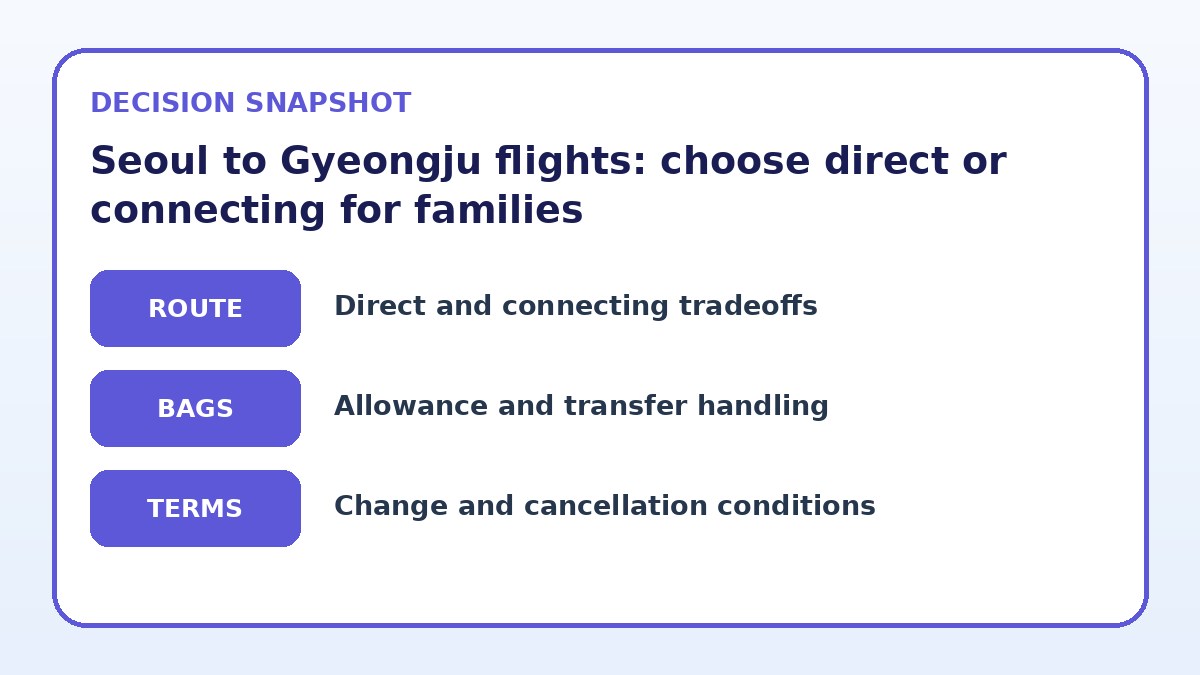
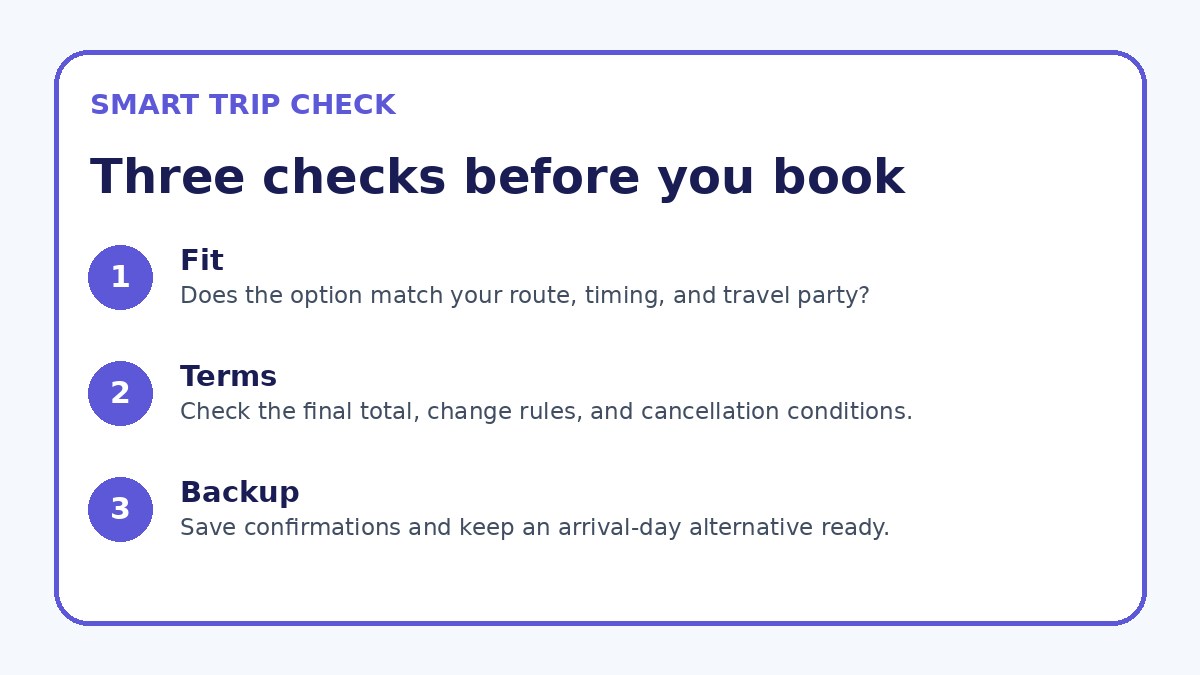
Always verify transfer rules and baggage handling on the airline or rail operator’s final booking page before purchasing. Confirm whether checked bags are through-checked on connections or if you must collect and re-check them, what the minimum connection time is, and whether seat assignments for children are guaranteed. If you’re mixing transport providers—say, a flight into a city and a separate domestic train—check separate transfer times and ticket change policies so you’re not stranded by missed connections.
Plan packing and day-of logistics around the chosen option. Bring a compact, carry-on bag with essentials—snacks, medication, a charger, an extra change of clothes, and entertainment—to bridge gaps during transfers. Reserve seats in advance when possible, choose child-friendly meal or entertainment options, and build at least a 30–60 minute buffer for unexpected delays when changing transport modes. Finally, have a contingency plan: know where help desks are, how to contact carriers quickly, and how to get a local taxi or shuttle if needed.
Frequently asked questions
Are direct Seoul to Gyeongju flights always less stressful for families?
Direct journeys reduce the number of transitions and can lower stress, especially with young children or lots of luggage. However, direct options aren’t automatically less stressful if they involve inconvenient arrival terminals or lengthy ground transfers to your accommodation. Compare the whole journey: if a direct flight adds a long bus or taxi ride at one end, a connecting route that lands closer to Gyeongju’s access points could be easier. Verify transfer options and total door-to-door time before deciding.
How much connection time should we allow when traveling with small children?
Allow more than the carrier’s published minimum connection time—plan an additional 30 to 60 minutes for families to manage toilets, stroller folding, diaper changes, and unhurried gate transfers. If you must collect and re-check baggage, or if transferring between distant terminals or modes (plane to train), increase that buffer further. When in doubt, choose a longer layover that gives you breathing room rather than a tight connection that risks missed onward travel.
Can mixing a flight and a train be easier than a single flight connection for families?
Yes, mixing modes can sometimes be simpler if the train station offers straightforward, family-friendly access and arrives closer to your Gyeongju destination. Trains often have more room to move, accessible toilets, and easier luggage handling than short domestic flights. But mixed-mode travel requires careful timing, and separate tickets mean you may not be protected by a single-carrier rebook policy if a delay occurs. Check ticket change rules and plan sufficient transfer time before booking.
Final planning note
Choosing between direct and connecting Seoul to Gyeongju options comes down to what your family values most: fewer transitions and predictability, or shorter elapsed travel time and scheduling flexibility. Calculate door-to-door durations, confirm baggage and seat policies on the final booking page, and factor in the number and nature of ground transfers. Pack a family carry-on, reserve seats, and allow conservative buffers for connections to reduce stress. With those checks, you can pick the itinerary that balances comfort, convenience, and time so your trip to Gyeongju starts calmly and stays that way.
Continue planning
Check current options and final conditions
Use the provider page to confirm live availability, the final total, cancellation terms, and every condition that matters to your trip.
This evergreen planning guide was created with AI-assisted drafting and a structured quality review. It does not display live prices, schedules, availability, visa guidance, or provider rankings. Verify current details before booking. Some links are affiliate links; we may earn a commission at no additional cost to you.