
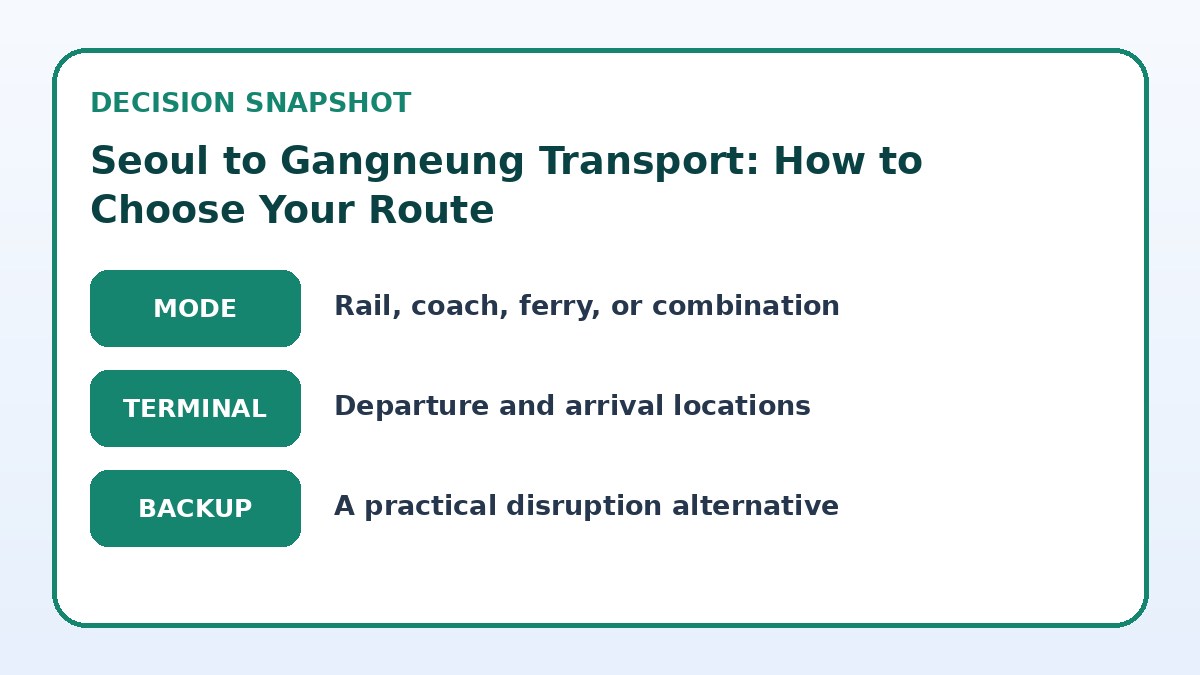
Practical answer first: most first-time visitors choose the high-speed train or an express coach for the Seoul to Gangneung trip because those modes balance speed, comfort and frequency. If you prefer scenic coastal travel, driving or a combined ferry + local transport route can add enjoyable flexibility. For budget travelers, an intercity bus may offer the simplest option. Before booking, compare door-to-door time, luggage rules, departure frequency, and how comfortable you are with transfers. This article lays out what each mode delivers, who it suits best, and the specific checks to make on provider pages (timetable, seat-type, luggage policy, cancellation terms) so you can pick the best plan for your itinerary and travel style.
Train: speed, predictability, and what to check
Trains between Seoul and Gangneung are typically chosen by travelers who value speed and reliability. When comparing options, check whether services are direct or require a transfer, whether seats can be reserved, and how frequently trains depart on your intended travel day. For planning convenience, estimate total door-to-door time including travel to the station, security or ticket lines, and local transit at your destination.
On the provider’s booking page verify seat classes, luggage allowances, and cancellation or change terms. If you need to coordinate with tight connections—tours or evening services—confirm the operator’s stated minimum connection time. For ticket comparison, look at train departure frequency and station convenience relative to where you’ll be staying in Seoul and Gangneung.
Coach and intercity bus: budget and frequency considerations
Express coaches and intercity buses can be the most straightforward low-cost alternative, frequently serving major terminals with regular departures. They’re useful when you want many departure choices throughout the day or need a simple point-to-point transfer without train station navigation. Expect variation in comfort between standard coaches and premium express services; read seating descriptions and onboard amenity notes on booking sites.
Before you buy, check exact terminal locations in both cities because buses may use different stops than trains or downtown areas. Confirm baggage rules and whether your ticket guarantees a specific seat. If traveling during public holidays or large events, verify frequency and whether supplemental services run—provider pages or a comparison site like Trip.com can show current availability but always cross-check the operator’s official timetable.
| Approach | Best for | Tradeoff to check |
|---|---|---|
| High-speed train | Travelers prioritizing short travel time and comfort | Higher cost and fixed departure stations compared with some buses or self-drive options |
| Express coach / intercity bus | Budget travelers and those needing many departure choices | Longer journey times and potential traffic delays, but simple booking and more stops |
| Driving / car hire | Groups or travelers who want scenic detours and schedule control | Requires navigation, parking planning, and handling tolls/insurance |
| Ferry + local transport | Travelers who want coastal scenery and a relaxed pace | Less frequent services and greater need to coordinate connections |
Driving and car hire: flexibility vs. extra responsibilities
Hiring a car gives total control over departure time and routes, letting you detour to coastal towns, national parks, or roadside food spots. For travelers with multiple stops or a group sharing costs, driving can be practical. However, the convenience comes with responsibilities—understand local driving rules, parking availability in Gangneung, and whether your international driving permit is required. Also factor in rest stops, fuel, and any toll roads en route.
When comparing rental companies, verify the allowed mileage, insurance coverage options, and whether winter tyres are supplied if you travel in colder months. Make a rough itinerary so you can assess realistic driving hours and where to refuel. Confirm pick-up and drop-off locations and one-way drop fees on the hire company’s booking page before reserving, and check user reviews for reliability and ease of paperwork.
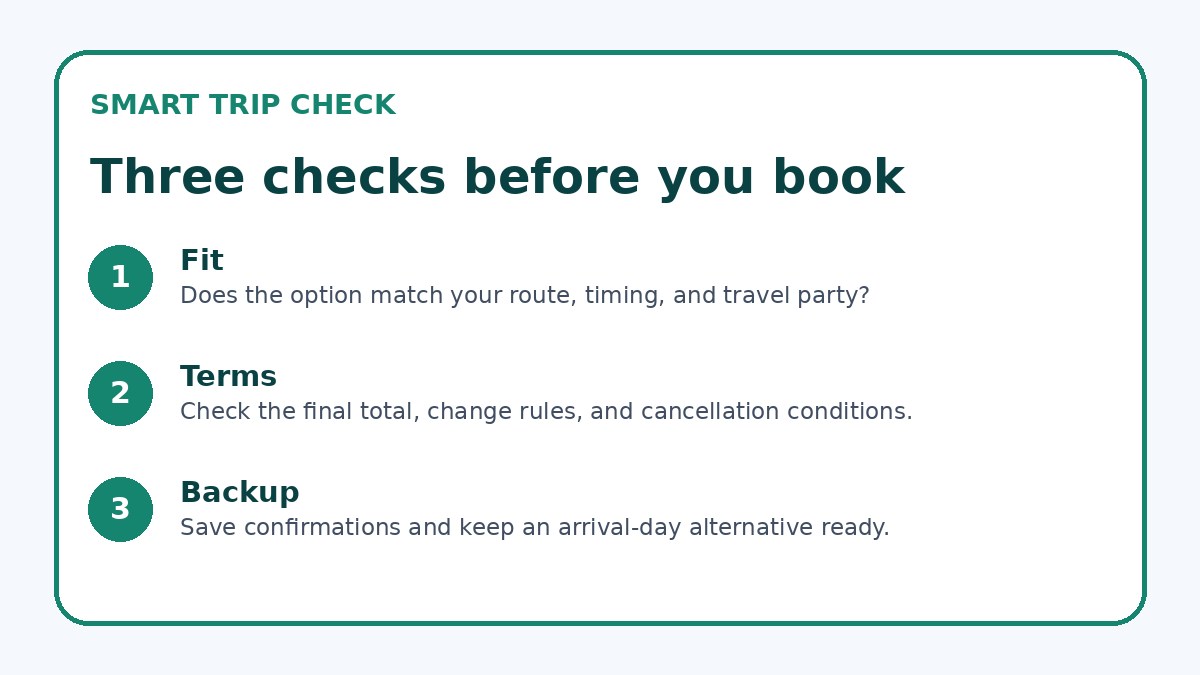
Before you book
- Check direct versus connecting options and the total door-to-door time for each transport mode before choosing.
- Verify luggage allowances, seat reservation rules, and cancellation policies on the operator’s official booking page.
- Confirm the exact departure and arrival terminals in Seoul and Gangneung to plan transfers or local transport.
- Allow buffer time for seasonal crowds, festivals, or peak travel periods when service frequency can change.
- If renting a car, confirm insurance coverage, permitted drivers, and any one-way drop fees before signing.
- If using ferry or mixed routes, cross-check the ferry timetable and the final-connection local transport schedule.
Ferry and mixed transport: scenic but schedule-dependent
A ferry plus local transport approach is appealing if you want a coastal experience and plan to visit seaside towns en route. Ferries may not run from central Seoul, so this option often involves a transfer to a port or joining a combined ticket. Because ferries are less frequent, synchronize ferry departure and arrival times with local buses, trains, or car hire to avoid lengthy waits or missed connections.
For this option, verify departure days, seasonal variation, and whether tickets require advance booking. Check luggage restrictions and how the operator handles delays or cancellations. If you choose a mixed itinerary, map the final-mile connections carefully and allow buffer time between each leg. Confirm the ferry operator’s official timetable and the local transport schedules for the ports involved before committing to this scenic route.
Frequently asked questions
Which transport option is fastest from Seoul to Gangneung?
Typically, high-speed train services offer the shortest scheduled travel time between major stations. However, total journey time depends on where you start in Seoul and where you need to be in Gangneung, station transfer times, and how long it takes to reach the terminal. Always estimate door-to-door time—not just time onboard—when you compare train, coach, or driving options. Check the operator’s timetable and station locations to confirm whether a direct train or a service with transfers is listed for your travel date.
Is driving easier than public transport for first-time visitors?
Driving gives freedom and is handy for visiting coastal sights, but it requires comfort with local traffic rules, signage, and parking in Gangneung. For first-time visitors who prefer to avoid navigation and local rules, trains or coaches simplify the trip because they arrive at major terminals and remove parking hassles. If you decide to hire a car, verify rental insurance, driving permit requirements, and the pick-up/drop-off terms on the rental company’s page to avoid surprises.
How should I choose between booking train or bus tickets in advance?
If your travel dates are fixed or fall on busy periods, booking ahead secures your preferred departure and seat type; trains especially may show limited availability close to travel. For flexible travelers, buses often have many daily departures and can be booked closer to departure. Regardless of mode, compare the operator’s official conditions for refunds and changes. You can use a comparison site like Trip.com for a quick availability snapshot, but always confirm schedules, seat reservations, and ticket conditions on the provider’s official booking page before finalising.
Final planning note
For first-time travelers deciding how to get from Seoul to Gangneung, start by ranking what matters most: shortest door-to-door time, cost, scenic flexibility, or simplicity. High-speed trains excel for speed and comfort; coaches are often the simplest budget option; driving offers detours and control; ferry-plus-local transport is the scenic, schedule-dependent choice. Use the checklist to verify connection points, luggage and seat conditions, and any seasonal variations. Check official operator pages for timetables, seat classes and cancellation rules, and compare availability on aggregator sites if you like — then pick the option that best matches how you want to spend your travel time.
Continue planning
Check current options and final conditions
Use the provider page to confirm live availability, the final total, cancellation terms, and every condition that matters to your trip.
This evergreen planning guide was created with AI-assisted drafting and a structured quality review. It does not display live prices, schedules, availability, visa guidance, or provider rankings. Verify current details before booking. Some links are affiliate links; we may earn a commission at no additional cost to you.