If you’re traveling from Seoul to Busan with extra luggage, the practical choice is the one that reduces handling and transfers, gets you close to your door-to-door endpoints, and leaves contingency plans for delays. For many this means prioritizing options with easy station access, clear luggage rules, and minimal walking between platforms, pickups, and final accommodations. Start by mapping where you need to be in Seoul and Busan—airport, downtown hotel, or a private address—and compare how each mode connects those points. This article walks through terminal fit, luggage friction, timing flexibility, and a simple disruption backup so you can pick between rail, coach, driving, or a combination that suits your baggage and comfort needs.
Terminal fit: where you start and finish matters
Not all stations and terminals are equally convenient for travelers with lots of luggage. In Seoul, consider whether your departure point is a central city terminal, an airport station, or a suburban hub; each requires a different transfer strategy. In Busan, pick the arrival terminal that places you nearest to your hotel or meeting point to avoid extra trips. When evaluating options, map walking distance, elevator/escalator availability, and whether a single-level interchange is possible—those details reduce the number of times you must haul suitcases up and down stairs.
Ask how the mode connects to your first and last mile: can you book a curbside pickup or is the platform a long walk from taxis and buses? If using a rail station, check if luggage carts are allowed or provided and whether street-level exits have ramps. For coach travel, verify where luggage is stowed and whether drivers help with loading—that influences how much you'll need to lift yourself. For a car option, weigh proximity against traffic patterns and parking availability at both ends.
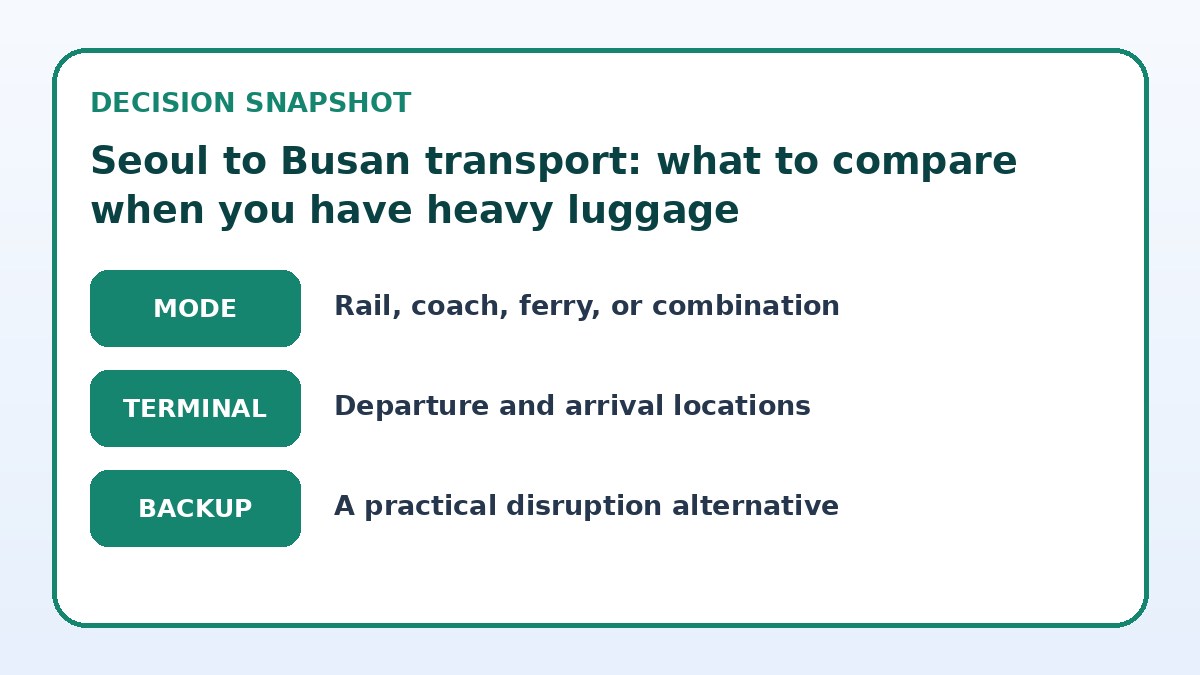
Choose the end-to-end journey plan
| Journey approach | Best for | Friction to check |
|---|---|---|
| Direct high-speed rail then taxi to door | Travelers prioritizing speed with minimal luggage handling | Requires taxi capacity and access at both stations; check taxi availability at arrival time |
| Long-distance coach to central terminal | Those who prefer lower transfers and central drop-off points | Luggage handling into coach holds may require lifting and a final local transfer |
| Private transfer or driving door-to-door | Maximum control and zero intermediate handling | Costs and parking/traffic factors affect practicality; driver vehicle size limits bulky items |
| Mixed: regional train plus booked taxi or luggage service | Travelers balancing comfort, flexibility, and reduced carrying | Coordination needed between services and confirmation of luggage capacity |
Check live intercity options
Look beyond the ride itself and compare terminals, transfers, luggage, and arrival fit.
Luggage and transfer friction: how much handling is acceptable?
Think in real moves: from your accommodation to the departure terminal, between vehicles if changing mode, and from arrival to your final address. Every transfer adds friction—stairs, platform gaps, narrow lifts, and station crowds multiply effort. If you have multiple large suitcases or fragile gear, minimize the number of transfers. Evaluate which modes allow reserving extra luggage space or offer helpers; if you plan to use public transit locally after arrival, confirm how easily that mode accepts large bags.
If you can’t avoid multiple transfers, plan them deliberately: choose times with lighter crowds, pre-book assistance where available, and use luggage-friendly routes between terminals (for example, a short taxi rather than a long subway ride with multiple escalators). Consider luggage delivery services if you want to travel hands-free between cities—compare door-to-door convenience versus the additional coordination required. Always verify official luggage allowances and rules on the operator’s booking page before finalizing plans.
Timing flexibility: balancing schedule and comfort
Your tolerance for strict departure times influences whether speed or convenience matters more. Faster options may mean fixed, infrequent departures with less flexibility for late packing or delays; slower services often run more frequently and are more forgiving. If you carry much luggage, factor in extra time for check-in, baggage stowage, or arranging a lift from the curb. Build buffer time at both ends to account for traffic, security checks, or busy terminals—especially if you must move heavy bags between modes.
If your schedule is tight, prioritize fewer transfers over marginally faster door-to-door journey times. For those with flexible schedules, look for off-peak departures when stations and vehicles are less crowded and staff can assist more easily. Also confirm cancellation and change policies on the provider’s booking page so you can adapt when plans shift; this is particularly important when coordinating with last-mile services like taxis or hotel pickups.
Compare the practical alternatives
Use the final page to confirm what is actually offered on your dates and save a workable fallback.
Intercity travel checklist
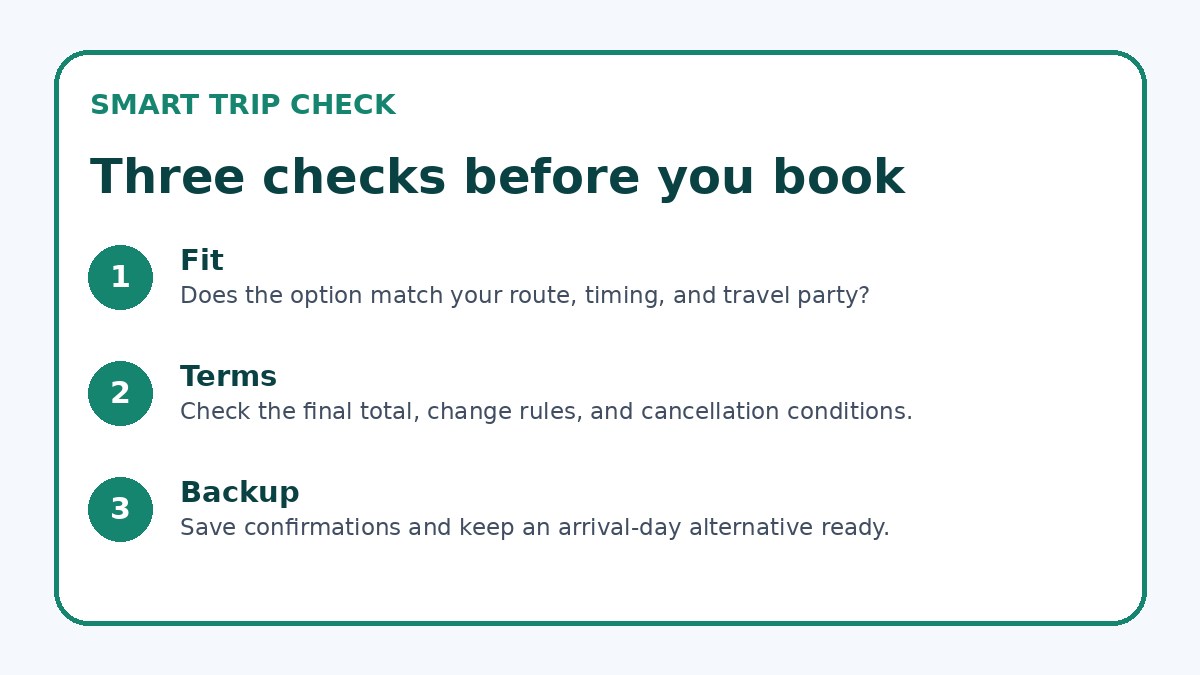
- Map exact pickup and drop-off points in Seoul and Busan and estimate walking distances with your luggage.
- Confirm luggage allowances and any extra-item policies on the operator’s official booking page before purchase.
- Pre-book a taxi or private transfer at the arrival end when you expect busy terminals or limited curbside access.
- Allow at least 45–90 minutes buffer for transfers involving heavy bags, accounting for crowds and elevators.
- Prepare a compact overnight bag with valuables and essentials in case checked luggage is delayed.
- Save contact numbers and screenshots of reservations; verify change and cancellation terms for each leg.
Disruption backup: practical contingencies for delays
Even with the best plan, disruptions happen. Build a simple backup: identify an alternate later departure, a nearby station or terminal where you can reroute, and one reliable door-to-door option such as a pre-booked taxi or private transfer. Keep digital copies of reservations, a local SIM or roaming data for on-the-spot bookings, and contact numbers for your accommodation so they can advise on pickups. If you’re carrying fragile or time-sensitive items, add insurance or choose a service with better rebooking flexibility.
For longer delays, know the local options for short-term luggage storage or delivery so you can leave bags securely and continue with time-sensitive activities. When possible, save the operator’s official helpdesk and social channels; these will be the places to confirm refunds, rebookings, or assistance. Trip.com can be used to compare current availability and conditions, but always verify the final details—luggage allowances, pickup points, and change policies—directly on the operator’s booking page before committing.
Rail & Intercity Transport questions travelers ask
Is it better to take the train or bus from Seoul to Busan when I have lots of suitcases?
The best choice depends on your priorities: trains typically offer smoother rides and easier onboard movement, while coaches often drop you at central bus terminals. If minimizing handling is crucial, choose the option that keeps walking and transfers to a minimum between your lodging and final stop. Consider pairing a main-mode leg (train or coach) with a short, pre-booked taxi at one end to avoid carrying bags through stations or onto local transit. Verify specific luggage rules and station access on the provider’s booking page before deciding.
Can I arrange help with loading and unloading luggage for intercity journeys?
Many operators and terminals have staff who assist with larger items, but availability varies by station and service. If assistance is important, look for services that explicitly offer porter help or confirm staff support when you book. Alternatively, book a private transfer or taxi that can handle more bags and provide door-to-door service. For absolute certainty, contact the operator’s customer service or use a luggage delivery company—check costs, time windows, and pickup/drop-off instructions on the provider’s page before relying on them.
How should I plan if my arrival and departure points aren’t near major stations?
If either endpoint is distant from major terminals, prioritize door-to-door or minimal-transfer options. That might mean driving, pre-booking a private transfer, or combining a main intercity leg with a short taxi at the far end. Factor in local traffic patterns and the time it takes to reach the nearest convenient station; a slightly slower but centrally arriving service can save effort and additional transfers. Always check where the intercity service actually stops and confirm the location and typical wait times for onward taxis or shuttle services.
Final decision note
Choosing the most practical Seoul to Busan transport when you have extra luggage means planning around door-to-door convenience rather than just the fastest or cheapest single leg. Start by locating where you must be in both cities, then select the option that minimizes transfers, offers reliable luggage handling, and fits your schedule flexibility. Reserve taxis or private transfers at one end if you need to avoid station crowds, and always verify luggage rules and change policies on the operator’s booking page. With a clear backup plan and a few buffer margins, you can move between Seoul and Busan with less strain and more predictability.
Continue planning
Check current options and final conditions
Use the provider page to confirm live availability, the final total, cancellation terms, and every condition that matters to your trip.
This evergreen planning guide was created with AI-assisted drafting and a structured quality review. It does not display live prices, schedules, availability, visa guidance, or provider rankings. Verify current details before booking. Some links are affiliate links; we may earn a commission at no additional cost to you.