If you and your partner are deciding how to get from Toronto to Montreal, start by choosing the level of ticket flexibility you need: refundable or changeable fares, same-day exchanges, and transfer-friendly itineraries matter more when two people travel together. For most couples, the tradeoff is between lower advance fares that lock you into a schedule and more flexible tickets that let you shift plans if one person is delayed, wants a longer stopover, or luggage changes the plan. This article compares the main journey approaches—intercity rail, express coach, self-drive, and mixed-mode rail+coach or car+train—and focuses on terminal access, luggage and transfer friction, timing flexibility, and realistic disruption backups that keep your door-to-door time predictable. Read on to decide which flexibility features to prioritize, how to compare booking pages, and what to check before you finalize a joint ticket.

Choosing between rail, coach, car and mixed modes
When couples plan Toronto to Montreal travel, the first decision is the basic mode: train, coach, car, or a mix. Each mode creates a different set of ticket flexibility questions. With rail you often get more comfortable seating and fewer luggage hassles, and stations are usually centrally located which shortens door-to-door time. Coaches can be cheaper but sometimes charge for big bags or have stricter change rules. Driving offers full schedule control and the easiest luggage handling, but the practical time and stress of parking, tolls, and urban driving in either city change the calculation for a couple who wants a relaxed arrival.
Mixed-mode itineraries—for example, driving to an outlying station then taking rail, or coach one way and train the other—can combine the strengths of different modes but require extra attention to connection margins and the policies of separate operators. Couples should map the whole door-to-door chain, including first-mile transfers and last-mile options, when assessing flexibility. A combined trip can be more resilient if you choose providers whose change or cancellation rules are compatible, but if they are not, a single flexible ticket on one mode might be less hassle overall.
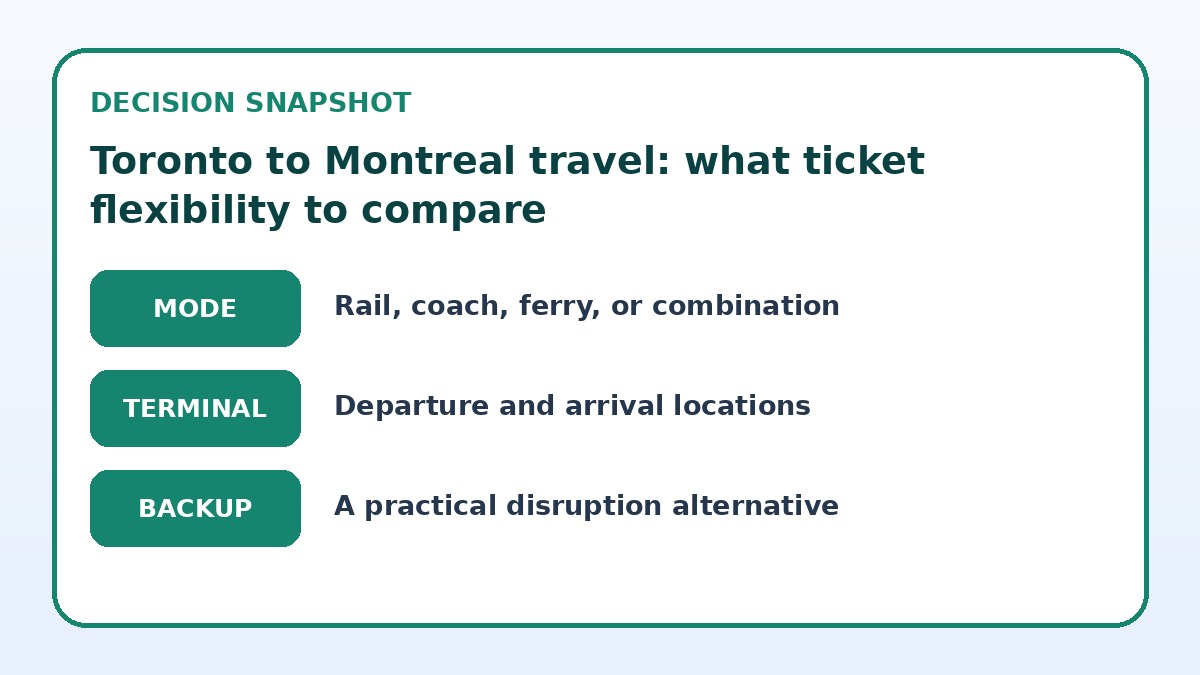
Choose the end-to-end journey plan
| Journey approach | Best for | Friction to check |
|---|---|---|
| Intercity rail (central stations) | Couples prioritizing comfortable onboard space and straightforward city-center transfers. | Fares vary by class; check specific ticket change and refund rules on the carrier’s booking page. |
| Express coach (direct buses) | Couples on tighter budgets who accept longer roadside stops and potential luggage fees. | Lower base fares can mean stricter change rules and less flexibility for missed connections. |
| Self-drive (rental or private car) | Couples wanting full schedule control, flexible stops, and easy luggage handling. | Adds parking, urban driving stress, and variability in door-to-door time that you must plan for. |
| Mixed-mode (drive+train or coach+rail) | Couples seeking to combine convenience and cost savings across legs with planned transfers. | Requires careful alignment of separate providers’ change rules and buffer time for transfers. |
Check live intercity options
Look beyond the ride itself and compare terminals, transfers, luggage, and arrival fit.
Terminal fit and luggage/transfer friction for two
Terminal fit matters more for two travelers because handling two sets of bags, a stroller, or sports gear multiplies friction. Trains typically arrive and depart from central stations with taxi ranks, rideshare pickup points, and short walking distances into downtown hotels, which lowers the effective travel time for couples. Coaches may use intercity terminals or curbside stops; assess how far that stop is from your lodging and whether luggage handling is assisted or self-loaded. If either partner has mobility needs, confirm elevator and assistance availability on booking pages and at both endpoints.
Driving reduces baggage transfer steps but shifts effort to parking and city navigation. If you plan to park at a downtown garage or leave a rental at an airport, check drop-off policies and potential out-of-hours charges. For mixed trips, factor in time and energy for transferring between modes—unloading bags from a car into a station locker or dragging suitcases across a bus bay is tedious for two. Wherever possible, pick options with step-free access, luggage storage, or porter services to make the journey smoother for couples carrying more than just carry-ons.
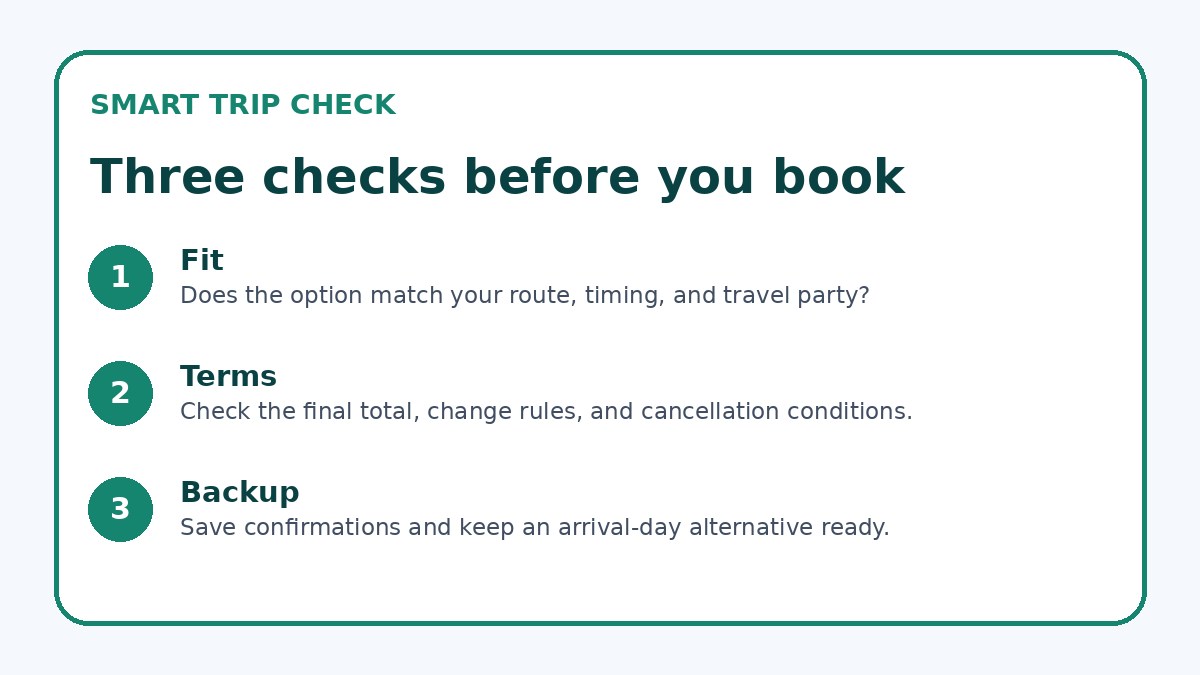
Timing flexibility and how to read fare rules together
When two people travel, timing flexibility becomes a question of how changes affect both tickets. Look for fares that explicitly allow name changes, date swaps, or same-day standby for the second passenger without excessive fees. Some transport providers sell fares that are technically refundable but carry a costly administrative fee, which can be worse than a more flexible but nonrefundable option in practice. On provider booking pages verify exactly what is allowed: is a single change permitted per booking, do both passengers need to be changed together, and are reissue windows limited to certain hours?
If alternatives include connecting options, compare the tolerance for missed connections. Low-flex fares may treat missed transfers as a no-show; flexible fares or protected connections cover rebooking. For couples, buying adjacent seats and confirming that both passengers’ reservations are linked helps when seeking a joint change. Always record the fare code and the exact change/cancellation policy language from the provider’s final booking page. This protects you if you need to argue for a waiver or process a refund later.
Compare the practical alternatives
Use the final page to confirm what is actually offered on your dates and save a workable fallback.
Intercity travel checklist
- On each provider’s final booking page, copy the exact change and cancellation policy language and record the fare code.
- Compare door-to-door times, including transfer walking, parking, and check-in, not just the advertised ride duration.
- Verify luggage allowances and fees for each passenger so extra bags don’t force an urgent seat or vehicle change.
- If booking separate legs, leave at least 60–90 minutes buffer between scheduled arrivals and departures for transfers.
- Confirm pick-up and drop-off points in both cities and check nearby rideshare or taxi availability for late arrivals.
- Buy a flexible option or travel insurance that explicitly covers missed connections and rebooking for both passengers.
Disruption backup plans and door-to-door practicality
Plan a realistic disruption backup before you leave: identify the next few departures for each mode, a local taxi or rideshare option, and a nearby rail or coach alternative that could rescue the trip if one leg fails. For couples, having both partners’ contact and booking references handy speeds up rebooking. Think beyond the ride: if you miss your planned arrival time, where will you stay last-minute, how will you collect checked luggage, and can you adjust onward transit? A flexible ticket is only as useful as the availability of alternative services on the same day.
Also consider insurance and credit-card protections that might cover significant delays or cancellations. Confirm whether a flexible fare provides immediate same-day rebooking at no extra charge, or whether you’ll have to pay a fare difference. If you rely on multiple operators, assess whether a single point of contact can rebook the entire door-to-door chain; otherwise, be prepared to manage separate claims. Practically speaking, couples should agree on the acceptable level of inconvenience and cost for rerouting so decisions can be made quickly under stress.
Rail & Intercity Transport questions travelers ask
Is it better for couples to book refundable fares or buy flexible nonrefundable tickets?
Refundable fares remove the uncertainty of losing money if plans change, but they can be expensive relative to flexible nonrefundable tickets that allow changes with a fee. For couples, the key is to examine how changes apply to both passengers: can you change only one passenger’s date or name, or must you reissue the whole reservation? On the operator’s booking page, check whether change fees are flat or variable and whether fare difference applies. If you expect a high chance of schedule shifts, prioritize flexibility over a small upfront saving.
How should couples handle luggage if one partner travels lighter than the other?
Decide before booking whether luggage will travel together or separately and choose a mode that handles your heaviest item easily. Trains typically allow larger bags without per-item fees and provide more space to store two sets of luggage near your seats. Coaches and low-cost operators may charge for checked bags or limit large items. If you drive part of the way, you can reduce transfer friction, but factor in the effort of parking and transporting bags to central drop-offs. Always verify the exact size and weight rules on the provider’s final booking page.
What practical backup should couples plan for if a connection is missed?
Identify the next few departures on any alternative carrier, plus local taxi or rideshare options that can get you to your destination if public transit options run out. For train or coach disruptions, ask the operator about protected onward connections or whether they assist with rebooking; get any promise in writing or take a screenshot. If you’re driving, pre-map alternate routes and parking locations. Ensure both partners have printed or digital copies of bookings, ID, and emergency contacts so you can rebook faster under pressure.
Final decision note
For couples traveling between Toronto and Montreal, the smartest booking balances flexibility, door-to-door practicality, and how much hassle you’re willing to manage together. Rail typically simplifies transfers and luggage handling for two, coaches can be economical if you accept tighter rules, and driving gives schedule control at the cost of parking and urban driving time. Mixed itineraries can work well but demand careful alignment of separate providers’ policies. Before you pay, copy the exact fare rules from the provider’s final booking page, compare whole-route door-to-door times, and agree with your partner on an acceptable level of contingency so you can make quick decisions if plans change.
Continue planning
Check current options and final conditions
Use the provider page to confirm live availability, the final total, cancellation terms, and every condition that matters to your trip.
This evergreen planning guide was created with AI-assisted drafting and a structured quality review. It does not display live prices, schedules, availability, visa guidance, or provider rankings. Verify current details before booking. Some links are affiliate links; we may earn a commission at no additional cost to you.