If you’re booking Dubai to Sydney flights with children, prioritize a balance between shorter travel time and fewer connection risks. Start by deciding whether a single-connection routing or a longer itinerary with a predictable overnight stop will keep your family calmer; that choice drives seat selection, baggage decisions and how much buffer you need for transfers. Practical planning means having exact traveler ages, preferred departure dates, airport terminals in Dubai and Sydney, and a clear maximum acceptable travel time before checking live options. This article gives the quick decision up front, then walks you through the tradeoffs—routing, baggage and connection risk, schedule fit, and fare conditions—so you can compare alternatives methodically and arrive in Sydney with the least stress possible.

See live routes for your exact travel day
Compare direct and connecting choices with the same baggage and traveler details.
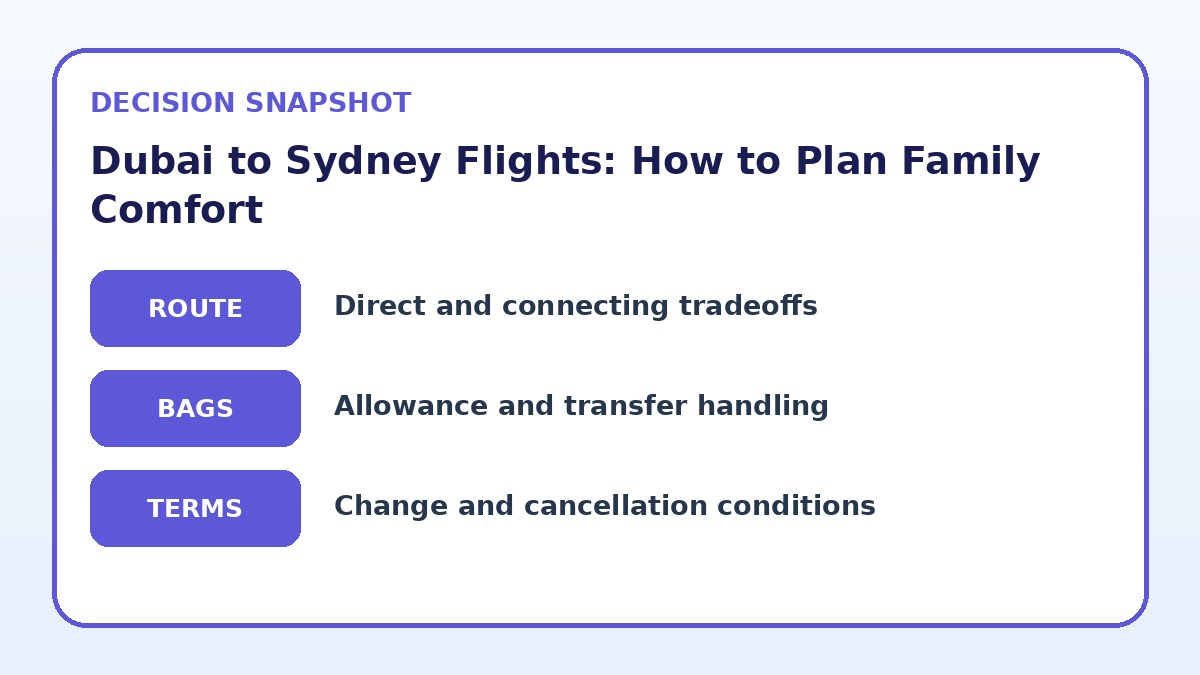
Routing: direct vs. one-stop vs. overnight split
Families should start by comparing route shape before looking at price. A single-stop itinerary often reduces total door-to-door time compared with two stops, but the layover length and terminal transfer complexity can make a short connection risky with children and luggage. If a direct (nonstop) option exists for your dates, weigh it against family comfort: nonstop saves time and handling, which reduces stress for toddlers and infants. Where nonstop isn’t available or too expensive, a one-stop routing with a comfortable long connection can let you use lounge access or airport hotels and recompose the group before the long southern ocean leg.
Overnight splits are worth considering when your family needs to avoid an extremely long continuous flying block. Breaking the trip in a friendly hub city lets you settle into a hotel, maintain predictable sleep routines, and reduce the chance of missing a tight connection with tired children. The tradeoff is added ground transfers and another night to organize, which may increase overall trip complexity and cost. When evaluating itineraries, write down total door-to-door time, number of transfers, and layover lengths so you can compare the practical difference between a nonstop, one-stop, and overnight-split plan.
Baggage and connection risk: protecting checked and carry-on items
For families, checked baggage and connection handling are critical. Whenever possible book through a single ticket so the operating carrier is responsible for transferring checked bags and managing missed connections; if you piece together separate tickets, assume you will need to collect and recheck luggage between flights. Verify on the airline’s final booking page whether infants count toward baggage allowances and what seat-specific carry-on rules apply, because a separated allowance can leave you short of essential items like a stroller or extra clothes.
Also plan for the unexpected by packing a family carry-on with essentials: change of clothes, medications, snacks, basic entertainment and paperwork. If you rely on airport strollers or special assistance, contact the airline and both airports in advance to confirm handling and pickup points. When comparing options, ask each carrier (or check the Trip.com listing as a comparison tool) how they manage short connections, missed connections, and whether they offer automatic rebooking and hotel accommodation for long delays on through-ticketed itineraries.
Compare flight-selection strategies
| Flight strategy | Best for | Risk to check |
|---|---|---|
| Shortest total travel time (fastest routing) | Families wanting to minimize hours in transit and avoid overnight layovers | Often has higher fares and tighter connections, increasing risk if any delay occurs |
| One-stop with long daytime layover | Families who prefer a predictable, relaxed transfer with lounge or airport facilities | Extends total trip duration and may require paying for food or day-room access |
| Overnight split with hotel stay | Families with very young children or those who need normal sleep schedules | Adds hotel and transfer logistics plus extra cost and time on the ground |
| Cheapest available multi-carrier itinerary | Budget-conscious families willing to manage separate tickets and baggage recheck | Higher connection and baggage risk; you must allow large buffers and accept limited support |
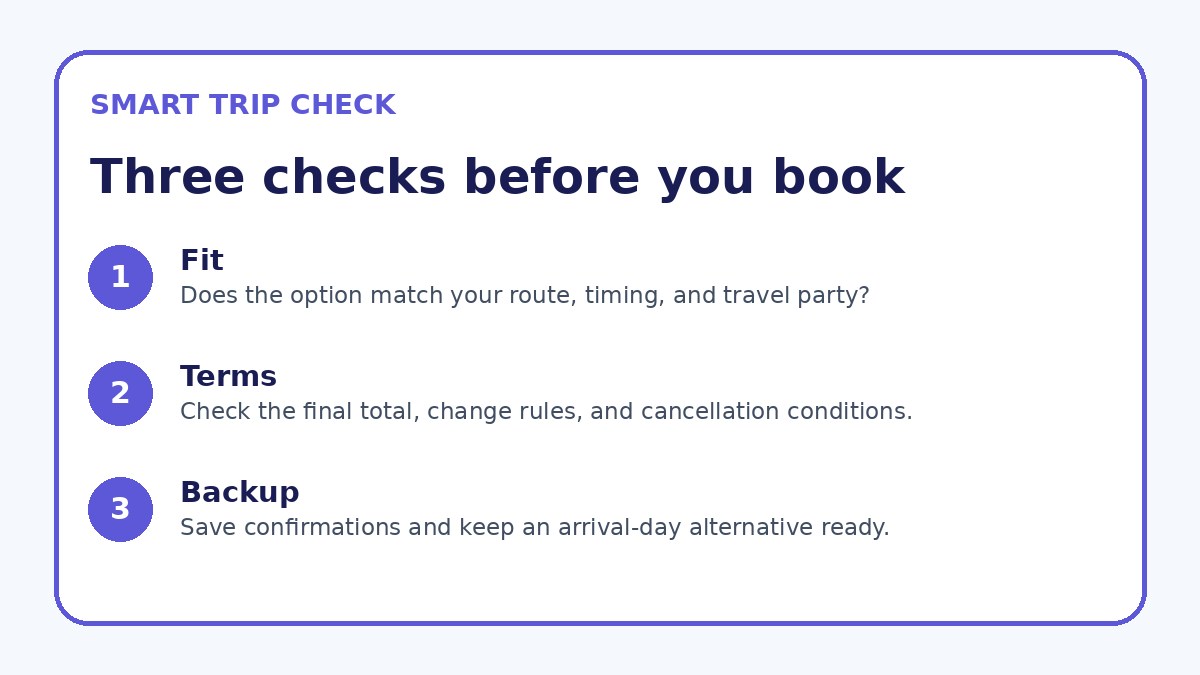
Recheck the complete itinerary
Confirm airports, connection handling, baggage, and change conditions before deciding.
Schedule fit: choosing departure and arrival times for kids
Selecting departure and arrival windows that match your children’s sleep and meal cycles makes the trip feel shorter. If your family handles early wake-ups better than late evenings, a morning departure from Dubai that arrives in Sydney during local daytime may be preferable. Conversely, overnight flights that coincide with normal sleep times can let children sleep through a large portion of flying time. Consider cabin environment too: some long-haul flights dim lights and serve long-haul meals at set times—check typical service patterns on the carrier’s booking page or flight details before choosing.
Account for time zone transitions and recovery time on arrival. A daytime arrival in Sydney gives you immediate access to ground transport and the ability to settle in, while a late arrival could mean navigating an unfamiliar city with tired kids. When comparing schedules, write down planned meal and nap times for travel days and test whether the flight timings align. Also factor in airport transfer time at both ends: faster airport transfers may justify a slightly worse flight time if they reduce total stress.
Flight details to verify
- Collect exact traveler information: full names as on passports, birthdates for infants/children, and whether you’ll request a bassinet or extra seat.
- Note preferred travel dates and a 2–3 day flexible window to compare better routings and fares during live searches.
- Decide routing preference (nonstop, one-stop, or overnight split) and the maximum acceptable total travel time before checking options.
- On each carrier booking page verify baggage allowances, infant/child seat rules, and whether luggage is through-checked for connections.
- Check fare change and cancellation terms, plus whether the ticket offers free rebooking, refunds, or requires travel insurance for protection.
- Plan a family carry-on with essentials for at least one full day in case checked luggage is delayed or a connection is missed.
Fare conditions and flexibility: what to verify before booking
Fare rules determine how easily you can change plans if a child falls ill or a schedule needs shifting. Before booking, inspect change fees, free rebooking windows, and whether fare classes allow name changes or open ticket options. Many family travelers value refundable or flexible fares that permit rebooking with low cost; others accept stricter tickets but buy travel insurance that covers delay, cancellation and medical issues. On the airline’s booking page verify exactly what is included: carry-on and checked baggage allowances, seat selection fees for family seating, and whether infant/child fares include a separate seat or lap travel.
Also check the small-print about irregular operations: if a connection is missed because an earlier leg is delayed, confirm the carrier’s responsibility for rebooking and accommodations. If you have a multi-carrier itinerary, verify whether codeshare legs are protected under the same fare rules. Finally, if you plan to use frequent flyer benefits, check redemption rules and whether infant tickets or extra seats for children are permitted under the program before you lock in a fare.
Flight Guide questions travelers ask
Should I prioritize nonstop flights from Dubai to Sydney for my family?
Nonstop flights reduce handling and transfer risk, which can be valuable with young children or many bags; fewer touchpoints usually mean less chance of missed connections and lost luggage. However, nonstop options can be more expensive or limited, and departure/arrival times might not match your family’s sleep or meal schedule. Before booking, compare total door-to-door time, cabin schedules, and the carrier’s family services on the booking page. Also weigh whether a slightly longer itinerary with a comfortable layover could result in a calmer travel day for your group.
How much connection time should we allow in Dubai with kids and checked baggage?
Allow extra buffer beyond the airline minimum when traveling with children, especially if terminal changes, immigration or rechecking luggage are required. Short turnaround times are stressful with multiple bags, strollers, or when attention is needed for infants. If both flights are on a single ticket, you can usually accept shorter connections than with separate tickets, but still plan for time to use restrooms, change diapers, and move between gates. Check the carrier’s recommended minimum connection time on the booking page and add at least 45–90 minutes depending on airport layout and whether you must pass immigration.
What seating and equipment should we arrange for family comfort on long-haul flights?
Reserve seats together as early as possible and consider bulkhead or window-plus-aisle combinations for easier child access and family space. If your infant qualifies for a bassinet, request it during booking and reconfirm before departure; not every aircraft type or row may support one. Bring familiar comfort items—blankets, small pillows, headphones—and pack entertainment and snacks in your carry-on. Verify seat allocation, bassinet availability, and any required documentation (like an infant ticket or proof of age) on the carrier’s final booking page before travel to avoid disappointment at check-in.
Final decision note
Planning Dubai to Sydney flights for a family means choosing the right tradeoff between time, cost and logistical risk. Decide early whether minimizing in-air time or reducing connection complexity matters more to your household; that choice will guide seat booking, baggage strategy and how much buffer you book between flights. Always gather full traveler details and preferred dates before checking live options and verify fare rules, baggage allowances and connection protections on the airline’s booking page. Use the checklist items to prepare and compare the four decision approaches. If you want a quick spot-check of published options, Trip.com can show current availability, but rely on the carrier pages to confirm final baggage, seat and fare conditions.
Continue planning
Check current options and final conditions
Use the provider page to confirm live availability, the final total, cancellation terms, and every condition that matters to your trip.
This evergreen planning guide was created with AI-assisted drafting and a structured quality review. It does not display live prices, schedules, availability, visa guidance, or provider rankings. Verify current details before booking. Some links are affiliate links; we may earn a commission at no additional cost to you.