If you need a practical family plan for ground travel between Seoul and Busan, start by deciding how many city-stopover legs you want, how much luggage you’ll carry, and which family priorities — speed, cost, or sightseeing — matter most. For most families this means choosing between high-speed intercity trains for speed and comfort, express buses for cost flexibility and seat availability, or a private car/driver to control stops and timing. Build a multi-city plan by mapping arrival and departure hubs in each city, then slotting accommodations and activities around realistic transfer buffers. This article gives quick decisions you can make now, then explains tradeoffs, how to compare families’ needs, and the exact provider details you must verify on booking pages before you pay.
See current options before you compare the details
Availability and final conditions change. Open Trip.com now or keep reading for the practical comparison.
Choosing the right mode for families
When a family compares Seoul to Busan transport options, the top practical variables are journey time, on-board space, frequency, and how easily you can manage kids and luggage. High-speed trains typically win on journey time and predictable schedules; they also usually have room to walk, change a diaper, or calm an upset child. Express buses can be cheaper and often serve different neighborhoods, giving more flexibility on where you start or end. Driving gives complete control and the chance to stop for sightseeing — but requires someone comfortable driving long distances and handling directions, tolls, and parking.
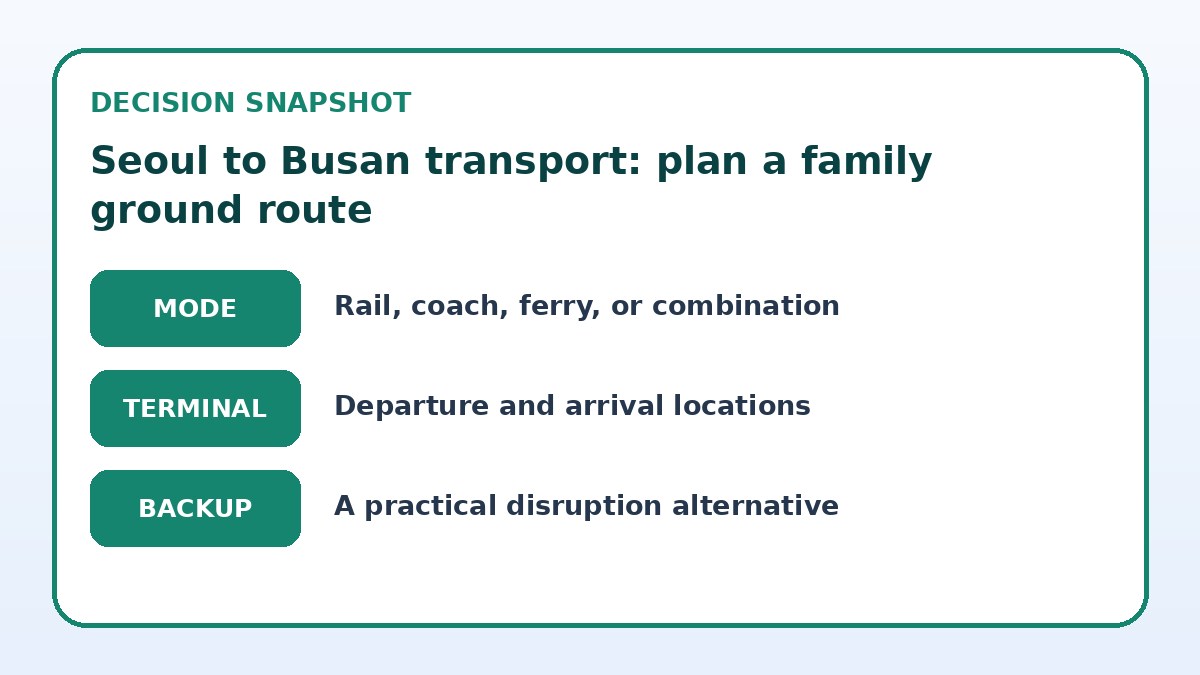
To choose, list your non-negotiables: do children need quiet for naps, do you require a car seat, or do you want to break the trip into multiple small towns? Match these needs to transport features: trains for speed and fewer traffic risks, buses for flexible routing and lower cost per traveler, and cars for door-to-door control and multi-stop itineraries. Once you choose a primary mode, build a backup plan for delays and missed connections, and verify luggage and seat policies on the provider booking page before committing.
Designing a multi-city itinerary with kids
A multi-city ground-transport plan divides the trip into manageable legs: for example, Seoul → intermediate stop → Busan. Choose intermediate towns based on short travel times that let kids stretch, local attractions that interest the family, and convenient accommodations near stations or bus terminals. Time your legs so mornings are for travel and afternoons for exploring — younger kids often travel better in the morning or after naps. Keep each day’s total transit time realistic: children handle one long journey better if overnighted halfway, rather than pushing through multiple long legs in a single day.
Logistics matter: select hotels close to the transport hub you’ll use next, pack a day bag with snacks and entertainment for transfers, and check if your chosen accommodation can hold luggage before check-in or after checkout. If you plan a day-trip stop, confirm how often trains or buses run on that specific leg — frequency determines whether you can be spontaneous or must follow a tight timetable. Always verify the final booking pages for exact station stops, platform arrangements, and luggage allowances before you travel.
| Approach | Best for | Tradeoff to check |
|---|---|---|
| High-speed intercity train | Families prioritizing speed, comfort, and predictable schedules | Less door-to-door flexibility; check seat assignments and luggage rules on the booking page |
| Express intercity bus | Families seeking lower fares and flexible start/end points | Longer journey times and potential road delays; verify seat pitch and restroom availability |
| Private car or rental | Families needing full itinerary control, multiple stops, or remote town access | Driver fatigue, parking and tolls, and responsibility for car seats and navigation |
| Mixed-mode plan (train + local bus/car) | Families combining speed with local exploration of intermediate towns | Requires careful timing of connections and verification of platform/terminal transfers |
Ready to check the option that fits your plan?
Use your exact dates and traveler details so the provider page can show the current total and conditions.
Practical checks before booking each leg
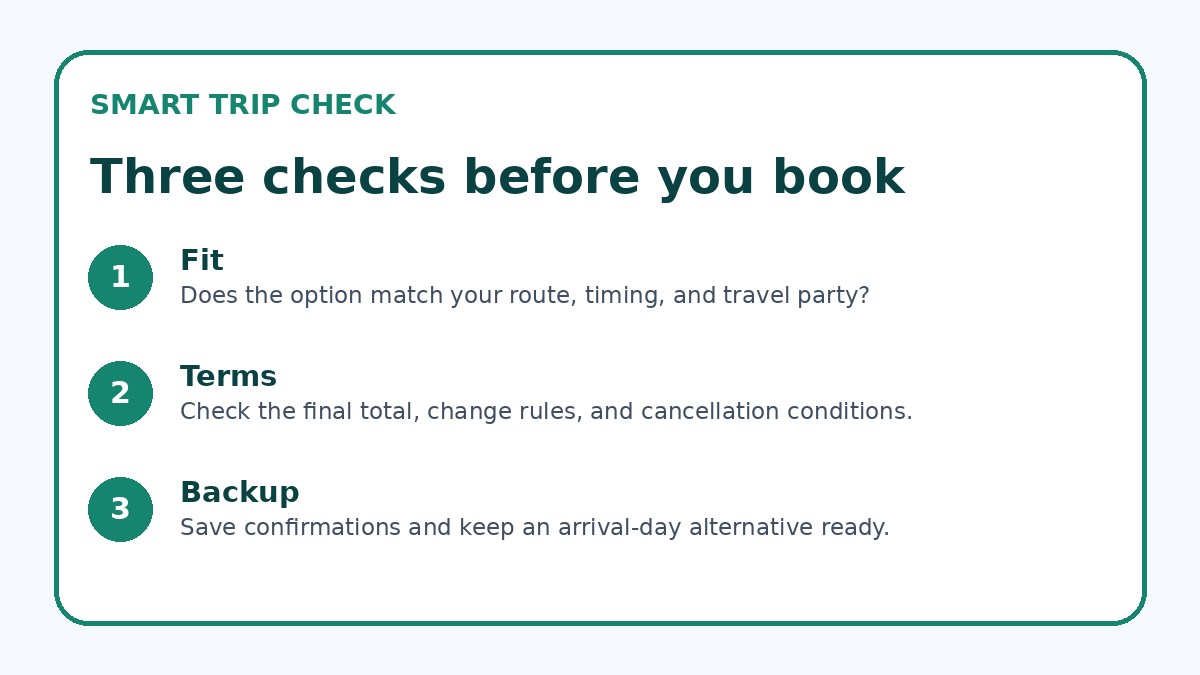
Before you buy tickets for Seoul to Busan transport, verify four provider facts that change often: exact departure and arrival stations, whether seats are assigned, baggage rules and size limits, and cancellation or change policies. For family travel, assigned seats that allow adults to sit beside children are important; some providers let you reserve specific rows or family zones. Check whether a stroller counts as luggage or can be gate-checked. If you’re driving and hiring a car with car seats, confirm availability and whether you must bring your own child restraints.
Also confirm transfer walking distances between platforms or terminals, and whether the station has elevators or accessible ramps if you have a stroller. Look at the timetable for realistic connection windows — allow an extra buffer for traffic or platform crowding. If using a third-party comparison site like Trip.com, use it to see current availability but always click through to the transport provider’s official booking page to confirm baggage rules, seat selection options, and refund conditions before finalizing payment.
Before you book
- Decide family priorities (speed, cost, or flexibility) and write them on a single planning page.
- Map your start and end stations and pick hotels within easy walking distance of the next leg’s hub.
- Confirm seat assignment rules and reserve seats so adults can sit beside children when booking.
- Pack a day bag with snacks, medications, chargers, a spare outfit, and small quiet activities.
- Verify luggage and stroller rules on the provider’s booking page before final payment.
- Build at least 45–90 minutes buffer for transfers and include an emergency contact plan.
Packing, comfort, and on-the-day routines
Pack a family day bag that prioritizes comfort and quick access: snacks, spill-proof bottles, wipes, a lightweight blanket, basic medication, chargers, headphones, and small toys or books that encourage quiet play. For multi-leg itineraries, distribute essentials so you don’t need to open checked luggage between legs. Dress kids in layers for changing temperatures on trains, buses, or in a car. If you anticipate naps, bring a familiar item and consider a portable travel pillow for longer legs.
On travel day, leave for the first departure with extra time for toilet breaks and ticket pick-up. Use a checklist to confirm tickets, passports or IDs, phone power, and station directions. For car legs, plan rest stops every 1.5–2 hours to stretch legs and avoid crankiness. If you expect crowded departures, aim for an earlier departure window to avoid last-minute boarding stress. Finally, build in a flexible emergency buffer in your schedule so one delayed leg doesn’t disrupt the whole multi-city plan.
Frequently asked questions
Should families prefer trains or buses between Seoul and Busan?
Choose trains if your family values faster travel, stable schedules, and easier movement onboard; they often allow walking and have predictable running times. Buses can work if you want to start or end in neighborhoods not served by train stations and often cost less per ticket, but expect longer travel times and potential traffic delays. Think about naps, how much luggage you have, and whether you need assigned seats next to children. After narrowing to one mode, verify seat assignments, luggage rules, and exact station or terminal locations on the provider’s booking page.
How many stops should a family include in a multi-city ground plan?
There’s no single right number — balance travel tolerance, sightseeing interest, and kids’ nap schedules. For most families, one mid-journey overnight or a single daytime stop reduces stress: it breaks long travel into two manageable legs and gives time to explore without packing and unpacking daily. If your kids are older and enjoy short detours, several short stops can work if each leg is under two hours. Always check connection frequency and allow generous transfer windows when planning multiple stops.
What practical things should I verify on the booking page before paying?
On any provider page confirm the exact departure and arrival stations, whether seats are assigned and if you can reserve specific seats, the baggage and stroller policy, and the cancellation/change terms. For car rentals or private drivers, confirm child-seat availability and insurance coverage. If your itinerary has connections, check platform or terminal transfer details and the frequency of alternate services. If using a comparison site like Trip.com to see availability, follow through to the provider’s official page to confirm these specifics before finalizing payment.
Final planning note
Building a family-friendly Seoul to Busan ground-transport plan starts with clear priorities: choose speed (trains), cost flexibility (buses), or door-to-door control (car). Break the route into sensible legs that match children’s routines, place accommodations close to departure hubs, and always verify seat, luggage and transfer details on the provider’s booking page before you commit. Pack a thoughtful day bag, build transfer buffers, and keep a simple backup plan for missed connections. With these steps you’ll reduce on-the-day stress and create a flexible, realistic itinerary that keeps travel time manageable and family enjoyment high.
Continue planning
Check current options and final conditions
Use the provider page to confirm live availability, the final total, cancellation terms, and every condition that matters to your trip.
This evergreen planning guide was created with AI-assisted drafting and a structured quality review. It does not display live prices, schedules, availability, visa guidance, or provider rankings. Verify current details before booking. Some links are affiliate links; we may earn a commission at no additional cost to you.