If you need a short, practical answer: choose the most flexible ticket you can afford if your plans could change, and a less-flexible, lower-cost ticket if your dates and arrival time are fixed. For many solo travelers between Seoul and Busan that means weighing refundable or changeable train and intercity bus tickets against no-refund advance fares. This article shows the tradeoffs—penalties, rebooking ease, seat reservations, and how connections affect flexibility—so you can match a policy to your risk tolerance. I’ll also explain what to verify on the provider’s final booking page (refund windows, change fees, seat hold rules, and whether tickets are exchangeable at stations). That checklist helps you avoid surprises and choose whether to prioritize price, schedule certainty, or the freedom to pivot at short notice.
See current options before you compare the details
Availability and final conditions change. Open Trip.com now or keep reading for the practical comparison.
Main transport choices and where flexibility matters
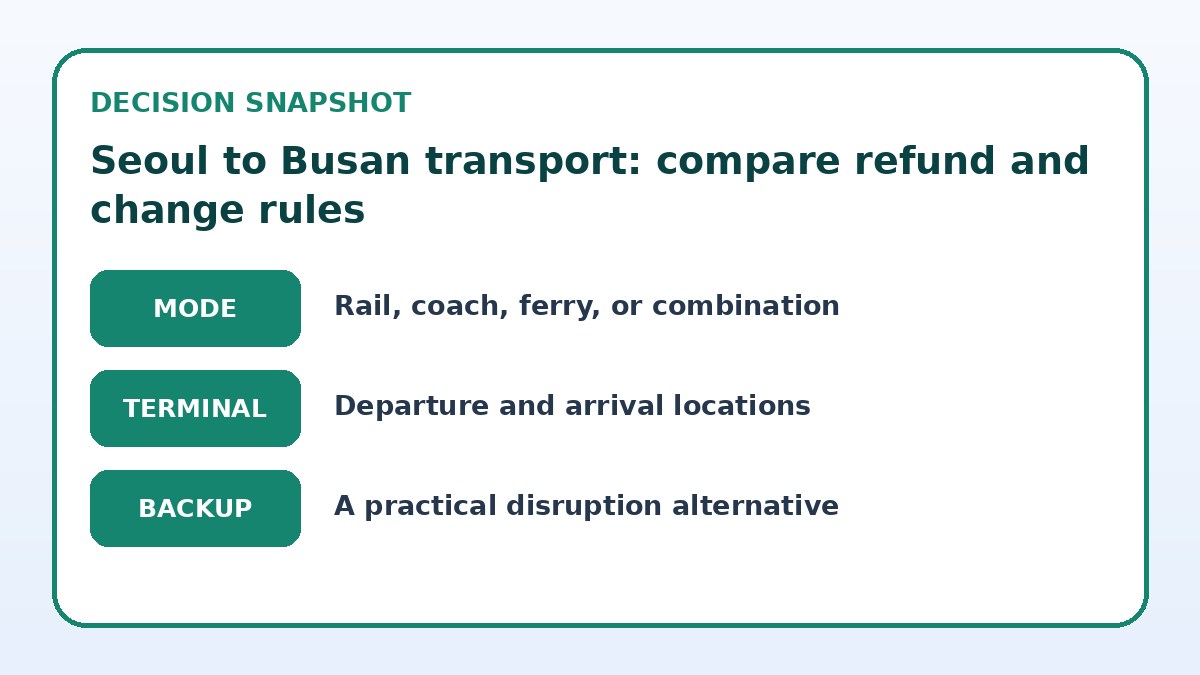
The common overland options between Seoul and Busan are high-speed rail, conventional rail, intercity buses, and combinations that include local trains or buses for first/last miles. Each option treats flexibility differently: high-speed rail often offers tiered fares with refundable or exchangeable tickets at higher price points, while some intercity buses and discount rail fares lock you in. Solo travelers should map how often plans change for them and where flexibility will be most valuable—departure time, seat reservation, or the ability to cancel entirely and recover value.
Another key area is connections. If you plan to mix modes—say, a high-speed train plus a regional bus from a different terminal—flexibility during the first leg may not protect the second unless you buy a combined ticket. When deciding, consider how easy it is to rebook at stations, whether an online change process exists in English, and how airlines or bus operators handle involuntary changes like service cancellations.
Refunds, exchanges, and the typical rules to compare
When comparing tickets, focus on three concrete policy elements: refund eligibility, change fees and windows, and seat reservation conditions. Refund policies vary: some fares allow full refunds up to a deadline, others only partial refunds, and some none at all. Change fees may be a flat fee or a percentage plus any fare difference; deadlines (how long before departure you can change) are equally important. For solo travelers, the ability to change a booking online without visiting a counter can save valuable time and hassle.
Seat reservations affect both comfort and flexibility. A ticket with a reserved seat offers certainty but may require rebooking the seat if you change times. Open or unreserved tickets let you pick any service in a class but can mean standing or no guaranteed seat on busy services. Look on the provider’s final booking page for exact wording on 'open tickets', reserved seats, and whether a reservation holds for a limited time before being released.
| Approach | Best for | Tradeoff to check |
|---|---|---|
| Fully refundable/exchangeable ticket | Travelers who need maximum freedom and low planning stress. | Higher upfront cost and potentially fewer discounted seats. |
| Partially refundable or flexible-with-fee ticket | Those who want a middle ground between cost and adaptability. | Moderate fees for changes and possible fare difference charges. |
| Advance nonrefundable discounted fare | Solo travelers with fixed schedules looking to save money. | Little to no refund or free-change options if plans shift. |
| Separate low-cost legs (split bookings) | Budget-focused travelers willing to manage risk across segments. | Missed connections may be entirely your responsibility; more rebooking hassle. |
Ready to check the option that fits your plan?
Use your exact dates and traveler details so the provider page can show the current total and conditions.
Practical tradeoffs for solo travelers
Solo travelers often balance cost against the convenience of being able to pivot. If you value schedule certainty, a refundable or exchangeable high-speed rail ticket can be worth the premium—especially for business trips or events. If you’re traveling with a flexible itinerary, an advance discount rail fare or bus ticket can reduce cost but increases the risk that a sudden change will force a full-price rebooking. Think about how much you’d pay to avoid rebooking stress and multiply that by the probability your plans will change.
Also consider the non-monetary costs of low flexibility: time spent at ticket counters, language obstacles when handling changes, and the stress of juggling separate bookings. Buying a single flexible ticket that covers the full route can eliminate those hassles, while splitting legs into separate low-cost tickets can save money but transfers the risk onto you. For trains or buses that publish seat availability in real time, check whether the provider offers a simple mobile rebooking flow or requires in-person changes.
Before you book
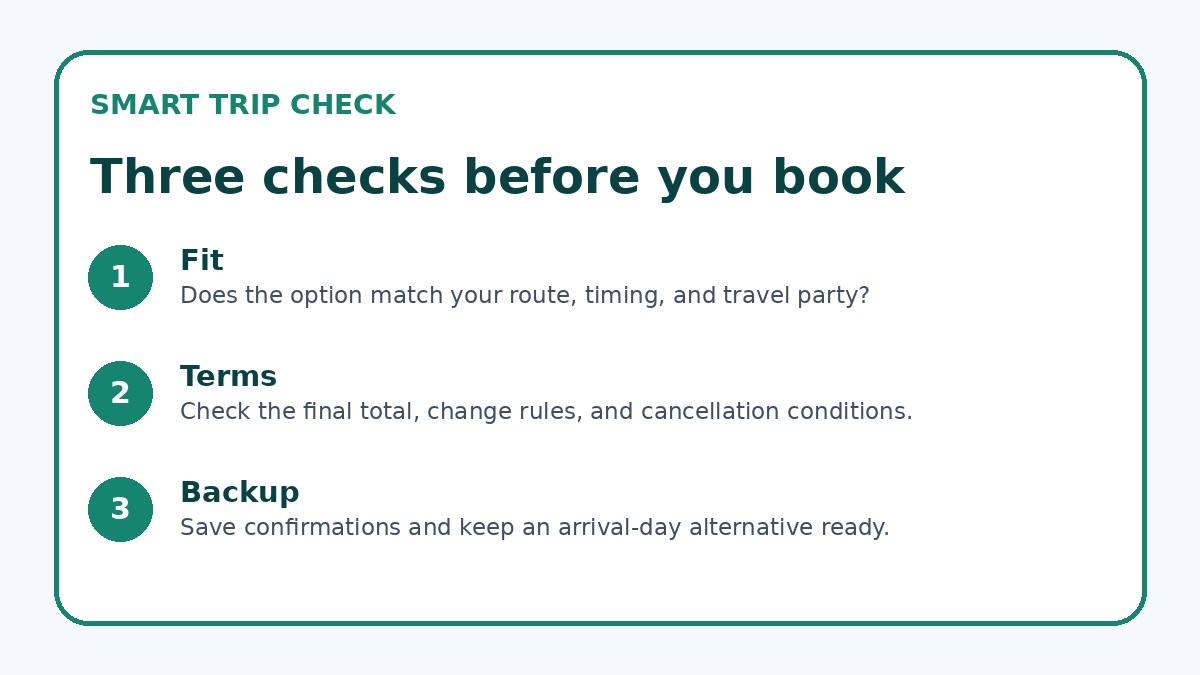
- Read the refund and change policy on the operator’s final booking page, not just the search listing.
- Verify whether your ticket includes a reserved seat and what happens to that reservation if you change times.
- Confirm if rebooking or refunds can be completed online in English or require an in-person station visit.
- Check whether a combined ticket covers missed connections or if each leg is a separate risk.
- Note any deadlines for free changes or full refunds and set calendar reminders for that cutoff.
- Compare total cost including likely change fees and potential fare differences, not only the purchase price.
How to compare options and verify details before booking
Before you click purchase, compare policies line by line. Always inspect the provider’s final booking page for exact refund and change rules, any time limits on refunds, how change fees are calculated, and whether seat reservations transfer with a change. If booking through a third-party platform, verify the ticket conditions on the operator’s official site too; third-party descriptions sometimes omit important limitations. Trip.com can be one place to compare availability and conditions, but confirm policies where the operator states them.
Make a quick decision checklist: confirm whether the ticket is refundable, how much notice is required for a free change, whether rebooking is available online or must be done at a counter, and if the ticket is exchangeable for a voucher. If you need the freedom to depart on short notice, prioritize open or fully refundable fares. If you are confident in your itinerary, a tiered or advance fare may be adequate and more economical.
Frequently asked questions
If I buy a cheap advance ticket, can I swap to an earlier train on the same day?
It depends on the fare rules. Many advance tickets are time-specific and require a paid change or a no-refund exchange at a counter. Open or flexible tickets typically allow same-day changes or boarding a different service within a class, but availability can be limited on busy services. Always check the specific ticket’s wording about same-day exchanges and whether the operator enforces seat reservations. If same-day flexibility is important, look for fares that explicitly state they permit it or purchase a refundable option.
Should I buy a combined through-ticket or separate tickets for each leg?
A combined through-ticket typically offers protection if the first leg is delayed and causes you to miss a connection, because the operator or alliance often rebooks you. Separate tickets can be cheaper but transfer the risk to you—if you miss the second leg, you may need to buy a new seat. Consider how likely delays are on each leg, whether you have buffer time, and whether the operator’s transfer protection is documented on the booking page. For solo travelers who dislike uncertainty, a single combined ticket is often worth the extra cost.
Where do I double-check policies and avoid surprises when booking?
Always examine the final confirmation page on the operator’s official site or the ticketing platform before paying. Look for explicit terms on refunds, change fees, deadlines, and whether the ticket is exchangeable at a station. If booking through an aggregator, verify the operator’s own policy pages as well. If anything is unclear, contact customer service and save the exchange in writing. Finally, if you plan to rely on seat reservations, find the exact procedure for modifying or canceling those reservations on the provider’s site.
Final planning note
For solo travelers between Seoul and Busan, ticket flexibility is a tradeoff between cost and the ability to change plans with minimal friction. If your itinerary could shift, prioritize refundable or clearly exchangeable fares and confirm online rebooking options; if your schedule is firm, advance discounted fares can make sense but require acceptance of risk. Always verify the operator’s explicit refund and change conditions on the final booking page, check how seat reservations are handled, and decide whether combined tickets are worth the protection for connections. A short pre-booking checklist—focused on refunds, change windows, and reservation rules—will help you choose the right balance of price and peace of mind.
Continue planning
Check current options and final conditions
Use the provider page to confirm live availability, the final total, cancellation terms, and every condition that matters to your trip.
This evergreen planning guide was created with AI-assisted drafting and a structured quality review. It does not display live prices, schedules, availability, visa guidance, or provider rankings. Verify current details before booking. Some links are affiliate links; we may earn a commission at no additional cost to you.