If you’re arriving in Sapporo with oversized suitcases, sports gear, or multiple bags, deciding between public transport and a private transfer shapes your first hours in the city. The practical answer: choose a private transfer when you need door-to-door convenience, zero lifts with heavy bags, and fewer stops; choose public transport when you want more flexibility, lower base cost, or easy access to transit hubs where you’ll store or consolidate luggage. Both paths work well in Sapporo, but the right pick depends on where you are staying, how many bags you have, how mobile everyone in your party is, and how much walking or carrying you want to avoid. Below you’ll find clear tradeoffs, a step-by-step checklist for booking, and the verification points to check on providers’ final booking pages before you commit.
See current options before you compare the details
Availability and final conditions change. Open Trip.com now or keep reading for the practical comparison.
When private transfers make more sense
Private transfers are the most straightforward choice when extra luggage is the main constraint. A hired car or van can collect you at arrivals, limit the number of times baggage is handled, and drop you exactly at your accommodation’s door. That reduces walking with heavy items, eliminates the need to navigate stairs or crowded platforms, and gives you control over timing—important if you land late or want to leave early. Families, travelers with mobility issues, or groups with sports equipment often prefer this convenience despite higher base costs.
Before booking a private transfer, confirm the vehicle size and how many suitcases the provider allows; some services cap pieces or require oversized items to be listed in advance. Also verify pickup logistics—how the driver contacts you, where to meet if multiple terminal exits exist, and whether parking or waiting time is included. These operational details change often, so check the provider’s final booking page for baggage limits, meeting-point instructions, and cancellation or waiting-time terms before you commit.
When public transport is the better choice
Public transport becomes attractive if you prefer lower overall spending, expect to stay in a central area well served by transit, or plan onward travel that connects smoothly from stations. Sapporo’s train and bus network can be efficient for compact luggage and travelers ready to manage lifts or elevators. If your accommodation is near a major station or tram stop, you can often reach it with one transfer, and storing or consolidating bags at a luggage service later can ease exploration during your stay.
Plan carefully for platform access and peak crowding: some suburban or airport stops have stairs or long ramps. Identify elevators or escalators along your chosen route in advance and consider off-peak travel if possible to avoid busy trains. When comparing public options, check the number of transfers required, the distance between stations and your final accommodation, and whether the route will require carrying bags across level changes or long corridors.
| Approach | Best for | Tradeoff to check |
|---|---|---|
| Private transfer (car/van) | Travelers with many or oversized bags, limited mobility, or tight schedules. | Higher base cost and need to verify baggage capacity and pickup logistics on booking pages. |
| Airport express bus | Simple door-to-hub rides if your accommodation is near a well-served stop. | May involve walking from the stop to your hotel and limited space for oversized items. |
| Train plus short taxi or walk | Guests staying near major stations who can manage short transfers and stairs. | Transfers can be awkward with heavy luggage; check elevator availability and transfer distances. |
| Mix: public to central station, then luggage service | Travelers who want lower cost while avoiding dragging bags through the city. | Requires extra logistics—finding luggage storage and syncing times with your arrival. |
Ready to check the option that fits your plan?
Use your exact dates and traveler details so the provider page can show the current total and conditions.
How to compare time, cost, and effort
Make a simple comparison matrix: door-to-door time, cost per person or vehicle, number of times you must handle bags, and physical effort required (stairs, walking distance). For door-to-door estimates, add walking time from parking or drop-off to your lodging when evaluating private services, and add transfer and walking times for public options. Don’t forget soft costs: stress, handling difficulty, and the possibility of missing connections if flights are late. Balancing these elements will reveal which approach saves you time or effort.
When doing the math, always confirm specs on the provider’s booking page: exact pickup location, luggage allowances, and whether additional fees apply for extra stops or oversized items. If comparing a train and a bus route, check whether either option requires an extra taxi or shuttle at the end. If you have many or bulky items, factor in the time and effort of moving them through stations or between platforms—this often tips the balance toward private transfers for heavy-load travel.
Before you book
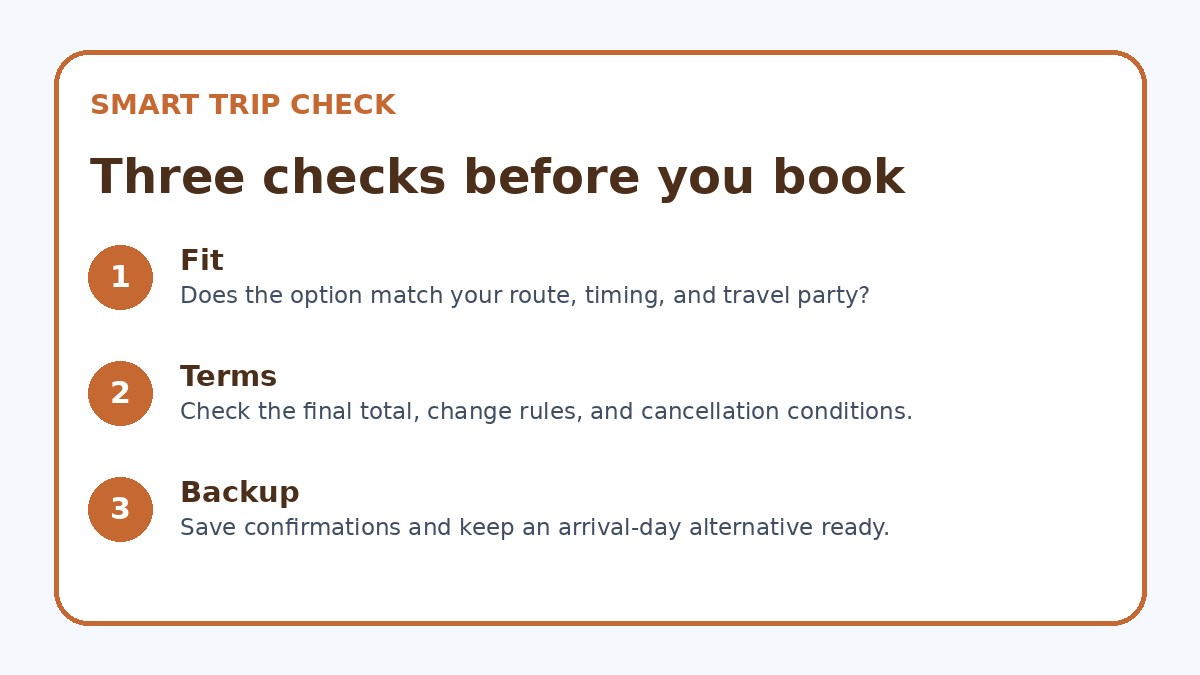
- Record your accommodation’s exact address and the best nearby station or stop before comparing options.
- Count and measure every piece of luggage; note any oversized, fragile, or oddly shaped items.
- Ask private providers about vehicle size, luggage limits, driver assistance, and where to meet at the terminal.
- Map public routes and mark elevator/escalator locations between airport platforms and final stops.
- Check the provider’s final booking page for baggage policy, pickup instructions, and change/refund terms.
- Keep confirmation emails/screenshots and the provider’s contact number handy for arrival pickup coordination.
Practical steps to finalize your choice
Start by noting two facts: the exact address of your accommodation, and the number, size, and special nature of your bags. With that, request quotes or route plans for both a private transfer and public alternatives. For private transfers, ask providers whether drivers help with loading, if child seats are available, and how they handle oversized items. For public transport, map the route from the airport to your hotel, identify elevator locations, and check whether you’ll need a short taxi at the end.
Finally, confirm uncertainties on the supplier’s final booking page before paying: baggage policy, pickup or meeting point details, refund and change conditions, driver contact methods, and any additional charges for waiting time or extra stops. If you want a quick cross-check of current availability, you can look on aggregators like Trip.com, but always take the supplier’s own terms as definitive. Keep screenshots or confirmation emails so you can show details at pickup if needed.
Frequently asked questions
Can I bring oversized sports equipment on public transit in Sapporo?
Policies for oversized or unusual items vary across carriers and can change, so don’t assume universal acceptance. Before you travel, identify the specific train or bus operator you’d use and read the baggage rules on the operator’s booking or information page. If public options limit size or require special handling, consider a private transfer or a luggage shipping service. Also verify whether stations on your route have ramps or elevators to avoid carrying bulky gear up stairs.
How do I find the right private transfer vehicle for a group with many suitcases?
Contact providers with exact details: passenger count, number and dimensions of bags, and any special items. Ask for the vehicle model or class, then confirm the advertised capacity and whether extra luggage space is available for an additional fee. On the provider’s booking page look for meeting-point instructions, driver contact methods, and any waiting-time charges. If a quote seems vague, request written confirmation of luggage capacity before paying to avoid surprises at pickup.
Is it safer to use a luggage storage service instead of carrying bags to my hotel?
Using a verified luggage storage service can reduce immediate handling, letting you travel lighter into the city while you check in later. Confirm the storage provider’s hours, insurance or liability terms, and security measures on their booking page. Note pickup locations relative to transit stops so you don’t add extra walking. If you have valuables, keep them with you. Luggage storage is a practical middle path for those who want to use public transit but avoid dragging heavy bags through stations.
Final planning note
Choosing between public and private transfers in Sapporo depends on the balance you want between convenience and cost when traveling with extra luggage. Private transfers remove many handling pains and reduce physical strain, while public transport can save money if your accommodation is near a well-connected stop and you can manage brief walks or transfers. Use the checklist to gather exact baggage counts and addresses, compare door-to-door effort in minutes rather than vague claims, and always verify baggage policies, pickup points, and change/refund terms on providers’ booking pages before you pay. A clear comparison and a short pre-trip check can turn an awkward arrival into a smooth start in Sapporo.
Continue planning
Check current options and final conditions
Use the provider page to confirm live availability, the final total, cancellation terms, and every condition that matters to your trip.
This evergreen planning guide was created with AI-assisted drafting and a structured quality review. It does not display live prices, schedules, availability, visa guidance, or provider rankings. Verify current details before booking. Some links are affiliate links; we may earn a commission at no additional cost to you.