For business travelers, the core decision on Seoul to Busan flights is a simple tradeoff: do you pay more for schedule convenience and lower connection risk, or do you accept tighter rules and potential delays in exchange for a more flexible fare? Start by defining your non-negotiables—meeting times, required arrival window, and whether you must carry presentation equipment or a change of clothes. Once you know those constraints, you can compare flight options more meaningfully: direct versus connecting routing, carry-on versus checked baggage needs, and how fare change and refund rules match your corporate expense policy. This article gives a compact framework to make that decision, what to verify on carriers’ final booking pages, and practical steps to prepare exact dates and traveler details before checking live availability on airline sites or comparison tools such as Trip.com.
See live routes for your exact travel day
Compare direct and connecting choices with the same baggage and traveler details.
Routing: direct versus connecting options
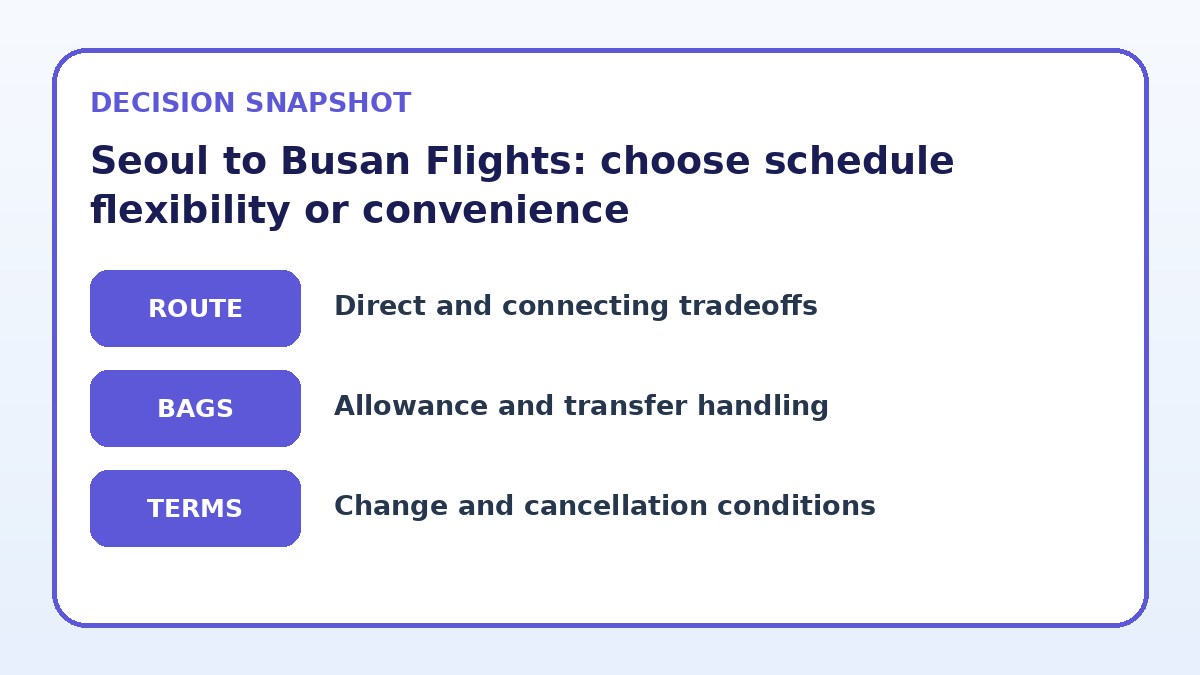
Seoul to Busan is served by a mix of route types; your decision should hinge on total door-to-door time and the number of handoffs. For business travelers, a direct flight or a single short connection reduces uncertainty, but may be offered in a more restrictive fare class. When comparing options, calculate total travel time including transfer to and from airports, security lines, and potential traffic to understand true schedule impact.
If a direct flight isn’t available at your preferred time, weigh a connection that leaves a healthy buffer between flights. Avoid marginal connection windows when you carry important materials or need predictable arrival times. When examining a connecting option, check whether minimum connection time is industry-standard at the transfer airport and whether same-ticket protection applies; verify all of this on the carrier’s final booking page rather than relying solely on search results.
Baggage and connection risk
Baggage allowances and handling protocols vary by fare and carrier and can be the deciding factor for business travelers. If you travel with a checked bag or specialist equipment, choose a fare class that includes sufficient allowance to avoid paying for separate checked items that could complicate transfers. For connecting itineraries, same-ticket transfers generally protect checked bags, but confirm whether you must re-check bags or collect them during a layover—these details live on the airline’s booking page and can affect total transfer time.
If you plan to travel carry-on only to speed up transitions, select flights with consistent cabin baggage policies and realistic gate transfer distances. Business trips often require rapid movement between airport and meeting—carry-on-only can save time but may force you into a different fare bucket with stricter change rules. Explicitly check baggage size, weight, and any equipment surcharges before booking to avoid surprises at check-in.
Compare flight-selection strategies
| Flight strategy | Best for | Risk to check |
|---|---|---|
| Lowest-fare, non-refundable tickets | Travelers with fixed dates and minimal luggage | Lowest upfront cost but restrictive change/refund terms; higher risk if plans shift. |
| Flexible fare with change privileges | Frequent schedule changes and last-minute meetings | Higher fare but far easier to rebook; may limit cheapest cabin or seat choices. |
| Direct flights with moderate fares | Tight arrival windows and high schedule certainty | Better convenience and lower connection risk; potentially higher fare than connecting options. |
| Connecting itinerary with long buffers | Cost-sensitive travelers who need reliability without premium fares | Lower fares than direct but longer total travel time and more transfer complexity. |
Recheck the complete itinerary
Confirm airports, connection handling, baggage, and change conditions before deciding.
Schedule fit: arrival windows and buffer planning
Match flight times to your business schedule by working backward from the latest acceptable arrival time, adding buffers for ground transport, security, and potential delays. For morning meetings, an earlier arrival with a longer pre-meeting buffer reduces stress, but that may mean an overnight stay or earlier departure from Seoul. For afternoon meetings, mid-day flights might be ideal—just ensure the carrier’s schedule reliability and airport transfer options align with your itinerary.
When comparing two similar itineraries, prioritize the one that preserves contingency time for critical meetings. If your employer allows it, consider booking a slightly more expensive option with built-in flexibility or a refundable segment for peace of mind. Document exact meeting times, hotel check-in policies, and transport options so you can select flights that minimize the risk of missing crucial commitments.
Flight details to verify
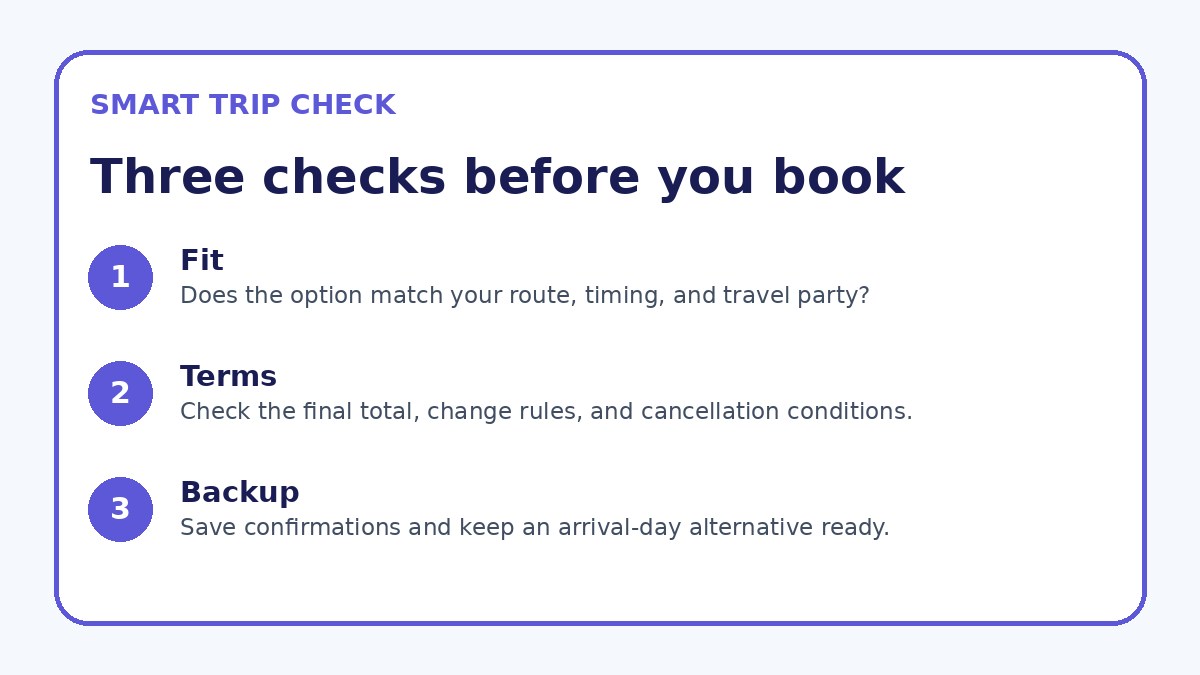
- Confirm exact meeting start times, venue address, and the latest acceptable arrival time before searching flights.
- Decide baggage needs (carry-on only, checked bag, or special equipment) and filter fares that include required allowances.
- Check fare rules on the airline’s final booking page for change fees, refundability, and same-ticket protection for connections.
- Compare total door-to-door travel time, including airport transfer, security, and potential traffic, not just airborne time.
- If booking a connector, verify the minimum connection time policy and whether baggage is checked through on a single ticket.
- Prepare traveler details (full name as on ID, frequent flyer number, and company billing info) and exact travel dates before opening booking tools.
Fare conditions: change, refund, and upgrade options
Business travelers often value flexibility more than the lowest fare, so read fare conditions carefully before purchase. Look for change-fee policy, refundability, and whether same-day or complimentary stand-by options are available—these vary by fare bucket and can be decisive when meeting schedules shift. Confirm what constitutes a change fee versus a fare difference and whether tax or carrier-imposed surcharges apply when rebooking; verify these specifics on the carrier’s final booking page.
Consider corporate account benefits or credit-card protections that may add flexibility, such as elite upgrade priority or paid rebooking allowances. If you anticipate schedule shifts, prioritize fares that allow credits or free changes and check the process to apply those credits, required documentation, and any blackout periods. Keep a record of fare rules at booking and capture screenshots or confirmation emails for quick reference during travel.
Flight Guide questions travelers ask
How do I decide between a direct flight and a cheaper connecting option for a business trip?
Start by setting your arrival deadline and the amount of buffer you want before a meeting. Direct flights reduce connection risk and are usually faster door-to-door, which matters when missing a meeting is costly. Cheaper connecting flights can be suitable if you can tolerate extra travel time and you’ve confirmed same-ticket baggage handling and adequate connection windows. Check the airline’s booking page for protection on missed connections and read the fare rules for rebooking—those specifics determine whether the cheaper route is actually practical for business travel.
What baggage rules should business travelers verify before booking Seoul to Busan flights?
Confirm the included baggage allowance for the exact fare class you plan to buy, not just for the airline generically. Look for size and weight limits for both carry-on and checked bags, and whether any equipment or extra-large items require advance notice or a separate fee. If you have a connecting itinerary, verify whether checked baggage is transferred automatically or must be collected and rechecked. Always confirm these details on the airline’s final booking page and, if necessary, ask customer service for written clarification to avoid surprises at check-in.
Can I rely on corporate travel policies to cover change fees or last-minute rebooking?
Corporate travel policies vary; some cover change fees, while others restrict fare classes or require pre-approval for premium flexible fares. Before booking, confirm with your travel administrator what the policy allows for fare class, refunds, and upgrades, and whether there’s a preferred supplier or pre-negotiated flexible ticket option. Keep documentation of any approved exceptions and the process for claiming reimbursements. When in doubt, choose a fare with change privileges if your schedule is likely to change and check the carrier’s final booking page for the exact mechanics of rebooking and refunds.
Final decision note
Balancing schedule flexibility and convenience on Seoul to Busan flights comes down to prioritizing what you value most: time certainty or lower cost. Define your non-negotiables—meeting times, baggage needs, and how much buffer you require—before shopping. Use those criteria to compare direct and connecting routings, and always verify fare rules, baggage terms, and connection protections on the carrier’s final booking page. If your employer has a travel policy or negotiated fares, coordinate with your travel manager. Prepare exact traveler details and dates before searching so you can act efficiently when you find an option that meets both your schedule and corporate requirements.
Continue planning
Check current options and final conditions
Use the provider page to confirm live availability, the final total, cancellation terms, and every condition that matters to your trip.
This evergreen planning guide was created with AI-assisted drafting and a structured quality review. It does not display live prices, schedules, availability, visa guidance, or provider rankings. Verify current details before booking. Some links are affiliate links; we may earn a commission at no additional cost to you.