If you need a straightforward answer: choose the mode that balances terminal convenience and luggage handling with your schedule flexibility. For most first-time visitors traveling between Fukuoka and Hiroshima, that means weighing frequent high-capacity rail against lower-frequency coaches or ferries and sometimes mixing modes to reach specific neighborhoods. Decide first where you need to start and finish door-to-door (hotel, station, or port) and then map transfers and luggage steps. This article gives a clear way to compare rail, coach, ferry, and hybrid plans by terminal fit, transfer friction, timing flexibility, and what to do if something goes wrong. Use the decision grid and checklist to build a practical, end-to-end plan, and verify live departure details on booking pages or comparison sites like Trip.com before you finalize anything.
How to choose between rail, coach, ferry, or a hybrid plan
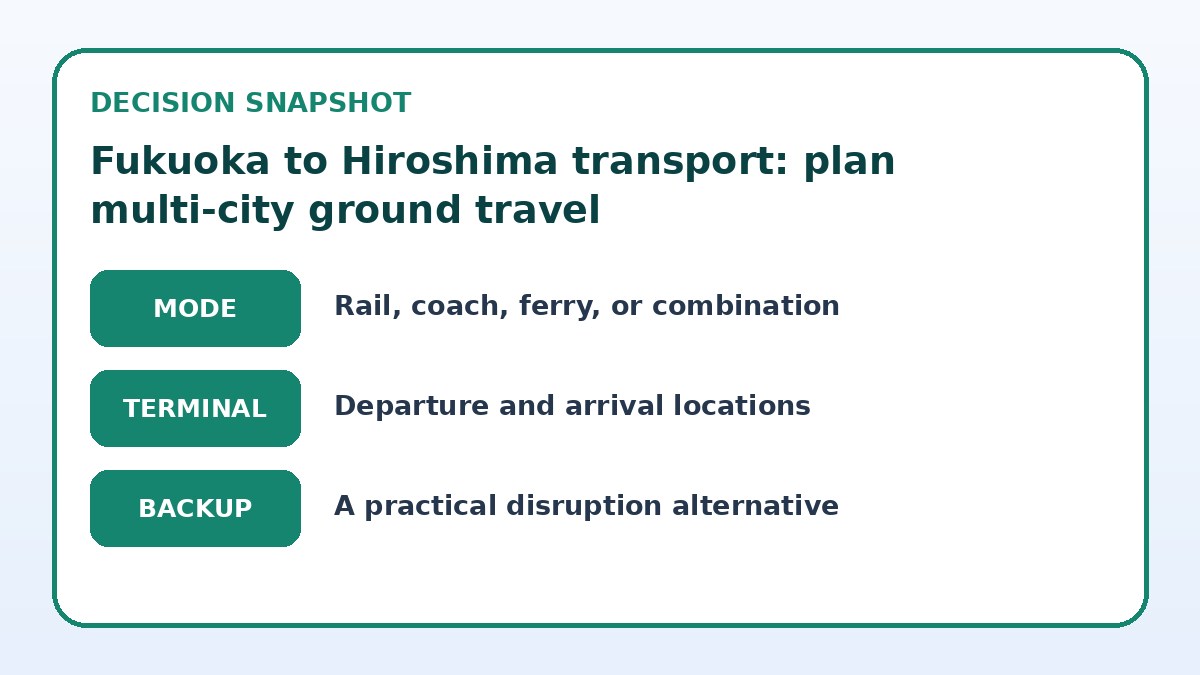
Start by mapping your exact origins and destinations within both cities. Terminals matter: major stations are generally in city centers with more onward transport options; ports and coach terminals may be closer to waterfront or peripheral districts. If your accommodation is within easy walking distance of a station, rail reduces transfer friction. If your finish point is nearer a coach terminal or port, a coach or ferry could be more practical. Consider whether you prefer a single-seat trip or don’t mind one or two transfers; single-seat options reduce the stress of moving luggage between platforms or vehicles.
Next compare timing flexibility. Rail typically has more frequent departures and makes it easier to adjust plans on the day; coaches and ferries often run on fixed, less-frequent schedules that require advance planning. A hybrid plan—such as rail to a regional hub plus a short coach or taxi—can combine the frequency of trains with targeted last-mile convenience. Assemble several door-to-door itineraries and compare total door-to-door durations, not only in-vehicle time, because transfers, walking, and waiting often determine how tired you’ll be on arrival.
Choose the end-to-end journey plan
| Journey approach | Best for | Friction to check |
|---|---|---|
| All-rail plan (trains only) | Travelers valuing frequent departures and central terminals with predictable transfer points. | May require walking between station exits and hotels; luggage handling can be your responsibility between platforms and taxis. |
| All-coach plan (buses only) | Visitors aiming for a single-seat transfer with simpler luggage paths and fewer platform changes. | Less frequent schedules and potentially longer on-road time; coach terminals may be farther from central hotels. |
| Ferry-inclusive plan (ferry plus land transport) | Those who value scenic travel and have terminals near their start or end points. | Ferries typically have fixed departure times and may add extra walking or luggage transfers at ports. |
| Hybrid plan (rail plus coach/taxi for last mile) | Travelers wanting speed for most of the journey with minimal door-to-door friction at either end. | Adds booking complexity and requires coordination across different providers and transfer windows. |
Check live intercity options
Look beyond the ride itself and compare terminals, transfers, luggage, and arrival fit.
Terminal fit and luggage/transfer friction
Terminal fit is about proximity to accommodation, quality of onward connections, and how easy it is to move luggage. Major railway stations tend to have more platform-level services, luggage storage, and taxis outside the station. Coaches and ferries sometimes require longer walks, stairs, or separate terminals; that increases transfer friction if you have large suitcases. If you need to minimize handling—elderly travelers or families with children—prioritize options with fewer transfers and taxis that pick up at the terminal entrance.
Think through each transfer step: platform to concourse, concourse to bus bay, ferry gangway, and final taxi pick-up. Estimate the number of stairs, escalators, or potential elevator waits; busy times can lengthen those steps. If your trip includes an overnight bag you’ll carry on, a short-sided hybrid trip with a taxi for the last mile can be worth the extra cost. When booking, verify on carrier pages whether they provide hands-on assistance, luggage stowage rules, or platform-to-vehicle level boarding, and plan extra time for heavy-luggage handoffs.
Timing flexibility, scheduling tradeoffs, and daily rhythms
Assess how rigid your schedule is. If you have firm appointments or limited daylight, favor options with frequent services—trains typically win here. If you’re on a relaxed itinerary and prefer a scenic or quieter ride, a ferry or a mid-day coach can be enjoyable. Peak travel times and weekends may alter connection convenience: stations and coach terminals can be crowded, which increases transfer time. Always build buffer time for the unexpected, especially if you must check in to accommodation by a certain hour.
Also factor in last-mile services. In both cities, taxis and local buses fill gaps after you disembark, but availability and traffic can change door-to-door time significantly. If you’re traveling early morning or late evening, check the first and last local transit services from your arrival terminal. Create two viable schedules—your preferred plan and a fallback—so you can switch on the day without losing more than a short amount of time. Confirm live timetables on provider booking pages before departure.
Compare the practical alternatives
Use the final page to confirm what is actually offered on your dates and save a workable fallback.
Intercity travel checklist
- Identify the exact street address of your Fukuoka departure point and Hiroshima arrival point to measure door-to-door time.
- Map the nearest station, coach terminal, and port for both start and end points and note taxi ranks and elevator locations.
- Decide how many luggage moves you will tolerate and select the option with the fewest platform-to-vehicle handoffs.
- Build two feasible itineraries (preferred and backup) with realistic transfer buffer times between segments.
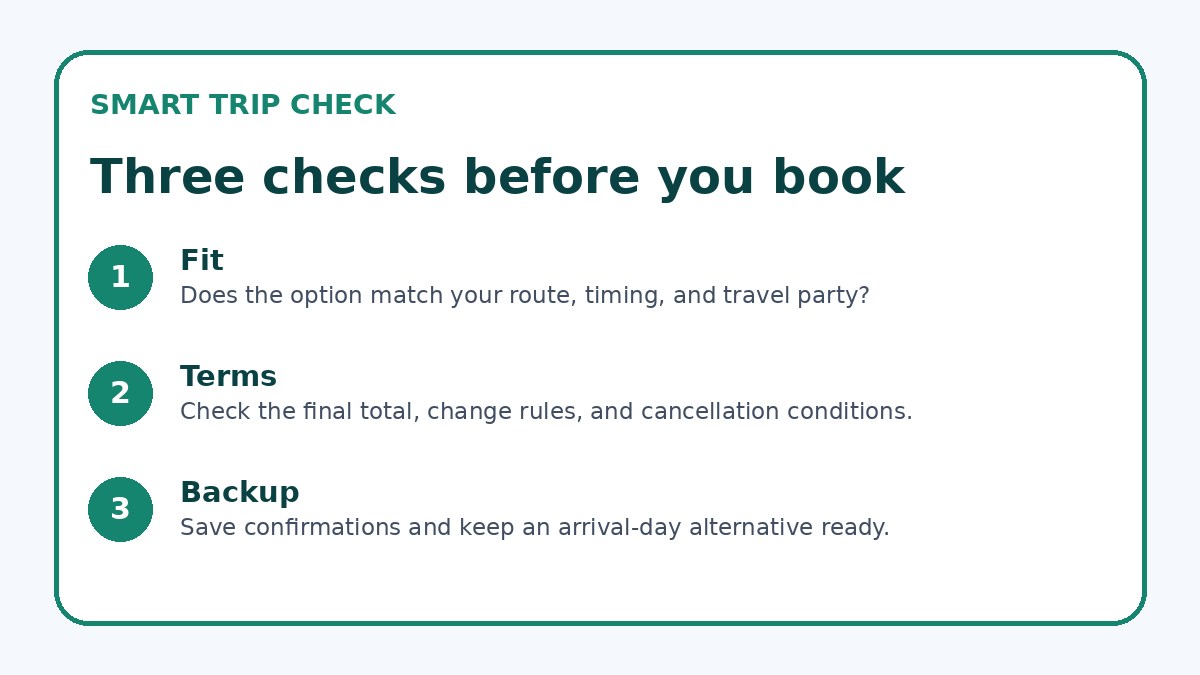
- Save screenshots or booking confirmations and provider contact details; verify change and cancellation terms on the final booking page.
- Plan for last-mile transit: note taxi apps, local bus lines, and walking routes from each possible terminal to your accommodation.
Disruption backup strategies and day-of adjustments
Prepare simple backups: an alternative recent train, a coach scheduled within a few hours, or an on-call taxi operator that serves the terminal. Keep apps or screenshots of those options so you can rebook or reroute quickly if a delay or cancellation affects your original plan. If you rely on several segments (for example rail plus ferry), ensure minimum connection times are realistic and that you can cancel or change without excessive penalty—check provider terms on the booking page.
If disruption happens mid-journey, focus on door-to-door practicality: get to the nearest major terminal with multiple onward options and re-evaluate from there. A short taxi for the last mile to your accommodation is usually the fastest recovery; a local hotel or station information desk can advise on real-time options. If you booked through a comparison site, keep the confirmation and provider contact handy; otherwise, have a plan to move to the nearest hub with alternatives.
Rail & Intercity Transport questions travelers ask
Is the train the fastest practical option for Fukuoka to Hiroshima transport?
Trains frequently offer high-capacity, point-to-point services with many daily departures and centrally located stations, which often translate into the fastest door-to-door journeys. However, 'fastest' depends on where you are starting and finishing in each city and on transfer times: a train that requires a long taxi ride at either end can be slower overall than a coach that drops you near your accommodation. Compare full door-to-door time rather than vehicle-only duration, and check live timetables on the carrier’s booking page before you decide.
How should I handle luggage when switching between rail, coach, or ferry?
Minimize transfers if heavy luggage is a concern. Choose options with fewer segments and verify whether terminals have level boarding, luggage storage, or staff assistance. If transfers are unavoidable, allow extra time for moving bags between platforms, concourses, and vehicle bays, and consider a short taxi for the last mile to avoid carrying luggage through crowded terminals. Always check provider baggage rules and storage availability on the booking page so you know if trunk or overhead stowage is required.
What’s the simplest disruption backup to arrange on the day of travel?
Identify the nearest major hub with multiple departure options and keep a secondary reservation window available. Practically, this means knowing the next few train or coach departure times and having a taxi option saved for an immediate last-mile recovery. If you booked with a comparison site, save provider contact details and cancellation policies; otherwise, have local app alternatives and station information desk locations queued so you can switch plans quickly without significant delays.
Final decision note
Building a practical Fukuoka to Hiroshima transport plan starts with door-to-door thinking: know exactly where you begin and end, then choose the combination of rail, coach, ferry, and taxis that minimizes transfers and luggage handling while fitting your timing needs. Use the decision criteria—terminal fit, transfer friction, timing flexibility, and disruption backups—to compare realistic itineraries, not just vehicle travel times. Prepare two viable plans, verify departure and baggage rules on provider booking pages, and save contacts and backup options before you travel. That approach keeps the journey predictable and lets you enjoy the cities rather than worry about connections.
Continue planning
Check current options and final conditions
Use the provider page to confirm live availability, the final total, cancellation terms, and every condition that matters to your trip.
This evergreen planning guide was created with AI-assisted drafting and a structured quality review. It does not display live prices, schedules, availability, visa guidance, or provider rankings. Verify current details before booking. Some links are affiliate links; we may earn a commission at no additional cost to you.