If you’re traveling from Seoul to Bangkok with extra baggage, pick Incheon (ICN) for most practical advantages: bigger international terminals, more airlines that publish generous checked limits or straightforward paid options, and clearer luggage-handling infrastructure. Gimpo (GMP) can be tempting because it’s closer to central Seoul and sometimes quicker to reach, but it mainly serves domestic routes and limited international flights; that can complicate overweight or oversize handling and spare-part services. The practical answer depends on where you start in Seoul, how much extra luggage you have, and whether you value time savings or smoother airport services. Below I explain how to weigh transit time, baggage allowances, transfer logistics, and costs so you can choose the airport that minimizes stress and unexpected charges. Verify baggage rules and paid extra-bag options on the airline’s booking page before buying a ticket; Trip.com can be used to compare live availability if you wish.
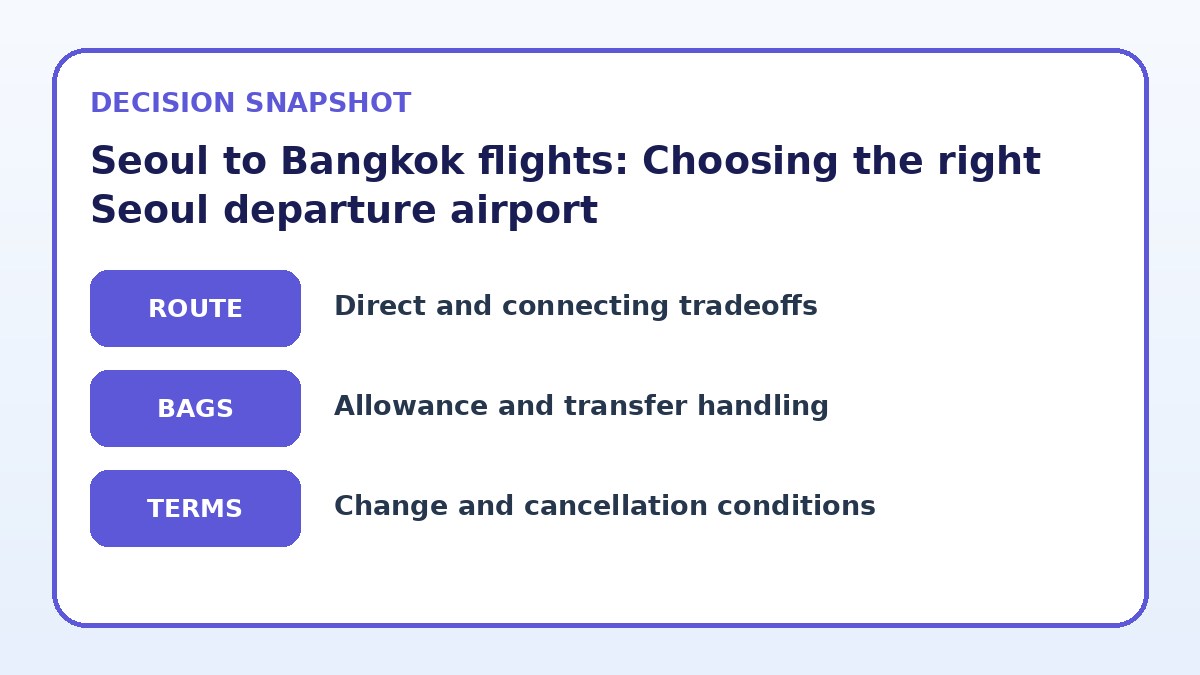
See current options before you compare the details
Availability and final conditions change. Open Trip.com now or keep reading for the practical comparison.
Why Incheon is usually best for extra luggage
Incheon International is designed around international passenger flows and freight-handling systems. That means more automatic and staffed baggage belts, clearer signage for oversized and special-item drop-offs, and more frequent coordination with international carriers on weight limits. If you face overweight fees or need to ship an extra bag, the airport hosts airline desks and cargo services that can advise or accept freight shipments—services that are less comprehensive at Gimpo. For larger groups or multipart itineraries, the chance that your baggage will be prioritized and tracked through transfers is also higher at Incheon.
Choosing Incheon also gives you more airline options that publish checked-bag allowances or simple paid add-ons at booking, which reduces surprises at the gate. Even when a low-cost carrier operates the route, Incheon’s ground handlers are usually better equipped to deal with oversized suitcases, surfboards, or camera gear because they process more international special items overall. If you plan to pay for extra weight in advance, confirming that online during booking tends to be clearer for Incheon departures; however, always check the airline’s final page for the exact fees and whether pre-purchase reduces costs versus airport payment.
When Gimpo may be the smarter choice
Gimpo lies much closer to central Seoul and saves ground travel time, which can matter if you’re transiting from a downtown hotel with heavy luggage or have a tight schedule. If your airline operates a direct international flight from Gimpo to Bangkok (which happens occasionally on specific carriers), and that airline’s baggage policy meets your needs, the shorter taxi or subway ride to GMP may make your trip simpler. Fewer kilometers to the airport can reduce taxi costs and the effort of moving multiple suitcases on public transit, especially during peak traffic times.
That convenience comes with tradeoffs. Gimpo’s international services are limited compared with Incheon, and ground-handling resources for oversized or nonstandard cargo are often scaled down. If you have specialty items or need services like immediate freight forwarding, you may find fewer options at GMP and could end up paying more or spending more time resolving issues. Before choosing Gimpo, confirm the flight’s baggage allowances, whether the carrier will accept extra pieces, and whether the airport has the relevant handling or storage facilities for your items.
| Approach | Best for | Tradeoff to check |
|---|---|---|
| Depart from Incheon (ICN) | Travelers with multiple heavy or oversized bags who want robust baggage services | Longer ground travel from central Seoul and possibly higher taxi costs |
| Depart from Gimpo (GMP) | Travelers prioritizing minimal transfer time from downtown with standard-size extra luggage | Fewer international ground services and limited special-item handling |
| Pre-pay extra allowance online | Those who prefer cost certainty and faster airport processing | You must verify the airline’s final booking page for exact fees and acceptance rules |
| Use airport cargo/express shipping | Shippers of oversized or non-urgent items who can leave items behind the passenger itinerary | Longer lead time and different pricing structures—requires coordination at the airport cargo counter |
Ready to check the option that fits your plan?
Use your exact dates and traveler details so the provider page can show the current total and conditions.
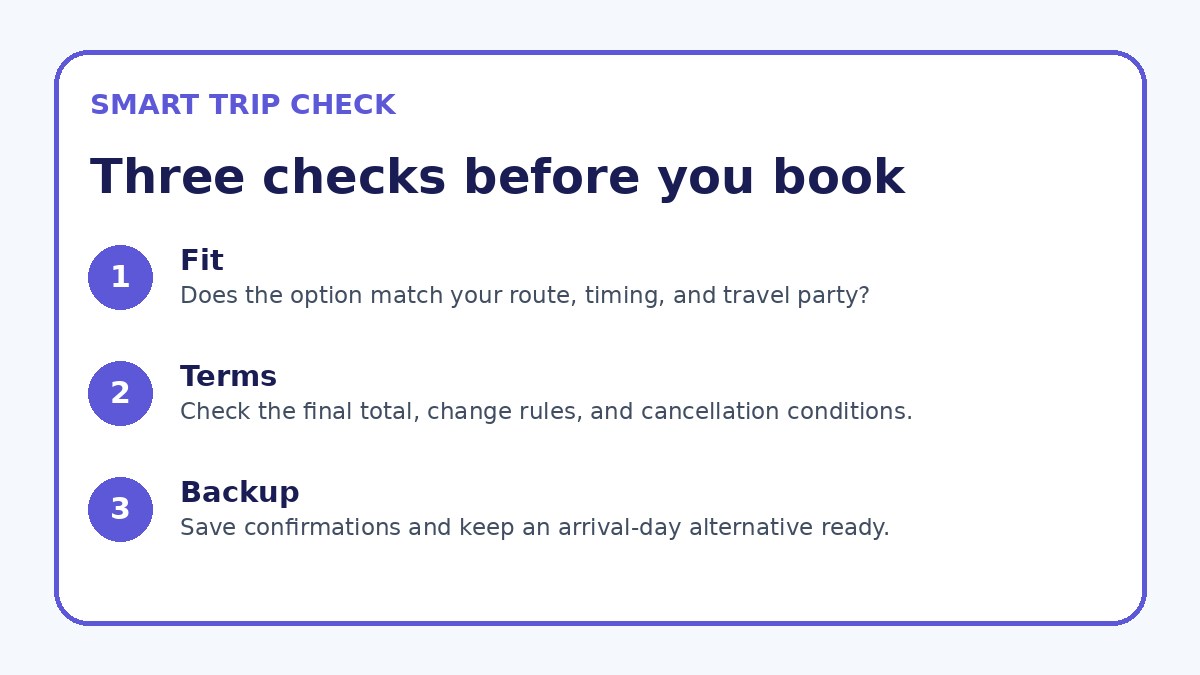
How to compare options practically before booking
Start by mapping where you will be in Seoul when you need to leave and calculate realistic door-to-door times for both ICN and GMP, including transfers during your target departure window. Add buffer time for check-in and oversized-item processing—airlines often ask that bulky items arrive earlier than standard check-in. Next, list the exact contents, weights, and sizes of your luggage. That allows you to compare airline baggage allowances precisely and to see whether buying additional allowance at booking or paying airport fees will be cheaper and less stressful.
Also compare the airline’s published baggage rules with any airport services you might need, such as crate availability, oversized baggage counters, short-term storage, or freight forwarding. If a direct flight to Bangkok exists from both airports, contrast the fare structure and the total travel time. If one option requires a same-day transfer or connection, check whether the ticketed transfer includes checked-luggage through-checking or whether you must collect and recheck bags, which adds complexity when carrying excess items.
Before you book
- Confirm the exact weight and size of every bag and list any oversized or fragile items before comparing flights.
- Compare total door-to-door travel time to ICN and GMP from your lodging, including likely traffic at your departure hour.
- Check the airline’s final baggage policy page for included allowance, fees for extra pieces, and rules for oversized items.
- If possible, pre-pay checked-bag allowance during booking and save the confirmation screenshot or email.
- Call or email the airline or airport cargo desk in advance if you plan to ship oversize items or need crate/pallet options.
- Pack a small day bag with essentials and valuables to carry on in case checked luggage is delayed or rechecked.
Day-of-travel tactics for minimizing baggage headaches
Arrive early and use online check-in where possible to see baggage allowances and pay for extra allowance ahead of time. When you reach the airline desk, confirm that all pieces are recorded on your baggage tag(s) and ask for a tag receipt for each piece. Photograph unusually sized items and the baggage tag numbers before handing them over; that documentation speeds up recovery if something goes wrong. If you have high-value or fragile items, carry them in a properly padded carry-on if permitted, or request priority handling if the airline offers it.
If you face an overweight or oversize charge at the counter, ask the agent whether pre-purchased allowance, offloading nonessentials, sending via cargo, or consolidating items into fewer bags is the cheapest or fastest fix. For last-minute shipping, ask both the airline and the airport cargo/express desk about next-day or economy freight options. Finally, keep the airline’s baggage-policy page open on your phone and save the customer-service contact so you can verify any claims or penalties before accepting them at the counter.
Frequently asked questions
Will leaving from Gimpo save me money on baggage fees compared with Incheon?
Baggage fees are set by the airline rather than the airport, so changing airports does not automatically change checked-bag charges. Gimpo may reduce your ground transport cost because it’s closer to central Seoul, but if the carrier operating from GMP charges the same overweight or extra-piece fees as the same carrier at Incheon, your baggage cost will be similar. Always check the airline’s final booking page for exact fees and consider pre-purchasing allowance during booking if that option is offered and seems cheaper than paying at the counter.
If I have a connection in Bangkok, can my checked bags be sent straight through from Seoul?
Whether bags are checked through depends on your ticketing and the carriers involved. If both flight legs are on the same ticket or with partner airlines that offer interline through-checking, your bags may be transferred automatically; if not, you may need to collect and recheck them on arrival. This is independent of whether you depart from Incheon or Gimpo, so verify through-check rules with the airline before travel. Always ask the check-in agent to confirm whether your bags are tagged to your final destination and keep the baggage tag receipts.
What should I do if an airline refuses an oversized item at the counter?
If an item is refused, calmly ask the agent for the exact reason—weight, dimension, or safety/handling policy—and whether alternative processing such as cargo acceptance, special handling, or a re-packaging suggestion is available. Request to speak with a supervisor if necessary. If cargo shipping is offered, get a written estimate and timing. Photograph the item and any notices given. Finally, if you must leave the airport to ship the item separately, factor that extra time and cost into your itinerary and confirm whether rechecking is required for your flight.
Final planning note
For most travelers with extra luggage on the Seoul to Bangkok route, Incheon is the practical default because it provides more comprehensive international baggage services, clearer options for oversized items, and a higher chance of simple pre-paid allowance at booking. Gimpo can be a good choice if you’re downtown, have only moderately extra bags, and can catch a direct GMP international service that meets your baggage needs. The decisive steps are to map door-to-door time, list your luggage specifics, confirm airline baggage rules on the carrier’s booking page, and decide whether pre-paying or arranging cargo shipping reduces stress. Use those checks to pick the airport that balances convenience, certainty, and cost for your situation.
Continue planning
Check current options and final conditions
Use the provider page to confirm live availability, the final total, cancellation terms, and every condition that matters to your trip.
This evergreen planning guide was created with AI-assisted drafting and a structured quality review. It does not display live prices, schedules, availability, visa guidance, or provider rankings. Verify current details before booking. Some links are affiliate links; we may earn a commission at no additional cost to you.