If you’re traveling to Sapporo for work, price alerts can help you spot good opportunities without derailing your schedule or travel policy. The practical approach: set targeted alerts for specific routes, dates, and preferred hotels; apply a simple decision rule (for example, wait for X% improvement or a fixed fare class change); verify refundable or changeable ticket rules on the booking page; and loop in your corporate travel approver before purchase. This keeps impulsive buys off your credit card and aligns purchases with company policy and expense tracking. Below you’ll find how to design alert rules, balance speed versus policy, compare connecting versus direct options, and what to verify on the provider’s final booking page before you confirm anything.
See current options before you compare the details
Availability and final conditions change. Open Trip.com now or keep reading for the practical comparison.
Design alerts that match your company policy
Start by translating your corporate travel policy into alert parameters. Decide which airports (for Sapporo, common choices are New Chitose Airport and alternatives in Hokkaido) and what time windows are allowed, plus permitted cabin classes and hotel star ranges. Use these concrete constraints when creating alerts so only policy-compliant options trigger notifications. If your company requires pre-approval above a spending threshold, include that ceiling in your alert logic or immediately forward qualifying alerts to the approver rather than booking on impulse.
Also set alert frequency and delivery method to match how you work: a single daily digest reduces the temptation to chase every small fluctuation, while push alerts are better when a rapid purchase is needed for tight itineraries. For repeat routes, save templates so parameters remain consistent and auditable. Finally, log the alert criteria when you forward opportunities to your travel manager so approvals can be made quickly without re-running searches.
Simple decision rules to avoid impulse booking
A short, objective decision rule prevents emotional booking choices. Examples: buy if fare drops by a fixed percentage from the baseline, buy if a preferred refundable fare appears under your threshold, or forward to approver if savings exceed X and the trip is within Y days. Keep the rule visible in your alert app’s note field or in your team’s shared policy document so you don’t default to impulse decisions when an attractive alert arrives.
Pair the rule with a two-step verification for higher-cost purchases—pause for a quick check of schedule reliability and change penalties, then confirm with your travel approver or finance contact. This creates friction that reduces impulse buys but still allows fast action when necessary. If you must act quickly, make the purchase through a corporate booking tool that records the approval afterward rather than using a personal account.
| Approach | Best for | Tradeoff to check |
|---|---|---|
| Immediate booking on any alert | Travelers who must secure seats quickly and have broad approval authority | High risk of policy exceptions, accidental purchases, and reduced flexibility |
| Strict rule-based booking (preset thresholds) | Those needing predictable, auditable purchases aligned with company policy | May miss marginal savings that fall short of the preset threshold |
| Forward-for-approval workflow | Business travelers who require manager sign-off for larger expenses | Slower bookings and potential loss of time-sensitive fares |
| Daily digest alerts with manual review | Busy professionals who prefer lower distraction and controlled decision times | May miss sudden price drops that appear and disappear between digests |
Ready to check the option that fits your plan?
Use your exact dates and traveler details so the provider page can show the current total and conditions.
What to compare: direct vs connecting, refundable terms, and hotel cancellation
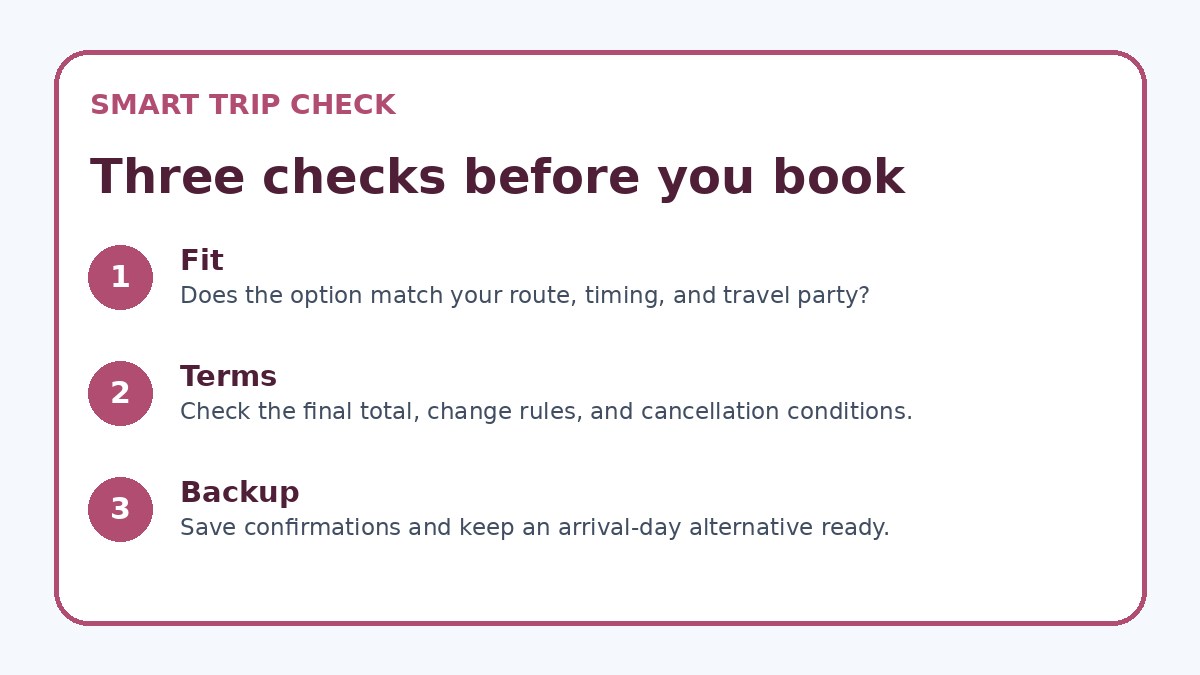
When an alert pops for Sapporo travel deals, compare flight options beyond price. If both direct and connecting itineraries appear, weigh travel time, connection risk, and corporate reimbursement rules. A lower fare that adds two connections may save money but increases the chance of missed meetings due to delays. Check change and cancellation rules on the provider’s final booking page—those conditions determine true flexibility, not the headline fare alone.
For hotels, prioritize refundable rates or flexible cancellation windows if your schedule might shift. Compare location relative to your Sapporo meeting venues, transit access, and whether the booking records guest name and company details needed for expense reports. When provider-specific terms could change, confirm baggage allowances, seat assignment costs, and any ancillary fees on the final booking page before committing.
Before you book
- Set alerts for the specific Sapporo airport pair, travel dates, and allowed cabin classes that match company policy.
- Define a quantitative decision rule (percentage, fare class, or absolute threshold) that triggers booking or approval.
- Confirm refundable or flexible change rules on the provider’s final booking page before purchasing.
- Route alerts requiring sign-off to your travel approver with the alert screenshot and rule match details.
- Book through your company’s approved channel and attach the confirmation to the expense report immediately.
- Log alert parameters and final purchase rationale in the team folder for audit and future tuning.
Practical workflow: notifications, approvals, and final checks
Set a routing workflow that moves from alert to decision without ad-hoc choices. For instance: alert triggers → automatic filter checks against policy → email or chat message to you with a recommended action → affirmative two-step authorization if needed → book through corporate-approved channel. Use consistent tags or labels in your alert tool to mark which opportunities require pre-approval and which can be purchased directly within policy thresholds.
Before clicking purchase, run a quick checklist: confirm travel dates and names, verify refundable/change conditions on the provider’s booking page, ensure total trip cost stays within your approval limit, and capture a screenshot or booking summary for expense submission. If you rely on a third-party platform for comparison, check live availability and the provider’s final terms at the booking page—these are the terms that will govern your ticket or room.
Frequently asked questions
How should I set the price drop threshold for an alert when traveling to Sapporo on business?
Choose a threshold that balances savings with the likelihood of getting an approval and the cost of delay. A useful approach is to calculate the time value of a quick decision (how much you’d pay for booking certainty) and set the threshold above that amount so approving saves net cost. Also consider your company’s approval lag: set a larger threshold if approvals take longer to avoid losing the fare. Whatever you pick, document the rationale in your policy so reviewers understand why a purchase met the rule.
If an alert shows a low fare that’s non-refundable, is it ever sensible to buy for a business trip to Sapporo?
Sometimes yes, but only when the itinerary is locked and you can accept the risk. Evaluate the likelihood of changes, meeting importance, and potential cost of rebooking. Prefer refundable or changeable options for high-uncertainty trips. If the non-refundable option is substantially cheaper and within your approval workflow, secure written sign-off before purchasing and ensure the company’s expense policy covers potential losses from necessary rebooking.
Which specifics must I verify on the provider’s final booking page before completing a Sapporo booking?
Always verify the passenger name match policy, exact travel dates and times, baggage allowances, seat assignment costs, change and cancellation penalties, and total price including taxes and fees. Confirm whether the fare is refundable or only changeable and whether changes incur fees or fare differences. For hotels, check the cancellation window and whether corporate billing or an invoice is available. These final terms on the provider page are binding—do not rely solely on the alert summary.
Final planning note
Using price alerts for Sapporo travel deals can save time and money for business trips if you build in a small set of guardrails. Translate your corporate travel rules into alert parameters, adopt a simple quantitative decision rule, and route exceptions through an approval workflow to prevent impulse purchases. Always verify flexible terms, fees, and passenger details on the provider’s final booking page before confirming. With a documented process and a low-friction approval path, you’ll be able to act quickly on genuinely useful alerts while keeping purchases compliant and expense reports straightforward.
Continue planning
Check current options and final conditions
Use the provider page to confirm live availability, the final total, cancellation terms, and every condition that matters to your trip.
This evergreen planning guide was created with AI-assisted drafting and a structured quality review. It does not display live prices, schedules, availability, visa guidance, or provider rankings. Verify current details before booking. Some links are affiliate links; we may earn a commission at no additional cost to you.