
If you want to spend more time exploring Cebu and less time commuting, prioritize location; if restful nights and private workspace matter most, prioritize room comfort. For day-to-day planning, choose one primary priority and a single secondary criterion (for example, downtown location with a quiet room or a quieter neighborhood with excellent in-room facilities). Think about what you’ll actually do during your stay: island trips? late-night dining? coworking? Each use case changes the tradeoffs. Before finalizing any booking, check the hotel’s latest room details, bed types, cancellation terms, and transit links on the provider’s booking page. You can compare current availability and conditions on Trip.com if you like, but always verify the hotel’s own page or contact them directly for specific room features and safety measures.
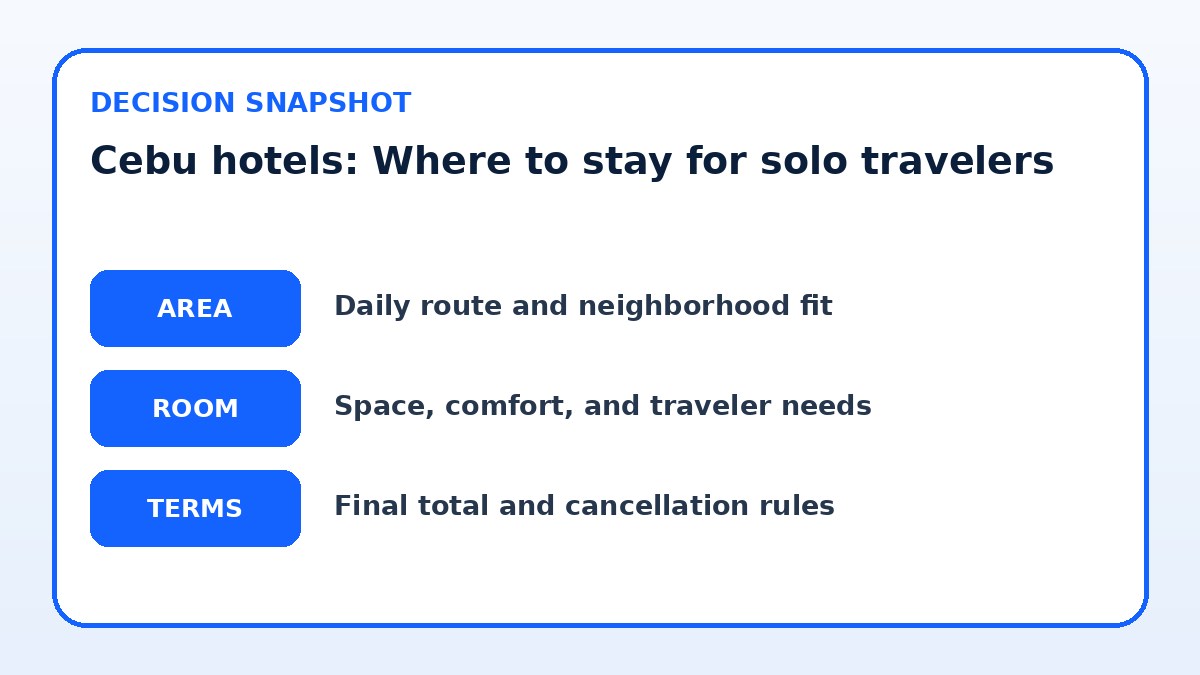
See current options before you compare the details
Availability and final conditions change. Open Trip.com now or keep reading for the practical comparison.
Decide your priority: exploring versus recharging
Start by listing what a typical day in Cebu will look like for you. If you plan to island-hop, visit historical sites, or sample multiple neighborhoods in a single day, minimize transit time by staying in a walkable central area near shops, restaurants, and transport hubs. A central hotel makes it easier to come back for a midday rest or drop off purchases. Conversely, if your main priority is uninterrupted sleep, a hotel that offers larger rooms, thicker walls, and blackout curtains will be more valuable, even if it adds 20–40 minutes of transit to popular attractions.
Consider daily rhythms too: solo travelers who like late dinners or bars will benefit from a lively central location where taxis are plentiful late at night. If you are an early riser, proximity to the port or airport can shave off stressful morning transfers and allow more flexible day trips. Also think about weather: during wet afternoons, a shorter walk between hotel and transit is a real convenience. Match your hotel choice to the kind of day you want to have most often, not the rare extremes.
Location tradeoffs: neighborhoods and transport
Cebu City has compact neighborhoods with distinct personalities; pick one that aligns with your plans. Downtown areas offer the convenience of shops and transport but can be busier and noisier. If you’ll use public transport or scheduled ferries, verify proximity to relevant terminals and typical travel times. Solo travelers who prefer to stroll after dark should choose streets with good lighting and activity. When you evaluate listings, check maps, guest photos, and recent reviews for specific comments about noise, safety, and transit accessibility.
If you need reliable airport transfers or plan early departures to islands, check shuttle options or taxi availability and confirm which side of major roads the hotel’s entrance sits on. A quieter residential neighborhood may give you a better night’s sleep and larger rooms, but weigh the cost and convenience of rides to evening activities. For a balance, consider staying near a transit artery with easy Grab access yet a short walk to pedestrian-friendly streets. Always verify the hotel’s nearest transport links and last-mile options on the booking page before committing.
| Approach | Best for | Tradeoff to check |
|---|---|---|
| Central, compact room | Solo explorers prioritizing walkability and quick access to nightlife | Smaller rooms and more street noise |
| Peripheral, larger room | Travelers who need quiet, workspace, and more personal space | Longer transit times to main attractions |
| Near transport hubs | Those with early departures or ferry connections | Possible higher daytime traffic and less tranquil surroundings |
| Boutique/guesthouse in a calm block | Solo travelers wanting local character and a homely feel | Fewer on-site facilities and variable standards |
Ready to check the option that fits your plan?
Use your exact dates and traveler details so the provider page can show the current total and conditions.

Room comfort matters: what to look for
Room size, bed type, air conditioning, and bathroom layout directly shape how rested and productive you’ll be. For solo travelers who work, prioritize a comfortable desk, reliable lighting, strong Wi-Fi, and accessible power outlets. For light sleepers, ask about room location (away from elevators and street-facing windows) and blackout curtains. If you plan to store camera gear or valuables, look for in-room safes and lockable luggage racks. On the booking page, confirm bed dimensions, photos of the exact room type, and whether the room has windows that open or are sealed.
Amenities that feel small can have outsized impact: a kettle, minibar, and good water pressure make mornings easier; a quiet air conditioner with adjustable temperature helps sleep. If you need laundry or ironing for longer trips, check whether those services are on-site or nearby. When guest photos are inconsistent, contact the hotel to request a photo or room description; demand-specifics like desk dimensions or plug types when they matter. Lastly, read the provider’s cancellation and change policies carefully so you can adapt if the room proves unsuitable on arrival.
Before you book
- Confirm the exact room type and bed size on the hotel’s booking page and request photos if the listing is unclear.
- Check the hotel’s stated distance to your primary interests (pier, mall, or work location) and estimate door-to-door transit time by taxi or public transport.
- Ask the hotel about noise levels and room location (street-facing, above bars, or near elevators) before you book.
- Verify Wi‑Fi speed or ask for a room in a quieter zone if you need to work in the hotel.
- Ensure 24-hour reception or secure late check-in procedures if you expect late arrivals or late-night returns.
- Confirm luggage storage, laundry options, and whether the hotel can arrange trusted local transport or transfers.
Safety, solo-traveler services, and practical checks
Safety and ease are crucial for solo travelers. Confirm 24-hour front desk availability, secure access to guest floors, and well-lit entryways. If you plan late returns from nightlife or island trips, verify night-time transport options and whether the hotel can book trusted taxis. Some hotels also provide single-room-friendly packages, flexible check-in, or luggage storage; if those services matter, ask before booking. Read recent guest comments for trends about staff helpfulness and neighborhood safety rather than isolated incidents.
Make practical checks on the booking page: exact room dimensions, photos, whether breakfast is included, and amenities like lockers or safes. If you rely on chargers and adapters, double-check plug types or the availability of universal adapters. For shore or airport transfers, confirm where drivers meet guests and what identification they use. Use Trip.com or similar aggregators to compare availability and policies, but always verify the hotel’s own details and confirm any special requests directly with the property before arrival.
Frequently asked questions
Is it better to stay near the port or in the city center for island trips?
If your primary reason for visiting Cebu is island hopping, staying nearer the port or the specific departure terminal can reduce early-morning transfer stress and shorten check-in windows for boat operators. However, ports are sometimes busy and less scenic for evening strolls. A sensible compromise is to pick a central hotel with easy taxi access to the port that offers luggage storage for same-day check-ins. Always confirm the exact departure terminal with your island operator and the hotel’s estimated transfer time before booking.
How can I find a quiet room in a busy Cebu neighborhood?
When booking in a bustling area, request a room away from the main street, higher up if noise is from traffic, and not next to elevators or function spaces. Look for listings that specify ‘quiet location’ or read recent reviews that mention noise levels; guest photos with views of the street can be revealing. Contact the property directly to request a specific room type or floor and ask whether they provide earplugs or white-noise options. If noise is a decisive factor, consider paying a little extra for a room category that explicitly offers better insulation or separation from communal areas.
Can I rely on online reviews to judge room comfort and location?
Online reviews can highlight recurring strengths or problems—like thin walls, poor air conditioning, or convenient location—but treat single comments cautiously and focus on patterns. Pay attention to recent reviews for current conditions, and compare photos from multiple guests to identify discrepancies with the official listing. If reviews contradict each other, contact the hotel with specific questions about room size, desk availability, or noise mitigation. When in doubt, book a flexible rate or confirm change and cancellation policies so you can adjust if the room or location doesn’t meet your needs on arrival.
Final planning note
Choosing Cebu hotels as a solo traveler comes down to honest priorities: do you want to minimize commute and be in the middle of things, or do you value a calm, comfortable room above proximity? Decide the one thing you won’t compromise—be it walkability, sleep quality, or workspace—and then compare listings for a complementary secondary feature. Use maps, recent guest photos, and direct questions to the property to close information gaps. Verify room dimensions, exact location, and service details on the hotel’s booking page before you commit. Comparing options on Trip.com can help with availability, but always confirm specifics and special requests directly with the hotel so your stay matches your expectations.
Continue planning
Check current options and final conditions
Use the provider page to confirm live availability, the final total, cancellation terms, and every condition that matters to your trip.
This evergreen planning guide was created with AI-assisted drafting and a structured quality review. It does not display live prices, schedules, availability, visa guidance, or provider rankings. Verify current details before booking. Some links are affiliate links; we may earn a commission at no additional cost to you.