
For a business traveler heading from Paris to Rome, the two practical priorities before you book are the baggage plan and the airport schedule. Decide first whether you travel with only carry‑on or need checked luggage; this choice affects which fares make sense, how much time to allow at each airport, and what connections you’ll accept if the itinerary isn’t direct. Next, set conservative minimums for arrival and connection—time to clear security, possible passport control, and a buffer for small delays. This article gives immediate, actionable rules you can use when comparing Paris to Rome flights, then explains tradeoffs so you can fine‑tune decisions by time of day, airport, and corporate travel policy.
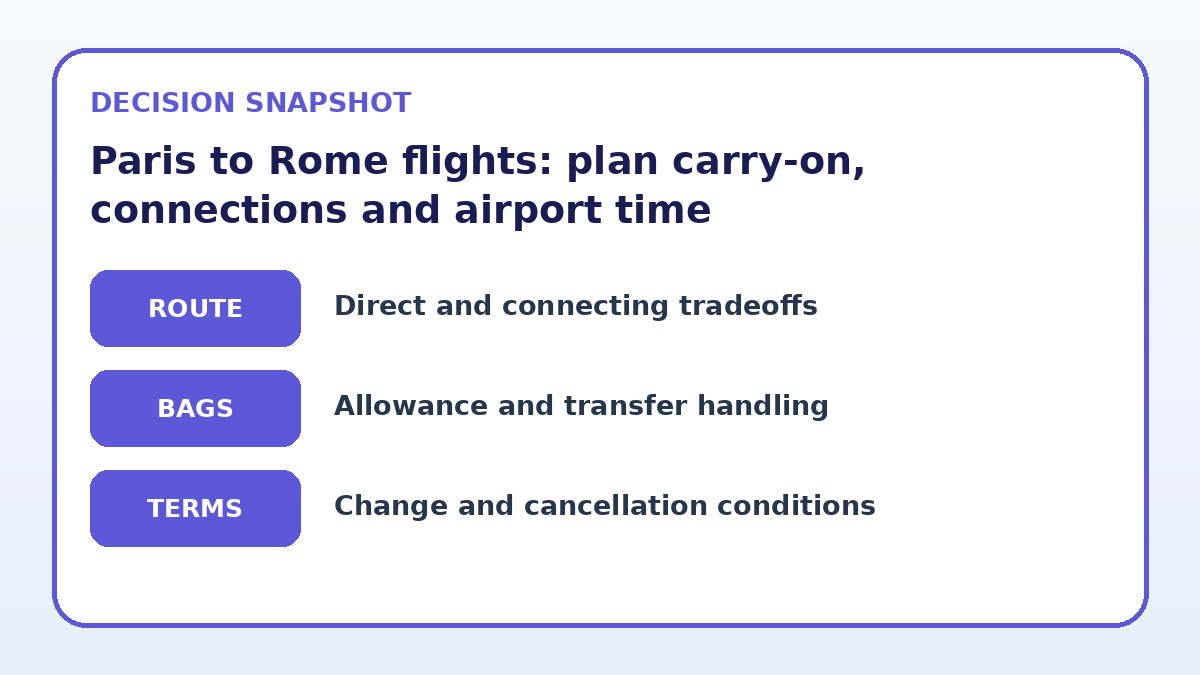
See current options before you compare the details
Availability and final conditions change. Open Trip.com now or keep reading for the practical comparison.
Decide carry‑on vs checked luggage before comparing fares
Start by listing what you must carry on the trip: laptop, chargers, documents, a fresh shirt or two, and any presentation materials. If everything fits comfortably in a carry‑on sized bag plus a small personal item, prioritize itineraries that allow carry‑on only without extra fees; this reduces total travel time and removes the baggage‑claim step at Rome. If your firm reimburses checked baggage or your meeting requires heavier materials, plan for checked luggage but allow additional time at both airports and accept the small risk of misrouting during connections.
When comparing fares, check the airline’s carry‑on size and weight rules and whether the ticket includes guaranteed cabin allowance—low‑cost carriers often restrict carry‑on to a smaller bag or charge to guarantee a cabin slot. Also verify the checked baggage allowance on the exact fare you intend to book, not a base fare shown in search results; rules vary by fare class and can change. If you travel frequently on this route, consider a slim, dedicated business carry‑on that matches most European cabin limits to avoid surprises at boarding.
Plan arrival at Paris departure airport
Paris has multiple airports and terminals with different traffic patterns; confirm which airport and terminal before you leave. For carry‑on only travelers, arrive early enough to allow security and potential passport check if you’re leaving from a terminal with international traffic—typically 60–90 minutes before departure is sensible. If you must check a bag, increase that to a minimum of 90–120 minutes; busy periods, like weekday mornings and early evenings, can add extra queueing at drop‑off counters. Also factor in transport time from your hotel or office: allow extra margin for taxi or rideshare pickup times and Paris traffic.
If your itinerary lists the possibility of connecting to another flight within Paris, or if you must change between airport hubs (for example, moving between the main airport and a secondary one), add substantial buffer time—at least 2–3 hours depending on ground transfer complexity. Corporate travel desks often set their own minimums; use those if provided, but cross‑check practical transfer times and peak ground traffic. Finally, verify lane rules like fast‑track or priority security on the exact booking page so you know whether you can speed through security lines or still need the full allotted time.
| Approach | Best for | Tradeoff to check |
|---|---|---|
| Carry‑on only, direct flight | Travelers prioritizing speed, minimal airport time and no baggage handling | May limit what you can bring and reduce flexibility if plans change |
| Checked bag, direct flight | Those needing more clothing or equipment and preferring one flight | Adds check‑in and arrival time plus slight risk of bag delay |
| Carry‑on, connecting flight | Business travelers who accept a longer flight window to access better times or fares | Requires realistic connection buffer and terminal transfer awareness |
| Checked bag, connecting flight | Trips needing full luggage with flexibility on departure times | Highest total airport time and increased risk of missed connections or misrouted baggage |
Ready to check the option that fits your plan?
Use your exact dates and traveler details so the provider page can show the current total and conditions.
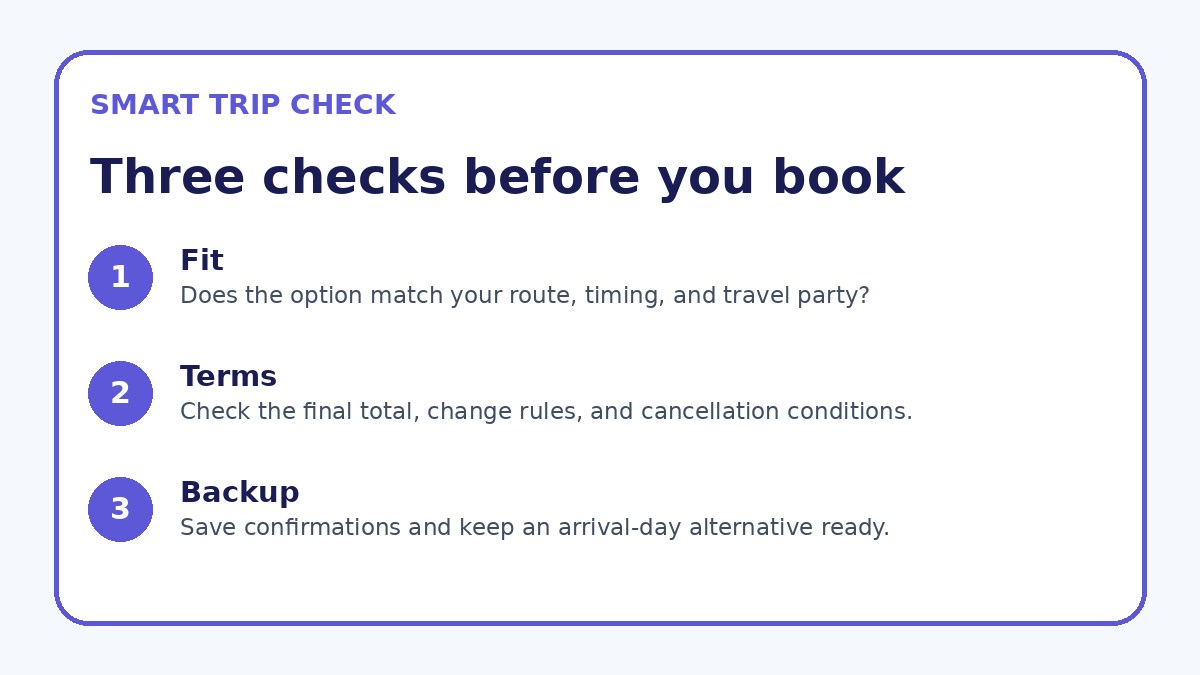
Allow time for arrival formalities and transport in Rome
On arrival in Rome, passport control and baggage claim are the two unpredictable steps. If you arrive on a direct intra‑Schengen flight from Paris, you may not pass passport control, but if your journey includes non‑Schengen segments, plan for passport checks. With carry‑on only you still need time to exit the gate, navigate the terminal, and reach ground transport—factor in 30–60 minutes depending on arrival terminal and whether you use trains, taxis, or a pre‑booked car. If you have a meeting soon after landing, consider flights that land with a comfortable cushion of 90–120 minutes after touchdown to account for any hold on the tarmac or slow disembarkation.
If you have heavy luggage or need to transfer to a different airport in Rome, add more time. Check the precise terminal for your arrival on the booking page and research the common transfer options from that terminal to your final meeting location—some terminals are closer to city center train services, while others require a longer taxi or shuttle ride. Also confirm whether express trains or shuttle timetables align with your arrival time; missing a scheduled connection can cost more time than a longer initial buffer.
Before you book
- Confirm the exact Paris departure airport and terminal on your booking page and map your ground transport timing accordingly.
- Measure your carry‑on against the airline’s posted cabin dimensions and weight on the fare page before you rely on carry‑on only.
- If checking luggage, arrive at the Paris check‑in counter at least 90 minutes before departure and reconfirm drop‑off closing time.
- For connections, verify the booking page’s minimum connection time and add 30–60 minutes if you must change terminals or pass passport control.
- Check the arrival terminal in Rome on your reservation, then estimate ground transport time to your meeting or hotel with a buffer for traffic.
- If timing is tight, choose flights that show priority security or fast‑track options on the booking page or book an airport lounge with quick access.
Comparing direct vs connecting options and time tradeoffs
Direct flights reduce the number of security checks and the risk of missed connections, which is particularly valuable for business travelers with tight schedules. When a direct flight fits your time window, it usually simplifies baggage handling and airport time planning: you know whether you need passport control and can schedule one departure and one arrival. However, direct flights may be less frequent or depart at inconvenient times; weighing a slightly longer journey with a reliable connection can sometimes deliver a better overall arrival time into Rome for afternoon meetings.
For connecting itineraries, compare the total door‑to‑door time including minimum recommended connection times rather than just flying time. Look at the connection airport’s layout and whether you must change terminals or re‑clear security and passport control—these details determine whether a 45‑minute connection is realistic or risky. Always verify the minimum connection time listed on the airline or booking page and add a personal buffer based on your tolerance for risk, corporate policy, and the need to retrieve checked luggage or access airport lounges during a layover.
Frequently asked questions
How early should a business traveler arrive at the Paris airport for a Paris to Rome flight?
Aim to be at the Paris departure terminal 60–90 minutes before a short intra‑European flight if you have carry‑on only; increase to 90–120 minutes if checking bags or traveling during weekday peak hours. Also factor in the time to get to the airport—rush‑hour traffic, taxi pickups, or train connections can add unpredictable delays. If your ticket or corporate policy lists a required check‑in time, follow that guideline and verify the provider’s current check‑in and bag‑drop cutoff on the booking page before you leave.
Can I realistically make a mid‑morning meeting in Rome if I fly out of Paris early the same day?
Possibly, but it depends on flight departure and arrival times, whether the flight is direct, and ground transport on both ends. For a direct morning flight landing in Rome with carry‑on only, aim for a schedule that lands at least 90–120 minutes before your meeting to allow time to exit the terminal and travel into the city. If your itinerary requires a connection or checked luggage, add extra time. Always build in a buffer for delays and confirm terminal‑to‑city transfer times from the booking confirmation.
What should I verify on the airline or booking page before finalizing a Paris to Rome booking?
Check the exact airports and terminals for both departure and arrival, the fare’s carry‑on and checked baggage allowances and fees, and the minimum connection time if the itinerary includes transfers. Also confirm whether priority security, fast‑track, or lounge access is included and whether passport control is expected on arrival. These details can change by fare class and over time, so use the booking page as your authoritative source for planning airport arrival and connection buffers.
Final planning note
For business travelers on Paris to Rome flights, the clearest, immediate levers are your luggage strategy and conservative airport timing. Traveling carry‑on only streamlines both airports and shortens door‑to‑door time, but it requires disciplined packing and verification of airline cabin rules on the booking page. Checked luggage adds convenience at the cost of more time and a small routing risk, especially with connections. When comparing itineraries, prioritize total travel time and terminal logistics over advertised flight duration. Finally, always confirm terminal, baggage allowances, and connection minimums on the carrier’s final booking page so you leave with realistic buffers for a dependable arrival in Rome.
Continue planning
Check current options and final conditions
Use the provider page to confirm live availability, the final total, cancellation terms, and every condition that matters to your trip.
This evergreen planning guide was created with AI-assisted drafting and a structured quality review. It does not display live prices, schedules, availability, visa guidance, or provider rankings. Verify current details before booking. Some links are affiliate links; we may earn a commission at no additional cost to you.