For many couples, deciding whether to rent a car in San Francisco is less about cost and more about clarity: does the rental insurance actually protect both drivers, or will a misunderstanding leave you exposed? The practical answer up front: if your plans include leaving the city for flexible coast or wine-country drives, a rental can improve the trip — but only if you confirm which person(s) are listed as authorized drivers, which coverage is primary versus secondary, and how the policy handles damage, theft, and liability. Read the fine print on the rental agreement and any credit-card or personal-auto coverage before you sign at pickup. This article walks couples through how to interpret common insurance wording, how to assess pickup and return friction, route value for driving, and a reliable non-driving fallback so you can choose confidently.
Does driving improve your San Francisco itinerary?
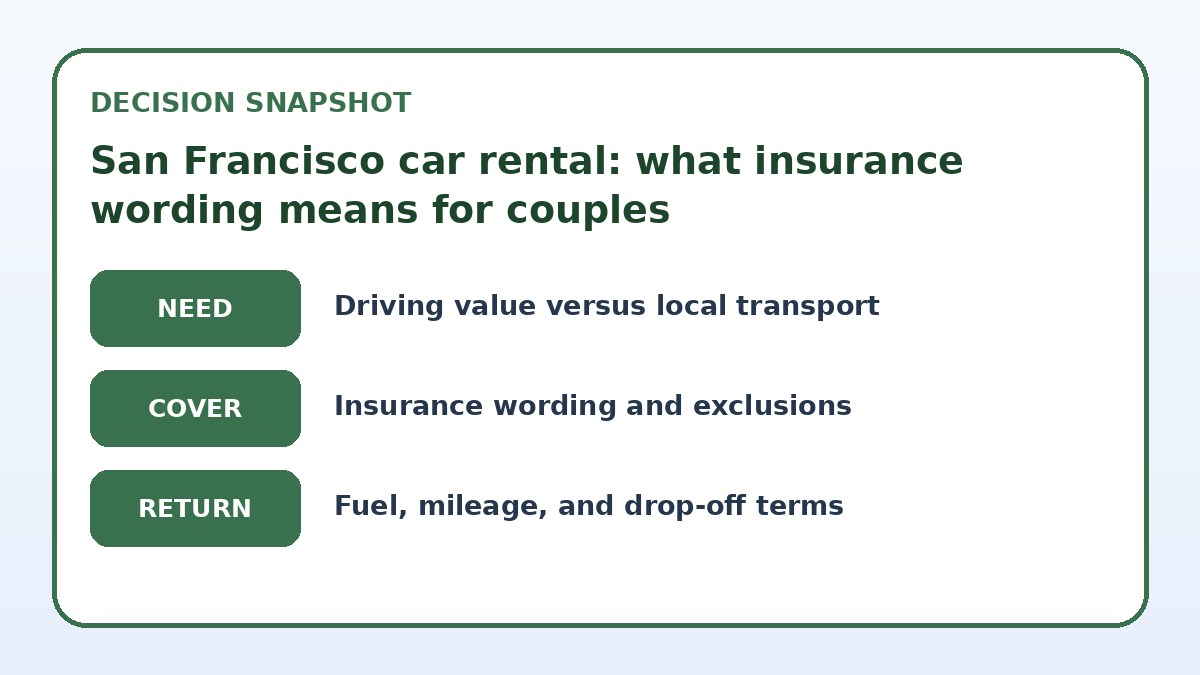
Decide first whether a car actually adds value. Within San Francisco proper, parking is sparse, steep, and often restricted; many iconic points—Golden Gate Bridge viewpoints, Fisherman’s Wharf, and neighborhood walks—are walkable or reachable by transit and rideshare. A car is most useful when your couple’s plans include flexible, multi-stop day trips: Muir Woods, Point Reyes, the Marin Headlands, Highway 1 south to Half Moon Bay, or winery visits in Sonoma and Napa. If those excursions are core to your trip and you prefer your own schedule, driving can beat the logistics of organizing separate tours.
Weigh convenience against hassle: factor in parking costs, potential tow zones, and the stress of narrow, one-way streets. Also consider whether you want the freedom to stop whenever you see a view versus accepting the simpler rhythm of transit, ferries, and scheduled tours. For many couples, a hybrid choice — transit inside the city combined with a short-term rental for a specific day trip — delivers the best balance between mobility and sanity.
Decide whether driving earns its place
| Mobility strategy | Best for | Cost or friction to check |
|---|---|---|
| Full rental for entire stay | Couples wanting full flexibility and multiple day trips outside the city | Higher parking and city driving friction; must verify authorised drivers and CDW wording carefully |
| One-day rental only for an outside-the-city trip | Couples who primarily use transit but want a single flexible excursion | Less parking stress in the city but requires careful planning for pickup/return times and insurance coverage |
| Public transit, rideshares, and ferries | Couples focused on neighborhoods, museums, dining, and waterfronts within SF | Limited flexibility for remote day trips; may need scheduled tours or transfers for farther destinations |
| Guided or private day tours | Couples who want scenic drives without handling parking, insurance, or navigation | Fixed schedules and group sizes may limit spontaneity compared with self-driving |
Check live rental choices only after the route test
Use the exact driver, dates, pickup point, and return plan to compare current conditions.
Understanding insurance wording: what to read and why it matters
Rental agreements use concise legal terms that control who is covered and when. The Collision Damage Waiver (CDW) or Loss Damage Waiver (LDW) reduces or eliminates your financial responsibility for damage to the rental vehicle, but wording matters: some waivers exclude damage from off-road use, don’t cover windshields, or won’t apply if an unauthorised driver was behind the wheel. Liability insurance covers injury or property damage to others—verify the limits. Couples should confirm whether additional drivers are covered automatically, or only if explicitly added (and whether an extra fee applies).
Also check whether coverage is described as primary or secondary. Primary coverage pays first; secondary coverage only steps in after your personal auto policy pays its share. If one partner has a robust personal auto policy or a credit card that offers primary rental coverage, that changes the economics of buying the rental company’s waivers. Always ask for exact wording on exclusions (pets, unpaved roads, unauthorized drivers) and request written confirmation at pickup. If anything is unclear, photograph the contract pages and keep them with your travel documents.
Compare the full rental conditions
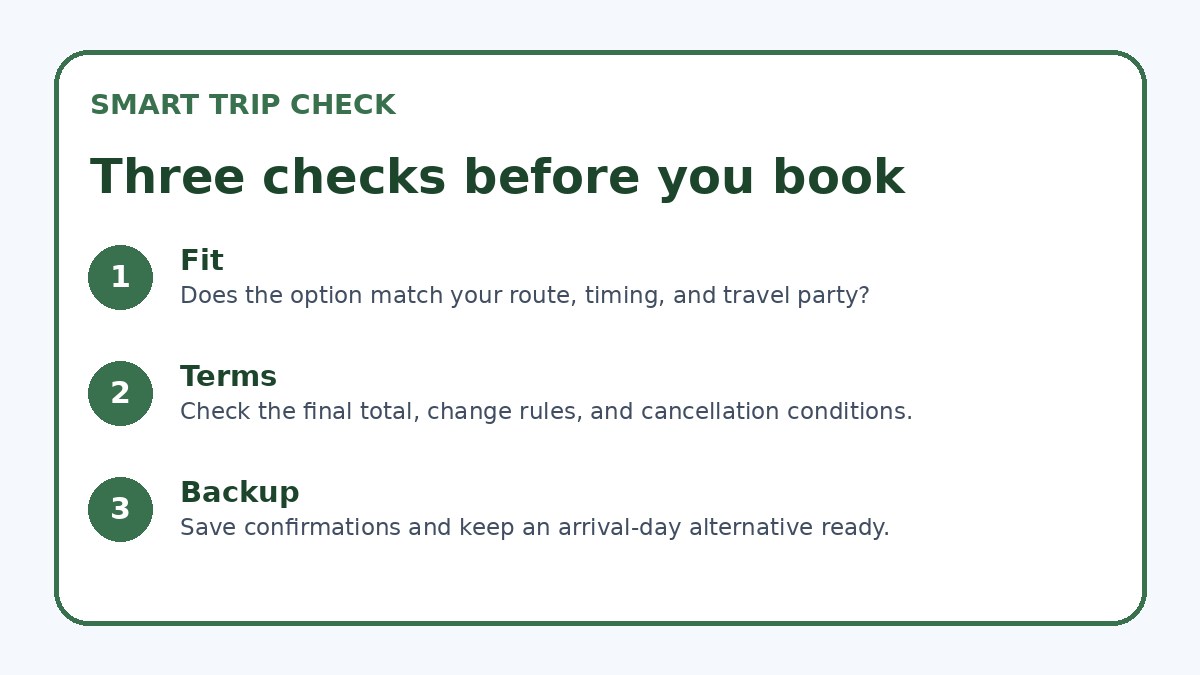
Confirm insurance wording, exclusions, deposit, fuel, mileage, and return terms on the final page.
Pickup and return friction: what causes disputes and how to avoid them
Pickup friction often stems from differences between what online booking pages state and what the counter agent writes on the contract. Common issues include surprise additional-driver fees, differing authorised-driver lists, restrictions on cross-border travel, and last-minute demands to buy the CDW. At pickup, calmly confirm the driver names on the rental agreement, the deductible amount, who pays for fuel if not returned full, and the documented condition of the car. Walk the vehicle with the agent, photograph every side, and ensure both partners understand who may legally drive.
Return disputes usually focus on damage, mileage, fuel level, and cleanliness. When you return, request a final inspection with the agent present and get a signed return receipt noting the odometer, fuel level, and any new damage—or lack of damage. If you can’t complete a joint inspection due to hours or dropbox returns, take time-stamped photos or video of the vehicle and the odometer; keep those records and the rental contract. If a charge appears weeks later, escalate with the rental company and your credit card provider, providing the documentation you collected.
Car rental terms to verify
- Before booking, confirm which driver names must appear on the rental contract and whether additional-driver fees apply.
- Read the rental company’s CDW/LDW and liability descriptions and note any listed exclusions or subrogation clauses.
- Contact your personal auto insurer and your credit card issuer to ask whether their rental coverage is primary or secondary and what exclusions apply.
- At pickup, inspect and photograph the vehicle thoroughly with the agent and get the pre-rental condition documented on the contract.
- When returning the car, request a signed return receipt noting odometer and fuel level, or capture time-stamped photos if an in-person inspection isn’t possible.
- Keep all booking confirmations, the rental agreement, photos, and any email correspondence to contest unexpected charges through the provider or card issuer.
Non-driving fallback: how couples get around San Francisco without a car
If you decide against renting, San Francisco is well-supplied with alternatives that suit most couples. Muni buses and light rail provide dense coverage inside the city; BART connects to the airport and regional hubs. Ferries link the Embarcadero to Sausalito and other bayside towns. Rideshare and taxis fill gaps for late-night or awkward transfers. For longer scenic trips, consider booking a guided day tour that handles driving and parking logistics, or reserve a one-day rental only for the day you plan to escape the city.
When skipping a car, plan how you’ll do specific excursions. Map transit and ferry timetables for the places that matter to you, and check accessibility and last-return options so you’re not rushed. Reserve restaurant or tour slots in advance where possible. If a scenic coastal or wine-country day remains desirable, compare private transfers, small-group tours, and one-day rentals for cost and convenience; each couple’s tolerance for planning and driving stress will determine which approach feels easiest.
Car Rental & Road Trip questions travelers ask
If one partner’s credit card offers rental insurance, does that automatically cover both drivers?
Not always. Credit card rental insurance typically extends to the cardholder and sometimes to additional drivers only if they are authorised on the rental agreement, but policy details vary. Ask the credit card issuer for written confirmation of covered drivers and whether coverage is primary or secondary. Also check exclusions like certain vehicle types or off-road use. At the rental counter, make sure the credit card and driver names match the contract; otherwise the card’s coverage could be voided.
What does 'primary' versus 'secondary' coverage mean for our out-of-pocket costs?
Primary coverage pays the claim first to cover damage or theft without involving your personal auto insurer; this usually prevents a claim on your own policy. Secondary coverage only pays after your personal policy has paid its portion, which can leave you responsible for deductibles and could affect your premiums. For couples, identify which partner’s personal auto policy exists and whether it applies to rentals—if neither partner has adequate personal coverage, buying primary rental coverage at the counter may be the safer option.
How strict are rental companies about who actually drives the car?
Very strict: most companies require each regular driver to be listed on the contract and produce valid ID and driver’s license at pickup. If an unlisted person drives and an incident occurs, the company can deny coverage and hold the renter financially responsible. Short, occasional drivers such as friends or family are commonly excluded unless explicitly added. Always add both partners as authorised drivers in writing to avoid disputes if either of you takes the wheel.
Final decision note
For couples planning San Francisco travel, the decision to rent hinges on whether driving unlocks experiences you value and on clarity about insurance wording. If your trip leans heavily on day trips beyond the city limits, a rental can be worth the parking hassle—provided you verify authorised drivers, deductible amounts, exclusions, and whether coverage is primary. If most of your time will be inside San Francisco, consider a hybrid plan: transit and rideshare within the city plus a one-day rental or a guided tour for scenic escapes. Whatever you choose, document the rental agreement and vehicle condition at pickup and return, and confirm coverage details with your insurers and card issuer before you travel.
Continue planning
Check current options and final conditions
Use the provider page to confirm live availability, the final total, cancellation terms, and every condition that matters to your trip.
This evergreen planning guide was created with AI-assisted drafting and a structured quality review. It does not display live prices, schedules, availability, visa guidance, or provider rankings. Verify current details before booking. Some links are affiliate links; we may earn a commission at no additional cost to you.