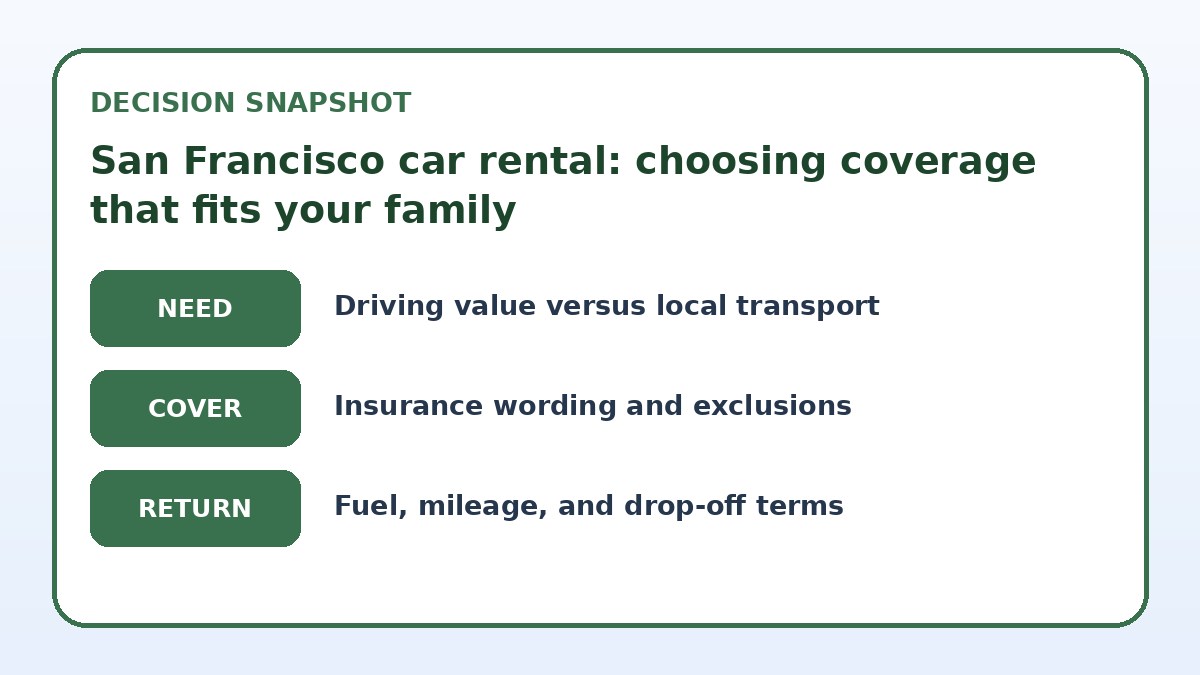
When a family needs a car in San Francisco, the insurance wording on the rental agreement can feel like a separate language. The practical answer: focus first on three things — liability limits, collision/damage waivers, and who is covered to drive — then confirm exclusions such as roadside assistance, deductibles, and rules for child seats or additional drivers. Decide whether to use personal auto coverage, buy the agency’s waivers, or top up with a credit-card benefit by checking what each option explicitly excludes. Read the rental company’s final booking page and the insurer’s policy documents before you pay. This article walks parents through common terms, tradeoffs for families, what to check on the booking page, and simple decision steps so you can reserve with confidence and avoid surprises when you pick up the car.
See current options before you compare the details
Availability and final conditions change. Open Trip.com now or keep reading for the practical comparison.
Key insurance terms families must understand
Rental agreements use shorthand that hides important differences. Liability insurance covers damage or injury you cause to other people or property; in California, state minimums exist but may be low for serious crashes. The rental company may offer supplemental liability coverage to raise those limits. Collision damage waivers (often called CDW or LDW) are not technically insurance but a contract that limits or removes your obligation for damage to the rental vehicle if you comply with the agreement. Deductibles are the amount you would pay if a CDW doesn’t cover the full loss; a lower deductible means higher cost for the waiver.
Additional common terms include Loss of Use (charges while the car is being repaired), Theft Protection (coverage if the car is stolen), and Personal Accident Insurance (medical coverage for you and passengers). Exclusions matter: off-road use, driving under influence, unauthorized drivers, or using the vehicle for ride-hailing can void waivers. For families, child-safety equipment rules and whether the car can be driven by a teenage family member are practical details — they often appear in fine print rather than headline prices.
Who pays: personal auto policy, credit card, or rental waivers?
Many families have three potential sources of protection: your personal auto insurance, benefits from a credit card used to pay for the rental, and the rental company’s waivers. Personal auto policies often extend coverage to rental cars driven by you, subject to your policy limits and exclusions; that can be cost-effective but may leave you responsible for the policy deductible and a claims impact. Credit-card coverage varies widely — some offer secondary collision coverage that kicks in after your primary insurance, while a few cards provide primary coverage. Always read the card’s benefit guide for explicitly listed exclusions, claim procedures, and whether family members who drive the car are covered.
Buying the rental company’s CDW/LDW eliminates the need to use your own insurance for vehicle damage in many cases, but it can be the most expensive option. Rental waivers may also cover administrative or loss-of-use charges the insurer won’t pay. For families deciding at the counter, weigh convenience and peace of mind against cost and the risk of claims affecting your personal insurance rates. If you rely on a card benefit, bring the card’s policy document or a printed benefits summary because the agent may request proof.
| Approach | Best for | Tradeoff to check |
|---|---|---|
| Use personal auto insurance (and add credit-card secondary coverage) | Families with comprehensive personal policies who want to avoid rental counter fees | Possible deductible, claim paperwork, and risk of affecting personal premiums |
| Buy the rental company’s CDW/LDW and liability supplements | Families seeking simplicity and immediate full coverage at pickup | Higher upfront cost and potential duplication of existing coverage |
| Mix approach: personal liability + rental collision waiver | Families balancing cost control with lower financial exposure for vehicle damage | More decisions at booking and possible confusion about who pays which portion |
| Rely mainly on credit-card primary coverage (where offered) | Families with premium cards offering documented primary rental protection | Coverage varies by card and may exclude younger drivers or certain vehicle classes |
Ready to check the option that fits your plan?
Use your exact dates and traveler details so the provider page can show the current total and conditions.
Practical verification steps before you book
Before you hit reserve, gather three documents: your personal auto policy summary, the credit-card rental benefits guide, and the rental company’s full insurance page linked to the vehicle rate. On the rental company’s booking page, check the exact names for waivers (CDW, LDW, SLI for supplemental liability insurance) and whether roadside assistance or theft protection is bundled or sold separately. Pay attention to whether the listed coverage is compulsory in California, optional, or merely suggested. If the site shows price ranges for optional waivers, note that the final charge may appear only at the counter; verify the displayed per-day or total amount and how/when payment is taken.
Ask three direct questions to the agent when collecting the car: what is the deductible for damage or theft with and without the waiver; which drivers are insured under my purchase; and which activities or locations void coverage (for example, driving on unpaved roads or crossing bridges to specific islands). Get answers in writing or on the rental receipt. If you rely on credit-card coverage, confirm the card must be used to pay for the rental and whether you must decline the rental company’s CDW at pickup to preserve the card benefit.
Before you book
- Bring printed or digital copies of your personal auto policy summary and your credit-card rental benefits before pickup.
- At booking, note the exact names and daily rates for CDW/LDW, SLI, theft protection, and roadside assistance on the rental page.
- Ask the agent to list all named drivers and confirm whether a teen driver is covered and what additional fees apply.
- Confirm deductible amounts for damage and theft with and without any waiver, and request that information on your rental receipt.
- Verify child-seat policies: whether seats are provided, insured, or if you must bring your own and how that affects claims.
- Take photos of the car’s condition and note existing damage on the rental form before you drive away.
Decision criteria and tradeoffs for families
Risk tolerance, policy complexity, and who will drive the car are the main family decision drivers. If you prefer a clean experience with minimal post-trip paperwork and are comfortable paying for it, the rental company’s waivers provide immediate, obvious protection at the counter. That removes the hassle of filing claims with your personal insurer and avoids potential premium increases. However, families on a budget or those with generous personal auto coverage may prefer to decline rental waivers and rely on their own policy and credit-card benefits, accepting the administrative burden should damage occur.
Factor in the age and experience of drivers: younger drivers often face additional fees and may be excluded from some credit-card benefits. Consider the itinerary: frequent parking in congested city neighborhoods or overnight street parking increases the probability of dings and break-ins, which can make a CDW more attractive. Also weigh peace-of-mind items: roadside assistance and theft protection can be salvational for a vacation disrupted by a flat tire or a stolen bag, so check whether those are included or must be added.
Frequently asked questions
Is the rental company’s collision damage waiver worth buying for a family vacation in San Francisco?
Whether a CDW is worth it depends on your priorities. If you have comprehensive personal auto insurance, that policy may cover rental damage subject to your deductible and limits, making the rental CDW unnecessary. However, CDWs simplify handling repairs and can avoid a claim on your own policy. For families parking in tight city spaces, the lower stress from avoiding claims paperwork can justify the cost. Check your personal policy limits and the rental company’s deductible and exclusions; if those gaps worry you, purchasing the waiver at pickup is a defensible choice.
Will my credit card cover a San Francisco car rental if I decline the rental company’s insurance?
Many credit cards offer rental car coverage, but benefits differ. Some cards provide primary coverage, which means you can handle repair costs directly with the card benefit and avoid using your personal auto policy. Others are secondary, filling only gaps after your personal insurance pays. Critical details to verify include whether drivers under a certain age are excluded, whether certain vehicle classes (luxury SUVs, vans) are covered, and if you must decline the rental company’s CDW to keep the card benefit. Bring the card’s written policy and confirm requirements before pickup.
How should families handle additional drivers and teen drivers on the rental agreement?
List every intended driver on the rental agreement and confirm coverage before departure. Rental companies often charge extra for additional or young drivers and may require the extra drivers to be present with valid licenses at pickup. Some insurance sources, like certain credit cards or personal policies, may exclude drivers under a specific age or require that they be listed to be covered. If a teen will drive, ask the agent about age-related surcharges and whether the waiver or your card coverage applies to them; get any exceptions or fees documented on the rental receipt.
Final planning note
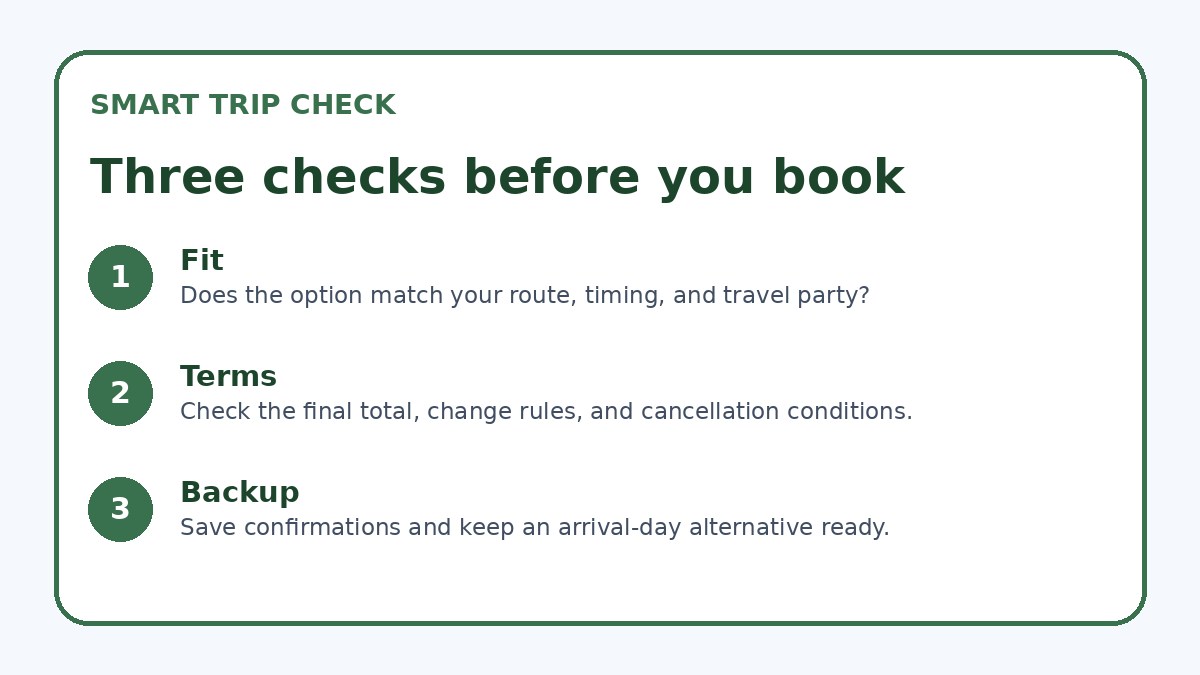
Families renting a car in San Francisco can reduce anxiety and unexpected costs by focusing on three verification steps: understand the rental-company terms (CDW, liability limits, deductibles), confirm what your personal auto policy and credit card benefits actually cover, and get written confirmation of who is insured and what exclusions apply. There is no single correct choice; pick the approach that matches your budget, your tolerance for paperwork after damage, and who will be driving. Before you finalize a booking, read the insurer’s and the rental company’s exact policy pages and keep copies of any benefit documents—Trip.com can be a place to compare current availability, but always verify coverage details on the provider’s booking page or your insurer’s policy wording.
Continue planning
Check current options and final conditions
Use the provider page to confirm live availability, the final total, cancellation terms, and every condition that matters to your trip.
This evergreen planning guide was created with AI-assisted drafting and a structured quality review. It does not display live prices, schedules, availability, visa guidance, or provider rankings. Verify current details before booking. Some links are affiliate links; we may earn a commission at no additional cost to you.