The first decision after landing at San Francisco International (SFO) is simple: get everyone comfortable and choose the transfer that fits your luggage, stroller needs, and where you’ll be staying. For most families that means deciding between a private car, shared ride, taxi, or public transit within the first hour—while you collect baggage and confirm your accommodation’s check-in. Focus on four things right away: how much luggage and car-seat equipment you have, whether your arrival is delayed or late-night, a clear meeting point for drivers or transit connections, and whether your downtown or neighborhood drop-off has stairs, narrow streets, or elevator access. Make the short decision now so a tired child isn’t the one slowing you down later. Below you’ll find practical tradeoffs and the quick checks to complete on booking pages to avoid surprises.
Check options for your arrival details
Use your flight, luggage, party size, and accommodation address to compare current choices.
Luggage, party size and car-seat needs
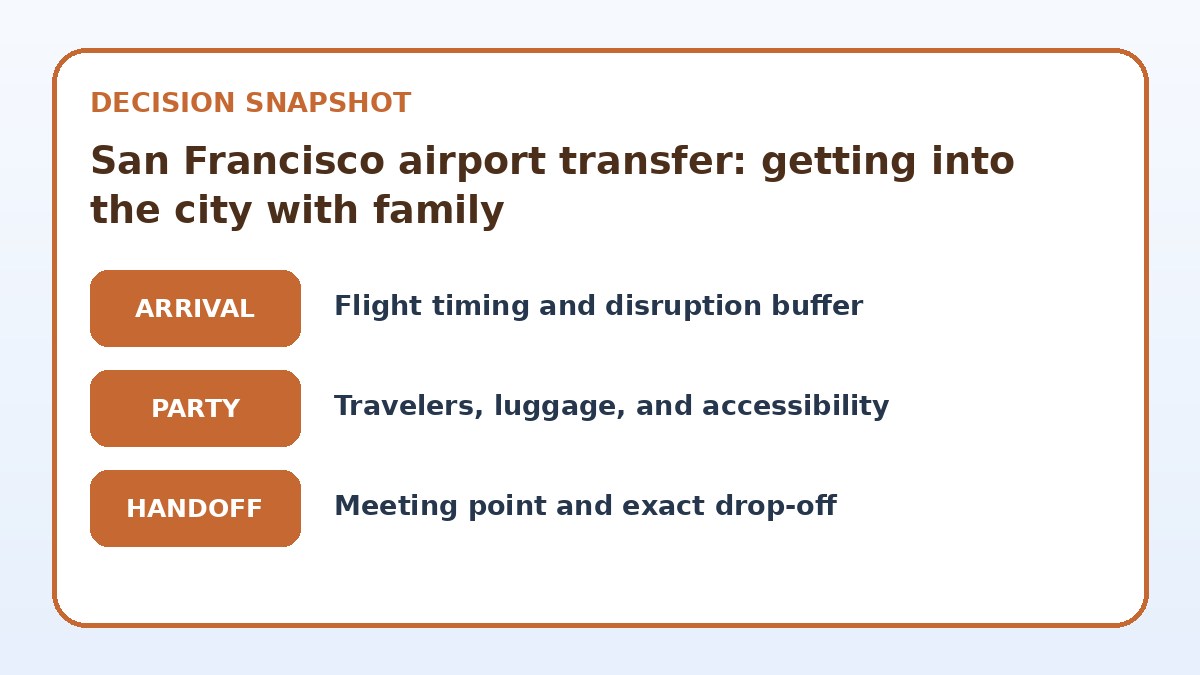
Start by listing every person and item you’ll bring from the plane: adults, children by age, car seats, stroller(s), and checked bags. Families with more than two checked suitcases or a bulky stroller will usually need a larger vehicle than a standard rideshare. Many private transfer services and taxis can fit car seats if you request them in advance, but policies and availability vary. If you expect to bring a car seat, check whether the provider supplies one, whether you must install it yourself, or whether you should bring your own. For infants, bringing a familiar car seat can be safer and quicker than relying on rental or provider-supplied seats.
When you know the party size and gear, compare options by vehicle capacity and ease of loading. An SUV or minivan-style transfer can reduce the number of trips from curb to hotel and is often worth the extra cost for families. If you’re splitting into two vehicles, plan a meeting spot at the terminal and confirm both drivers have the same final address. Also think about space inside the car for a stroller that must stay open for quick exits. If you’ll be fitting a stroller in the trunk, practice folding it quickly at least once before travel day so handling inside a busy terminal is smoother.
Arrival details to have ready
- Confirm the total number of passengers, ages of children, and exactly which car seats or boosters you will bring.
- Check the chosen provider’s flight-delay and pickup-window policy on their booking page and save the terms screenshot.
- Select and pin a specific terminal exit, curb zone, or baggage claim meeting point on your phone map before disembarking.
- If booking a private vehicle, note vehicle capacity and request an appropriate-sized car or minivan for all luggage.
- Ask your accommodation for the preferred drop-off point, elevator access, and any building entry instructions or codes.
- Save the transfer contact number, booking reference, driver details, and a second contact person in case plans change.
Late, disrupted arrivals and flexible pickup
Flights can be delayed, lines can be long, and young children get tired—choose a transfer that handles timing variability. Private transfers and many shuttle providers allow a window and will monitor flight arrival times; however, always verify the operator’s flight-tracking and late-arrival policy on their booking page. Rideshare and taxis are handy if you prefer flexibility: you can request them after you land with real-time pickup. For international arrivals that clear customs slowly, a prebooked driver who monitors flights reduces stress because they won’t leave if you’re late, but that reliability is only confirmed in the supplier’s terms, so check them before locking a booking.
If your arrival is late-night, some public transit options run reduced service and stops may be less convenient with luggage or children. Nighttime taxi queues and rideshifted driver availability also vary. A private car or pre-arranged taxi can be safer and simpler late at night since it removes the need for extra transfers or long waits. Whatever you choose, save a contact number for the transfer provider and a screenshot of the booking reference so you can re-share details with family members or the driver if plans change.
Match the transfer to your arrival
| Arrival approach | Best for | Detail to verify |
|---|---|---|
| Private car/meet-and-greet | Families needing space, car seats, and a predictable door-to-door service. | Costlier than other options and requires booking details verified on the provider page. |
| Rideshare or taxi | Flexible arrivals and shorter waits when you can request a ride after landing. | Vehicle size and car-seat availability vary; you may need two cars for large families. |
| Shared airport shuttle | Budget-minded families with less luggage and flexible timing. | Multiple stops increase travel time and pickup points can be farther from your terminal. |
| Public transit (BART + local bus) | Families comfortable with transfers, traveling light, and saving money. | Requires carrying luggage on platforms and potentially long walks to final accommodation. |
Make the meeting plan clear
Check the final pickup instructions, waiting conditions, and exact drop-off coverage.
Meeting points, pickup clarity and communicating with drivers
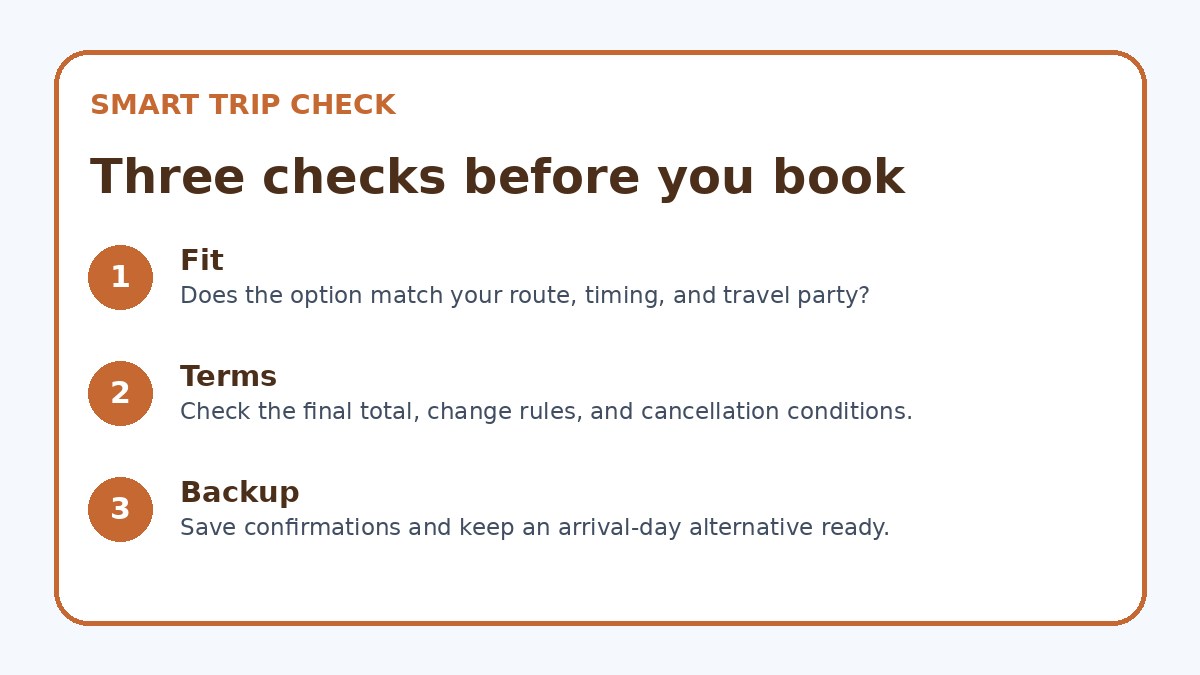
Meeting the driver smoothly starts with exact details: terminal name, baggage claim area, and the curb or rideshare zone. Major San Francisco terminals have designated pickup areas; when you book, record the provider’s recommended location and pin it on your phone map. If you reserve a shared shuttle, check whether it uses a central ground transportation lane or a numbered curb spot—those details determine how far you might walk with luggage. For rideshare pickups, confirm the app’s pickup pin and tell the driver which door you’ll be at; a clear landmark or gate number avoids frantic calls in a busy terminal.
Teach older children a simple routine for meeting a driver: stand near baggage claim, keep backpacks visible, and don’t wander off. If family members arrive on different flights, decide who waits where and whether to consolidate at a single pickup point or take separate vehicles. Keep the driver’s name, vehicle model, and license plate visible in your phone until everyone is safely in the car. If you need to change the drop-off point en route—an extra errand or a grocery stop—check the booking terms in advance for allowed route adjustments and possible extra charges.
Drop-off fit with neighborhoods and accommodation access
San Francisco neighborhoods vary widely in curb access, stairs, and parking regulations; match your transfer to your accommodation’s layout. Hotels and many short-term rentals in flat areas like Fisherman’s Wharf or the Embarcadero often have straightforward curbside pick-up and drop-off. If you’re headed to steep streets, row houses, or buildings with narrow alleys, request a driver who can stop close to the entrance and help with loading. Some condos and apartment buildings have set delivery hours or permit requirements—ask your host whether curbside drop-off is permitted and where the best short-term stop is located.
Think about the short walk from curb to lobby: a flight of stairs or a long block can be difficult with a stroller and two suitcases. If your hotel offers curbside assistance or porter service, confirm whether it’s available at your arrival hour. For vacation rentals, ask the host to provide precise entry directions and any access codes so you don’t need to leave kids unattended on the sidewalk. When possible, choose a drop-off point with a shelter or covered entrance in case of rain; small comforts like a covered step protect tired children and make transfers less stressful.
Airport Transfer & Local Mobility questions travelers ask
Should I prebook a car seat for my child or bring our own?
Bringing your own car seat ensures you know it fits your child and is properly installed, but it adds bulk to your luggage. Many private transfer companies and some taxis accept requests for child seats—check the provider’s booking page for their policy, the type of seat offered, and any extra charges. If you rely on a supplied seat, confirm its certification and age-appropriateness. For infants, a rear-facing seat that you bring from home is often the simplest, safest option if managing the extra suitcase is feasible.
Is public transit a practical option for families arriving at SFO?
Public transit (regional rail plus local buses or light rail) can be practical when traveling light and staying near a transit stop. It’s cost-effective and avoids traffic, but it usually involves stairs, platform gaps, and transfers that can be hard with small children and multiple bags. Check the transit operator’s accessibility options, stroller policies, and schedule frequency for your arrival time. If you choose transit, plan the exact route, note elevator locations, and allow extra time to manage luggage and transfers.
How do I handle a late-night arrival with small children?
For late-night arrivals, prioritize a simple, direct transfer: prebooked private cars or taxis reduce transfers and waiting with tired kids. Confirm on the provider’s site whether they guarantee night pickups and if there are extra fees for late hours. If you prefer rideshare, ensure the app and payment method are ready and identify the official pickup zone ahead of time to limit walking in quiet terminals. Also have a backup plan: the number for the hotel or host, and a local taxi dispatch in case your primary option falls through.
Final decision note
Choosing the right San Francisco airport transfer for your family comes down to three practical checks: honest counting of luggage and car-seat needs, clarity about pickup and drop-off points, and the flexibility required for your arrival time. Private cars simplify logistics with space and door-to-door service; rideshares and taxis offer on-demand pickup; shuttles save money but can add stops; and public transit works if you travel light. Before booking, verify flight-tracking, car-seat policies, vehicle capacity, and drop-off limitations on the provider’s final booking page. Optionally, compare current availability on Trip.com to see schedules and service options, then pick the option that minimizes walking and waiting for your family.
Continue planning
Check current options and final conditions
Use the provider page to confirm live availability, the final total, cancellation terms, and every condition that matters to your trip.
This evergreen planning guide was created with AI-assisted drafting and a structured quality review. It does not display live prices, schedules, availability, visa guidance, or provider rankings. Verify current details before booking. Some links are affiliate links; we may earn a commission at no additional cost to you.