Practical decision first: for most families, prioritize a fast intercity train between Rome and Florence for the core journey, then layer local connections to your hotels and day trips. Trains typically reduce door-to-door time and simplify luggage handling versus multiple coach legs or complicated car routing. However, a combined plan — for example, a train for the long haul plus a rental car for a day trip from Florence — can better match family schedules and sightseeing needs. This article walks you through how to compare rail, coach, self-drive, and mixed plans by terminal fit, luggage and transfer friction, timing flexibility, and disruption backups. The goal is an end-to-end, door-to-door family transport plan that minimizes stress and keeps options open if plans change.
Choosing the right mode: rail, coach, car, or mixed
Start by listing what matters most to your family: minimizing transfers, limiting luggage handling, time flexibility, or maximizing sightseeing on the way. Trains often win on transfer simplicity because major stations in Rome and Florence sit in central locations served by taxis and public transit. Coaches can deliver hotel-area stops but sometimes require longer boarding waits and stricter luggage rules. Rental cars provide the most route freedom for exploring small towns but add parking headaches and driving time through city traffic and limited zones.
Match your choice to your itinerary: if your trip is primarily point-to-point and you want to drop bags at your Florence accommodation quickly, a rail-first plan is usually the most practical. If you plan multiple rural stops in Tuscany, consider renting a car only for the Florence portion, picked up at or near the train station to avoid extra city driving. For families, a mixed approach often offers the best tradeoff — use rail to cut the long-distance stress, then a car for flexible day excursions while based in Florence.
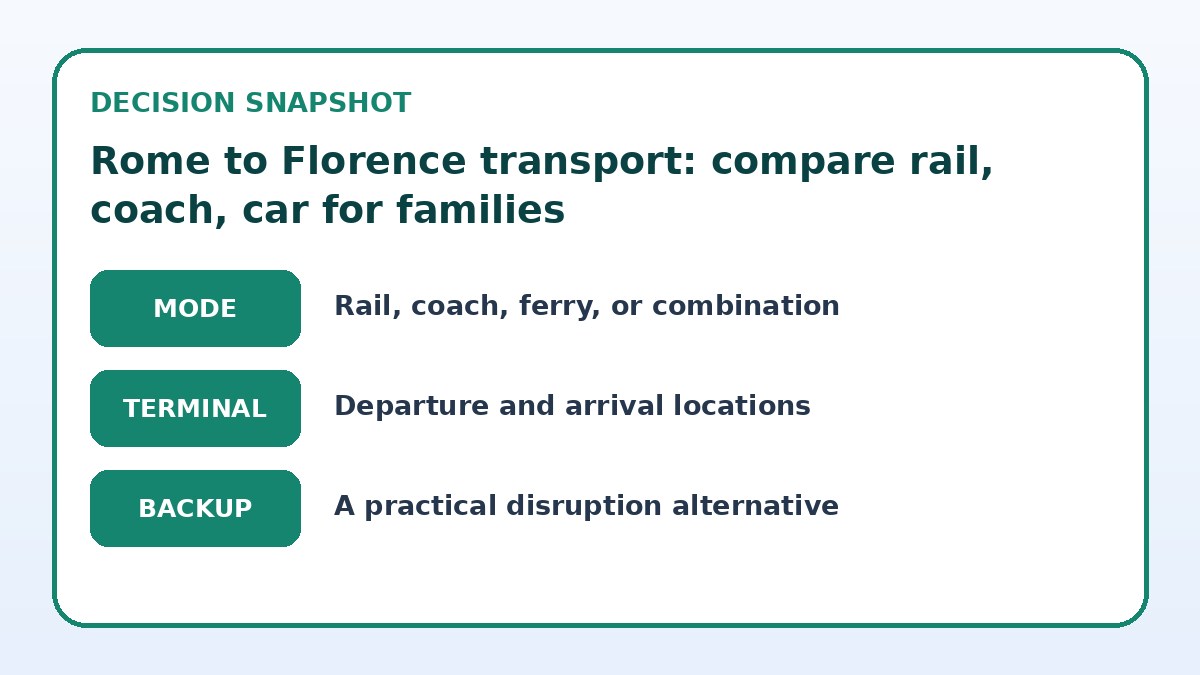
Choose the end-to-end journey plan
| Journey approach | Best for | Friction to check |
|---|---|---|
| Rail-first plan (intercity train + local transit) | Families prioritizing fast, low-friction transfers and central arrival points | Less flexibility for rural side trips without adding a rental car later |
| Coach-only plan (direct coach legs) | Families wanting simpler door-to-door hotel links and fewer station stairs | Potentially fewer departure times and stricter luggage rules |
| Self-drive plan (rental car end-to-end) | Families needing full flexibility for scenic stops and off-the-beaten-track villages | Parking, low-emission zones, and city-center drop-offs in Florence can be difficult |
| Mixed plan (train to Florence, short rental for day trips) | Families who want low-stress long-distance travel combined with flexible local exploration | Requires coordinating train arrival with rental pick-up and verifying operating hours |
Check live intercity options
Look beyond the ride itself and compare terminals, transfers, luggage, and arrival fit.
Terminal fit and door-to-door planning
Don’t evaluate the intercity leg alone; map each door-to-door segment. Identify which stations or coach terminals sit closest to your Rome accommodation and which Florence neighborhood you want to reach. For rail, check where trains stop in each city — central stations typically have direct bus and taxi links, while some coach terminals may park further from main tourist areas. For car plans, look up both pick-up/drop-off locations and hotel parking options in Florence because many historic areas have restricted vehicle access.
Create a timing spreadsheet with realistic transfer times: time to get from your Rome lodging to the departure terminal, boarding and luggage stowage, the intercity ride, and final transfer from the arrival terminal to your Florence lodging. Factor in family needs such as restroom breaks, snack time, and stroller handling. Where possible, book accommodations with late check-in or luggage hold so a delayed arrival is manageable without losing a day of sightseeing.
Luggage, transfer friction and timing flexibility
Families often carry more gear: suitcases, daypacks, a stroller, and perhaps a child seat. Compare how each mode handles baggage — trains usually permit baggage in dedicated areas and ease of movement between carriages, while coaches can impose stricter weight or piece limits and require retrieving luggage at the terminal. If you hire a car, decide whether you need to reserve a child seat and ensure your vehicle choice accommodates strollers and luggage. Make packing choices that reduce transfer friction: soft-sided luggage, collapsible stroller, and a daypack for essentials.
Timing flexibility matters when travelling with kids. Trains can offer multiple departures across the day enabling you to choose a convenient slot; coaches may run fewer services but sometimes have direct routes that remove a change. When planning, avoid tight connections: leave buffer time for delays at either end. If your family prefers a relaxed schedule, select an option with at least one extra hour between the scheduled arrival and any onward appointments or check-ins, and build an alternate later departure into your plan just in case.
Compare the practical alternatives
Use the final page to confirm what is actually offered on your dates and save a workable fallback.
Intercity travel checklist
- List family priorities (minimize transfers, limit luggage handling, or maximize sightseeing) and rank them to guide mode selection.
- Map door-to-door times: lodging-to-departure terminal, intercity travel, and arrival terminal-to-hotel including buffer time.
- Check baggage rules and stroller/child-seat policies with the operator before booking; note what must be pre-reserved.
- Locate alternative departures and local taxi/ride-hail options near arrival in case of delays or cancellations.
- If renting a car, reserve a child seat and confirm pick-up/drop-off hours and the rental office address near the station.
- Save or screenshot confirmations, station/terminal addresses, and offline maps for both cities accessible without mobile data.
Disruption backups and what to verify before booking
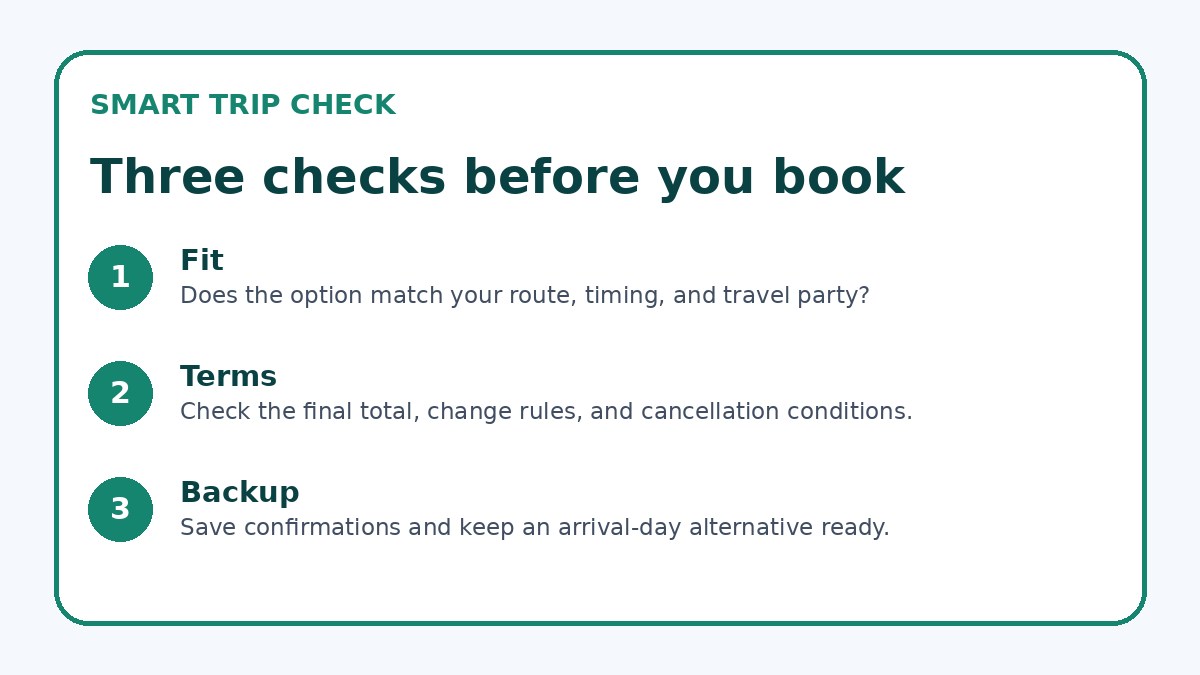
Every family plan should list two disruption backups: an alternate later train or coach departure and a local taxi or ride-hail option to bridge short gaps. If you opt to drive, note local rental office hours and a fallback pick-up location in case your first choice closes. Confirm refund or change rules for booked tickets so you can reshuffle plans without costly penalties, and ensure your phone has working data or offline maps to find an alternate route if needed.
Before purchasing any ticket or car reservation, verify the provider’s latest policies on baggage allowances, child seats and stroller rules, exact terminal addresses, and whether reservations are required for specific services. If you rely on a connecting service — for example a train arrival timed with a rental car pick-up — check the provider’s recommended transfer times and their change policies. Optionally compare current availability on Trip.com, but verify details and finalize bookings on the provider’s official booking page to confirm any conditions that affect your family.
Rail & Intercity Transport questions travelers ask
Is a direct train always the best option for families traveling from Rome to Florence?
A direct train often reduces handling and travel time, which benefits families, but ‘best’ depends on the whole door-to-door picture. If your Rome lodging is far from the main station or your Florence hotel sits on a narrow historic street with restricted vehicle access, the direct train may still require significant transfers at each end. Also consider departure frequency, luggage needs, and whether you plan side trips in Tuscany. Compare how much transfer time and effort a train saves versus the flexibility a car gives for your specific itinerary.
How much buffer time should families leave between a train arrival and hotel check-in?
Plan at least one hour between the scheduled arrival and a standard hotel check-in to handle luggage collection, restroom breaks, and short taxi or public-transit rides, and more if you have a stroller or very young children. If you expect potential delays or need a rental car pick-up, increase that buffer to 90–120 minutes. Also check the hotel’s luggage-hold policy so you can arrive before check-in and leave bags securely if needed; confirm this directly with your accommodation before travel.
Can I combine train travel with a rental car easily when traveling with kids?
Yes — many families take a train for the long haul and pick up a rental car at or near the arrival station for local exploring. To make it smooth, reserve the car in advance, request any child seats, and check the rental office’s opening hours against your train arrival. Allow time to collect luggage, sign paperwork, and fit child seats when estimating your transfer time. Verify the exact rental pick-up address and ask whether the company will hold the vehicle if your train is delayed.
Final decision note
For families, building a Rome to Florence transport plan means thinking beyond the ride itself and arranging every transfer, luggage move, and contingency. Start by ranking priorities — speed, fewer transfers, or flexible sightseeing — then choose rail, coach, car, or a mixed plan that aligns with those priorities. Map true door-to-door times, check baggage and child-seat rules, reserve backups like later departures or local taxis, and confirm pickup addresses and office hours before you finalize bookings. That preparation turns an intercity leg into a reliable, family-friendly step of a larger multi-city trip.
Continue planning
Check current options and final conditions
Use the provider page to confirm live availability, the final total, cancellation terms, and every condition that matters to your trip.
This evergreen planning guide was created with AI-assisted drafting and a structured quality review. It does not display live prices, schedules, availability, visa guidance, or provider rankings. Verify current details before booking. Some links are affiliate links; we may earn a commission at no additional cost to you.