If your agenda is meetings across Dubai, deciding whether to book a Dubai car rental is the first practical choice that shapes time, stress and cost. In many central-business-area itineraries you’ll save door-to-door time with a car, especially when meetings are spread across Marina, DIFC and Jumeirah, or when you need late finishes. But driving also brings parking, variable congestion, and insurance questions that matter for corporate liability. This guide gives a clear short answer up front, then walks through route value, insurance wording to check, pickup/return friction at airports and hotels, and a solid fallback using public transport and on-demand taxis. Read the checklist at the end before you book and verify vehicle coverage, toll payment arrangements, and pickup/return policies on the rental provider’s final booking page.
Route value: when driving truly improves a business itinerary
Start by mapping meeting locations and typical travel windows. Driving adds the most value when meetings are spread across several districts with poor transit connections — for example, combining appointments in Dubai Marina, Industrial Area and a meeting outside the city centre. Also weigh whether you’ll need to carry presentation materials or equipment. If the whole schedule sits within the metro-served corridor (e.g., Business Bay, DIFC, Bur Dubai) the metro plus short rides usually beats slow parking searches and peak-hour tunnels.
Consider time-of-day congestion and parking availability at each venue. Dubai’s major roads are efficient off-peak, but arterial congestion around business peak hours and special events can erode any time advantage. Confirm whether hosts offer visitor parking or valet, or whether you’ll pay for private parking. Estimate door-to-door times rather than distance alone; short walking distances from metro stations can often offset a shorter drive’s parking hassles.
Decide whether driving earns its place
| Mobility strategy | Best for | Cost or friction to check |
|---|---|---|
| Self-drive rental car | Business visitors needing full schedule control, equipment transport, or late-night site visits. | Parking, insurance excess, and pickup/return time can add hidden costs and administrative work. |
| Metro plus local taxis | Meetings clustered along metro lines where consistent travel times and predictability matter. | Limited direct access to some venues and last-mile walking or taxi time increases total transit legs. |
| Ride-hail only (pre-booked or on-demand) | Flexible, point-to-point travel without parking or insurance responsibility—good for scattered appointments. | Surge pricing, variable wait times, and company expense controls can complicate budgets and timing. |
| Hybrid: short-term rental plus public transport | Mixed itineraries requiring a car for a few specific days or site visits, with transit elsewhere. | Two booking streams to manage and possible duplication of costs if not tightly scheduled. |
Check live rental choices only after the route test
Use the exact driver, dates, pickup point, and return plan to compare current conditions.
Insurance wording: what to read before you sign
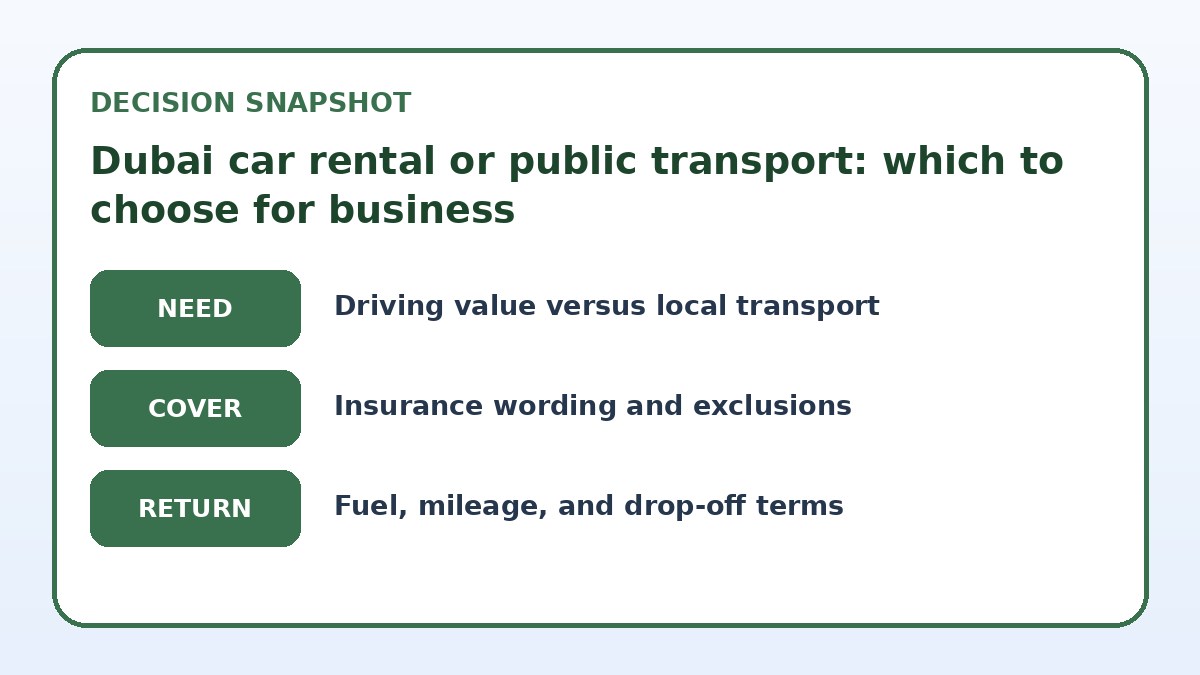
Insurance sections on rental contracts are where a modest daily rate can become costly if an incident occurs. Look for the collision damage waiver (CDW) and whether it’s included or optional, the excess amount you’d be responsible for, and any named exclusions such as tyre, windshield, or undercarriage damage. Corporate cards, employer policies, and third-party travel insurers sometimes cover part or all of the excess — check the exact policy wording rather than relying on summary statements.
Also verify liability coverage and how the company handles fines and tolls. Some contracts require immediate payment for traffic violations with later reimbursement; others may levy administrative fees when the rental company pays fines on your behalf. Before confirming a Dubai car rental, open the provider’s full insurance section on the booking page and download or screenshot relevant pages so your finance team can review them later.
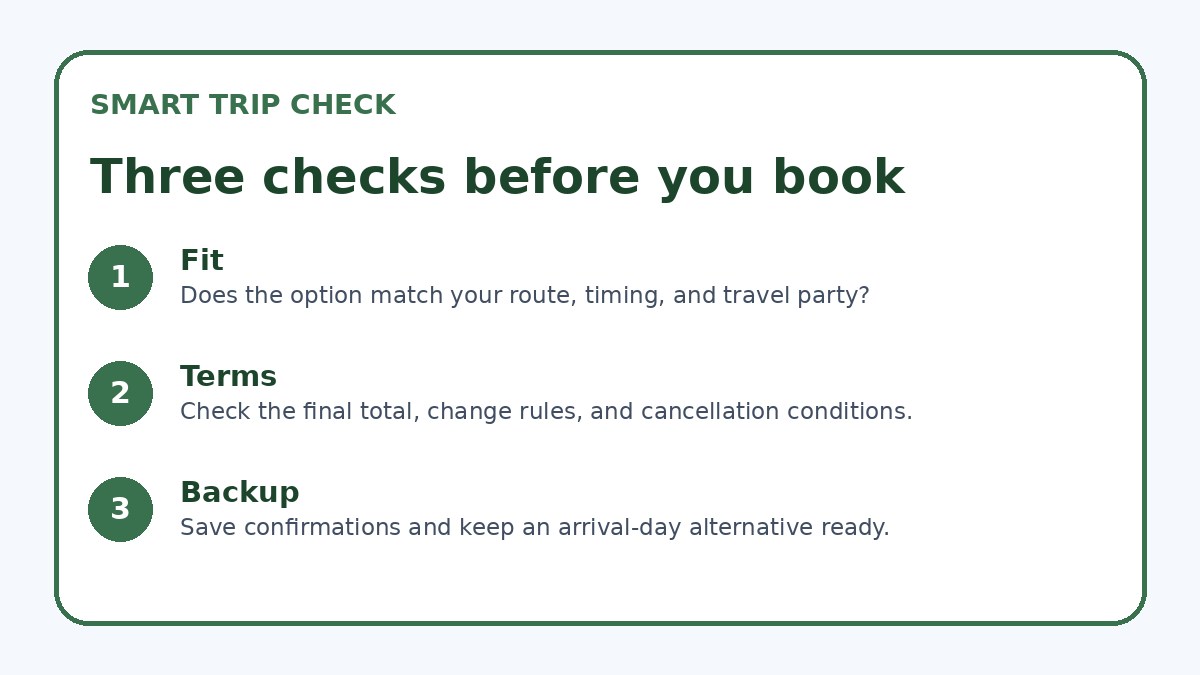
Compare the full rental conditions
Confirm insurance wording, exclusions, deposit, fuel, mileage, and return terms on the final page.
Pickup and return friction: airport logistics and hotel handovers
Pickup at Dubai airports or city locations can be straightforward but still take time. Account for shuttle waits to rental lots, documented vehicle inspections and counter queues during busy arrival waves. If you’re collecting a vehicle after an evening flight, allow extra time for counters that close or reduce staff after midnight. When returning, some companies require you to fill a fuel tank to a specified level or risk refuelling charges; others accept drop-off with fuel cards. Verify fuel, drop-off hours, and any required documentation on the booking page.
If you prefer hotel handovers, check whether the rental firm offers delivery to your hotel and whether the hotel requires onsite parking permits or charges for loading. Delivery services can save time but may add a fee. Ensure the vehicle is inspected together and any pre-existing damage is recorded. Photograph and timestamp the car when you pick it up and return it—these images are crucial if disputes about condition or damage arise later.
Car rental terms to verify
- Map all meeting addresses and estimate door-to-door travel times for driving and public transport during your meeting windows.
- Open the rental provider’s full insurance wording on the booking page and confirm collision waiver, excess amount, and named exclusions.
- Confirm pickup and drop-off hours, required documentation, and whether airport counters or hotel delivery adds time or fees.
- Check whether your company card or travel policy covers rental excesses and traffic fines; get written pre-approval if needed.
- Photograph the vehicle’s exterior and interior at pickup and return, save timestamps and any inspection reports provided by the agent.
- If not driving, prebook a ride-hail app with corporate payment and save metro routes and station exits nearest each meeting venue.
A non-driving fallback: public transport, metro and ride-hail strategy
An organized fallback is essential if you decide not to drive. Dubai’s metro connects major business hubs along two lines, offering predictably timed journeys during work hours. Combine the metro with short taxi or ride-hail trips to cover the first/last mile to offices and hotels. For off-peak or late-night meetings, pre-booked ride-hail trips provide reliable point-to-point transfers without the parking hassles and insurance exposure of self-driving.
Plan transfers and buffer time between meetings, because waiting for a car or transferring between modes adds variance. Use a single ride-hail app your company approves, set up corporate payment if available, and keep receipts for expense reports. If accessibility or equipment transport is a factor, confirm vehicle types in advance with the ride-hail provider or plan for a rental only for those specific legs.
Car Rental & Road Trip questions travelers ask
Can I rely on a credit card for insurance when I book a Dubai car rental?
Many corporate and personal credit cards offer rental insurance benefits but coverage varies widely. Before assuming protection, check the card issuer’s policy wording for geographical coverage, included damage types, claim procedures and any requirement to decline the rental company’s CDW. Some cards only cover collision if you pay for the full rental with the card and refuse the provider’s optional waivers. Verify those exact terms on your cardholder agreement and confirm whether the coverage is primary or secondary to your employer’s policy.
Is driving in Dubai significantly more time-efficient than taking the metro?
It depends on where and when you travel. Driving can be faster for trips that cross different districts or go beyond the metro network, and when you need door-to-door control. However, the metro offers reliable, often faster journeys along its lines during peak hours because it avoids road congestion. Compare door-to-door schedules, parking time at each meeting, and how many last-mile taxi rides you'd need. For clustered downtown meetings the metro plus short taxis typically matches or beats driving once parking time is included.
What should my company expense policy require before approving a rental car in Dubai?
A clear policy should require: justification for why public transport or ride-hail was unsuitable, approval for the rental class and daily rate cap, confirmation of insurance coverage for excess or collision through company policy or card, and instructions for handling fines and tolls. Require the traveller to save the booking page’s insurance wording, the rental contract, vehicle inspection photos, and all fuel and toll receipts. These documents support post-trip reconciliation and any damage claims.
Final decision note
For business travellers, the practical choice between a Dubai car rental and public transport comes down to route value and risk management. Rent a car when your schedule demands flexibility, equipment carriage or late-night travel beyond metro reach; otherwise, rely on the metro and ride-hailing for predictable, lower-friction movement in central business districts. Before booking, check insurance wording, excess amounts, pickup/return hours and any fuel or toll arrangements on the provider’s final booking page. If you want an easy place to compare current availability and conditions, you can consult a general aggregator such as Trip.com, but always confirm contract details on the rental firm’s page and keep documentation for expense and claims.
Continue planning
Check current options and final conditions
Use the provider page to confirm live availability, the final total, cancellation terms, and every condition that matters to your trip.
This evergreen planning guide was created with AI-assisted drafting and a structured quality review. It does not display live prices, schedules, availability, visa guidance, or provider rankings. Verify current details before booking. Some links are affiliate links; we may earn a commission at no additional cost to you.