Short practical answer: for most business travelers to Seoul, separate bookings usually win on schedule control and refundable flexibility, while packages can save time on planning and reduce transaction hassle when your dates and needs are fixed. Before judging either option, compare exactly the same travel dates, number of travelers, luggage allowances, ground transport, and cancellation/change terms. Packages bundle elements but vary widely in what they include and how changes are handled; separate bookings let you mix carriers, hotels, and ground options but require more hands-on coordination. Use the rest of this guide to evaluate inclusions, flexibility, traveler-specific value, and final contract terms so you can make a decision tied to your meeting schedule, risk tolerance, and company travel policy.

Test package value fairly
| Booking approach | Best for | Tradeoff to check |
|---|---|---|
| Full package (flight + hotel + transfers) | Travelers who want minimal planning time and a single point of contact. | Less control over individual elements and potential combined change penalties. |
| Package with add-ons (flight + hotel, optional transfers/tours) | Those who want a baseline bundle but still need a few selectable services. | Selecting add-ons can raise the price and add mixed refund conditions to the booking. |
| Separate bookings (flight, hotel, transfers each booked independently) | Business travelers needing schedule flexibility, loyalty credit, and policy compliance. | More time spent arranging logistics and managing multiple confirmations and invoices. |
| Hybrid approach (book critical items separately, bundle the rest) | Those who want control over flights and meetings but convenience for ground services. | Requires careful coordination to ensure timing matches across independently booked elements. |
Check current package and separate options
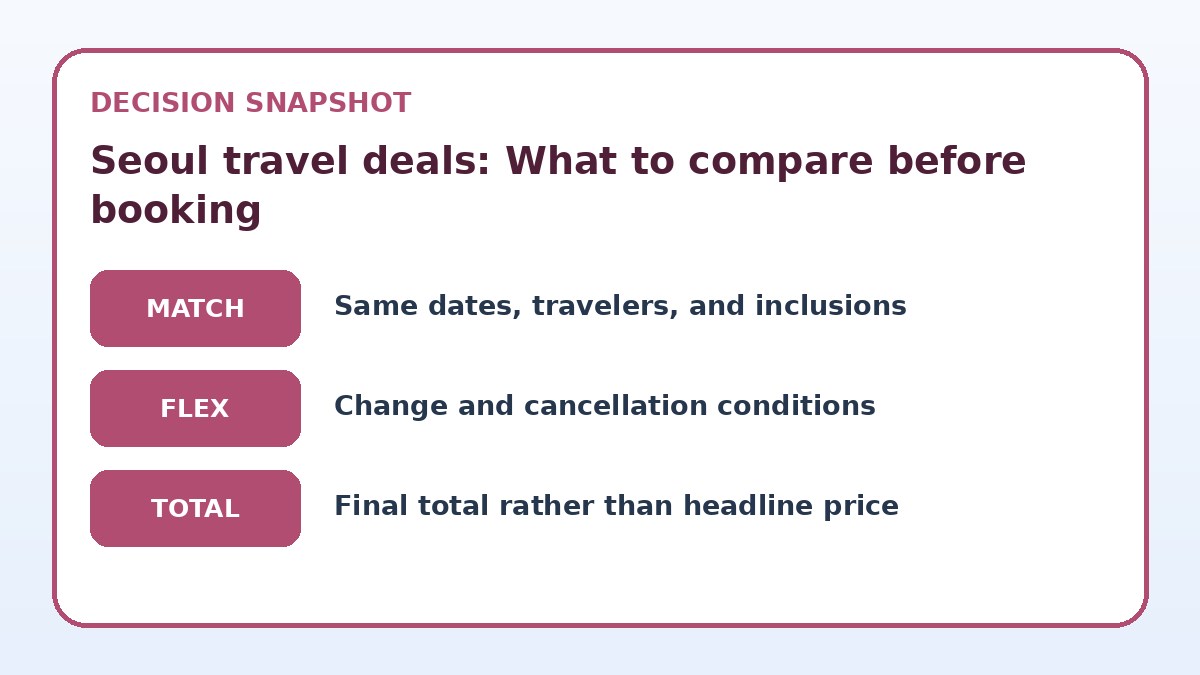
Use identical dates, travelers, room needs, baggage, and flexibility so the comparison stays meaningful.
Inclusions: what the package actually covers
Start by listing every element you need: international flights, domestic connections, preferred hotel category, airport transfers, Wi‑Fi or hotspot rental, and any required ground transport for meetings. Packages often advertise ‘flight + hotel’ but differ on whether transfers, travel insurance, additional baggage, seat selection, or meeting-room access are included. For business travel, an omission like no airport transfer or no flexible check-in can create cost and time friction that erodes any headline convenience value.
When comparing, create a side-by-side checklist for the package and the same items booked separately. Note vendor responsibilities for each inclusion and look for explicit exclusions on the seller’s final booking page. If the package bundles nonrefundable tickets or advance‑purchase hotel rates, factor potential change fees into your decision. For shared services like group transfers, confirm timing windows and whether they align with your arrival or departure times.
Flexibility: change and cancellation rules
Business travel commonly needs date changes. Packages may offer lower upfront effort but can tie multiple elements to a single change fee or nonrefundable condition. Separate bookings let you choose flexible airfare — refundable fares, changeable tickets, or corporate rate hotels with free cancellation — even if the per-component sticker price is higher. Decide what level of flexibility you require: full refundable, limited changes, or strictly fixed itineraries.
When evaluating flexibility, read the specific fare conditions and hotel cancellation policies on the provider’s final page before you pay. Look for how change fees are applied: will changing one flight require reissuing the whole package or trigger re-pricing of the hotel? If your employer’s travel policy allows it, favor options that isolate risk (separable components) so one change doesn’t force renegotiation of unrelated bookings.
Look past the headline total
Compare inclusions and change conditions before deciding whether a package is genuinely useful for this trip.
Deal comparison checklist
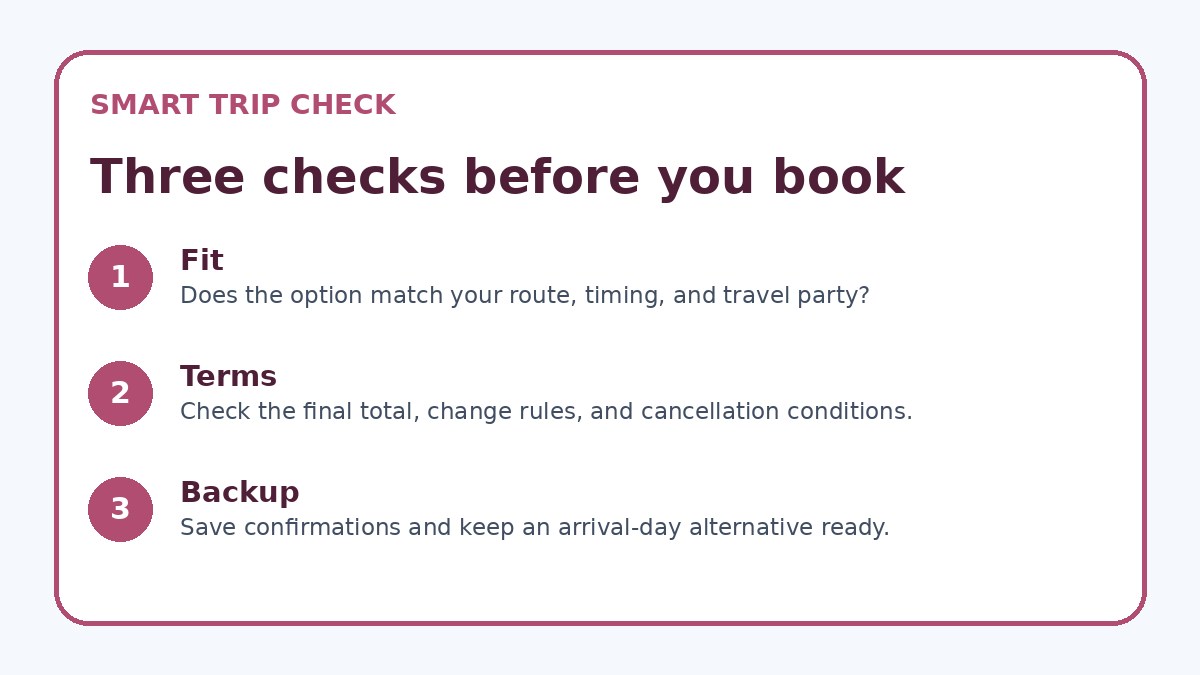
- Match the exact travel dates, number of travelers, and cabin class when comparing package and separate quotes.
- Open the final checkout page for each option and copy the fare rules, cancellation windows, and change fees into your notes.
- Confirm whether the package’s transfers are private or shared and whether pickup times match your flight schedule.
- Check invoicing details to ensure receipts meet your company’s expense and reimbursement requirements.
- Verify luggage allowances and seat selection policies for each fare to avoid unexpected upgrade or baggage costs.
- If loyalty or corporate rates matter, test separate booking options to ensure points and negotiated discounts apply.
Traveler-specific value: what business travelers uniquely need
Business travelers usually prioritize schedule control, predictable arrival times, reliable Wi‑Fi, proximity to meeting venues, and easy expense reconciliation. A package can be valuable when it secures a hotel near your conference venue and provides a seamless transfer from the airport, saving time and admin. If your trip includes several intra-Korea connections or group meetings, a packaged itinerary may reduce coordination and provide a single invoice for expense reports.
Conversely, if you require loyalty program credit, specific flight times, or the ability to change segments independently, booking separately better preserves those options. Decide whether corporate booking tools, preferred carriers, or negotiated rates must be used: if so, separate bookings may be necessary to apply corporate discounts or earn airline miles. Factor in post-booking support—packages sometimes offer a single point of contact, which can be useful for on-the-ground problem solving.
Final terms: what to verify before you confirm
Always verify the seller’s final terms on the checkout or confirmation page. Key items to check: exact fare rules, baggage allowances, hotel rate cancellation windows, whether transfers are shared or private, and how refunds and changes are processed. If the package includes a transfer, confirm the pickup procedure, contact details, and contingency plans for late arrivals. For separate bookings, confirm how different vendors handle schedule disruptions that cascade across bookings.
Also check invoicing and receipts for your expense system: will the package provide a single invoice or separate supplier invoices? Ask whether your company’s travel policy requires refundable fares or corporate booking channels. If you need a third-party reference, platforms such as Trip.com can show live availability and terms as a comparator, but always treat the provider’s checkout page as the definitive source for rules and final costs.
Travel Deals & Booking Strategy questions travelers ask
Can a package ever be cheaper than booking components separately for a Seoul business trip?
Yes, packages can appear cheaper when suppliers combine advance-purchase inventory or negotiated rates, but avoid assuming the headline price is a true saving. To verify, compare the package against separate bookings for the identical travel dates, cabin class, and hotel category. Include ancillary costs—baggage, transfers, and change fees—in both comparisons. Also check whether the package locks multiple items into nonrefundable conditions that could make an initial saving vanish if your schedule changes.
How do I manage schedule changes if I booked a package and a meeting is moved?
First, review the package’s change and cancellation policy on the final confirmation page to see whether elements are tied together. Contact the package provider to learn whether changing one component forces reissuance or re-pricing of the whole bundle. If you expect frequent changes, consider a hybrid or separate bookings approach to isolate risk. If your company allows, choose refundable or flexible fares and hotel rates when making bookings; these are more expensive but protect you from disruptive rebooking costs.
What specific items should my company’s travel policy require for Seoul business travel comparisons?
Policy should require matching dates and traveler numbers in price comparisons, require documentation of fare rules and hotel cancellation terms, and mandate whether corporate preferred carriers or loyalty accrual must be used. It should state whether single-invoice packages are acceptable and when refundable or changeable fares are required. Also include guidance on transfers—whether private airport pickup is mandatory for late arrivals—and require verification of invoicing format for expense reconciliation.
Final decision note
Choosing between a package and separate bookings for Seoul business travel depends on your tolerance for schedule risk, the need for loyalty credit or corporate discounts, and how much administrative time you can spend. Packages reduce planning friction and consolidate invoices but may couple unrelated elements under single change rules. Separate bookings offer control, potential policy compliance, and isolated flexibility but demand more coordination. Use the side-by-side checklist approach described here: compare identical dates, traveler counts, inclusions, and final terms on the provider checkout pages before you commit. That disciplined comparison will reveal the true value for your specific business trip.
Continue planning
Check current options and final conditions
Use the provider page to confirm live availability, the final total, cancellation terms, and every condition that matters to your trip.
This evergreen planning guide was created with AI-assisted drafting and a structured quality review. It does not display live prices, schedules, availability, visa guidance, or provider rankings. Verify current details before booking. Some links are affiliate links; we may earn a commission at no additional cost to you.