Practical answer first: before you click “book,” add up the real out-the-door cost for your Rome trip—airfare plus likely airport transfer, the exact room rate after taxes and mandatory fees, a realistic daily budget for food and transit, and prebooked entrances or tours you plan to use. That single number tells you whether a “deal” is actually a bargain or a false economy that leaves you paying more in Rome than a slightly pricier, better-located option. For solo travelers the difference matters: a cheaper hotel on the outskirts can increase local transport spending and time lost to commuting, while a central place may cut costs and stress despite a higher nightly rate. Below I’ll lay out how to calculate that full cost, what tradeoffs to consider, and a checklist so you can compare offers objectively before committing.
See current options before you compare the details
Availability and final conditions change. Open Trip.com now or keep reading for the practical comparison.
Build the full-trip number before judging a deal
Start with the components you know you will pay: flight or train fare, any mandatory luggage fees, the exact nightly rate with taxes for the room type you want, and likely transfer methods from the arrival point to your accommodation. Add expected daily spending for meals, local transit, and at least two paid attractions you’ll prioritize. Don’t forget small recurring costs—mobile data, public restroom fees in tourist areas, or a daily coffee habit—which add up across several days.
When you add these pieces, you get a comparable figure across options. That total lets you answer the core question: does a lower headline price actually save money once you account for convenience and time? For example, a cheaper flight with an awkward arrival time may force a private transfer or an extra paid night, while a centrally located hotel that looks costlier per night could cut local transport and give longer sightseeing time—both valuable for a solo traveler.
Compare travel options: direct versus connections and transfer choices
For routes to Rome, look at total door-to-door time and likely transfer costs, not just ticket prices. If a direct flight is available, weigh the premium against the cost and time of a cheapest connecting option. A connection that looks cheap on the booking site can mean more time in transit, greater risk of missed connections, and added secondary costs such as meals or paid lounge access. When trains are an option, consider seat reservations, luggage handling, and the cost of getting to the station.
On arrival, list transfer options—airport shuttle, public train or bus, rideshare, or taxi—and check how each affects your schedule and wallet. For late-night arrivals a guaranteed taxi might be the only safe choice, while daytime arrivals can use cheaper rail links or buses. Verify final transfer prices and schedules on provider pages and check baggage policy details on the airline or rail site's booking page to avoid surprises.
| Approach | Best for | Tradeoff to check |
|---|---|---|
| Cheapest headline fare and budget hotel | Travelers prioritizing lowest upfront cost and willing to sacrifice time and convenience | May increase local transport, transfers, and fatigue; often lacks flexibility or included services |
| Higher fare or central hotel with better amenities | Travelers who value time, convenience, and fewer daily transit costs | Higher upfront spend but often lower incidental costs and less logistical stress |
| Prebooked tours and skip-the-line tickets | Short itineraries where maximizing sights per day matters | Higher prepaid expense and less spontaneity, but saves waiting time |
| Flexible fares and pay-as-you-go sightseeing | Travelers who prefer adaptability and may adjust plans mid-trip | Potentially lower cost if plans change, but can cost more overall if peak-time waits or sold-out slots occur |
Ready to check the option that fits your plan?
Use your exact dates and traveler details so the provider page can show the current total and conditions.
Lodging tradeoffs that matter most to solo travelers
Location is the single biggest lodging variable for solo travelers. A room inside or near central neighborhoods cuts walking or transit needs—saving both money and time—while a lower nightly rate farther out can inflate daily transit and reduce evening safety or convenience. Consider what you value more: late-night strolling near landmarks or quiet residential streets. Also factor in what the rate includes: breakfast, city tax, Wi‑Fi, or a refundable cancellation policy. Those inclusions change the true cost and flexibility of a booking.
Room type matters: single rooms, small doubles used solo, and private hostel rooms differ in price and amenities. A private room in a well-located guesthouse can cost more per night but reduce the need for paid tours or transfers by allowing earlier starts and later returns. Read the provider’s booking page to confirm cancellation terms, check-in windows, breakfast policies, and whether any mandatory resort or city taxes are added at checkout rather than shown upfront.
Before you book
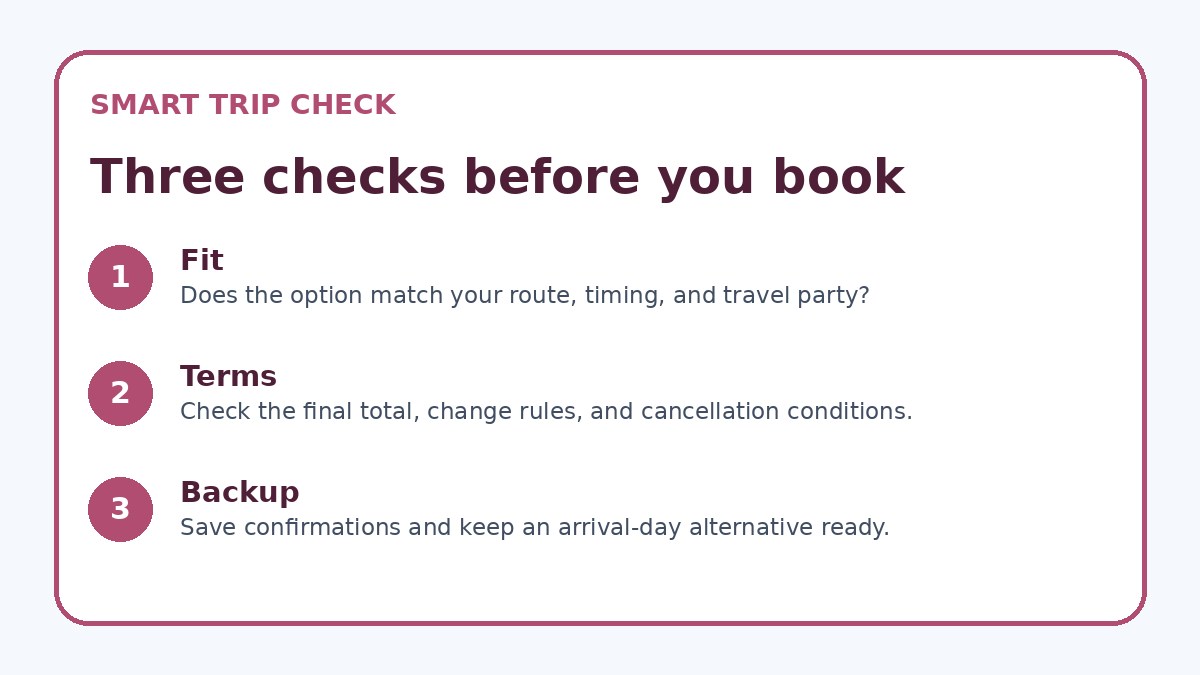
- Calculate total door-to-door travel time and add estimated transfer costs from arrival point to your accommodation.
- Confirm the nightly rate with taxes, city tourist fees, and any mandatory extras on the lodging provider’s booking page.
- Check baggage allowances and change/cancellation terms on the airline or rail booking page before selecting a low fare.
- Estimate daily spending for transit, two paid attractions, and typical meals; multiply by trip days and add to the booking total.
- Decide which attractions to prebook and verify exact entry, cancellation, and rescheduling policies on the provider’s final page.
- Compare final totals across options (cheapest headline vs central/convenient) and choose the package that minimizes time and hidden costs.
Prebook tickets and evaluate time versus money
Decide which attractions or experiences to prebook before you arrive. Rome’s popular sites can have long lines; prebooked timed entries save waiting but increase upfront cost. For a short trip, paying more to skip lines or joining a small guided entry may deliver higher value because you see more in a limited time. For a relaxed schedule, buying some tickets on-site can save money but risks long waits that eat into your day.
Use the full-trip number to decide whether to prepay for tours, Roma transport passes, or flexible train fares. If a low-cost ticket requires strict nonrefundable terms, weigh the risk of schedule changes. Wherever possible, verify cancellation and change policies on the provider’s final booking page. You can also compare current availability and conditions on Trip.com as one of several places to check, but always confirm policies directly with the attraction or transport provider before committing.
Frequently asked questions
Should solo travelers always pick the cheapest flight and hotel when booking Rome travel deals?
Not necessarily. The cheapest combination can bring hidden costs: late arrivals requiring private transfers, hotels far from the center that increase daily transit costs, or nonrefundable fares that penalize changes. For solo travelers the time value—safer neighborhoods at night, shorter transit times, and fewer logistical headaches—often outweighs small nightly savings. Build the full-trip cost including likely transfers and daily expenses to see whether a slightly pricier, better-located option actually reduces your total spend and stress.
How much should I budget for prebooking attractions versus buying tickets on arrival?
Decide based on your schedule and tolerance for queues. If you have limited days and want to prioritize major sites, prebooking timed-entry tickets can save hours and make each day more productive, though it increases upfront cost. If you have a flexible itinerary and several days, buying some tickets on arrival may save money but risks long waits. Always check the attraction’s official booking page for availability and cancellation terms before purchasing to ensure you can adjust plans if needed.
Where should I verify final prices and policies before I complete a booking?
Always confirm prices, taxes, baggage rules, transfer costs, cancellation terms, and included amenities on the final booking pages of the provider—airline, rail operator, hotel, transfer company, or attraction. Third‑party sites like Trip.com are useful to compare current options and availability, but you should verify key policy details directly with each provider before payment. That avoids surprises such as mandatory local taxes added at checkout, baggage fees, or strict nonrefundable conditions.
Final planning note
For solo travelers planning Rome, the smartest booking decision comes from comparing total trip costs, not just headline prices. Add the real expenses—arrival transfers, exact room rates with taxes, likely daily spending, and any prebooked tickets—to see the true value of each option. Consider time saved, safety of arrival times and neighborhoods, and flexibility you may need. Use the checklist to systematize comparisons, verify policies on provider pages, and remember that a slightly higher upfront price can mean a smoother, cheaper overall trip. When in doubt, run two totals side by side: cheapest headline price and best‑located option, then pick the one that minimizes both hidden costs and stress.
Continue planning
Check current options and final conditions
Use the provider page to confirm live availability, the final total, cancellation terms, and every condition that matters to your trip.
This evergreen planning guide was created with AI-assisted drafting and a structured quality review. It does not display live prices, schedules, availability, visa guidance, or provider rankings. Verify current details before booking. Some links are affiliate links; we may earn a commission at no additional cost to you.