If you’re traveling solo from Rome to Florence, pick the ticket type that matches how fixed your dates are, how much luggage you have, and how much risk you’ll tolerate for disruptions. Practically, most solo travelers decide between high-speed trains (fast and central), slower regional trains (cheaper but less flexible), coaches (lower friction at times but fewer stations), or combining services when schedules or budgets demand it. This guide gives a direct recommendation up front: if your plans are firm, book a reserved high-speed train ticket for the central-to-central convenience; if you need flexibility, opt for changeable rail fares or a flexible coach ticket and plan a disruption backup. Below you’ll find how each mode fits terminal access, luggage and transfers, timing flexibility, and what to do if something goes wrong, so you can pick the right ticket and avoid surprises on travel day.
Terminal fit: central stations vs coach terminals
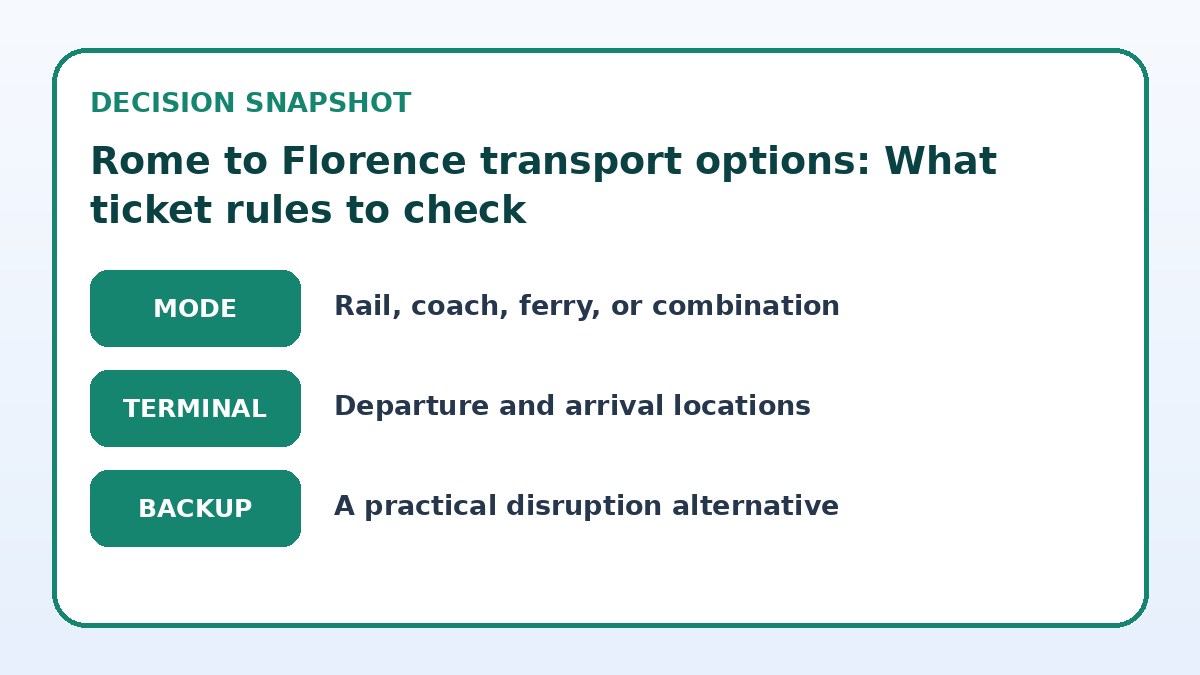
How a station or terminal fits your door-to-door plan matters more than the advertised journey time. In Rome and Florence, look at where trains and coaches actually stop relative to where you’ll be staying or what you need to reach on arrival, such as a hotel or an onward connection. A central train station usually means a short taxi, tram, or walk; a coach terminal may be outside the compact historic core and require additional transfers. Before you choose a ticket, map the final drop-off against your schedule and luggage capacity to avoid late surprises on arrival.
When comparing tickets, check not just the terminal name but entrance and exit locations; large stations can have multiple plazas and side streets that change your transfer time. If mobility or heavy luggage is a concern, favor options with minimal platform-to-street walking and easy taxi access. For coaches, verify whether the stop is at a dedicated bus station, a roadside stop with limited shelter, or a terminal inside a transportation hub; that detail affects comfort and transfer time, especially in poor weather or late hours.
Choose the end-to-end journey plan
| Journey approach | Best for | Friction to check |
|---|---|---|
| Reserved high-speed train ticket | Travelers with fixed schedules who want fast, central-to-central travel. | Less forgiving change/refund rules and limited flexibility if plans shift. |
| Flexible rail fare or open ticket | Solo travelers needing the ability to change trains without heavy penalties. | Often costs more than the lowest fares and may still have deadlines for changes. |
| Intercity coach ticket | Budget-conscious solos willing to trade station convenience for lower fares. | Potentially less central stops and more luggage or transfer hassle on arrival. |
| Mixed journey (train plus local bus/taxi) | Those needing schedule or route flexibility and willing to manage connections. | More moving parts increase risk of missed connections; check each segment’s rules. |
Check live intercity options
Look beyond the ride itself and compare terminals, transfers, luggage, and arrival fit.
Luggage and transfer friction
Solo travelers should be realistic about how much independent handling they want to do. Train travel often allows more space to keep bags with you and more frequent luggage racks, while coaches may limit overhead space or enforce strict size rules—always read the carrier’s baggage policy before buying. If a ticket requires a seat reservation, make sure the carriage layout and storage options suit your luggage. Consider how many times you’ll need to move your bags: fewer changes mean less chance of misplacing items or tiring yourself before you reach your accommodation.
Also consider the walk from arrival to your lodging. A station that seems central on a map can involve uphill cobbled streets or steps that complicate a heavy suitcase. If you plan to mix modes—say a train to Florence followed by a local bus or shared shuttle—factor the additional handling and possible wait times into your choice of ticket flexibility. For complete door-to-door ease, allow budget for a short taxi or pre-book a local transfer when arriving at a stop with awkward onward connections.
Timing flexibility: change fees, open tickets and refunds
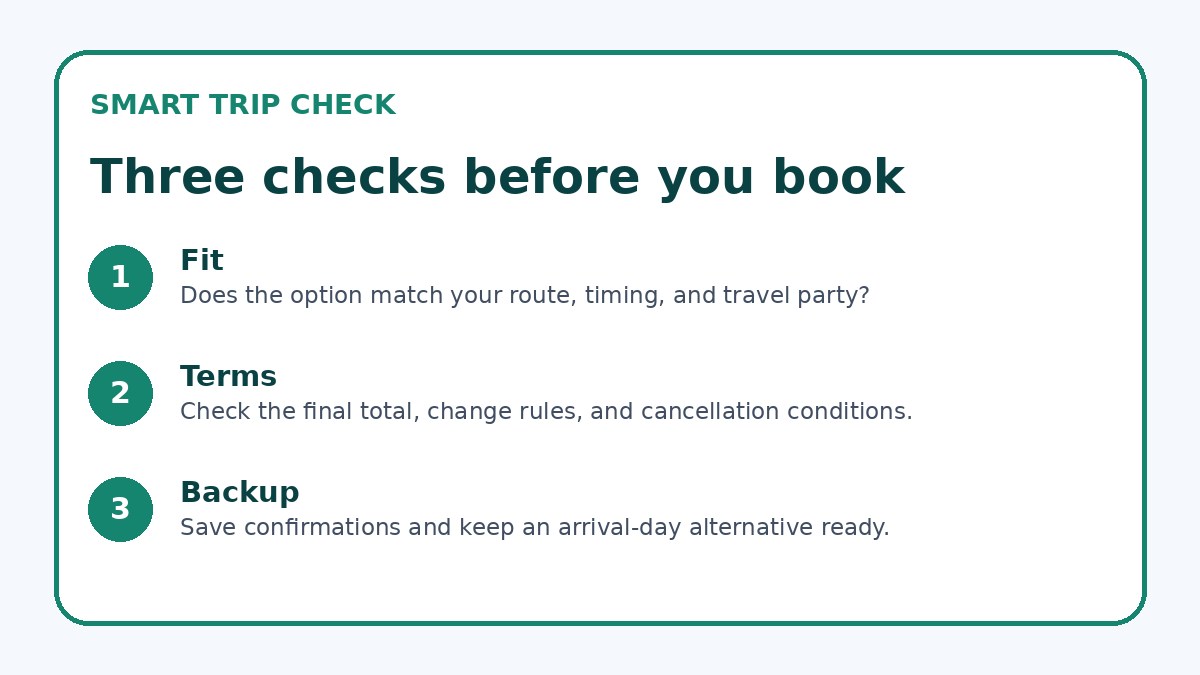
Ticket flexibility varies widely: some fares are fully refundable or exchangeable up to a deadline, others are strictly non-changeable, and simpler coach tickets may permit same-day changes but with conditions. For solo travelers with uncertain schedules, prioritize fares that explicitly allow exchanges or offer a credit for future travel. When comparing options, read the provider’s change and refund language carefully: find the exact cut-off times, whether a fee applies, and how refunds are processed. Avoid assuming platform summaries cover the full policy—verify the final terms on the provider’s booking page before purchase.
Also weigh how easy it is to change at the station versus online. Some low-cost coach operators and regional trains allow quick in-person swaps, while high-speed rail refunds and changes might require an online account or a ticket office visit. If you choose a non-refundable low-fare ticket to save money, create a disruption plan—see below—and decide whether the risk of losing value is worth the savings. For peace of mind, keep a screenshot or PDF of the ticket and the ticket conditions accessible on your phone.
Compare the practical alternatives
Use the final page to confirm what is actually offered on your dates and save a workable fallback.
Intercity travel checklist
- Map station and terminal addresses relative to your accommodation and measure expected transfer times by foot, tram, or taxi.
- Read the full change and refund policy on the provider’s final booking page before completing purchase.
- Check exact baggage allowances and any dimensional restrictions for your chosen ticket or carrier.
- Have two backup journeys planned and know where to buy or rebook tickets in person if a disruption occurs.
- Save digital and offline copies of tickets and the provider’s contact details for quick access during travel.
- Allow extra connection time when mixing modes and budget for a short taxi if an arrival terminal is awkward.
Disruption backups: realistic plans for delays and cancellations
Even short intercity trips in Italy can be affected by strikes, weather, or operational delays. As a solo traveler, plan at least two viable backups before buying any non-flexible ticket. If you’re on a non-changeable high-speed ticket, identify the next regularly scheduled train and its ticket rules, and know where the nearest coach options depart. For coach tickets, know which nearby stations run trains that might get you there if buses are cancelled, and how you would handle last-mile transfers on arrival.
Also have a simple communications plan: save emergency contact numbers for your accommodation, learn how to reach the operator’s customer service, and carry payment options for an unplanned taxi or a last-minute seat on alternative transport. If time-sensitive commitments exist at your destination, allow extra padding or choose a fully changeable ticket. Finally, when a disruption happens, check official provider channels and local station staff for authorized rebooking assistance rather than relying on social media or third-party anecdotes.
Rail & Intercity Transport questions travelers ask
Should I book a reserved high-speed train or a flexible rail fare for a solo trip?
Choose a reserved high-speed train when your dates and times are firm and you prioritise central station arrivals and shorter travel times. If your schedule might change, a flexible rail fare reduces stress by allowing exchanges or refunds according to the carrier’s policy. Compare the extra cost of flexibility to how likely you are to change plans. Always verify the exact change window and fees on the booking page before you pay—summary labels on search pages may omit important deadlines or conditional fees.
How do I assess coach terminals versus train stations for door-to-door practicality?
Look beyond the terminal name: identify the stop’s exact street address, the available onward transport links, and how far you’ll carry luggage to your hotel. A coach may appear cheaper but could drop you outside the historic center where taxis or local buses are required. Check whether the terminal has sheltered waiting areas if you arrive early or in bad weather. If mobility or time is tight, favour trains that stop closer to central points even if the ticket is slightly more expensive.
What’s a realistic disruption backup for a non-refundable ticket?
A practical backup includes knowing the next two alternative departure options, the nearest different-mode terminals, and whether you can buy an alternative ticket on-site. For example, note the next train and a coach that departs within a reasonable window and estimate the taxi cost between terminals. Keep payment methods ready and identify where you can buy or change tickets—online, on the operator app, or at a staffed ticket office. This way you can pivot quickly without missing essential appointments at your destination.
Final decision note
For most solo travelers on the Rome to Florence route, the choice hinges on how fixed your schedule is and how much transfer hassle you want to accept. If you value door-to-door simplicity and tight timings, a reserved high-speed train ticket usually makes the most sense—just confirm the change rules before you buy. If your dates are uncertain, select a flexible rail fare or a coach ticket with reasonable change options and plan backups for disruptions. Always verify terminal locations, baggage rules, and the provider’s final booking terms before paying. Consider Trip.com as one place to compare current availability and conditions, but double-check policies on the operator’s official page to avoid surprises.
Continue planning
Check current options and final conditions
Use the provider page to confirm live availability, the final total, cancellation terms, and every condition that matters to your trip.
This evergreen planning guide was created with AI-assisted drafting and a structured quality review. It does not display live prices, schedules, availability, visa guidance, or provider rankings. Verify current details before booking. Some links are affiliate links; we may earn a commission at no additional cost to you.