For families, deciding how to travel Tokyo to Kyoto is as much about station and terminal transfers as it is about the ride. The practical choice usually comes down to rail (Shinkansen or conventional trains) versus highway coach, or a hybrid that mixes a city transfer with a long-distance service. Choose rail when you want predictable city-center terminals and shorter transfer distances; choose coach if you prefer fewer terminal changes and a simpler single-vehicle door-to-door feel. Consider your children’s ages, how much luggage you have, stroller or car-seat needs, and whether you might prefer to minimize transfers even if the journey takes longer. This article focuses on transfer points, luggage friction, timing flexibility, and a simple disruption backup plan to help families pick the right option for a smoother trip between Tokyo and Kyoto.
Choosing between rail, coach, or a hybrid
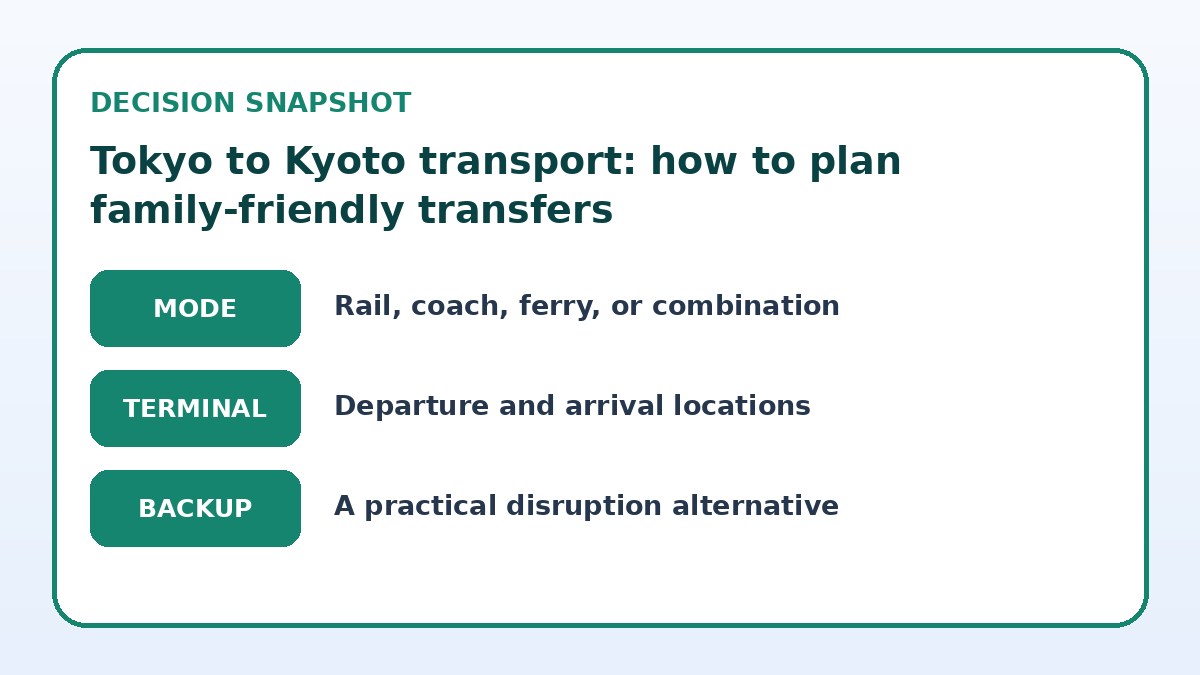
Start by listing priorities: shortest on-vehicle time, fewest transfers, smallest walking distances inside terminals, or lowest handling of luggage and child gear. For many families, the high-speed rail option offers quick intercity travel and downtown terminals that connect directly with local transport, which can mean shorter taxi rides at each end. Coaches may offer a simpler boarding process—one vehicle from pickup to drop-off—even if they use outskirts terminals. A hybrid plan could be taking a local train or taxi to a conveniently located long-distance coach or Shinkansen station to combine low transfer friction with faster mainline travel.
When comparing modes, map the actual door-to-door sequence: walk or taxi from accommodation to the departure terminal, wait time at the terminal, on-vehicle travel, and the arrival transfer to your Kyoto lodging. Include stroller, car-seat, and luggage handling in that chain. If any step includes long platform walks, multiple station levels, or crowded transfers at peak times, those are friction points that can outweigh a few minutes saved on the vehicle portion. Choosing a slightly slower option with a simpler transfer pattern can be kinder to kids and reduce stress.
Choose the end-to-end journey plan
| Journey approach | Best for | Friction to check |
|---|---|---|
| Direct Shinkansen (high-speed rail) | Families prioritizing fastest on-vehicle time and downtown terminal access. | Larger stations mean more walking and platform navigation with luggage or strollers. |
| Highway coach (direct coach service) | Families wanting fewer terminal changes and simple boarding with bags stored under the bus. | Drop-off points may be outside city centers, requiring a local transfer at each end. |
| Hybrid (local transfer + long-distance service) | Families balancing convenience and speed by staging a short local transfer to a favorable terminal. | Adds one extra transfer step—worthwhile only if local legs are short and low-friction. |
| Door-to-door private transfer or rental car | Families who want minimal handling and direct hotel-to-hotel travel with full control of timing. | Typically involves higher cost and possible longer travel time due to road conditions or city traffic. |
Check live intercity options
Look beyond the ride itself and compare terminals, transfers, luggage, and arrival fit.
Terminal fit and luggage/transfer friction
Assess each terminal for family needs: elevator and escalator access, level boarding, stroller-friendly routes, and luggage storage or porter availability. Major Tokyo stations and Kyoto Station tend to be large and offer elevators, but that also means longer internal walks between ticket gates, platforms, and exits. Coaches often use bus terminals or highway stops with level bus boarding, which reduces lifting and carrying, but those terminals may be further from city-center hotels. If your family travels with bulky items (double strollers, multiple suitcases), prioritize routes that minimize platform stairs and long corridor transfers.
Also consider luggage transfer services and on-board storage options. Some rail services allow larger suitcases in designated spaces or offer seat-back racks, while coaches typically provide underfloor luggage bays to avoid carrying heavy bags through stations. If you plan to switch modes during the journey, check where you’ll collect luggage: a long luggage retrieval at a busy terminal can double transfer time. For families, pre-booking a luggage courier or choosing hotels that accept early luggage drop-off can dramatically reduce transfer friction on both ends of the trip.
Timing flexibility and scheduling with children
Kids’ routines often set non-negotiable windows for departures, naps, and meals. Look for travel options that allow flexible departure times or easier adjustments in case of delays—this could mean services with frequent departures or operators who allow simple rebooking. When comparing scheduled rail and coach options, prioritize departure times that align with your family’s natural rhythm to avoid meltdowns on board. Also build buffer time into connections: a 30–45 minute buffer between local transport and long-distance departures gives you wiggle room for ticket lines, bathroom breaks, or a sudden diaper change.
Think about how long terminals keep seating, restrooms, and nursing rooms accessible before departure. On busy days, moving through a large station with children takes longer than you might expect, so choose earlier arrival times at terminals. If you travel with very young children, consider splitting the trip into morning and afternoon segments with a break in between to let them move and reset. Finally, for same-day returns, avoid tight round-trip schedules; families benefit from long connection windows to avoid rushing and to manage strollers or stroller-folding at transfer points.
Compare the practical alternatives
Use the final page to confirm what is actually offered on your dates and save a workable fallback.
Intercity travel checklist
- Map your full door-to-door sequence and time each leg, including taxi or subway between your accommodation and the terminal.
- Measure or note your luggage, stroller, and car-seat sizes and verify platform and boarding accessibility at your chosen terminals.
- Choose departure times that align with children’s routines and add a 30–45 minute buffer for transfers and bathroom breaks.
- Save digital copies and screenshots of tickets, keep operator booking pages open, and note refund/change policies before departure.
- Pre-download or register local taxi/ride-hail apps and bookmark station information desk locations for quick help during disruptions.
- Pack an easily reachable transfer kit with snacks, spare clothes, wipes, chargers, and small toys for calming in-between legs.
Disruption backup: practical alternatives and preparing for delays
Create a short backup plan with two realistic alternatives: a same-mode reroute (another train or coach at the next departure), and a different-mode fallback (taxi or rental car for the trickiest leg). Keep contact details and app access for local taxi operators and a familiar ride-hailing app on your phone. For rail journeys, identify the next major station where you could change routes or find a quieter waiting area with family facilities. If you’re using coach services, note whether operators list alternate collection points or third-party transfer options near your stay.
Prepare your family practically: pack a ‘transfer kit’ with snacks, spare clothes, wipes, and a portable charger to minimize panic during delays. Save digital copies of tickets and itinerary screenshots offline in case of poor reception. Know the locations of station information desks and family rooms at your departure and arrival terminals—staff can often help with gate changes or short-term luggage storage. Finally, consider refundable or flex ticketing where possible, but if you can’t confirm flexibility, make sure you have a low-friction paid backup like a taxi credit or an agreed local shuttle option.
Rail & Intercity Transport questions travelers ask
How do I decide if the Shinkansen or a coach is better for my family?
Compare the whole door-to-door journey rather than only travel time. The Shinkansen gives fast travel and arrival at central Kyoto, but large stations can mean longer walks and stairs. Coaches often simplify boarding and luggage handling, reducing platform lifting, yet might use outskirts terminals that require a local transfer. Add time for walking, elevator access, and luggage handling to each option, and weigh whether fewer transfers or shorter on-vehicle time matters more for your children’s routine.
What should I verify on provider booking pages before I buy tickets?
Confirm departure and arrival terminals, accessible boarding options (elevators, ramps), luggage allowances and where bags are stored, change/refund rules, and exact pickup/drop-off addresses for coaches. If seats or compartments for strollers are offered, check booking conditions. For hybrid itineraries, verify transfer station names and platform details. If using Trip.com or another aggregator, cross-check those specifics on the operator’s official page before finalizing bookings.
What simple disruption backup is realistic when travelling with children?
Have two practical fallbacks: the next scheduled service in the same mode and a different-mode option like a local taxi or private transfer for the trickiest leg. Keep taxi apps ready, carry emergency cash or a payment method accepted locally, and have a shortened itinerary you can show a driver. Also identify nearby family rooms or quiet waiting areas at major stations where you can regroup while arranging alternatives. Packing an extra change of clothes and familiar snacks reduces pressure during any delay.
Final decision note
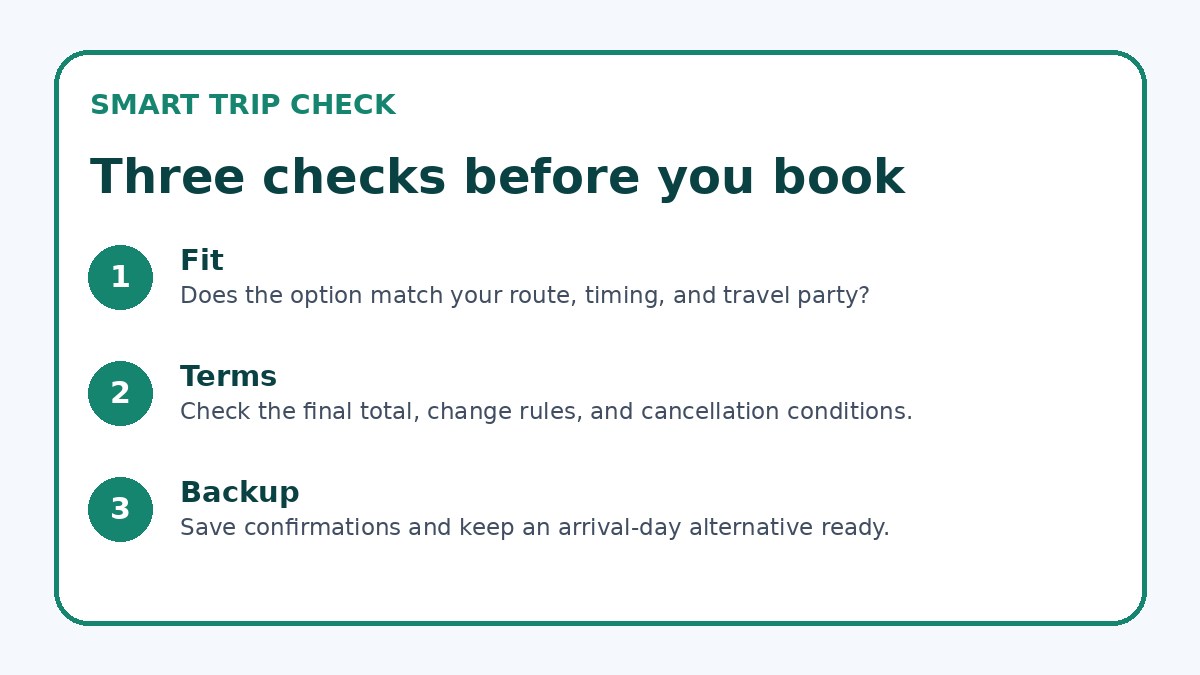
For families travelling Tokyo to Kyoto, the best choice is the one that reduces stress during transfers rather than merely shaving minutes off journey time. Map your door-to-door flow, prioritize terminal access and luggage handling, and choose a mode that suits your children’s routine and mobility needs. Use the comparison of rail, coach, hybrid, and private transfer approaches to guide a decision based on whether you value speed, fewer transfers, or complete door-to-door simplicity. Before booking, verify terminals, accessibility, luggage rules, and rebooking policy on the provider’s final page; Trip.com can be a place to compare availability but always confirm details with the operator. With a clear backup plan and the right timing, families can make the journey manageable and even restful.
Continue planning
Check current options and final conditions
Use the provider page to confirm live availability, the final total, cancellation terms, and every condition that matters to your trip.
This evergreen planning guide was created with AI-assisted drafting and a structured quality review. It does not display live prices, schedules, availability, visa guidance, or provider rankings. Verify current details before booking. Some links are affiliate links; we may earn a commission at no additional cost to you.