Driving in Bali can transform a family holiday: flexible stopovers, early-morning temple visits, and remote beaches become practical when you control your schedule. That said, renting a car is not automatically the right choice for every first-time visitor. This guide gives a clear decision first: rent a car if your family values itinerary flexibility, wants to reach several different regions (coast, inland, and east or west), and is comfortable handling unfamiliar roads and parking; choose alternatives if you prefer to avoid the stress of navigation, local traffic, and arranging child seats. Below you’ll find the route value that makes driving worth it, how to read insurance and coverage wording, what to expect at pickup and return, and a complete non-driving fallback that still covers most family needs in Bali.
When driving truly improves a Bali family itinerary
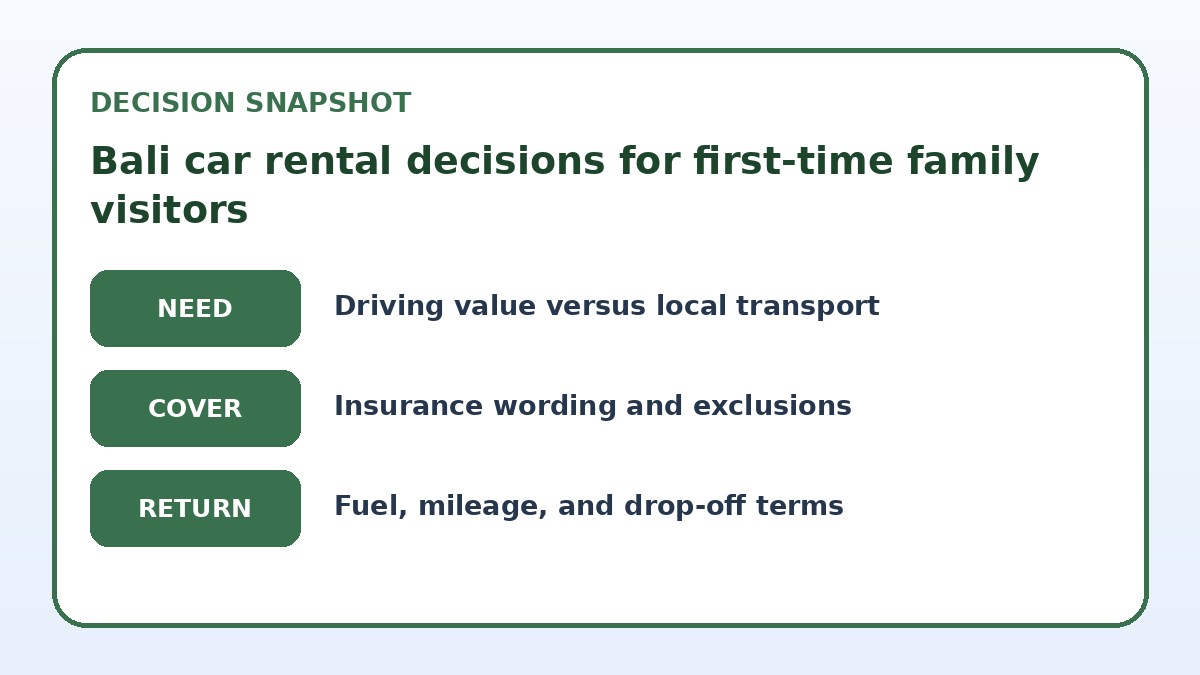
Evaluate route value first: driving is most useful when your family wants to cover several disparate areas in a single trip—for example, combining cultural Ubud mornings, an afternoon beach stop on the Bukit, and a quieter overnight in East Bali. With a car you can leave early to beat traffic, set flexible meal stops, and carry luggage and beach gear without juggling multiple pickups. For families with small children, door-to-door convenience and the ability to pause for naps or stretches are decisive advantages that cheaper, segmented transport does not offer.
By contrast, if your trip focuses on a single base and day trips that return there nightly, or you plan to rely on guided excursions that include transport, driving offers less value. Also factor in how comfortable the primary driver feels with narrow roads, local driving styles, and the need to park in tourist hubs. Finally, think about nighttime driving—some family-safe routes are best kept to daylight hours, which may affect how useful a car actually is for your daily plan.
Decide whether driving earns its place
| Mobility strategy | Best for | Cost or friction to check |
|---|---|---|
| Self-drive rental | Families wanting full schedule control and multiple-region routing. | Requires comfort with local roads, parking, and understanding insurance wording; potential stress with children in traffic. |
| Private transfer drivers | Groups avoiding navigation but needing door-to-door service and luggage handling. | Higher cost than self-drive and less last-minute flexibility for unscheduled stops. |
| Hybrid: drivers for long hops, taxis for local | Families balancing cost and convenience across mixed itineraries. | More booking coordination and potential variability in vehicle child-seat availability. |
| Guided day tours plus taxis | Families wanting local insight without managing routes or parking. | Less independent pacing and potential mismatch between tour timing and family needs. |
Check live rental choices only after the route test
Use the exact driver, dates, pickup point, and return plan to compare current conditions.
Understanding insurance, coverage wording, and what to verify
Insurance pages can be dense. Before you commit, confirm whether the rental includes third-party liability insurance, collision damage waiver (CDW) or loss damage waiver (LDW), and whether there is an excess/deductible amount you would be liable for after a claim. Also verify if roadside assistance is included, how accidents or damage are reported, and whether theft protection covers personal items. If the policy references local mandatory insurance, check what it covers and whether it is supplemented by the provider’s own policy.
Child-seat coverage and additional-driver allowances are common friction points. Confirm whether child seats are available for rent, whether you must reserve them in advance, and whether their installation is the renter’s responsibility. Read the final booking page of any supplier to see exact exclusions—such as off-road use, driving outside designated regions, or unpaved-road clauses—that could void coverage. When in doubt, ask the provider to email the specific policy wording you will sign at pickup.
Compare the full rental conditions
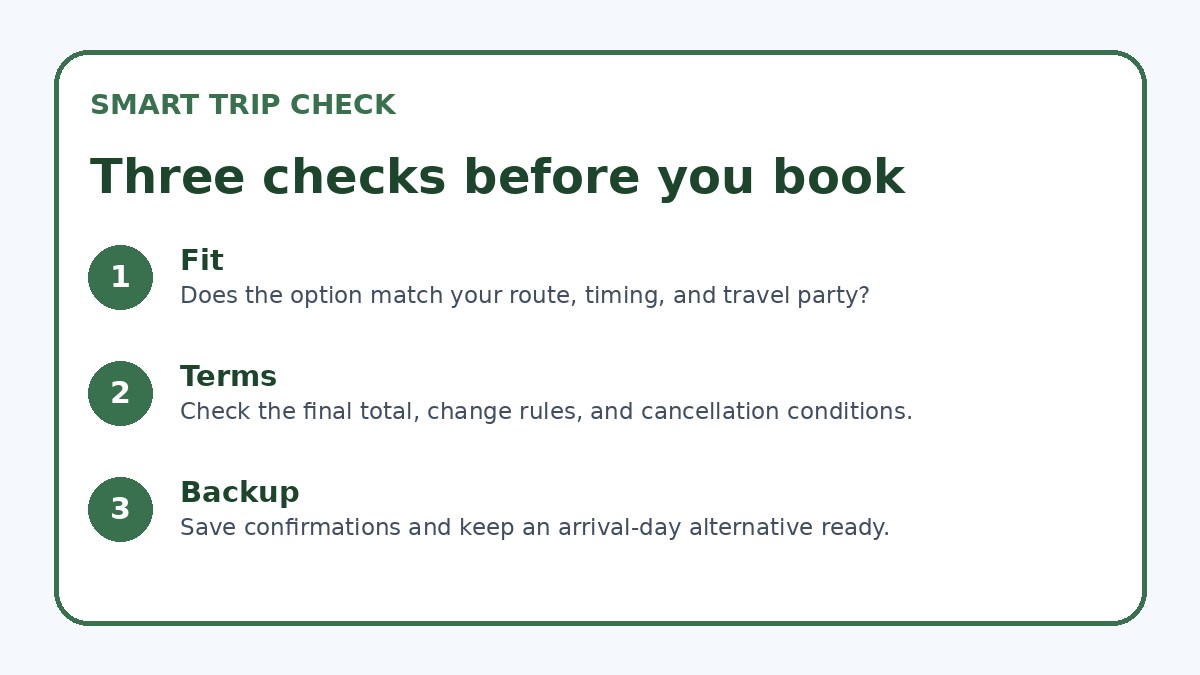
Confirm insurance wording, exclusions, deposit, fuel, mileage, and return terms on the final page.
Pickup, return and practical friction to expect
Pickup often involves paperwork, identity checks, and a detailed inspection of the vehicle with both parties noting existing scratches and dents. Allow time for this process—especially with children present—and bring all required documents: the driver’s license accepted by the provider, passport, credit card for the hold, and any driving permits the supplier requires. Inspect exterior and interior carefully with photos or video timestamps; confirm fuel policy and how mileage is measured. If you need extras such as child seats or a GPS unit, reserve them in advance and confirm whether there are pick-up location fees.
Returns can be quicker but still need attention: refuel to the agreed level, clear personal items (including small toys and chargers), and document the handback with time-stamped photos if possible. If you plan to drop off outside business hours, verify after-hours drop policies and any associated fees on the provider’s final page. Keep copies of all receipts related to tolls, parking or fuel to avoid disputes. Finally, confirm refund timing for any security deposit hold with the payment card issuer.
Car rental terms to verify
- Compare final rental contract wording for liability, deductible amounts, and whether roadside assistance and theft protection are included.
- Confirm accepted driver licenses and whether an international driving permit is required by the provider before booking.
- Reserve child seats in writing and ask for confirmation that staff will fit them at pickup if you cannot install them yourself.
- Photograph the car’s exterior and interior with timestamps at pickup and return to document existing damage and avoid disputes.
- Verify fuel policy and refueling options near your return location so you can meet the provider’s required fuel level.
- Confirm how and when any security deposit hold will be released with your card issuer and request a receipt at return.
A clear non-driving fallback for families
If you decide not to drive, you can still craft a flexible family plan. Use a mix of private transfers for long inter-region moves, local taxis or ride-hailing for short hops, and single-day guided tours for destinations where parking or navigation is challenging. Private transfers provide door-to-door ease with luggage and child seats often available on request; for shorter village trips, a local hire with a driver who knows parking and routes keeps stress down and lets you rest between stops.
Combine these services thoughtfully: book private transfers for longer segments (airport to base, base to next region) and pre-arrange child seats when possible. Reserve a couple of full-day private drivers for days when you want to visit multiple sites without the constraints of fixed tours. This approach costs more than self-driving in some cases but removes navigation, local traffic negotiation, and most insurance complexities while keeping family comfort and flexibility.
Car Rental & Road Trip questions travelers ask
Do I need an international driving permit to rent a car in Bali?
Requirements vary by provider and local authorities; some rental companies accept foreign licenses from certain countries while others require an international driving permit (IDP). Before booking, check the rental firm’s final terms where they list acceptable documents, and verify whether the IDP must be accompanied by your national license. Also ask if they require any age minimums, additional fees for young drivers, or restrictions on adding extra drivers.
Are child seats mandatory and easy to get with a rental?
Child-seat policy differs between providers: many offer seats for an extra fee but availability is often limited and should be reserved in advance. When you book, request the exact seat type, the age/weight recommendations, and whether staff will install it at pickup. If the supplier cannot guarantee a seat, consider bringing a travel booster or arranging a private transfer that confirms child-seat availability in writing.
What should I verify about insurance before handing over my credit card?
On the booking page and the contract, check whether CDW/LDW is included or optional, what the excess/deductible amount is, whether third-party liability coverage is present, and if theft protection covers personal items. Confirm whether any exclusions apply—such as off-road driving or driving outside specified regions—and ask how to contact roadside assistance. If third-party booking sites are used, review the provider’s own paperwork rather than relying solely on aggregate descriptions.
Final decision note
For many first-time visitors traveling as a family, Bali car rental is worth choosing when your itinerary spans multiple regions or when door-to-door convenience and luggage handling matter. If those advantages are outweighed by concerns about unfamiliar roads, child-seat availability, or insurance wording you find unclear, the hybrid or fully chauffeured alternatives deliver most benefits without navigation stress. Before you book, read the provider’s final booking page for exact insurance terms, driver-license requirements, child-seat policies, and pickup/return procedures. That diligence makes the difference between a liberating road trip and an avoidable headache—whatever mobility strategy you select.
Continue planning
Check current options and final conditions
Use the provider page to confirm live availability, the final total, cancellation terms, and every condition that matters to your trip.
This evergreen planning guide was created with AI-assisted drafting and a structured quality review. It does not display live prices, schedules, availability, visa guidance, or provider rankings. Verify current details before booking. Some links are affiliate links; we may earn a commission at no additional cost to you.