If you’re booking a car for a family trip to Rome, the practical first step is to focus on four words on the rental contract: collision damage waiver (CDW), excess, third-party liability, and personal effects coverage. For most families those four items determine whether a small fender-bender turns into hours of stress or a simple roadside claim. Before you click confirm, check the excess amount, whether CDW is full or partial, who is an authorised driver, and whether child seats and luggage are treated under personal effects cover or excluded. Read the provider’s final booking page and the insurer’s policy wording — that’s the only place the policy limits, exclusions, and required documentation will be definitive for your reservation.
See current options before you compare the details
Availability and final conditions change. Open Trip.com now or keep reading for the practical comparison.
Decoding the headline cover types
Collision Damage Waiver (CDW) is the most commonly offered piece of cover when you rent a car in Rome. It is not an insurance policy in the legal sense but a waiver that limits the rental company’s right to charge you for damage to the vehicle. CDW can be sold as full or partial: partial CDW reduces the charge but still leaves an excess (a deductible) you must pay. Some companies offer a super-CDW or zero-excess option that further reduces the excess, but those options often have specific exclusions such as windscreen, undercarriage and tyre damage which you should confirm in the fine print.
Third-party liability covers damage you cause to other vehicles, property or people. In Europe this is legally required at a minimum level, but the level included with a rental may vary. Check whether the rental includes only the minimum legal third-party coverage or a higher limit that reduces your personal exposure. Also ask whether the insurer recognises claims made in Italy and whether there are geographical limits or requirements for reporting accidents to local police. Always note the required paperwork and reporting timelines on the rental agreement so you don’t inadvertently invalidate a claim.
Excess, holds, and how they affect a family’s budget
The excess (deductible) is the out-of-pocket amount you must pay if the car is damaged. For families, a high excess can be a real burden — especially if multiple drivers are involved or if you plan to leave a stroller or luggage in the car and worry about break-ins. Many suppliers place a card hold on the lead driver’s credit card for the excess amount. Confirm whether debit cards are accepted for the hold and whether the hold expires at return or only after the claim is settled; holds can temporarily reduce available credit for other holiday expenses.
Refundable excess and third-party excess reimbursement products are sold both by rental companies and third-party insurers. If you choose such a refund product, determine the required claims process and typical timeline for reimbursement. Some third-party promises sound attractive but require you to front the full excess and then supply specific evidence — police reports, incident photographs, and the rental company’s damage estimate — before you get refunded. For families, that paperwork while caring for children can be an unwelcome extra stress, so weigh convenience against potential savings.
| Approach | Best for | Tradeoff to check |
|---|---|---|
| Buy full zero-excess cover from the rental company | Families wanting a simple, on-the-spot solution with claims handled directly at the desk | Usually higher daily cost and may still exclude tyres, windscreen or child seats |
| Purchase third-party excess reimbursement | Cost-conscious families comfortable fronting the excess and filing paperwork for refunds | You must pay the excess up front and prove the claim with documentation before reimbursement |
| Use your credit card’s rental insurance | Families who already have a premium card with rental coverage and want to avoid extra rental fees | Card policies vary widely; you must verify accepted countries, covered drivers, and any exclusions |
| Only take mandatory insurance included with the rental | Short urban trips where you’ll avoid risky driving and park in secure areas | Leaves a larger excess and more personal liability if something goes wrong |
Ready to check the option that fits your plan?
Use your exact dates and traveler details so the provider page can show the current total and conditions.
Child seats, personal effects and what’s often excluded
Child seats are mandatory by law in Italy for younger children and often provided by rental companies for a daily fee. But the cover for child seats and items like strollers or luggage is not guaranteed. Some policies treat accessories and personal items as excluded from theft or damage cover if they are inside an unattended vehicle. When you book, check both the rental company’s accessory policy and the insurer’s wording: does the rental company accept liability for a broken child seat during an accident, or do they treat it as an expendable accessory you’ll pay to replace?
If you’re travelling with valuable medical equipment, a tablet for the kids, or expensive luggage, clarify whether personal effects cover extends to these items while they are in the car. Also check time and location exclusions — for example, some insurers exclude theft from vehicles left unattended in non-secure areas or after a certain hour. For peace of mind, consider keeping essential items with you rather than relying on vehicle cover, and take photos of valuables and child seat condition on pickup and return to support any future claim.
Before you book
- Confirm the exact excess amount and whether a card hold will be placed; note whether debit cards are accepted for the hold.
- Verify who is listed as an authorised driver and add additional drivers on the rental contract before departing.
- Ask the provider in writing whether child seats, strollers, and personal luggage are covered by the insurer.
- Read the insurer’s policy wording linked on the final booking page and save a copy to your phone or email.
- Take comprehensive photos or a video of the vehicle and child seat condition at pick-up and drop-off.
- Note the rental company’s and insurer’s emergency phone numbers and the required accident reporting steps.
Practical steps before you book and at collection
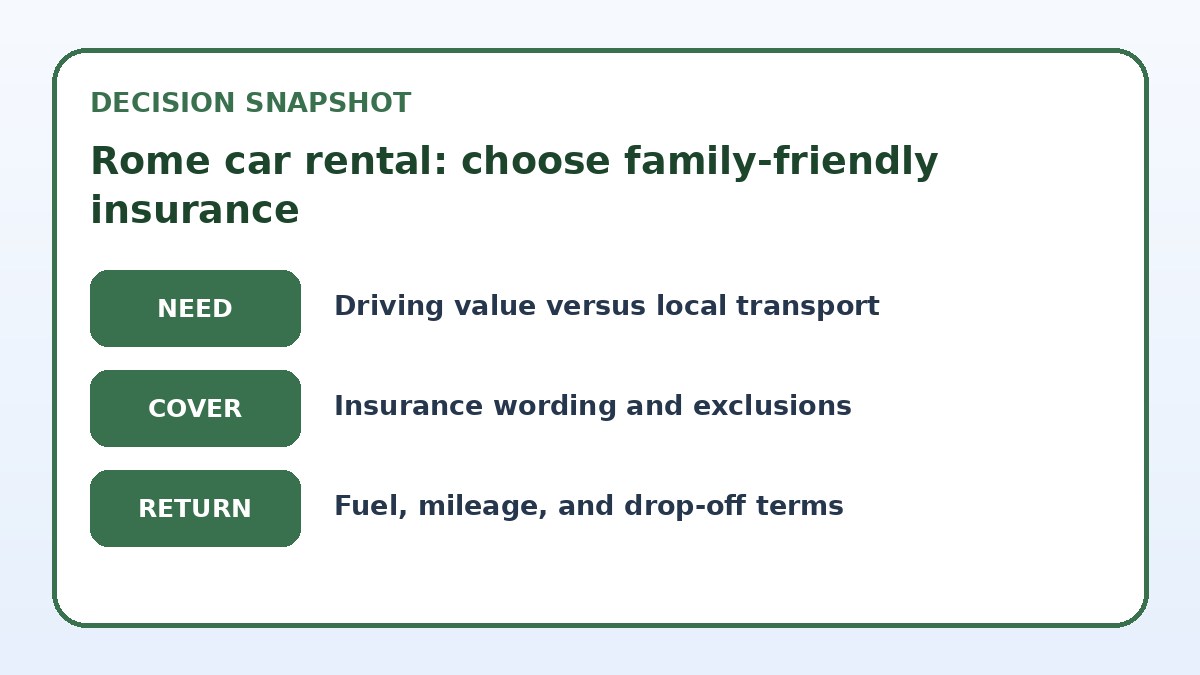
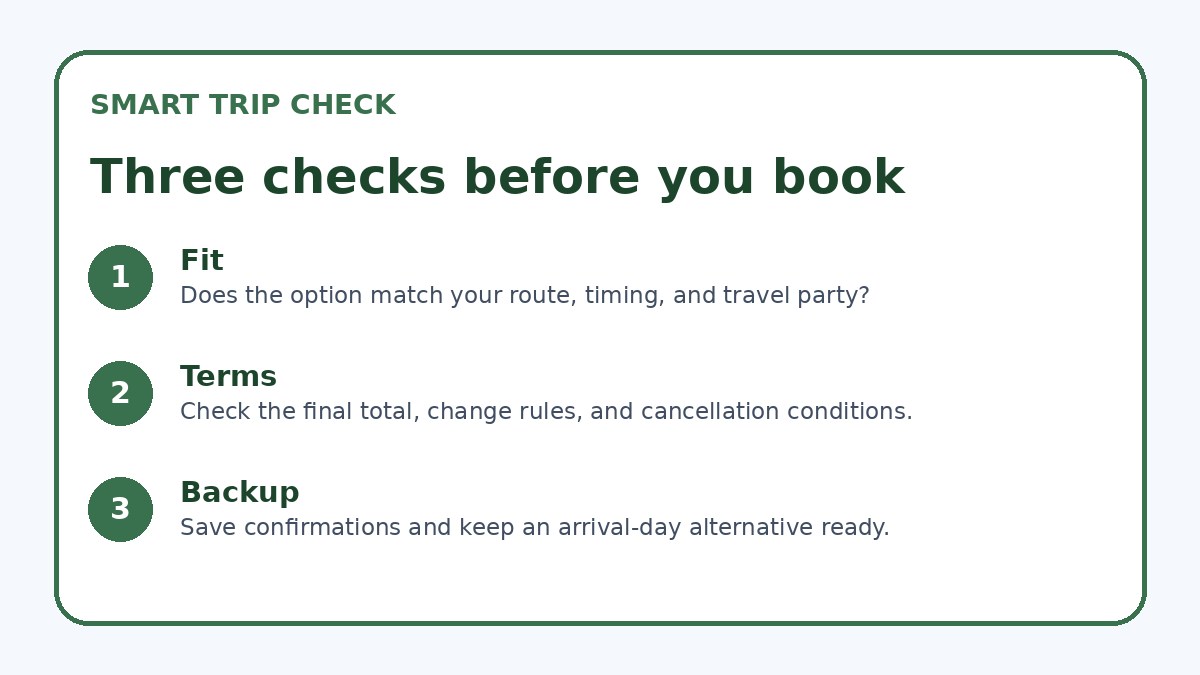
Before you book, read the supplier’s final booking page and the actual insurance policy wording linked from that page. Confirm excess amounts, who is an authorised driver, any mandatory local reporting steps for accidents, and whether the quote assumes purchase of added waivers. If you’re comparing offers online, note that promotional language may summarise cover — the definitive terms are in the insurer’s policy document and the rental agreement. Trip.com can be one place to compare availability, but always verify policy limits and exclusions on the rental company or insurer’s final booking page before you confirm.
At collection, inspect the vehicle with the agent and take time-stamped photos or a short video of every side, the interior, tyres and child seats. Ask the agent to annotate the rental condition report for any existing marks and ensure the return procedure and fuel policy are recorded. Get a printed or emailed copy of the full rental contract and the insurance summary; if the agent mentions exclusions verbally, ask them to show those exclusions in writing. Finally, note the emergency contact number for the rental company and the insurer so you have the exact steps to follow if something happens while you’re managing children.
Frequently asked questions
Will my personal travel insurance cover a rental car accident in Rome?
Some personal travel policies include vehicle hire excess cover or personal liability but coverage varies by provider and by the policy wording. Check your policy schedule for explicit mentions of rental vehicle excess or collision damage. Important details to verify: whether the policy applies in Italy, whether it covers family members and additional drivers, whether there is an upper limit per claim, and specific exclusions such as driving on unpaved roads. If your travel policy doesn’t clearly state coverage, call your insurer and ask them to confirm in writing before you rely on it.
Can I rely on a credit card’s insurance for family drivers and child seats?
Many premium credit cards offer secondary or primary rental car insurance, but terms differ on who is covered and what is excluded. Confirm whether the card covers additional drivers, whether it applies to rentals in Italy, and whether it covers damage to accessories like built-in GPS or child seats. Some cards require you to pay for the rental entirely with the card, or to decline the rental company’s CDW to activate coverage. Ask your card issuer for the policy document and read the exclusions carefully before you decline cover at the desk.
What documentation will help a claim go smoothly if there’s damage or theft?
Collect and retain a few key pieces of evidence: the checked and signed rental condition report, time-stamped photos or video of the vehicle and interior, a written police report for theft or significant damage, and any repair estimates provided by the rental company. Keep copies of correspondence with the rental company and insurer, including claim reference numbers and instructions. If you purchased third-party excess cover, follow their claims checklist precisely — missing a required document is a common reason refunds are denied.
Final planning note
Families renting a car in Rome benefit most from clarity and a few simple rituals: read the insurer’s policy on the rental provider’s final booking page, confirm authorised drivers and child seat coverage in writing, and document the car’s condition at pick-up and drop-off. Decide whether convenience (buying zero-excess at the desk) or potential savings (using credit card coverage or third-party reimbursement) fits your tolerance for paperwork and upfront cost. Above all, verify exclusions such as tyres, windscreen, and unattended personal items so you know what you are paying to protect. With those checks done, you’ll spend less time worrying about claims and more time enjoying Rome with your family.
Continue planning
Check current options and final conditions
Use the provider page to confirm live availability, the final total, cancellation terms, and every condition that matters to your trip.
This evergreen planning guide was created with AI-assisted drafting and a structured quality review. It does not display live prices, schedules, availability, visa guidance, or provider rankings. Verify current details before booking. Some links are affiliate links; we may earn a commission at no additional cost to you.