
Practical answer first: for families, target Queenstown’s shoulder seasons — late spring (September–early December) and early autumn (late February–May) — to balance milder weather, fewer crowds, and better local availability. Book flights and an apartment or family room at least 8–12 weeks before travel in those windows; if you need school-holiday dates, start earlier. Focus on flexible cancellation and self-catering options so you can adjust around weather-dependent activities like gondolas, lake cruises, and alpine walks. Decide whether you want a town-center base for convenience or a quieter lakeside holiday home for space and self-catering; each affects transport and daily planning.
See current options before you compare the details
Availability and final conditions change. Open Trip.com now or keep reading for the practical comparison.
Why shoulder seasons suit families
Shoulder seasons in Queenstown give families a useful tradeoff: milder visitor levels than peak summer or winter, while still offering good weather windows for popular sights. That means shorter queues for the gondola and lake activities, more choice of family-sized accommodation, and easier booking for guided day tours that otherwise fill in high season. For parents, the quieter pace often translates into less time managing crowds and more time for spontaneous exploration with children.
Tradeoffs matter. Shoulder-season weather can swing between sunny days and sudden alpine showers, so plan a flexible daily rhythm: reserve one or two weather-sensitive highlights and keep a couple of indoor or low-risk activities as alternatives. Packed lunches, an extra set of clothes for kids, and an adaptable itinerary let you take advantage of unexpectedly good days without worrying about wasted bookings if conditions change.
Choosing where to stay with kids
Decide first whether you want to be steps from town amenities or have more space and peace in a lakeside or Arrowtown location. Staying in central Queenstown simplifies logistics: restaurants, supermarkets, the waterfront, and shuttle pickup points are within walking distance, reducing daily transit for families. Shorter walks and quick returns to your room are big advantages with toddlers or when someone needs a nap.
Alternatively, lakeside suburbs and nearby towns offer larger accommodation footprints and quieter evenings, which many families prefer. If you choose this, check supermarket hours, the realistic time cost of daily drives, and whether a car seat or child booster is available through a rental provider. Also confirm parking access at your property and how late services run, because evening logistics are often the most tiring part of family travel.
| Approach | Best for | Tradeoff to check |
|---|---|---|
| Central Queenstown apartment | Families prioritising walkability, quick returns for naps, and easy access to town amenities | Smaller living space and higher evening noise compared with out-of-town options |
| Lakeside or Arrowtown house | Families wanting more space, outdoor room for kids, and quieter nights | Longer daily drives and potential distance from evening services and some activities |
| Book early with refundable rates | Families needing schedule flexibility or planning around school breaks | Higher upfront cost or limited promotional savings compared with non-refundable deals |
| Last-minute shoulder-season bookings | Families with flexible dates seeking availability or midweek upgrades | Risk of reduced choice for specific room types or popular guided experiences |
Ready to check the option that fits your plan?
Use your exact dates and traveler details so the provider page can show the current total and conditions.
How to compare travel deals and timing
When comparing Queenstown travel deals, evaluate total trip convenience, not just headline price. Add typical extras a family needs: checked baggage, car seats, airport transfers, and grocery options. For flights, compare direct versus connecting itineraries by weighing layover length and the chance to shift travel times to match children’s sleep schedules. For accommodations, compare refundable rates and what’s included—linen, cots, highchairs—on the provider’s final booking page before committing.
Use the shoulder-season tradeoff to your advantage: operators and lodging often have more flexible availability, which you can leverage for upgrades or better rooms, especially midweek. But don’t assume offers or availability remain unchanged—verify cancellation terms, house rules, and any mandatory cleaning fees directly on the booking page. Online comparison sites like Trip.com can show current availability, but always confirm details with the property or operator before finalising your plans.
Before you book
- Confirm school-holiday dates and local event calendars to avoid unexpected crowding during your intended shoulder-season window.
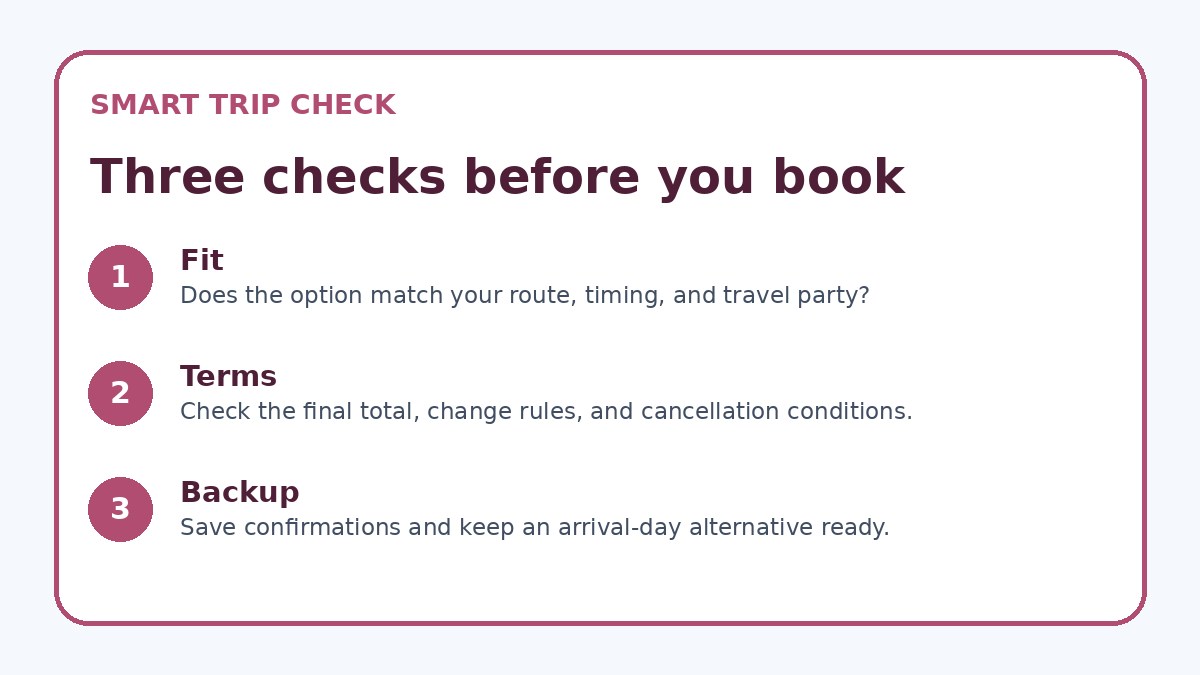
- Compare refundable and non-refundable rates, and only book when the provider’s final page shows clear cancellation, deposit, and cleaning terms.
- Reserve a family-friendly room or apartment with a kitchen, cot availability, and laundry access to simplify meals and routines.
- Check transport needs: confirm airport transfer options, child-seat availability, and realistic drive times from your chosen base.
- Ask activity operators about minimum ages, fitness requirements, weather rescheduling policies, and any equipment families must bring.
- Pack adaptable clothing and a basic first-aid kit; include waterproof layers and a compact sunshade for alpine weather swings.
Planning daily activities and contingencies
Structure days with a primary outdoor activity in the morning and a lighter or indoor backup in the afternoon. Mornings often bring the most stable weather for alpine walks, scenic cruises, or lake hires. Reserve guided experiences that have clear age and fitness recommendations and ask operators about weather-related rescheduling policies—get these terms from the booking confirmation so you can rearrange without surprise fees.
For rainy or cold shoulder-season afternoons, have a short list of family-friendly indoor options: museums, soft-play centres, or an apartment movie-and-pizza night. Pack essential comforts—thermals for variable alpine temperatures, waterproof layers, and a compact stroller for town walks. Good planning reduces the impact of variable weather and turns what could be wasted time into relaxed family downtime.
Frequently asked questions
When exactly are Queenstown’s shoulder seasons and why do they help families?
Shoulder seasons are the transitional periods between high summer and winter peaks—late spring and early autumn. For families, these windows reduce crowds and give better accommodation choice while still offering many outdoor activities. The main caveat is more variable weather: you’ll get sunny days and cool, wet spells. Planning flexible itineraries, booking refundable or low-penalty rates, and having indoor backup activities lets families benefit from quieter attractions without risking wasted days due to weather.
Should we prioritise staying in central Queenstown or a quieter suburb for our family?
Prioritise based on your family’s needs: central stays are best if you value short walks to restaurants, easy access to shuttles and quick returns for naps; quieter suburbs or towns suit families who need more space and want calm evenings. Consider practicalities: supermarket hours, parking, and daily drive time to activities. If you’re unsure, compare total daily logistics rather than just nightly rate—sometimes a slightly pricier central apartment saves time and reduces stress.
How can we safely compare travel deals and activity availability?
Start by adding all family-specific extras into your comparison: baggage, car seats, transfers, and any mandatory activity fees. Use comparison sites to check availability, but verify cancellation policies, included amenities (cots, highchairs), and rescheduling rules on the provider’s final booking page before paying. For weather-dependent experiences, request written confirmation of rescheduling or refund conditions. Keeping these checks in your booking routine avoids unpleasant surprises after purchase.
Final planning note
Planning Queenstown around shoulder seasons gives families a strong balance of calmer attractions and reasonable weather, but it requires realistic flexibility. Choose accommodation that fits your daily rhythm—central for convenience, lakeside for space—and always verify the provider’s final booking page for cancellation, included amenities, and any special rules. Structure days with a primary outdoor plan and indoor backups. With adaptable clothing, refundable or flexible booking options, and clear confirmation of activity policies, families can enjoy a more relaxed Queenstown trip while keeping stress and surprises to a minimum.
Continue planning
Check current options and final conditions
Use the provider page to confirm live availability, the final total, cancellation terms, and every condition that matters to your trip.
This evergreen planning guide was created with AI-assisted drafting and a structured quality review. It does not display live prices, schedules, availability, visa guidance, or provider rankings. Verify current details before booking. Some links are affiliate links; we may earn a commission at no additional cost to you.