If you're traveling solo to Queenstown, the practical first step is to tally every expected expense before you click confirm. That means more than flights and a bed — factor transfers, lift passes or adventure bookings, local transport, meals, gear hire, and a realistic contingency for weather-related changes or last-minute shuttles. Doing that math up front keeps options flexible: you might trade an extra night in town for a guided day trip, or choose a central hostel and self-cater to free up budget for an alpine experience. This article shows the specific line items to check, how to compare direct and connecting transport options, and which cancellation or booking details to verify on the supplier’s final page. Use the decision criteria here to shape a budget-aware itinerary that matches the style of solo travel you prefer.
See current options before you compare the details
Availability and final conditions change. Open Trip.com now or keep reading for the practical comparison.
Flights and route choices: more than the ticket price
When you evaluate flights for Queenstown, the displayed fare is the starting point. For solo travelers the tradeoffs between direct and connecting routes are practical: a connection can cut price but add a risk of missed connections, extra airport overnight stays, or additional baggage and transfer charges. Compare options by reading the carrier’s fare conditions — verify baggage allowances, whether meals are included, and how changes are handled. If trains, buses, or ferries are part of the route to the airport, add those ground costs and schedules into your calculation to understand door-to-door time and expense.
Also check what’s included on the carrier’s booking page before you buy: some low-fare options exclude seat selection or priority boarding, which can matter if you want stable rest on a long leg or need guaranteed aisle seating. If your trip involves regional carriers or multiple operators, plan for the possibility of staggered check-in and self-transfer between terminals or airports. When in doubt, list the extra services you value and price them into each flight option — the cheapest base fare can become more expensive once you add essential extras.
Transfers, local transport and staying central versus outlying
Queenstown’s arrival transport options vary by time of day and season; airport shuttles, taxis, rideshares, and rental cars each have different pricing patterns and booking requirements. For solo travelers, the decision to stay in a central location versus outskirts affects both nightly cost and daily transport needs. A central room might be pricier per night but cuts taxi or shuttle expenses and makes it easier to walk to eateries and tour meeting points. Conversely, an outlying apartment or hostel could save on lodging but add daily transfer costs and make solo logistics more complex when tours start early.
To compare these choices, estimate total transport spend for each accommodation option: airport transfer in and out, daily shuttles or taxi rides to starting points of activities, and any extra time-based costs like late-night rides. Don’t forget to check whether tour operators include transfer from central pickup points. When you look at provider pages, verify pickup locations, hours, and whether transfers must be prebooked; Trip.com can be used once to compare current availability and conditions, but always confirm details on the operator’s own booking page before finalizing.
| Approach | Best for | Tradeoff to check |
|---|---|---|
| Book cheapest nonrefundable deal | Travelers with fixed, certain dates and low tolerance for change | Lower upfront cost but little flexibility if plans shift or weather cancels activities |
| Book flexible/cancellable rates | Solo travelers who prioritize flexibility over initial savings | Higher initial cost that can reduce wasted spend when plans change |
| Stay central with higher nightly rate | Those who value walkable access and lower daily transport costs | Higher per-night accommodation cost may offset transport savings for longer trips |
| Choose peripheral lodging and rent a car | Travelers planning multiple day trips who want independence | Lower nightly rates but added rental, fuel, parking, and potential single-driver stress |
Ready to check the option that fits your plan?
Use your exact dates and traveler details so the provider page can show the current total and conditions.
Activities, gear hire and season-driven extras
The headline price of an activity rarely tells the full story. Many popular Queenstown experiences require add-ons such as mandatory safety briefings, equipment hire, insurance waivers, or optional photo packages. For solo travelers, small-ticket items add up quickly: a single-day guided adventure may look affordable until you include protective clothing hire and transport. Before booking, list every activity you want and check provider pages for what is included, if there are minimum-participant surcharges, and whether deposits are refundable. Prioritize which experiences you value most and reserve those first to lock in your schedule and budget.
Seasonality also changes costs and availability. Peak periods can require early booking and sometimes minimum-night stay rules or special transport surcharges. In shoulder seasons, some activities may operate on reduced schedules, which could mean relying on guided departures rather than flexible drop-in options. Plan a mix of booked experiences and open-time activities so a weather cancellation or sold-out tour doesn’t unravel the whole plan. Always verify cancellation terms, rescheduling policies, and whether provider pages show real-time availability before paying.
Before you book
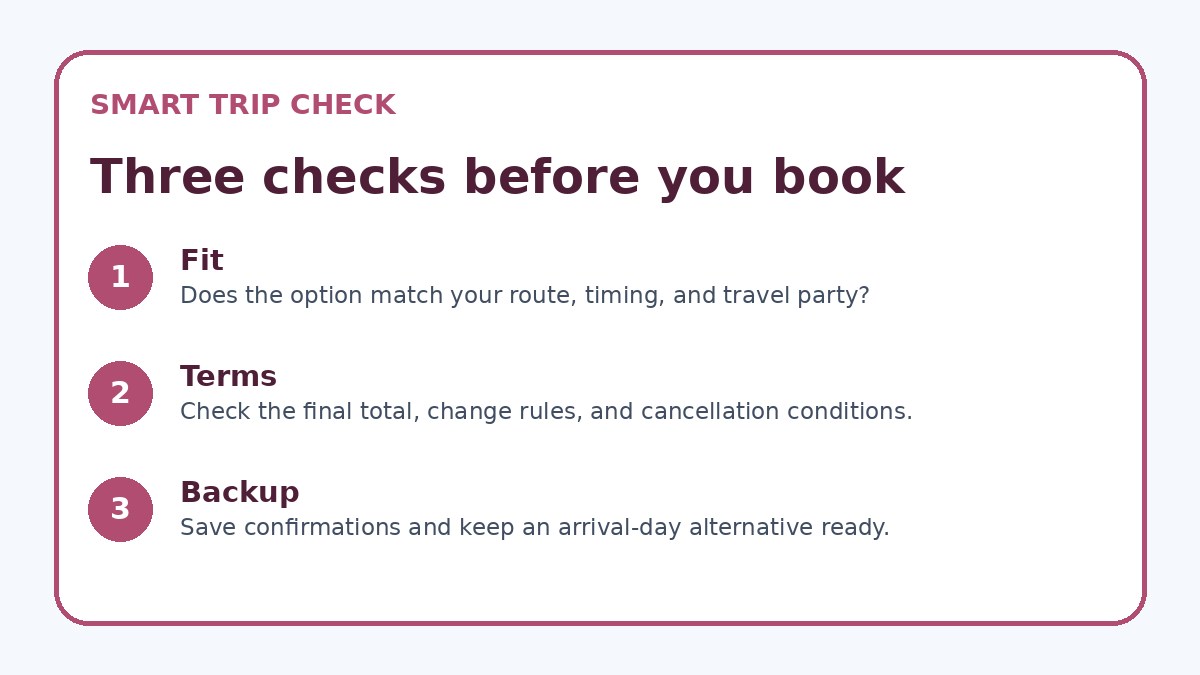
- Add flights, baggage fees, and likely seat-selection costs to a single trip spreadsheet before comparing fares.
- Estimate and price airport transfers and daily transport for each accommodation option you consider.
- List all planned activities and check provider pages for included items, mandatory gear hire, and cancellation terms.
- Review the full checkout page on each supplier site to confirm taxes, service fees, and any mandatory surcharges.
- Decide how much contingency money you need and include it as a separate line in your trip total.
- Compare the total cost and flexibility tradeoffs (nonrefundable vs refundable) and choose the option that fits your tolerance for change.
Accommodation, meals, and a realistic contingency plan
When confirming accommodation, read the final booking page carefully for taxes, cleaning fees, security deposits, and whether breakfast or kitchen access is included. Solo travelers often over- or underestimate food costs; staying in a place with a kitchenette can reduce daily spend if you plan to self-cater some meals. Factor in incidental items, such as locker hire for gear, late checkout fees, or a surcharge for extra linen. Add a contingency buffer to your total budget—enough to cover a missed connection, a weather-related tour cancellation, or a necessary upgrade to a safer transport option at short notice.
Decide what level of flexibility you want and reflect that in both your booking choices and your contingency amount. Nonrefundable prepaid rates can be attractive but reduce your options if plans change; flexible rates cost more but may save you money overall if you need to rearrange. When you’re ready to book, compare the total cost shown on the supplier’s final checkout page — this is the figure you should budget from, since it will include taxes, fees, and any mandatory extras you’ll actually pay.
Frequently asked questions
How should a solo traveler decide between a direct flight or a cheaper connecting route to Queenstown?
Start by calculating the door-to-door travel time and any extra costs a connecting route adds: overnight stays, transfer fares between terminals, and potential baggage transfer issues. For solo travel, also weigh the personal cost of travel fatigue and the risk of missed connections. If the connecting itinerary requires tight transfer windows or different carriers, factor in the contingency cost of an unplanned night or rebooking fee. Choose the option whose combined time, out-of-pocket costs, and stress level match how comfortable you are managing unexpected changes alone.
What is the best way to budget for adventure activities and equipment hire in Queenstown?
Itemize every activity you plan to do and open each provider’s booking page to see what’s included and what isn’t. Add equipment hire, safety-briefing fees, insurance waivers, and optional extras to your per-activity line item. If a provider requires prebooking, treat that as committed spend; if availability is loose, you can budget an estimated cost and decide closer to travel. Keep a buffer for one or two higher-cost options you might prioritize while there so you don’t overspend early in the trip.
How much contingency should I add to my Queenstown trip budget as a solo traveler?
Contingency needs vary by itinerary and comfort with risk. A sensible approach is to set aside a separate amount to cover a missed connection, a weather-cancelled activity that requires an alternative, or an unexpected overnight stay. Consider the complexity of your route, the number of prebooked activities, and whether you’ll be traveling in peak season; more complexity and peak demand suggests a larger buffer. Keep the contingency accessible and treat it as reserved funds rather than spending money, using it only if a real change forces extra expense.
Final planning note
Booking a solo trip to Queenstown with confidence comes down to one habit: total the realistic trip cost before you pay. Compare routes not just by headline fares but by door-to-door time, baggage and transfer fees, and how those choices affect your ability to make booked activities. Treat accommodation decisions as a total-cost comparison — nightly rate plus transport implications — and itemize tour inclusions and extras from operator pages. Carry a contingency buffer and verify the final checkout page for taxes and mandatory fees before confirming. If you build the trip cost intentionally, you preserve both freedom and options while avoiding surprise expenses on the ground.
Continue planning
Check current options and final conditions
Use the provider page to confirm live availability, the final total, cancellation terms, and every condition that matters to your trip.
This evergreen planning guide was created with AI-assisted drafting and a structured quality review. It does not display live prices, schedules, availability, visa guidance, or provider rankings. Verify current details before booking. Some links are affiliate links; we may earn a commission at no additional cost to you.