If you’re booking Seoul to Bangkok flights for work, start with a tightly focused checklist so your travel day isn’t full of avoidable hiccups. The practical answer: confirm schedule flexibility, choose the right fare and seat type, verify baggage and connection logistics, and check entry and transit requirements before you hit purchase. Do those four things first, then layer in company policy approvals, airport transfer options, and loyalty program considerations. Business trips often hinge on arrival time as much as price—pick the balance of convenience, cost, and risk you can justify to your employer. Below you’ll find the checklist items to run through and the decision tradeoffs explained so you can make choices that match meeting schedules, overnight needs, and company expense rules.
See current options before you compare the details
Availability and final conditions change. Open Trip.com now or keep reading for the practical comparison.
Timing and schedule: match flights to your commitments
Start by mapping your in-city appointments and any buffer you need for customs, immigration, and local transit. Business travelers should decide whether morning arrival, evening arrival, or traveling overnight best supports the itinerary: morning arrivals give a full workday but often require very early departures; evening arrivals may allow rest before meetings but can limit same-day productivity. When comparing flights, look at total door-to-door time — including travel to the airport, recommended check-in window for international departures, and expected immigration wait times at arrival — rather than only the airborne duration.
Also consider schedule reliability and daylight versus nighttime arrival. If you have a critical meeting, prioritize options with higher departure frequency or routes with robust connection buffers to reduce the chance a single delay disrupts the whole trip. If a connection is necessary, build a cushion that accounts for potential inbound delays and immigration lines; if your employer requires minimum connection times, use those as your baseline. Always note the local day of the week and traffic patterns that can influence airport transfer times in both Seoul and Bangkok.
Fares, flexibility, and corporate policy tradeoffs
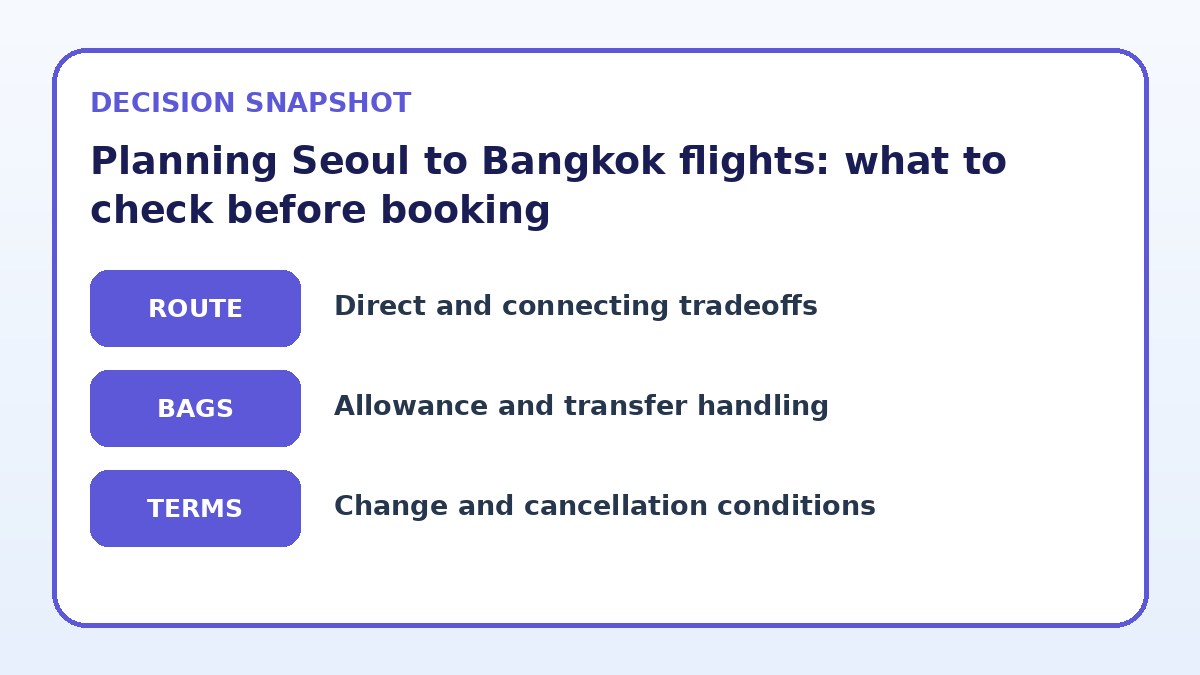
Understand the fare classes offered on your preferred routes and how those map to baggage, changes, and refunds. Low-cost or basic economy fares may look attractive but often exclude checked baggage, seat selection, and ticket changes; for business trips, the cost of last-minute change fees or paying for baggage at the airport can easily erase initial savings. Choose the fare that aligns with your company’s travel policy and the level of flexibility you need: flexible fares reduce risk if meeting schedules change, while restrictive fares may be acceptable for fully confirmed trips.
When balancing cost against convenience, quantify likely change scenarios. If your meeting reschedule probability is low, a slightly cheaper fare might be fine. If changes are common, a higher fare with free changes or a reasonable rebooking fee may be cheaper overall. Check whether your company has preferred fare rules, corporate discounts, or negotiated ticketing channels and follow those first. Finally, confirm the exact inclusions on the carrier booking page — baggage allowance, change and cancellation rules, and seat selection fees — because those details can vary even within the same fare name.
| Approach | Best for | Tradeoff to check |
|---|---|---|
| Direct nonstop flight | Travelers needing minimal transfer risk and fastest airborne time | May cost more or have fewer schedule options; check seat and baggage inclusions |
| Single-connection itineraries | Those seeking better timing or lower fares with manageable transfer | Requires reliable connection time and attention to terminal transfers |
| Cheaper basic fares | Firm, unchanged itineraries where company policy allows minimal inclusions | Often excludes baggage and changes; last-minute needs become costly |
| Flexible premium fares | Trips likely to change or travelers needing extra comfort and flexibility | Higher upfront cost but lowers rebooking and baggage risk |
Ready to check the option that fits your plan?
Use your exact dates and traveler details so the provider page can show the current total and conditions.
Connections, airports and transfer logistics
Do not assume a direct flight is the only convenient option — sometimes a single reliable connection offers better timing or lower overall door-to-door time. When a connection is on the table, compare the practical transfer time: layover duration, whether connections are in the same terminal, and if you need to clear security or immigration between flights. If transferring between different airports or terminals, add the extra transit time required and check available ground transport options. For business travelers, a slightly longer but simpler transfer can be preferable to a short connection that risks missing the onward flight.
Consider airport accessibility in each city. In Seoul, evaluate travel time from where you’ll be starting (central Seoul versus outskirts); in Bangkok, decide which airport suits your meeting location and evening logistics. Account for reliable transfer methods like pre-booked airport cars, rail links where available, or company-arranged shuttles. If you plan to travel with carry-on only, confirm carry-on policies and overhead-bin space expectations, since cramped connections can create boarding issues that affect your arrival plans.
Before you book
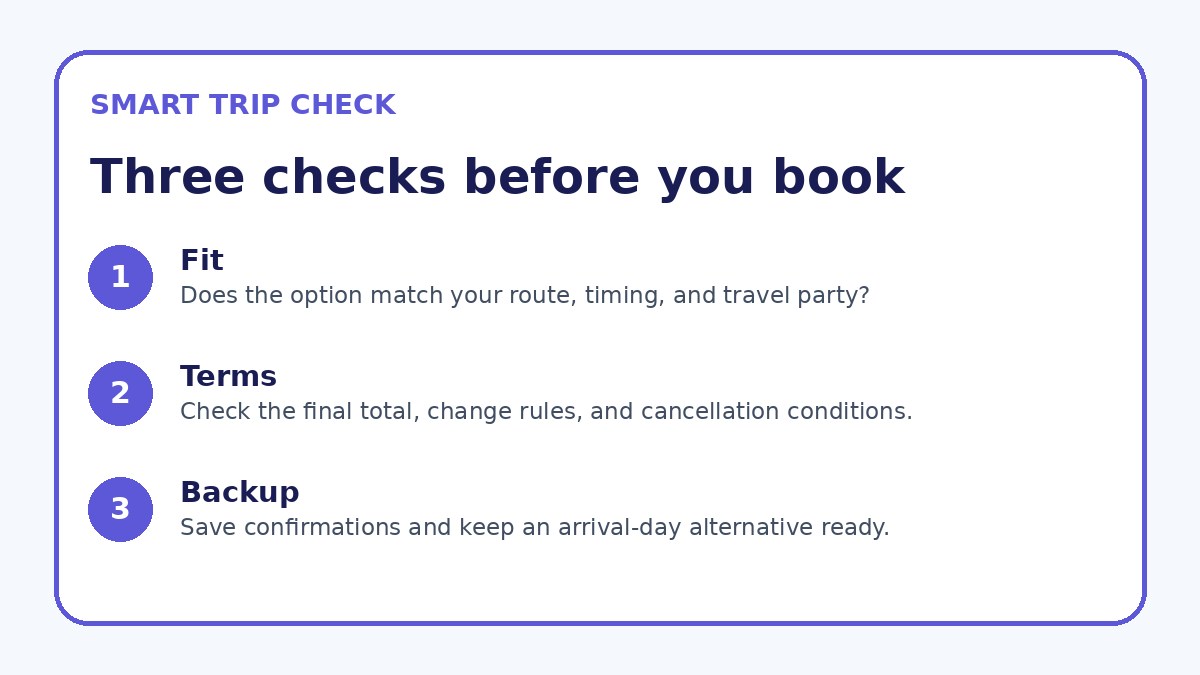
- Confirm meeting times and preferred arrival window, then shortlist flights that land with your required buffer for immigration and transfers.
- Select a fare that includes the baggage and change flexibility you need; verify the exact baggage allowance and change fees on the carrier booking page.
- Decide between direct and connecting flights by comparing total door-to-door time and minimum connection times, including terminal transfers where applicable.
- Reserve your seat and check for power outlets and Wi-Fi availability on the specific aircraft before booking if you plan to work in-flight.
- Arrange and book airport transfers at both ends (car, rail, or company shuttle) to ensure reliable timing for early departures or late arrivals.
- Add personal travel documents—passport validity, visa or entry requirements, and any required health forms—to a pre-departure folder and verify on official government or airline pages.
Seat selection, work-ready amenities, and loyalty considerations
For business travelers, seat selection and onboard amenities can directly affect productivity. Prioritize seats with power outlets, Wi-Fi availability, and space for a laptop if you need to work en route. If resting before meetings is important, choose seats with more reclining or quieter cabin areas; if deadlines demand work, select seats closer to galleys for fast service or in premium economy/business for more room. Look at equipment and connectivity options listed on the carrier page and confirm them before booking; airline pages will indicate whether a flight has Wi-Fi or in-seat power.
Loyalty and corporate accounts matter: check whether flights earn the status miles you need and whether your company has rate guarantees or rebate schemes. If you have enough status to upgrade at a reasonable cost or use miles for a seat-class improvement, factor that into the booking decision. Confirm that the booking channel will record your loyalty number and that any company travel tools or expense systems will accept the itinerary format. When provider-specific facts could change, verify seat map, Wi-Fi capability, and exact baggage rules on the carrier’s final booking page before finalizing payment.
Frequently asked questions
Should I always pick a direct flight from Seoul to Bangkok for business travel?
Not always. Direct flights reduce connection risk and can be faster, which is useful for tight schedules. However, direct options may be limited by departure times or price. Single-connection itineraries can sometimes offer better arrival times, lower door-to-door duration, or improved seat availability. Weigh the importance of arrival time, likelihood of schedule changes, and your tolerance for transfer delays. If a connection is needed, ensure the layover is long enough to comfortably clear any required security or terminal transfers.
How do I choose the right fare class when corporate policy constrains options?
Start by checking your company’s travel rules for allowable fare buckets, approvals, and preferred booking channels. If policy allows choice, compare the practical costs: include likely baggage fees, seat selection, and change fees when estimating total trip expense. If there’s a reasonable chance your trip will change, a higher fare with change flexibility may be cheaper overall than a lower fare plus high rebooking costs. Where possible, consult your corporate travel manager or booking portal to see negotiated options and to confirm that loyalty numbers and expense codes will be recorded correctly.
What should I verify on the airline’s final booking page before paying?
On the carrier’s final page, check exact baggage allowances (size, weight, number of checked and carry-on items), seat selection details, change and cancellation rules and fees, and whether Wi-Fi or in-seat power is available on that specific flight. Confirm the full fare break‑down, including ancillary fees that may apply at check-in. Also ensure your loyalty program number is attached and that the listed itinerary matches your chosen transfer terminals and connection times. If anything is unclear, contact the airline or booking channel to get written confirmation before completing payment.
Final planning note
Booking Seoul to Bangkok flights for business is about reducing risk and aligning travel choices with meeting needs. Start with arrival timing and flexibility, then pick the fare that covers realistic baggage and change scenarios. Compare direct and connecting options by total door-to-door time, not just airborne duration, and secure seats and transfers that support work or rest as required. Finally, verify all carrier-specific details on the final booking page so there are no surprises. Following a short, repeatable checklist will keep your travel consistent with company policy and make business travel more predictable and less stressful.
Continue planning
Check current options and final conditions
Use the provider page to confirm live availability, the final total, cancellation terms, and every condition that matters to your trip.
This evergreen planning guide was created with AI-assisted drafting and a structured quality review. It does not display live prices, schedules, availability, visa guidance, or provider rankings. Verify current details before booking. Some links are affiliate links; we may earn a commission at no additional cost to you.