If you’re booking Phuket hotels as a solo traveler, first decide whether location or room comfort matters more to your daily experience—then pick a place that fits that priority. Location saves transit time and gives easy access to beaches, markets, and nightlife; room comfort influences sleep quality, privacy, and the ability to recharge between activities. For many solo travelers a middle ground works best: a neighborhood with walkable amenities plus a private room that feels safe and quiet. This guide gives a practical decision framework: what to look for in neighborhoods, how to weigh room features against location, what tradeoffs to expect, and which questions to ask on the booking page. Use this to narrow choices quickly, then verify transport options, cancellation rules, and exact room amenities on the property’s booking page or a comparison site such as Trip.com before you reserve.
See current options before you compare the details
Availability and final conditions change. Open Trip.com now or keep reading for the practical comparison.
Choose the neighborhood that matches your rhythm
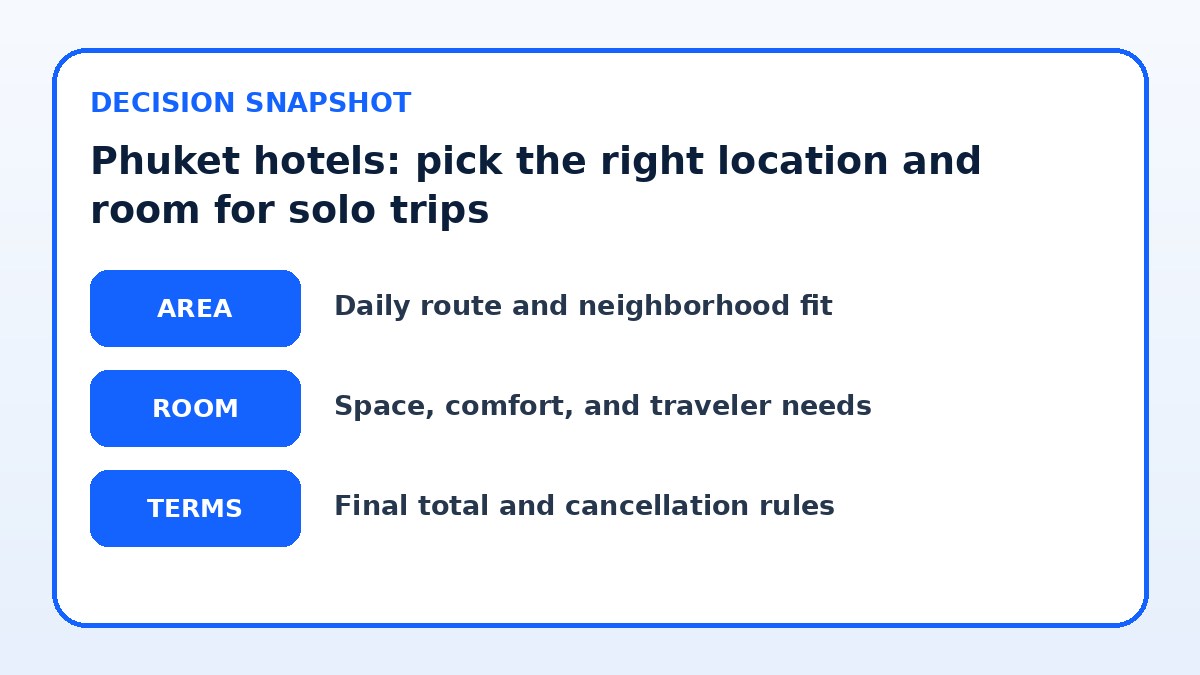
Phuket is a collection of different neighborhoods, each with a distinct tempo. Patong is loud and central if you want nightlife and many restaurants within walking distance; Karon and Kata are calmer, with long beaches and a more relaxed evening scene; Phuket Town is compact, cultural, and better for daytime exploring and cafes. Think about how you’ll spend most days—beach time, island hopping, diving, temple visits, or wandering markets—and then choose an area that minimizes daily transfers to those activities. Minimizing transfer time is often worth more than a slightly larger room when you only have a few days.
Also factor in practical services you’ll need as a solo traveler: pharmacies, convenience stores, 24-hour eateries, and a transport hub or reliable taxi stand. If you plan early-morning tours, staying closer to the pier or main road matters. If evenings out are a priority, choose somewhere with a trio of safe streets to walk, rather than a single main strip that shuts down late. Balance these needs against noise and crowds: the most central spots trade quiet for convenience, while quieter neighborhoods push your transport time up but buy you better sleep and lower rates.
Prioritize room comfort essentials for solo travelers
When traveling alone, your room is your private base—its quality shapes your rest and sense of security. Prioritize a comfortable bed, good blackout curtains, reliable air conditioning, and a private bathroom; these basics matter more than designer finishes. If you plan to work or read, ensure there’s a desk or a stable table and adequate outlets. Check whether rooms face a back alley or a busy street: back-facing rooms often reduce nighttime noise. Photos and recent guest comments will be vital; look specifically for mentions of mattress quality and noise after 10 p.m.
Safety-focused features also count as comfort: a door with a deadbolt, a functioning peephole, a safe for valuables, and clear procedures for late arrivals. If you’re sensitive to cleanliness, choose properties that publish their cleaning protocols and have recent photos of the rooms. For longer stays or warmer months, a kitchenette or fridge can make solo travel simpler and save on meals. Before booking, confirm the room type, bedding configuration, and which amenities are included on the property’s final booking page.
| Approach | Best for | Tradeoff to check |
|---|---|---|
| Stay central (Patong/Kata) with a compact room | Solo travelers prioritizing nightlife, quick beach access, and convenience | Higher noise and smaller rooms; more walking crowds and frequent taxi use for quieter mornings |
| Choose a quieter beach area (Karon/Kamala) with larger rooms | Travelers who value restful nights and relaxed daytime beach time | Longer transfers to nightlife and some tour departure points; fewer late-night options within walking distance |
| Base in Phuket Town for culture and cafes | Solo travelers who prefer daytime exploring, markets, and a local vibe | Further from the main beaches; you’ll need to plan day trips or public transport for coastal access |
| Split-stay: central then quiet | Those wanting both nightlife and downtime without committing to one vibe | Extra time and cost for switching hotels; need to manage luggage and additional check-ins |
Ready to check the option that fits your plan?
Use your exact dates and traveler details so the provider page can show the current total and conditions.
How to weigh tradeoffs: location versus room features
Tradeoffs are inevitable: a cheap, central room may mean noise and a tiny space; a spacious, quiet room in a residential area will cost more in taxi time. Make a short list of what you cannot compromise on—sleep environment, safety, or immediate access to nightlife—and treat the rest as negotiable. If you have only a few nights in Phuket and want to maximize beach and evening time, accept a smaller room near the action. If you’re on a longer trip and value quiet mornings and productive days, choose comfort over proximity.
Consider splitting the trip: some solo travelers book a central stay for a few nights, then move to a quieter area for the remainder. Factor in the hassle of switching hotels—packing, checking out, and potential extra travel costs—against the benefit of different experiences. When comparing options, calculate not only nightly rate but estimated daily transport time and cost to the activities you plan. Confirm transport options from each neighborhood on the booking page or with the property, and verify if they offer shuttle services or can call taxis for you.
Before you book
- List your top priority (sleep quality, beach access, nightlife proximity) and keep it visible while comparing listings.
- Filter hotels by room type, private bathroom, and included amenities; open actual room photos and recent guest images.
- Message the property to confirm floor level, noise risk, and whether your room faces the street or a courtyard.
- Check transport options from the hotel to piers, tour departure points, and the airport; ask about shuttle services if needed.
- Verify the cancellation policy and whether the listed rate includes taxes, service fees, and breakfast before payment.
- On arrival, inspect locks and safe, test lights, A/C and hot water, and document any discrepancies with photos immediately.
Practical booking questions and on-the-ground checks
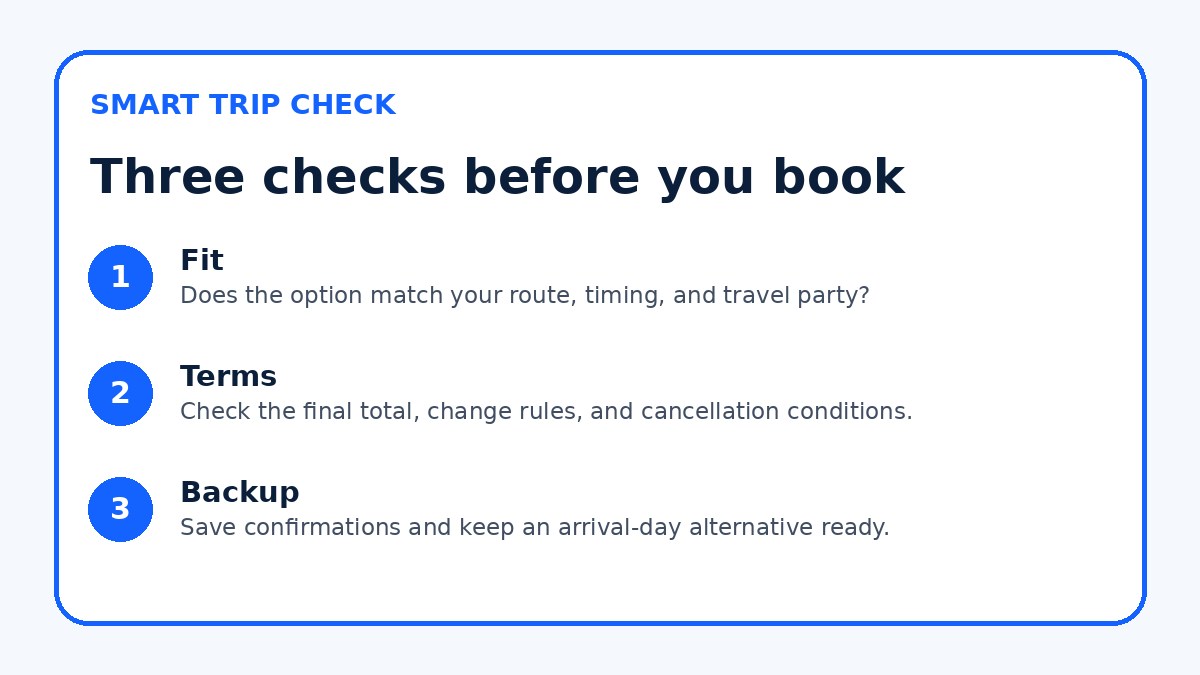
Before you hit confirm, check a few concrete things on the booking page and by contacting the property if needed: exact room layout and bed type, bathroom access and hot water reliability, whether photos are of the actual room or a sample, and the cancellation policy. Verify whether breakfast is included and whether the front desk is staffed 24/7 if you arrive late. Ask how the property handles airport transfers or group tours if those services matter to you. If the listing lacks detail on noise, request a back-facing or higher-floor room with a clear statement.
On arrival, do a quick security and comfort audit: test the door locks, check Wi‑Fi speed if you need to work, and listen for noise during your first hour in the room. If room comfort or safety falls short of what was described, document it with photos and contact the front desk; many properties will offer an alternative or explain what they can change. For the most current availability and conditions, you can compare options on Trip.com, but always verify the provider’s final terms on their own booking page before you finalize payment.
Frequently asked questions
Is it better to stay in Patong or Phuket Town for a solo traveler?
It depends on your priorities: pick Patong if you want nightlife, immediate beach access, and many tourist services within walking distance. Choose Phuket Town if you prefer quieter evenings, a cultural scene with cafes and markets, and easier daytime urban exploration. Consider how you’ll spend most days—beach-focused itineraries favor coastal neighborhoods; those aiming to visit temples, galleries, and local eateries will find Phuket Town more convenient. If undecided, plan for a split stay to experience both without committing to one vibe for the whole trip.
What room features should I never skip as a solo traveler in Phuket?
Prioritize a private bathroom, a comfortable bed, reliable air conditioning, and some form of sound buffering like a higher floor or back-facing room. Security features—solid door locks, a safe for valuables, and a visible reception—are important for peace of mind. If you work or spend time in the room, ensure there’s a table or desk and accessible power outlets. For longer stays, a fridge or small kitchenette and good Wi‑Fi make daily life much easier. Confirm these specifics on the property’s booking page before you book.
How much should I rely on photos and reviews when booking?
Photos and recent reviews are essential but require context: curated marketing photos may show a sample room rather than the exact unit, and older reviews may not reflect recent changes. Look for recent guest photos and multiple reviews that mention the same factual details—noise level, bed comfort, and cleanliness. When in doubt, ask the property directly for a photo of the actual room you’ll receive or a commitment about room placement. Always verify cancellation terms and exact amenities on the official booking page before completing payment.
Final planning note
Booking Phuket hotels as a solo traveler is about clarifying priorities and accepting a few tradeoffs. Choose location if your days will be short and you want to maximize beach time and nightlife; choose room comfort if you need reliable rest, privacy, or a workspace. For many, a middle path—staying in a walkable neighborhood with a private, well-equipped room—hits the sweet spot. Use the checklist to confirm room specifics, security, and transport, and always verify the property’s final terms and amenities on the booking page before paying. A little prep lets you book confidently and shapes how relaxed and adventurous your Phuket trip will feel.
Continue planning
Check current options and final conditions
Use the provider page to confirm live availability, the final total, cancellation terms, and every condition that matters to your trip.
This evergreen planning guide was created with AI-assisted drafting and a structured quality review. It does not display live prices, schedules, availability, visa guidance, or provider rankings. Verify current details before booking. Some links are affiliate links; we may earn a commission at no additional cost to you.