If you’re a first-time visitor planning an Osaka family road trip, the practical decision is simple: base yourself where highway access, parking and family-friendly services line up, then rent a car sized for passengers, luggage and baby seats. Choose a compact minivan or roomy crossover if you’re carrying strollers, a cooler and several suitcases; opt for a small rental only if you’re light on gear and want easier parking. Reserve child seats in advance and confirm pick-up location logistics — city center offices, airport counters and one-way drop-off options differ. This article gives a direct recommendation up front, then explains tradeoffs such as parking versus convenience, expressway tolls and fuel choices, how to evaluate rental policies, and what to verify on the provider’s final booking page before you pay.
See current options before you compare the details
Availability and final conditions change. Open Trip.com now or keep reading for the practical comparison.
Choosing where to stay with a rental car
For a family road trip that starts and ends in Osaka, deciding where to stay is the first big planning choice. Staying in central neighborhoods like Namba or Umeda keeps you close to restaurants, trains and family activities, but parking can be tight and costly. An alternative is to base near an expressway interchange or at hotels that advertise free or guaranteed parking—these save time on morning departures and reduce the stress of finding spaces after long days. Consider splitting nights: a couple of central nights for sightseeing and a night at a quieter, more car-friendly area to reset between drives.
When you evaluate hotels, ask about the size of parking spaces, overnight fees, and whether reservations for parking are required. If you expect to leave luggage in the car while sightseeing, pick a secure lot or hotel garage that charges by the night rather than hourly street parking. For families, proximity to a supermarket, pharmacy, and laundromat can be as practical as proximity to landmarks—these conveniences make roadside stops and snack breaks easier when traveling with children.
Picking the right car for a family
Match the vehicle to how many people and how much gear you’ll bring. For two adults and two small children plus luggage, a compact minivan or midsize crossover usually balances passenger comfort with city parking. If your family includes taller teenagers or you plan long countryside legs, choose a larger minivan with three rows for better legroom. Also think about doors and seat access: sliding rear doors are much easier for loading child seats in tight parking lots and reduce the risk of dooring cyclists or other cars.
Consider practical features: dual-zone climate control, easy-to-clean upholstery, integrated navigation with English menus, and multiple USB ports for charging devices. If you need infant or booster seats, specify them when you book because options can be limited and models vary by provider. Decide whether you want an automatic transmission (recommended for most family drivers in Japan) and whether you prefer a vehicle with an ETC (electronic toll) transponder. On the booking page, verify exact seat types, the transmission, and any mileage limits before you confirm.
| Approach | Best for | Tradeoff to check |
|---|---|---|
| Stay central and rent a smaller car | Sightseeing on foot with short daily drives | Higher parking hassle and less cargo space for strollers and luggage |
| Stay near expressway access and rent a mid-size SUV | Frequent longer drives and easier luggage handling | Longer walks into the city and possible extra local transport costs |
| One-way rental to different cities | Linear itineraries that avoid backtracking | One-way fees and more complex booking logistics to verify |
| Rent larger minivan with reserved child seats | Families needing extra room and easy seat installation | Higher fuel usage and tighter parking in dense urban areas |
Ready to check the option that fits your plan?
Use your exact dates and traveler details so the provider page can show the current total and conditions.
Planning family-friendly driving routes
Map daily distances with children’s attention spans in mind: plan one primary drive of 1–2 hours between major stops and leave extra time for scenic breaks, playgrounds, and restroom stops. Use offline map backups in case cellular coverage drops on rural highways. When possible, route along expressways for predictable travel times, then exit to local roads for scenic detours and pharmacy or meal stops. Be realistic about evening drives—children tire quickly after long days, so aim to arrive at your overnight base well before bedtime.
Factor in tolls and multiple-stop logistics. Tolls can add up on Japanese expressways, so compare the time saved versus the cost for each leg; sometimes a slightly slower national route is calmer and cheaper for families. Plan one or two longer legs no more than every two or three days to avoid travel fatigue. Also identify safe, open places for picnic breaks—rest areas (service areas) on highways often have clean facilities and playgrounds suitable for children, but check recent reviews or local advice before relying on any single stop.
Before you book
- Confirm pick-up and drop-off addresses and hours, and save the rental office phone number to your phone.
- Reserve the exact number and type of child seats you need and confirm any extra fees on the booking page.
- Verify fuel policy (prefer full-to-full) and check how the provider expects tolls to be paid or if an ETC device is fitted.
- Check insurance options and deductible amounts; decide if you need extra collision damage waiver coverage.
- Measure your luggage and stroller to ensure they fit in trunk capacity listed on the vehicle page.
- Download offline maps and note emergency stops, hospitals and child-friendly rest areas along your planned routes.
What to check on the rental booking page
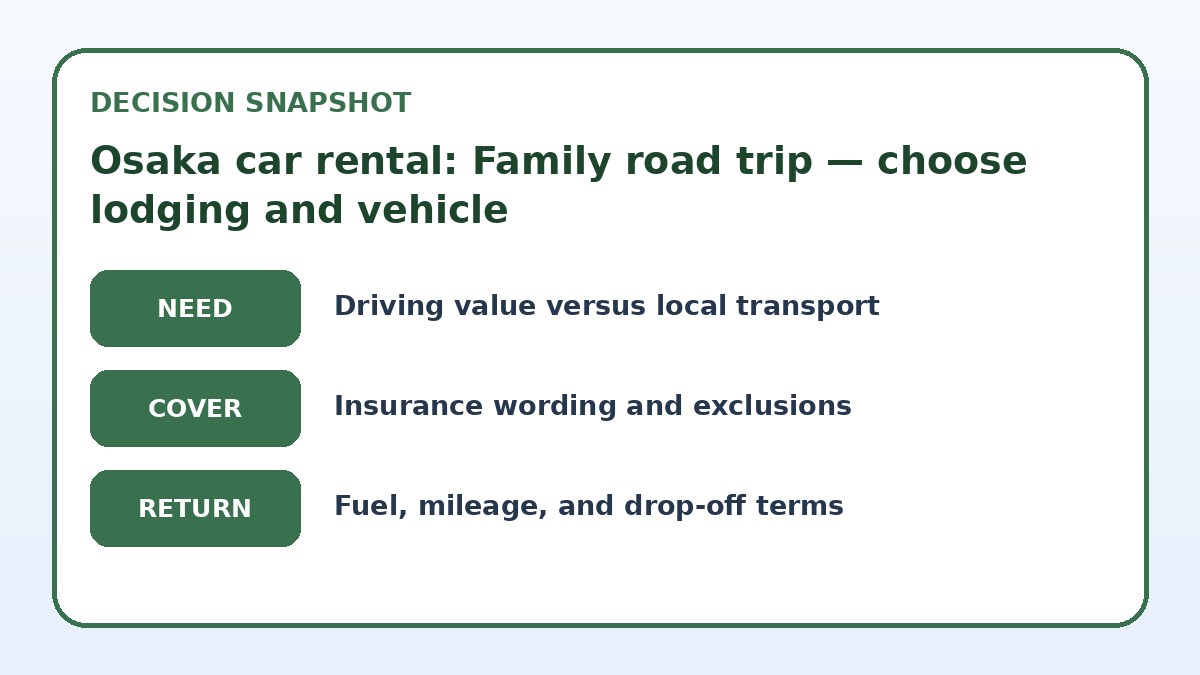
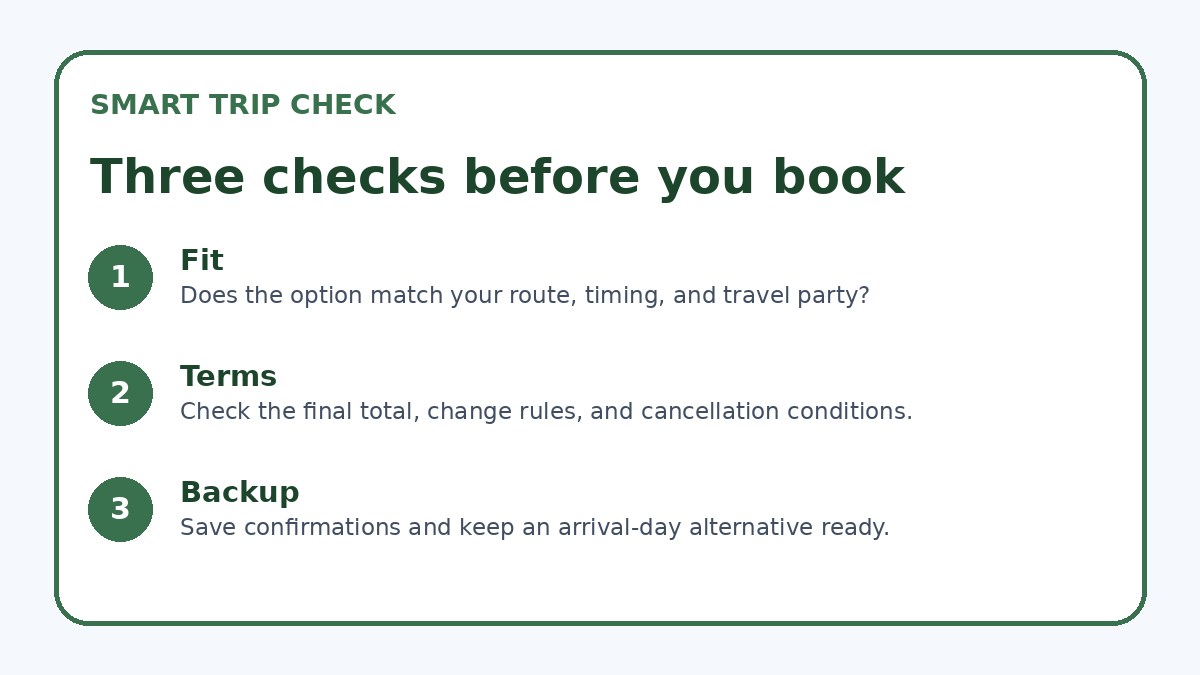
Before you hit confirm, verify these details on the provider’s final booking page: exact pick-up and drop-off locations, hours of operation, whether child seats are charged or included, the fuel policy (full-to-full is simplest), and any one-way or airport surcharges. Policies about additional drivers, international driving permits, and road-side assistance are also important for peace of mind—make sure the rental includes 24/7 support or that you know how to contact assistance in English. If you plan to cross prefectural borders, check that the rental agreement permits it.
Check the insurance options and what they actually cover; theft and collision coverages differ and deductibles can be significant. Make a note of mileage limits, road restrictions (some companies restrict unpaved roads), and how toll payments are handled—confirm whether an ETC device is fitted or whether you must pay tolls in cash. The rental’s cancellation terms matter for families with uncertain schedules, so confirm refund rules or change fees before booking. If you compare rates, Trip.com can be used as one place to view availability, but always verify final policy details on the rental company’s official page.
Frequently asked questions
Do I need an international driving permit to rent a car in Osaka?
Most foreign visitors need an international driving permit (IDP) based on the 1949 Geneva Convention in addition to their valid home driver’s license to drive in Japan. Some countries have different reciprocal arrangements — check whether your country’s license is accepted. Verify the rental company’s requirements on their booking page and carry both the IDP and original license in the car at all times. Also confirm any minimum age and driving experience rules with the provider before booking.
Are child seats mandatory and how do I ensure the right type?
Child seats are widely required and enforced; the specific age and weight rules depend on the child and local law. When you book, specify the child seat type (infant rear-facing, forward-facing, or booster) and confirm the provider’s model suitability for your child’s height and weight. Ask the rental company whether seats are installed for you or if you must install them yourself, and verify that the seats have passed recent safety inspections. Always test the fit at pick-up and keep installation instructions on hand.
How do tolls and ETC devices work for family road trips?
Japanese expressways commonly use electronic toll collection (ETC) to let vehicles pass through lanes quickly; many rental companies offer ETC units for an extra fee or include them. If you don’t use ETC, you’ll pay at toll booths, which can be slower and require small change or a credit card accepted at that booth. Check the rental booking page to see if an ETC card is included, whether you preload credit, and how toll charges will be billed to you. If the provider does not supply ETC, plan for cash or manual payment options.
Final planning note
Planning an Osaka family road trip as a first-time visitor becomes manageable when you focus on three decisions: where to base your family, which size and features you need in a rental car, and which rental policies you must confirm before booking. Balance the convenience of central Osaka lodging with the parking and space advantages of staying near expressway access. Choose a vehicle that fits people and gear comfortably, reserve child seats in advance, and verify pick-up/drop-off logistics, fuel and toll policies, insurance, and any one-way fees on the provider’s booking page. With those checks done, you’ll spend more time enjoying Osaka’s neighborhoods, parks and day trips, and less time juggling logistics on the road.
Continue planning
Check current options and final conditions
Use the provider page to confirm live availability, the final total, cancellation terms, and every condition that matters to your trip.
This evergreen planning guide was created with AI-assisted drafting and a structured quality review. It does not display live prices, schedules, availability, visa guidance, or provider rankings. Verify current details before booking. Some links are affiliate links; we may earn a commission at no additional cost to you.