If you need a straightforward way to get from Melbourne to Adelaide using ground transport, choose among intercity train, long-distance coach, driving yourself, or a mixed-plan that combines regional trains and buses. Start by deciding whether comfort, scenery, cost control, or flexibility matters most; that single priority will narrow options quickly. For most first-time visitors building a multi-city ground-transport plan, a mixed itinerary—using scheduled train or coach legs supplemented with rental car days for regional detours—balances convenience and local exploration. Before you book, map your desired stops, check the latest operator schedules and baggage rules, and confirm connection minimums on official booking pages. Use Trip.com or operator sites to compare current availability, but verify times and cancellation terms directly with providers before finalizing.
See current options before you compare the details
Availability and final conditions change. Open Trip.com now or keep reading for the practical comparison.
Choose the backbone: train, coach, car, or mixed
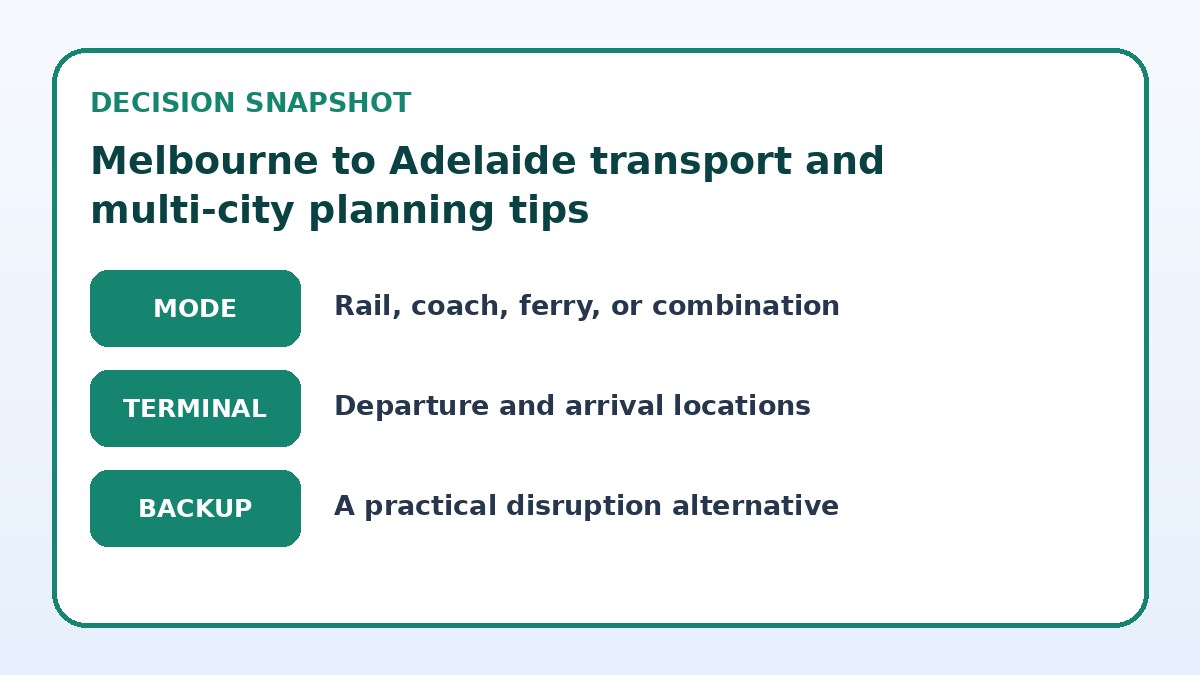
Pick one primary mode to form the backbone of your journey from Melbourne to Adelaide. Trains and coaches provide fixed-route, scheduled travel where you can relax and watch the countryside, while driving gives freedom to stop anywhere on the map. A mixed plan uses scheduled services for long stretches and a rental car for regional days; this reduces driving fatigue and removes the need to park in large cities during peak periods. Your backbone choice should reflect how many intermediate cities you want to visit, how much luggage you have, and whether you prefer guided comfort or independent exploration.
When comparing backbone options, think beyond just speed. Consider how often the service runs, how easy it is to change or cancel, and what onboard amenities or baggage limits exist. For first-time visitors unfamiliar with local roads and parking, scheduled services lower stress; for those comfortable driving and wanting to stop at vineyards, coastal towns, or nature reserves, a car adds flexibility. Finally, factor in accommodation logistics: staying near stations or coach terminals simplifies transfers, while car-based trips let you choose more remote lodgings.
Planning multi-city legs and sensible connections
When building a multi-city ground-transport plan, design legs that leave comfortable margins for connections. Aim to treat each scheduled service as a separate ticket only if you can absorb missed-connection risk; otherwise, prioritise single-ticket or through-connection options when available. Identify realistic minimum transfer times between stations and terminals, account for baggage retrieval or check-in procedures, and avoid tight back-to-back bookings. For drives, allow time for stops, fuel, and unforeseen delays like weather or roadworks; padding 20–30% extra time beyond Google-style estimates reduces stress.
Also plan where you will overnight to break long travel days into manageable chunks. Choose intermediate cities with transport hubs and multiple accommodation options to protect yourself from cancellations or delays. If you intend to combine coach or train with rental car legs, arrange car pickup/drop-off in cities where terminals are close to rental sites, and verify whether one-way rentals between states are permitted. Mapping realistic daily distances and connection windows will make the whole multi-city plan resilient and enjoyable.
| Approach | Best for | Tradeoff to check |
|---|---|---|
| Direct scheduled train/coach legs | Travelers prioritising fewer transfers and predictable itineraries | May be less flexible for detours and subject to fixed departure times |
| Driving a rental car for the entire route | Visitors wanting full control and freedom to visit remote stops | Adds driver responsibility, parking and potential one-way or border fees |
| Mixed plan: scheduled backbone + rental car for regions | Travelers wanting comfort on long legs and flexibility for local exploration | Requires coordinating different bookings and pickup/drop-off logistics |
| Segmented tickets with local transit between cities | Budget-conscious travellers who accept connection risk | Higher risk of missed connections and extra baggage handling |
Ready to check the option that fits your plan?
Use your exact dates and traveler details so the provider page can show the current total and conditions.
Comparing tradeoffs: comfort, cost, time and flexibility
Comfort, cost, time and flexibility rarely align perfectly; choosing which matters most will guide every booking. Trains often rate high for legroom and scenic views but may follow indirect routes that lengthen travel time. Coaches typically offer more departure options and lower headline fares but involve longer saddle-time for some travellers. Driving yields maximum flexibility and the chance to visit out-of-the-way places, but it also adds driver fatigue, parking concerns, and the responsibility of unfamiliar road regulations. For first-time visitors, weigh how comfortable you are with local driving culture and whether you value a relaxed transit experience.
Cost comparisons should include more than ticket prices. Add fuel, tolls, parking, and potential one-way rental fees for car options; for scheduled services, include baggage fees and seat reservations if required. Consider the non-monetary cost of missed connections and the stress of coordinating multiple bookings. If you want a scenic holiday, trade a bit more time for routes that pass through coastlines or wine regions. If your priority is arrival by a fixed time, favour direct scheduled legs or build generous transfer buffers into your plan.
Before you book
- Map your intended route with exact station and terminal names, not just city names, to avoid transfers between distant locations.
- Decide on a backbone mode (train, coach, car, or mixed) and list which legs will use each mode before checking prices.
- Confirm baggage allowances and seat reservation rules on each provider’s booking page prior to purchase.
- Allow realistic transfer windows between connecting services and add at least 20–30% time padding for driving segments.
- Check rental car one-way rules, cross-border permissions, and insurance coverage if you plan to pick up and drop off in different cities.
- Save booking confirmations and operator contact details offline and note alternative later services in case you need to change plans.
What to verify before booking and where to buy
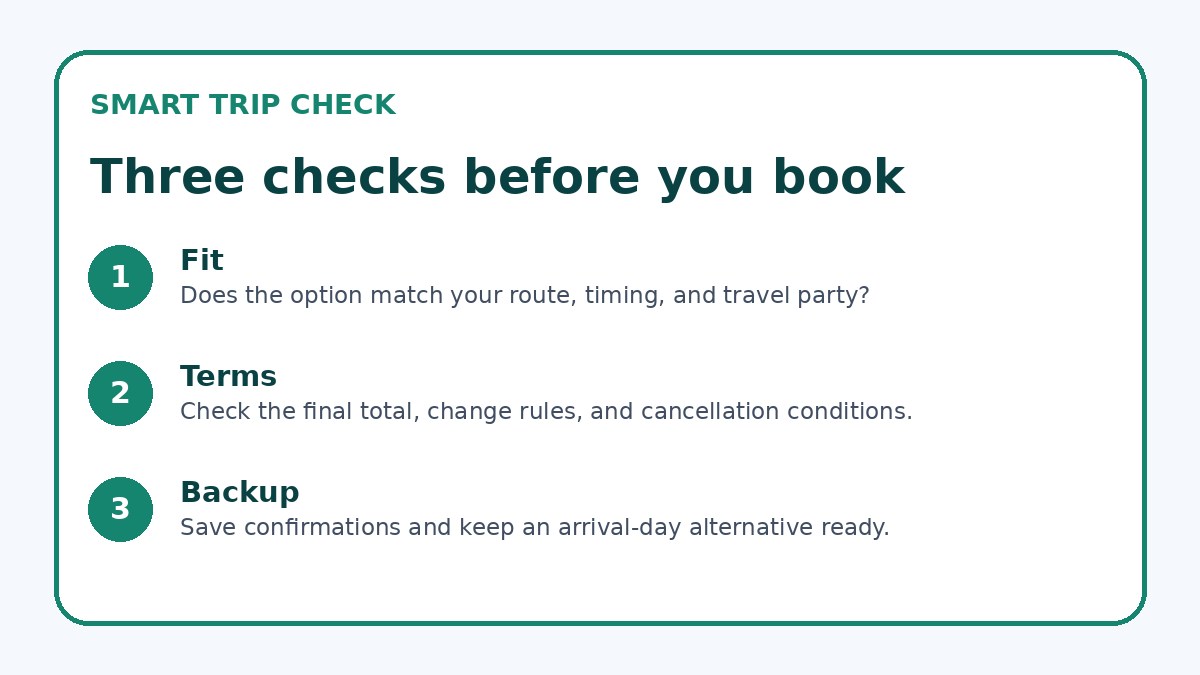
Before you buy any ticket or rental, verify the exact departure and arrival locations (stations versus coach terminals), baggage rules, change and cancellation policies, and whether your fare includes seat selection. For mixed itineraries, ensure that connection windows are realistic and that you can rebook locally if a leg is disrupted. Check whether local public transport or taxis are available at arrival points late at night, especially in regional towns. If an operator’s booking page shows multiple fare classes, confirm what each class permits in terms of refunds and arrival flexibility.
Compare options across official operator sites and a secondary aggregator such as Trip.com to see current availability, but always cross-reference the provider’s own page for the fine print before finalising. For rental cars, inspect the insurance coverage, cross-border rules, and one-way fees. Keep screenshots or PDFs of confirmations and note the provider support phone number. Finally, register flexible contact details in your bookings and allow extra time on multi-city travel days to absorb the unexpected.
Frequently asked questions
Is taking a train from Melbourne to Adelaide straightforward for a first-time visitor?
Taking a scheduled train can be straightforward, but simplicity depends on whether there’s a direct service or a connection. As a first-time visitor, confirm departure and arrival station names, baggage rules, and whether seat reservations are necessary. If the train route involves overnight travel or an intermediate connection, plan where you will store luggage and how you will transfer between terminals if needed. Check the operator’s booking page for exact boarding procedures and for advice on onboard facilities so you can pack and plan accordingly.
Can I mix coach or train legs with a rental car on the same trip?
Yes — mixing scheduled services with a rental car is a common approach to combine fast intercity travel with flexible regional exploration. When planning mixed legs, schedule car pickup and drop-off at convenient hubs close to rail or coach terminals to reduce transfer time. Verify pickup hours, one-way rental policies, and any regional restrictions directly with the rental company. Also reconfirm train or coach arrival times on the booking pages and leave extra time between the scheduled arrival and your car pickup to absorb delays.
What are the biggest pitfalls first-time visitors should avoid when planning ground travel?
Common pitfalls include underestimating transfer times, not verifying baggage allowances, and assuming different providers will accommodate missed connections. Avoid booking tight back-to-back legs on separate tickets unless you can afford the risk of missed services. Forgetting to check station versus coach terminal locations in a city can create long, unplanned transfers. If driving, don’t overlook parking availability, local road rules, and one-way rental fees. Always read the provider’s final booking page for refund, change, and luggage policies before paying.
Final planning note
Building a multi-city ground-transport plan between Melbourne and Adelaide is about matching a clear priority—comfort, speed, cost or flexibility—to an appropriate backbone and then layering sensible connections. For first-time visitors, a mixed approach often delivers the best balance: use scheduled trains or coaches for long intercity stretches and reserve rental-car days for local exploration. Whatever you choose, plan generous transfer windows, verify all baggage and pick-up rules on provider booking pages, and keep confirmations and contact details at hand. With a mapped backbone, realistic daily legs and contingency time, your ground trip across Victoria and into South Australia can be smooth, scenic and adaptable.
Continue planning
Check current options and final conditions
Use the provider page to confirm live availability, the final total, cancellation terms, and every condition that matters to your trip.
This evergreen planning guide was created with AI-assisted drafting and a structured quality review. It does not display live prices, schedules, availability, visa guidance, or provider rankings. Verify current details before booking. Some links are affiliate links; we may earn a commission at no additional cost to you.