Short answer: most first-time visitors do not need a rental car for central Hanoi, but a car can make sense if your priorities include flexible day trips, traveling with lots of luggage, or visiting remote northern provinces. Traffic, narrow streets, limited parking, and a strong network of taxis, ride-hailing apps, buses, and guided tours mean you can usually get by without driving. Still, if you plan off-the-beaten-track routes outside the city, are comfortable navigating busy Southeast Asian traffic, or need private door-to-door transfers, renting can be a practical choice. This guide helps you weigh those tradeoffs, lists the decision points to compare, and shows what to verify before booking so you can choose the transport mix that fits your pace and confidence level.
See current options before you compare the details
Availability and final conditions change. Open Trip.com now or keep reading for the practical comparison.
Why a car is often unnecessary for central Hanoi
Hanoi’s central districts are compact, walkable, and served by taxis and app-based rides such as Grab. Most famous sights — the Old Quarter, Hoan Kiem Lake, the Temple of Literature, and many museums — cluster near each other, so you can cover them on foot or with short rides. Traffic congestion and the abundance of two-wheelers make door-to-door driving slower than you might expect; sometimes walking or hopping into a taxi is faster for short hops. If your trip centers on restaurants, markets, museums, and narrow lanes, a rental car would mostly add cost and parking hassle.
Beyond convenience, consider practical limits: many central hotels and guesthouses lack private parking; metered on-street parking is limited and enforcement varies. Vietnamese drivers also use different signaling and lane discipline than many Western drivers, which can be stressful on a first visit. For first-time travelers the familiarity of local drivers, guides, or drivers-for-hire often reduces friction and lets you focus on sightseeing. Combine walking with targeted hires for specific transfers and you’ll usually avoid the expenses and stress of keeping a car in the city.
When renting a car makes sense for first-timers
A rental car starts to look valuable when your itinerary takes you outside the city to places where public transport is sparse or slow. If you plan to explore Ha Giang’s loop, remote sections of Ninh Binh, or rural valleys where buses don’t reach, a car provides flexibility for timing and luggage. Families traveling with young children, photographers with a lot of gear, or travelers with mobility concerns often prefer the door-to-door comfort a car provides. Private drivers are another option if you want the convenience of a vehicle without the stress of driving Hanoi traffic yourself.
Also consider travel rhythm: if you intend multiple day trips with early starts or late returns, a private car reduces transfers and missed connections. For multi-day independent road trips where navigation, local fuel stops, and overnight parking are manageable, renting is practical. However, factor in the time needed to collect and return a vehicle, local paperwork, and whether your planned routes involve mountain passes where driving conditions can change quickly. Realistic self-assessment of driving experience on busy Asian roads is essential before committing.
| Approach | Best for | Tradeoff to check |
|---|---|---|
| No rental — rely on walking, taxis and ride-hailing | First-time visitors staying central who want minimal stress and low cost. | Less flexibility for remote side trips and dependent on third-party schedules. |
| Self-drive rental car | Experienced drivers planning multi-stop countryside routes or heavy-luggage trips. | Higher cost, parking challenges, and stress driving in dense, scooter-filled traffic. |
| Rental with local driver | Travelers who want private transport without navigating local traffic themselves. | More expensive than self-drive but reduces navigation and safety concerns. |
| Combination approach | Visitors who want city convenience plus targeted rural freedom on select days. | Requires more logistical planning and multiple bookings, but balances cost and flexibility. |
Ready to check the option that fits your plan?
Use your exact dates and traveler details so the provider page can show the current total and conditions.
Costs, insurance and the booking checklist
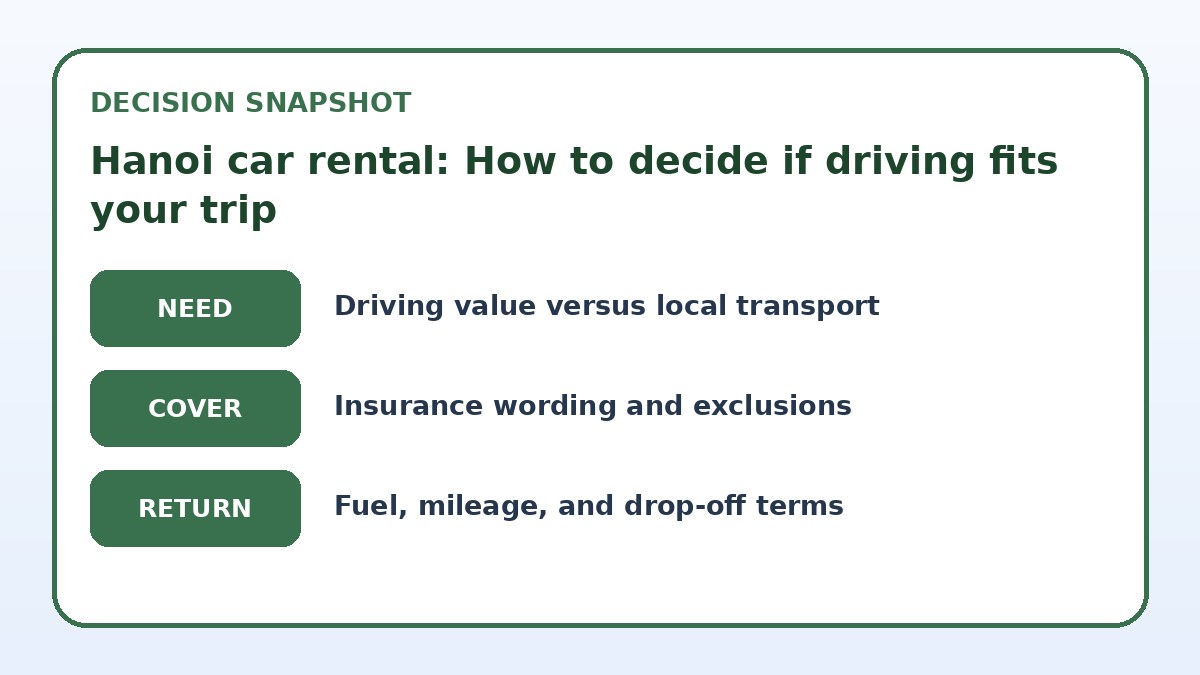
Rental prices change and vary by class, so don’t rely on a single figure here: compare providers and vehicle classes for the best fit. Most important is insurance detail—confirm liability limits, collision damage waiver terms, and what’s excluded (windshield, tires, undercarriage). Check whether additional drivers are permitted without extra fees, whether the price includes fuel or is fuel-policy based, and what the deposit or credit hold will be. If picking up at the airport, check for additional airport surcharges and verify exact pickup/drop-off locations on the rental agreement.
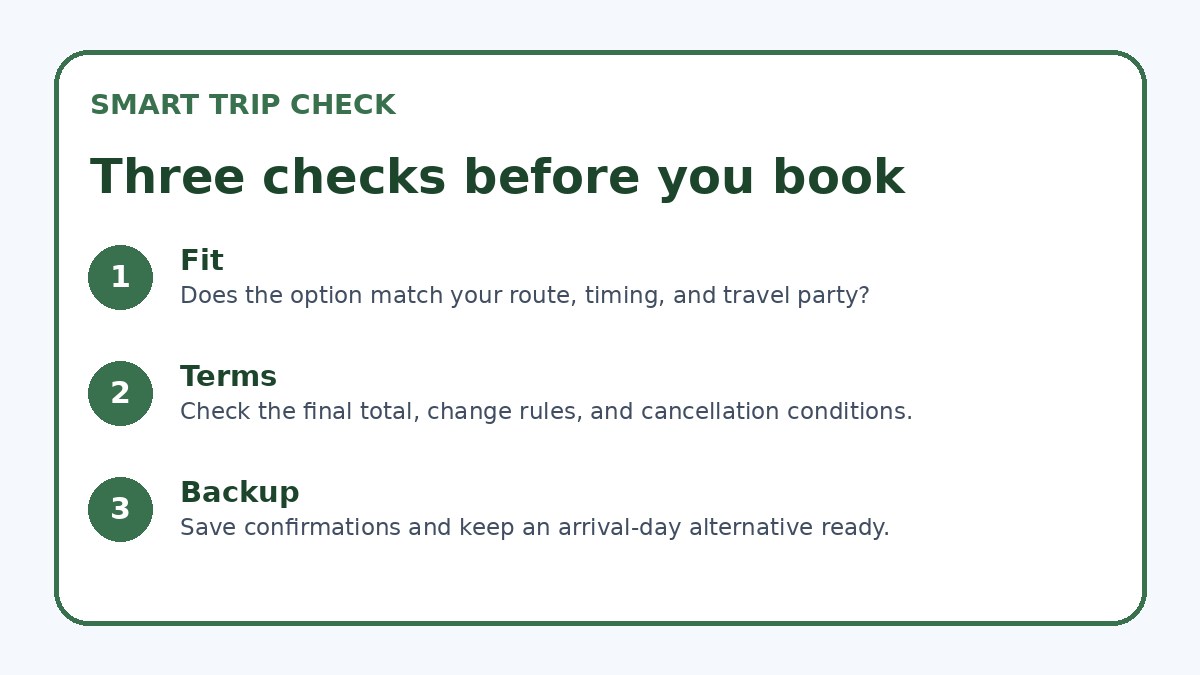
When booking, read the supplier’s final page for precise policies: the cancellation rules, driver age and license requirements, what documents they require (e.g., passport, International Driving Permit if needed), and whether roadside assistance is included. If you’ll cross into neighboring provinces or want to drive to border crossings, verify cross-border permissions in writing. Trip.com can be used once to compare current availability, but always confirm the booking provider’s own terms before paying.
Before you book
- Decide whether your itinerary includes rural destinations that lack public transport before choosing a car.
- Confirm driver requirements: license types accepted and whether an International Driving Permit is required.
- Compare insurance coverage and what damages or deductibles you would be responsible for in writing.
- Check pickup/drop-off locations, opening hours, and whether airport collection adds surcharges.
- Plan nightly parking: call each hotel to confirm on-site parking or nearby paid options.
- Verify fuel policy, additional driver fees, and procedures for roadside assistance on the supplier’s final page.
Alternatives and how to combine options smartly
You don’t have to pick just one mode of transport for a whole trip. Many first-timers combine city transit with a single rented car for specific legs. For example, spend the first two days car-free exploring Hanoi’s Old Quarter by foot and rideshare, then rent a car with a driver for a three-day northern countryside loop. Hiring a private driver for day trips gives the flexibility of a car with local road knowledge; it often includes fuel and parking and removes navigation pressure. Guided day tours can also cover key day-trip destinations without the hassles of driving yourself.
Look at travel time tradeoffs when combining modes: trains and buses suit predictable routes and are economical for long-distance transfers, while a private car wins on door-to-door timing and convenience. If you rent a car, plan where you’ll park each night and call hotels ahead to confirm parking availability. Use ride-hailing for short in-city hops to avoid parking fees, then switch to a rental when leaving the urban core for rural routes.
Frequently asked questions
Can I drive a rental car in Hanoi with my foreign license?
This depends on your nationality and the local rules in effect when you travel. Many visitors need an International Driving Permit (IDP) or a locally recognized translation alongside their home license; others must obtain a temporary local license. Always verify the specific driving-license requirements directly on the rental company’s booking page and check whether the supplier requires an IDP at pickup. If in doubt, contact the rental provider and your country’s embassy or consulate in Vietnam for authoritative guidance before booking.
Is renting a car with a driver more expensive than renting without one?
Typically a car-with-driver option costs more than a bare self-drive rental because it includes labor, local driving expertise, and often fuel and parking in the price. However, it can save you from losing time, paying for parking, or facing fines for unfamiliar traffic rules. To decide, compare total trip costs including fuel, parking, tolls, and your own time or stress. Check the provider’s final booking page to see exactly what the driver arrangement covers and whether tips, overnight allowances, or meals are expected.
How do I find safe routes and avoid tricky driving areas around Hanoi?
Use a mix of local advice, reputable navigation apps, and route planning to choose safer roads. Stick to main highways for intercity travel and avoid narrow, poorly lit rural lanes at night. Ask your rental agency or hotel for suggested routes and known trouble spots; if you hire a driver, they’ll handle local hazards. Always check the vehicle’s condition at pickup, understand emergency contact numbers in your rental paperwork, and keep a charged phone with maps and offline directions when you go off the beaten track.
Final planning note
For most first-time visitors, staying car-free in Hanoi simplifies logistics and lets you enjoy the city’s compact attractions without parking headaches or driving stress. Rent a car when your plan includes remote areas, heavy luggage, early starts, or flexible multi-stop countryside travel — but only after confirming insurance limits, driver-license rules, fuel policy, and parking options. Consider a hybrid approach: use taxis and rideshare in the city, then switch to a rented car or a car-plus-driver for targeted rural days. Verify all supplier policies on the final booking page and plan parking ahead so your transport choice supports the kind of trip you actually want.
Continue planning
Check current options and final conditions
Use the provider page to confirm live availability, the final total, cancellation terms, and every condition that matters to your trip.
This evergreen planning guide was created with AI-assisted drafting and a structured quality review. It does not display live prices, schedules, availability, visa guidance, or provider rankings. Verify current details before booking. Some links are affiliate links; we may earn a commission at no additional cost to you.