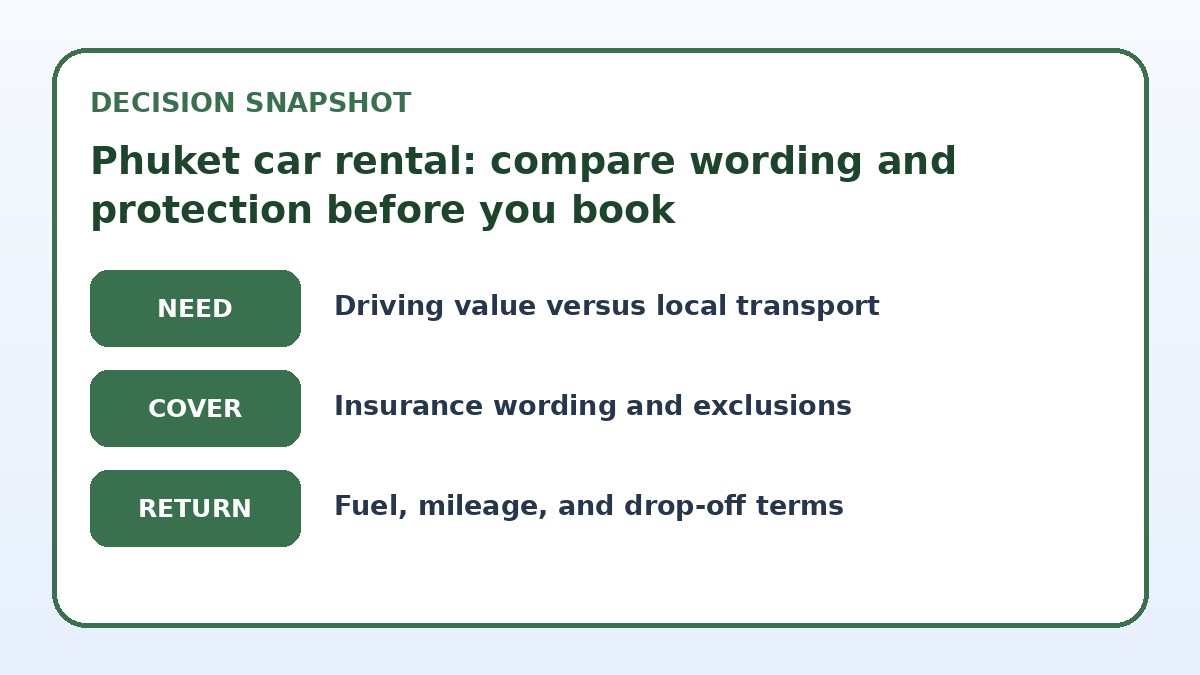
Practical answer first: when booking a Phuket car rental for your family, read three parts of the insurance wording closely — liability limits, excess (deductible) and what’s excluded — and verify whether roadside assistance and third‑party liability are included. If the contract uses terms like Loss Damage Waiver (LDW), Collision Damage Waiver (CDW) or Super CDW, check the deductible amount and whether it is refundable. Ask the rental company or booking page to show the exact contract clause that defines who is a covered driver and whether young or additional drivers cost extra. Finally, don’t rely on headline claims; always confirm the insurer or policy number and the exact exclusions on the provider’s final booking page.
See current options before you compare the details
Availability and final conditions change. Open Trip.com now or keep reading for the practical comparison.
Key terms families must identify in Phuket car rental wording
Start by finding and comparing three insurance labels used in rental paperwork: third‑party liability, coverage for the rental vehicle (often called CDW or LDW), and personal accident or occupant protection. Third‑party liability covers harm you cause to others and their property — important in busy tourist zones — but it never pays to repair your rented car. CDW or LDW reduces your financial responsibility for damage to the rental vehicle; however, it normally comes with an excess. Personal accident coverage is optional in many jurisdictions, and it may duplicate benefits already provided by travel medical insurance or family health plans, so read the beneficiary and payout conditions carefully.
Next, scan for monetary limits, deductibles, and whether the policy uses per‑incident or aggregate wording. A limit written as “up to X per claim” means you may still be liable beyond that if costs exceed the insurer’s payout. Deductible or excess language tells you what you must pay before insurance contributes — some providers show refundable deposits while others take the excess from your card. For families, also find sections on guest passengers and child seat damage; some policies exclude damage to child restraints or list them as a separate liability item.
Common exclusions and situations that matter in Phuket
Exclusions are where misunderstandings often happen. In Phuket, beach access, unsealed roads, and driving during heavy rain are frequently cited as excluded activities because of increased risk. Look for language that excludes ‘off‑road’, ‘beach driving’, ‘flood damage’, or damage while using the car for competitions. If the policy excludes damage caused by lost keys, theft from an unattended vehicle, or items left in the car, that affects families with strollers, bags, and baby gear. Don’t assume the local office will automatically cover these — request the exact clause and, if needed, consider buying supplemental cover that specifically names those risks.
Also examine how the insurer treats negligent behavior such as drunk driving, unauthorized drivers, and driving without a valid license. If an excluded event is involved, the insurer may void cover entirely, leaving the named renter financially and legally responsible. For families, this makes it crucial to keep to the vehicle’s recommended use and driver list, and to understand whether additional drivers in your party need to be registered in advance. Confirm whether temporary or international driver licenses are accepted and whether the insurer imposes a higher excess for younger drivers.
| Approach | Best for | Tradeoff to check |
|---|---|---|
| Accept rental company super‑CDW | Families wanting minimal on‑the‑spot liability and simpler claims | Higher daily cost and possible exclusions still apply; verify exact clause before declining other cover |
| Use credit card rental protection | Cardholders with clear primary rental coverage and willingness to submit paperwork | Often restrictive conditions, may require rejecting the company’s CDW and handling refunds later |
| Buy third‑party excess reimbursement insurance | Travelers seeking lower premiums who can pay upfront and claim reimbursement | You must usually file a claim and wait for reimbursement; immediate costs fall to you during travel |
| Rely on standard local rental coverage only | Short drives in low‑risk areas by cautious drivers comfortable with the stated excess | May leave significant gaps for exclusions common in Phuket, such as beach or off‑road damage |
Ready to check the option that fits your plan?
Use your exact dates and traveler details so the provider page can show the current total and conditions.
How to compare supplemental waivers, credit card cover, and local insurance
When rental company waivers look expensive or unclear, check three alternatives: (1) a supplemental waiver offered by the rental company to reduce excess; (2) protection included with premium credit cards; and (3) third‑party standalone rental insurance. Compare the actual contract wording — not just marketing blurbs. Credit card protections often exclude small vehicles, rentals in certain countries, or require you to decline the rental company’s CDW to trigger coverage. Standalone policies may offer clear excess reimbursement but typically require you to pay upfront and submit a claim later, creating potential cash‑flow inconvenience on vacation.
Weigh convenience against cost and claim process speed. A rental company’s super‑CDW may cut your on‑the‑spot liability to zero, sparing a family the anxiety of paying a large deposit, but it can be pricier and may not cover all exclusions. Credit card cover can be cost‑effective but often has restrictive conditions and claim paperwork requirements. If choosing a third‑party insurer, check turnaround times for reimbursements and whether they offer emergency assistance in Phuket — you’ll want a provider that communicates clearly and has a reachable claims line in the same time zone or with 24/7 support.
Before you book
- Request and save a copy or screenshot of the full insurance policy wording or schedule shown on the final booking page.
- Confirm the exact excess/deductible amount and whether it’s held as a pre‑authorization or charged immediately.
- Get written confirmation of who counts as an authorized driver and whether additional drivers or young drivers cost extra.
- Ask the provider to point out exclusions for beach driving, unsealed roads, flood, key loss, and child seat damage.
- Compare the rental waiver wording to any credit card or standalone policy terms, focusing on exclusions and claim process.
- Photograph the vehicle at pickup, note pre‑existing damage on the inspection form, and confirm emergency contacts and roadside assistance details.
Practical steps to verify coverage before you drive off in Phuket
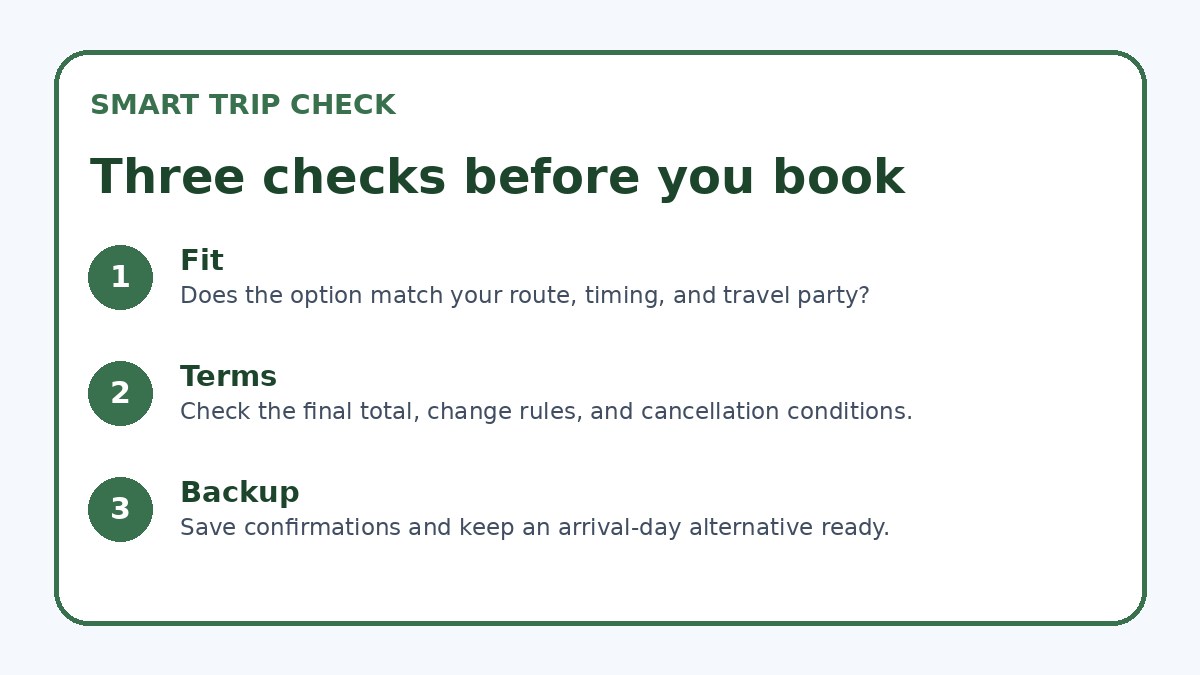
Before you complete the booking, request a copy of the full insurance wording or policy schedule and save a screenshot of the final rental page showing cover details. Read the clauses that define who is an authorized driver, list exclusions, and state the excess amount. If something is ambiguous, ask the rental company to put the clarification in writing or an email so you have documented confirmation. For families, confirm whether child seats are allowed in vehicles without voiding cover and whether any damage to anchors or restraints is treated differently from general vehicle damage.
At pickup, photograph the car thoroughly and have the agent initial or annotate an inspection form listing pre‑existing damage. Confirm the currency and card hold amount for the excess and ask whether the hold will be pre‑authorized or charged immediately. Keep emergency contact numbers (rental company, insurer, roadside assistance) in your phone and a printed copy. If you plan to drive into more remote areas, double‑check whether roadside assistance is included or only available for a fee, and whether towing limits are specified in the contract.
Frequently asked questions
Will Phuket car rental insurance cover driving on beaches or unpaved coastal tracks?
Most rental policies explicitly exclude beach driving and off‑road use because soft sand and tidal conditions increase damage risk. Read the exclusions section for phrases such as “off‑road”, “beach”, or “unsealed roads.” If the wording is unclear, ask the rental company to confirm in writing whether these activities are covered and whether doing so would void the CDW/LDW. For families who expect to visit undeveloped beaches, consider a supplemental policy or ask the agent for a clear exception, and drive conservatively where allowed.
Can my credit card’s rental protection replace the rental company’s insurance in Phuket?
Credit card rental protection can sometimes provide equivalent or partial cover, but it varies widely by card and issuer. Check the card’s terms for geographic exclusions, vehicle class limits, and whether the card’s benefit is primary (pays first) or secondary (pays after the rental company). Many cards require you to decline the rental company’s CDW to activate card protection, and some exclude certain rental durations or are void if you don’t follow claim procedures. Always download and keep the card benefit guide and call the issuer’s benefits line to verify coverage for Phuket.
What should I do at pickup to avoid disputes about damage and insurance claims?
Before driving away, walk the vehicle with the agent and point out every scratch, dent, and interior blemish; insist these are recorded on the rental agreement or inspection form. Take timestamped photos and short videos of exterior, interior, tires, and the engine bay if accessible. Ask the agent to explain the excess handling (pre‑authorisation vs charge) and confirm roadside assistance and claim numbers. Keep contact details and the insurer’s policy number handy; if the agent refuses to note existing damage, consider taking the car and calling the rental company’s local manager or choosing a different vehicle.
Final planning note
Families renting a car in Phuket can avoid most surprises by reading insurance wording with specific goals: find the liability limits, the excess, and the exclusions that commonly affect coastal and island driving. Decide whether convenience (rental super‑CDW) or cost savings (credit card or third‑party cover) matters more, and always verify conditions on the provider’s final booking page before you sign. At pickup, document the car thoroughly and get written confirmation of any verbal assurances. Those steps reduce risk and let you focus on planning family‑friendly routes, beaches, and stops without last‑minute insurance stress.
Continue planning
Check current options and final conditions
Use the provider page to confirm live availability, the final total, cancellation terms, and every condition that matters to your trip.
This evergreen planning guide was created with AI-assisted drafting and a structured quality review. It does not display live prices, schedules, availability, visa guidance, or provider rankings. Verify current details before booking. Some links are affiliate links; we may earn a commission at no additional cost to you.