
If you’re traveling to Paris with extra bags—sporting gear, long-stemmed items, or multiple suitcases—flexible travel dates can change the booking equation. The practical move is to search fares and hotels across a range of departure and return dates, then layer luggage policies and transfer options on top of price. That helps you avoid flights with strict weight limits, find hotels with easier luggage access, and book trains or ferries with clearer carriage rules. Start by widening your search window by three to seven days on either side and filtering results for checked-bag allowances or free luggage carriage. Keep a checklist of the carrier baggage rules you must verify on the provider's final booking page—airlines, train operators, and hotels all post the definitive conditions there.
See current options before you compare the details
Availability and final conditions change. Open Trip.com now or keep reading for the practical comparison.
How flexible dates affect luggage choices
Changing your travel dates can alter which carriers and services appear in search results. Some flights and trains include more generous baggage allowances on off-peak days or on less-sold services; others may only display low-tariff seats that restrict or charge heavily for checked items. By searching across a spread of dates you expose these alternate fare classes. The key is to treat each potential departure or arrival day as separate product comparisons: not just the price but the effective total cost when you add the real baggage charges you will incur.
Practical luggage-related outcomes from flexible dates include flights that retain free checked bags, better-timed connections that avoid long city transfers with heavy cases, and hotels with higher availability of accessible rooms or temporary hold luggage services. When you see a fare that looks appealing, open its baggage policy link and make a note of weight limits, piece allowances, and whether oversized items require advance notification. Always plan to verify that the exact fare class and baggage rules shown in search results remain the same on the provider’s booking page before you finalize payment.
Booking flights: what to compare beyond price
When you compare flights across flexible dates, treat the fare’s baggage rules as a primary filter, not an afterthought. Look for flights offering included checked baggage, or compare the incremental cost of adding bags for each date option. Also check connection times: tight connections increase the risk of delayed transfers and forced rebooking of oversized luggage. If an option requires two separate tickets or has long layovers, confirm whether through-checked baggage is possible or whether you’ll need to collect and recheck bags at an intermediate airport.
Verify the carrier-specific baggage allowance, size limitations, and whether special items (golf clubs, skis, musical instruments) need booking in advance or have per-item fees. On the provider’s final booking page, confirm the fare code and the exact price for each checked or oversized item before you pay. If the search tool mentions ancillary fees but not amounts, use the airline’s website or customer service to confirm; Trip.com can be used as one place to compare current availability, but confirm policy details on the carrier’s official booking page.
| Approach | Best for | Tradeoff to check |
|---|---|---|
| Rigid dates, low base fare | Travelers with small, carry-on only luggage and strict schedule needs | May force high fees or limited flight choices if you add checked or oversized bags |
| Flexible dates, prioritize included baggage | Those carrying multiple checked items or bulky gear who want predictable fees | May require shifting travel days and minor schedule compromises |
| Flexible dates, prioritize easy transfers | Travelers who value arrival time and minimal handling of luggage | Could cost more in ticket price but saves time and effort on arrival |
| Flexible dates, mix carriers (air+rail) | Those willing to combine modes to find better luggage rules or schedules | Increases the complexity of baggage handling and requires confirming interline policies |
Ready to check the option that fits your plan?
Use your exact dates and traveler details so the provider page can show the current total and conditions.
Choosing transfers and local logistics in Paris
Flexible arrival days can reduce the complexity and cost of transfers within Paris. Opting for arrivals at off-peak times can make it easier to secure a taxi large enough for your luggage, or to reserve a private transfer that accommodates long or bulky items. If public transport is part of your plan, remember that metro stations vary widely in accessibility—some have elevators and level access while others only offer stairs. Selecting a hotel or arrival time that avoids big stair-only transfers will save physical strain and reduce the risk of damage to luggage.
If you plan to use trains within France, flexible dates can open direct high-speed options or regional trains with better luggage rules. Check whether luggage storage at Paris stations or hotels is available on your chosen dates; some storage services require reservations or have reduced capacity during busy periods. Before booking, verify on the provider pages whether luggage holds, oversized item policies, and platform access details apply to the exact train or service you would use.
Before you book
- Search fares and hotels across at least a seven-day window and note dates that clearly show included checked baggage.
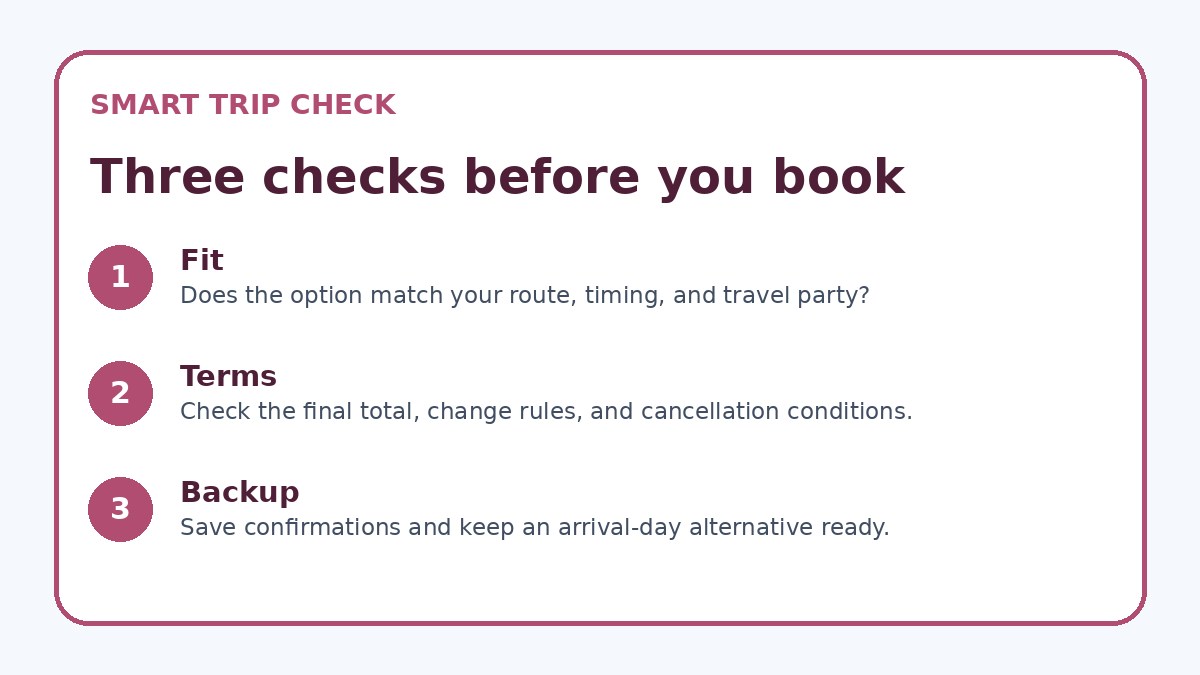
- On each potential booking’s final page, confirm the exact fare code and the carrier’s baggage allowance, including weight, dimensions, and excess fees.
- Check transfer options for large luggage—reserve a larger taxi or a private transfer when arrival times fall outside public-transport convenience.
- If using trains, verify luggage carriage rules for the specific connection and whether you need to reserve space for oversized items.
- Ask the hotel about elevator access, ground-floor rooms, porter service, and luggage-hold policies for early arrivals or late departures.
- Record the total landed cost per date (fare + baggage fees + transfers + extra hotel night) and pick the date that best matches your comfort and budget thresholds.
Cost tradeoffs and decision criteria
Flexible dates often present a tradeoff between lower fares and inconvenient schedules. A cheaper flight that includes a checked bag but arrives late at night may force an additional hotel night or an expensive, large-capacity transfer. Conversely, a slightly pricier daytime flight on a date with simpler transfers may be worth the extra outlay when you factor in taxi costs, time savings, and lower physical stress from handling luggage. Create a simple spreadsheet that captures ticket cost, added baggage fees, transfer prices, hotel differences, and the subjective cost of convenience for each date option.
Use clear decision criteria before you compare dates: maximum acceptable total baggage fees, preferred arrival window, willingness to pay for an accessible room near ground level, and tolerance for extra overnight stays. When you have these thresholds, flexible-date searches become fast and objective. Make sure to reconfirm final baggage restrictions, fare codes, and transfer reservations on the provider booking pages; if anything looks different from the search results, ask customer service to explain differences before you commit.
Frequently asked questions
How many days should I widen my search to find better luggage-friendly options?
Widen your search by at least three days on each side of your ideal travel dates; extending to seven days each way often reveals different fare classes and carrier options with better baggage allowances. The extra window can expose flights on slower days, alternate train or ferry services, and hotels with better room availability for accessible lodging. When you see promising options, verify the baggage rules and transfer availability on the provider’s final booking page because availability and baggage terms can differ between search summaries and the confirmed fare.
Should I prioritize flights that include checked baggage or cheaper base fares with add-on baggage?
It depends on your luggage profile. If you have multiple or oversized items, prioritize fares that include checked baggage so you avoid unpredictable add-on fees and complicated rebooking at connections. For a single additional suitcase, a low base fare plus a paid bag might still be cheaper—run the math across your flexible dates, including transfer and potential overnight costs. Always confirm the exact bag price and size allowance on the carrier’s booking page before committing, since search tools may not show the full ancillary charge.
How do I handle oversized or specialty items like musical instruments or sports gear?
Treat these items as a separate booking decision. Some carriers require advance notice or a special booking class for oversized items; others have dimensions and weight caps that differ from standard checked bags. Use flexible dates to find services that explicitly accept your item type and allow pre-booking. Check the provider’s official policy and contact customer service if dimensions or weight appear close to limits. Also verify transfer vehicle capacity and hotel handling options before finalizing travel dates and reservations.
Final planning note
Flexible dates give you leverage when traveling to Paris with extra luggage: they let you prioritize fares and services that reduce baggage fees, simplify transfers, and avoid inconvenient station or hotel scenarios. The effective approach is methodical—expand your search window, treat baggage allowances as a prime comparison point, and tally total landed costs including transfers and any extra nights. Verify fare codes, baggage rules, and transfer reservations on each provider’s booking page before you pay. When in doubt, a slightly more expensive date with clear baggage terms and simpler arrivals often saves money, time, and stress overall.
Continue planning
Check current options and final conditions
Use the provider page to confirm live availability, the final total, cancellation terms, and every condition that matters to your trip.
This evergreen planning guide was created with AI-assisted drafting and a structured quality review. It does not display live prices, schedules, availability, visa guidance, or provider rankings. Verify current details before booking. Some links are affiliate links; we may earn a commission at no additional cost to you.