If you’re booking Paris travel deals as a solo traveler, the single most useful step is adding every likely cost before you commit. That means tallying the flight or train fare, local transit or rides, the exact room rate with taxes and fees, luggage or seat-selection charges, attraction tickets you won’t skip, and a realistic daily budget for meals and small purchases. Do this in a single comparison document or spreadsheet so you can compare final totals across dates, lodging types, and booking platforms. When a provider’s booking page could change the price, note what to verify there — taxes, mandatory city fees, cancellation penalties, and whether the rate includes breakfast or other amenities. If you want a quick place to check current availability and options, Trip.com can be used for comparison, but always verify the provider’s final page before paying.
See current options before you compare the details
Availability and final conditions change. Open Trip.com now or keep reading for the practical comparison.
Build a full-trip cost checklist before you buy
Start with components: transportation to and from Paris, in‑city transit, accommodation, attraction tickets, food, and incidentals. For transport, do not stop at the headline flight or train fare — look for baggage fees, seat selection, change fees, and whether the fare includes carry-on luggage. For hotels or short‑term rentals, confirm whether city taxes, resort fees, cleaning fees, or mandatory service charges are added at checkout. If you plan to use rideshares, include surge multipliers and possible card fees. Put every number in one place so you can compare apples to apples.
Next, estimate daily living costs tailored to how you travel. If you dine in cafés twice a day and grab snacks or a midrange meal in the evening, your food budget will differ from a traveler who favors picnic lunches or supermarkets. Add attraction costs for the things you will realistically do — museums, tours, river cruises — and check whether bundle passes actually save money for your specific itinerary. Finally, set an emergency buffer (roughly 10–20% of planned daily expenses) to cover unexpected changes like delays, a missed connection, or a last‑minute change of plan.
Where to verify variable charges on provider pages
Always scroll to the provider’s final booking page before paying; that’s where taxes, mandatory fees, and optional add‑ons appear. For flights and trains, review the fare rules link — it lists baggage allowances, change and refund penalties, and any seat‑reservation fees. For accommodations, check the booking terms for mandatory extras such as local tourist taxes, cleaning fees, or security deposits that may be charged at checkout or on arrival. If you’re booking an apartment, look for minimum‑stay rules and whether utilities are included.
When a price seems low, deliberately look for common add‑ons: early check‑in, late check‑out, luggage storage, Wi‑Fi fees, or continental breakfast charges. For experiences and attraction tickets, verify whether tickets are timed‑entry and refundable, and whether there is a separate reservation fee. If you use a comparison site to shortlist options, follow through to the supplier’s page to confirm the final total and cancellation policy. Make a checklist of the exact fields to verify on every final page so you don’t miss a repeated hidden cost.
| Approach | Best for | Tradeoff to check |
|---|---|---|
| Lowest headline price (non‑refundable) | Fixed dates and travelers with very low change risk | Lowest upfront cost but higher potential loss if you must reschedule or cancel |
| Flexible or refundable fare | Risk-averse solo travelers who value adaptability | Higher ticket or room cost in exchange for change/refund options |
| Central but pricier accommodation | Travelers who prioritize time savings and evening safety | Higher nightly rate but lower daily transport and time costs |
| Outskirts budget lodging | Those who prioritize lower nightly prices and don’t mind commuting | Lower room cost but added daily transit expense and longer journeys |
Ready to check the option that fits your plan?
Use your exact dates and traveler details so the provider page can show the current total and conditions.
Tradeoffs: savings vs flexibility for solo travelers
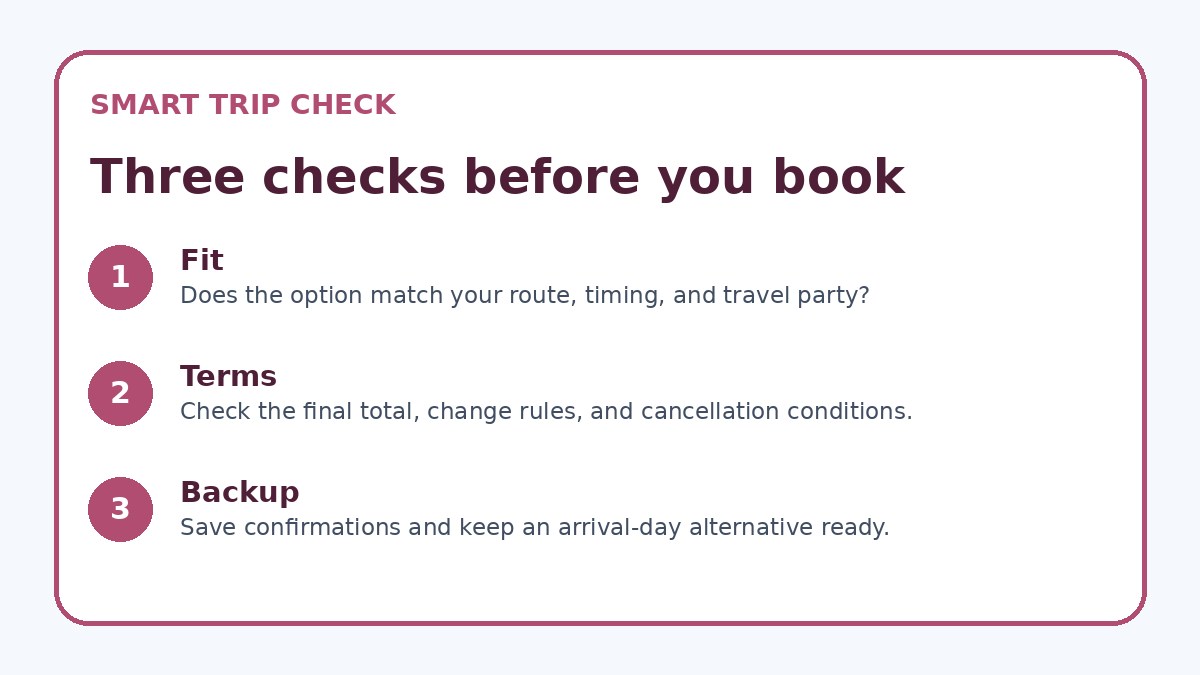
Low headline prices often come with tradeoffs: strict cancellation rules, limited luggage, or no seat selection. For a solo traveler, flexibility can be worth the extra cost because you bear all the risk of delays, illness, or plan changes. Decide how risk‑tolerant you are: if you can’t easily reschedule a trip, prioritize refundable or changeable options even if they cost more. If you travel light and know your dates are fixed, a non‑refundable fare or a private room in a budget guesthouse may make sense, but only after you confirm all add‑ons and penalties.
Another tradeoff is location versus nightly price. Staying farther from central attractions can cut nightly rates but add daily transit costs and more time in transit. A slightly pricier central place can save money on local transport and let you return for midday breaks — a real benefit when traveling solo. Balance these elements against safety, luggage storage needs, and whether you’ll rely on night transport; if you’ll be out late, prioritize areas with easy and reliable transit options even at a higher nightly rate.
Before you book
- Open the provider’s final booking page and confirm the total including taxes, mandatory fees, and any security deposit before entering payment.
- Note baggage allowance and costs, seat selection fees, and change or cancellation penalties for each transport option.
- Add estimated daily transport costs between your accommodation and planned sites, including occasional taxis or late-night rides.
- List the attraction tickets you will almost certainly use and check whether timed-entry or prebooking is required.
- Compare at least two nearby accommodation options for nightly rate plus transit time to your primary activity area.
- Reserve a small emergency buffer (10–20% of planned daily costs) and factor that into your final per‑day budget.
How to compare deals across dates and booking channels
Create a side‑by‑side comparison for each date window you’re willing to travel. For each option show: total door‑to‑door travel cost, accommodation total including all fees, estimated daily spend, and cancellation terms. Use consistent assumptions: the same baggage choice, same meal habits, and whether you’ll buy attraction tickets in advance. That lets you see how shifting dates, overnight connections, or a different arrival airport affect the final cost. Keep an eye on travel time and transfer complexity — a cheaper connection with long layovers may not be worth the saved money.
When comparing channels — OTAs, supplier sites, or packaged deals — check the final booking breakdown on the seller’s confirmation page before you pay. Note who is responsible for customer service if something goes wrong: the airline, train operator, or the booking platform. If you prefer a single point of contact for changes, that can justify booking directly with the provider even if the platform price is similar. Use Trip.com as one of several places to view availability, but always verify the final total and policies on the provider’s official booking page.
Frequently asked questions
How do I calculate the real nightly hotel cost for a Paris stay?
Start with the room rate shown, then add taxes and mandatory city or tourist levies listed at checkout. Include any nonrefundable cleaning fees, extra‑person charges, or fees for amenities you need (like breakfast or late check‑out). Divide refundable security deposits out of your upfront budget if they’re held on arrival. Finally, add estimated daily transport costs to your main activities so you compare effective nightly cost across locations and types of lodging.
Should I buy attraction tickets in advance when planning a solo Paris trip?
Buying in advance removes the risk of sold‑out time slots and can save time queuing, which is often worth it for popular museums and timed tours. However, prebooked tickets may be nonrefundable; consider whether your travel dates might change. For smaller sights or neighborhood museums, walk‑ins are often fine. When you prebook, confirm refund and change rules on the provider’s final booking page and factor any reservation fees into your total cost.
How do I decide between an early‑morning cheap flight with connections and a direct but pricier option?
Compare total door‑to‑door time, connection reliability, and the hidden costs of missed connections (overnight accommodation, rebooking fees) versus the price difference. If a connection is short or requires tight transfers, the direct option may be better even if pricier because it reduces risk and stress. Also factor in your tolerance for early departures or late arrivals and the cost to get to or from the arrival airport at off hours. Check fare rules and change fees on the final booking page to fully assess the risk.
Final planning note
For solo travelers, the smartest Paris travel deals are the ones you vet by total cost, not by the smallest headline number. Build a clear checklist, verify all charges on the provider’s final booking page, and weigh the value of flexibility against savings. Consider location tradeoffs, add a realistic daily budget for food and transit, and keep an emergency buffer. When you compare consistent total-trip estimates across dates and channels, the best choice becomes a practical fit for your schedule, comfort, and risk tolerance — and you’ll avoid the unpleasant surprise of hidden fees after you pay.
Continue planning
Check current options and final conditions
Use the provider page to confirm live availability, the final total, cancellation terms, and every condition that matters to your trip.
This evergreen planning guide was created with AI-assisted drafting and a structured quality review. It does not display live prices, schedules, availability, visa guidance, or provider rankings. Verify current details before booking. Some links are affiliate links; we may earn a commission at no additional cost to you.